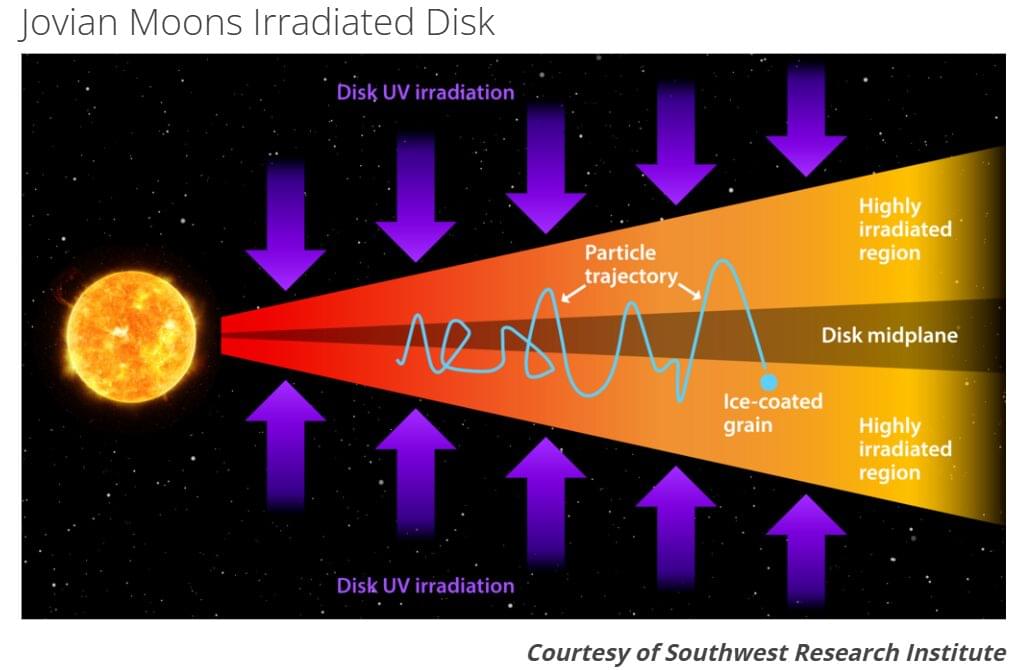
An international team that included Southwest Research Institute has shown how complex organic molecules (COMs), considered essential chemical precursors to life, may have become part of Jupiter’s four largest moons as they formed. The results appear in companion papers published in The Planetary Science Journal and Monthly Notices of the Royal Astronomical Society. Together, the studies shed new light on how the ingredients for life could have reached the Jovian system.
What do we mean with the ‘Big Bang’? Why are the properties of our universe so special? What is cosmological inflation? How can we test cosmological inflation and what do the latest observations tell us? Can we probe string theory using cosmology?
How did our universe come into existence? This basic and ancient question still remains one of the biggest mysteries in science. Ever since Einstein discovered that gravity can be understood as the stretching and bending of space and time, cosmology, which studies the properties, evolution and origin of the universe as a hole, became a proper and honest scientific subject, in which theoretical constructs can be confronted with (cosmological) observations.
What we have learned since then, in less than a century, about the origin and properties of our universe, is spectacular and at the same time mysterious. Our universe appears to be very special. In an attempt to explain these remarkable features a small group of theoretical cosmologists developed the paradigm of cosmological inflation in the eighties. What is cosmological inflation? An what do the latest observations tell us about this fascinating proposal in which all structures in our universe find their origin in small primordial quantum fluctuations? And what are the implications of cosmological inflation for conjectured theories of quantum gravity, such as string theory?
String theorist Jan Pieter van der Schaar argues that cosmology in general, and the cosmological paradigm of inflation in particular, is our best (and perhaps only) bet to probe and test the microscopic quantum description of space and time.
An Pieter van der Schaar is a string theorist by training, with a Ph.D. at the University of Groningen in 2000. After postdoctoral research stints at the University of Michigan, the Cern theory group, and Columbia University, he developed into a theoretical cosmologist with a particular interest to connect cosmological models to string theory and vice versa. Jan Pieter has been a member of the string theory and cosmology group at the Institute of Physics of the University of Amsterdam since 2006. Since 2013 he is the coordinator of the Delta Institute for Theoretical Physics and as of 2022 he is heading the ‘Building Blocks of Matter and Foundations of Space-time’ route as part of the Nationale Wetenschapsagenda.
We’ve known that the universe is expanding since 1929, and that its expansion is accelerating since 1998. The culprit behind the acceleration is unknown, so we live with a stand-in term \.
Some of the world’s leading physicists believe they have found startling new evidence showing the existence of universes other than our own. See more in Season 3, Episode 2, \.
Become a Big Think member to unlock expert classes, premium print issues, exclusive events and more: https://bigthink.com/membership/?utm_… “If science aims to describe everything, how can it not describe the simple fact of our existence?” On this episode of Dispatches, Kmele speaks with the scientists, mathematicians, and spiritual leaders trying to do just that:
This video is an episode from @The-Well, our publication about ideas that inspire a life well-lived, created with the @JohnTempletonFoundation
Watch the full podcast now ► • Dispatches from The Well.
In the newest episode of Dispatches from The Well, we’re diving deep into the “hard problem of consciousness.” Here, Kmele combines the perspectives of five different scientists, philosophers, and spiritual leaders to approach one of humanity’s most pressing questions: what is consciousness?
In the AI age, the question of consciousness is more prevalent than ever. Is every single thing in the universe self-aware? What does it actually mean to be conscious? Are our bodies really just a vessel for our thoughts? Kmele asks these questions, and many more, in the most thought-provoking episode yet. This is Dispatches from The Well.
Featuring: sir roger penrose, christof koch, melanie mitchell, reid hoffman, swami sarvapriyananda.
This study reveals the neural circuit mechanisms through which stress and itch interact in the brain. Neurons in the lateral hypothalamus play a critical role in the suppression of itch by stress.
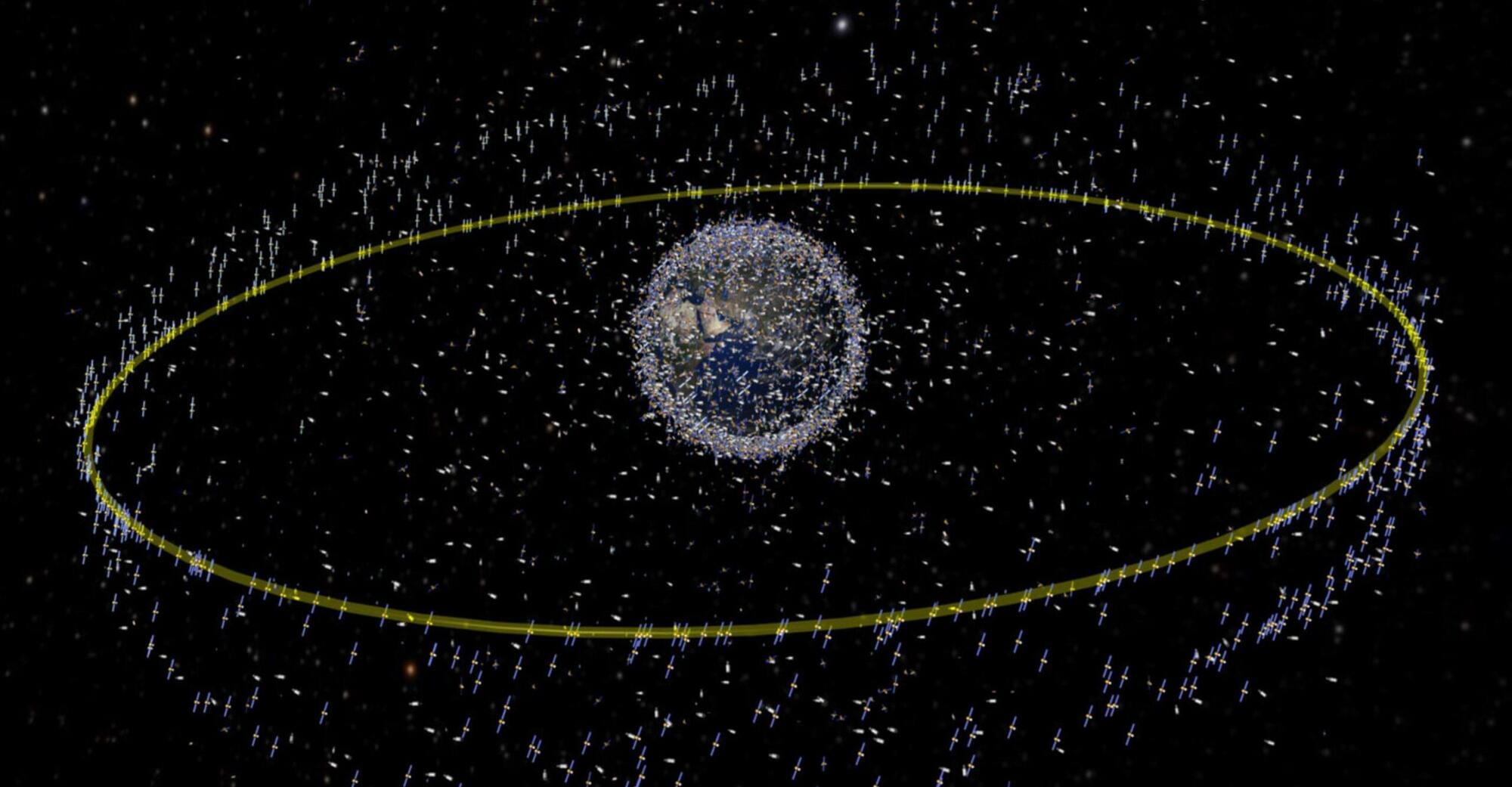
Recent reporting on SpaceX’s proposal to deploy up to one million satellites in low Earth orbit — paired with a vision of AI-enabled, autonomous orbital infrastructure — marks a decisive moment for the space community. Regardless of whether these numbers ultimately materialize, the direction is unmistakable: space is moving toward unprecedented scale, autonomy and strategic importance.
That reality demands a fundamental reassessment of what space awareness really means.
For decades, space situational awareness (SSA) focused on orbital mechanics: where an object is, where it will be and whether it might collide with something else. That model is now insufficient. Satellites are no longer passive nodes governed primarily by physics; they are software-defined, networked systems deeply integrated with terrestrial cyber infrastructure, global supply chains and increasingly AI-driven decision loops.
Dive deep into the fascinating mind of Philip K. Dick through The Exegesis of Philip K. Dick, a posthumous collection of the legendary science fiction author’s personal notes, philosophical musings, and reflections on reality, existence, and spirituality. In this video, we explore the core themes of the book, including Dick’s obsession with the nature of reality, his exploration of gnosticism, and his visionary ideas that foreshadowed concepts like simulated realities, later popularized by films such as The Matrix.
We’ll also delve into Dick’s personal struggles with mental illness, paranoia, and addiction, as well as his unrelenting pursuit of truth and spiritual enlightenment. Whether you’re a fan of his groundbreaking novels or curious about the mind behind them, this video offers an insightful look at the profound thoughts and challenges that shaped his work.
Join us as we unravel the complexities of The Exegesis and celebrate the legacy of one of the most influential thinkers and writers in science fiction history.
This video was created as a personal experiment of sorts, made from start to finish in one day using only AI tools, based upon my prompts.