Toggle light / dark theme

Get the latest international news and world events from around the world.

Log in for authorized contributors

Establishing design principles for achieving ultralow thermal conductivity via controlled chemical disorder

A major challenge in thermal-management and thermal-insulation technologies, across multiple industries, is the lack of materials that simultaneously offer low thermal conductivity, mechanical robustness, and scalable fabrication routes.

Discovering materials that exhibit completely insulating thermal behavior—or, conversely, extraordinarily high thermal conductivity—has long been a dream for researchers in materials physics. Traditionally, amorphous materials are known to possess very low thermal conductivity.

This naturally leads to an important question: Can a crystalline material be engineered to achieve thermal conductivity close to that of an amorphous solid? Such a material would preserve the structural stability of a crystal while achieving exceptionally low thermal conductivity.

Ultrathin kagome metal hosts robust 3D flat electronic band state

A team of researchers at Monash University has uncovered a powerful new way to engineer exotic quantum states, revealing a robust and tunable three-dimensional flat electronic band in an ultrathin kagome metal, an achievement long thought to be nearly impossible. The study, “3D Flat Band in Ultra-Thin Kagome Metal Mn₃Sn Film,” by M. Zhao, J. Blyth, T. Yu and collaborators appears in Advanced Materials.

The discovery centers on Mn₃Sn films just three nanometers thick. Despite their extreme thinness, these films host a 3D flat band that spans the entire momentum space, offering an unprecedented platform for exploring strongly correlated quantum phases and designing future low-energy electronic technologies.

“Until now, 3D flat bands had only been observed in a few bulk materials with special lattice geometries,” said Ph.D. candidate and co-lead author James Blyth, from the Monash University School of Physics and Astronomy.

Webb pushes boundaries of observable Universe closer to Big Bang

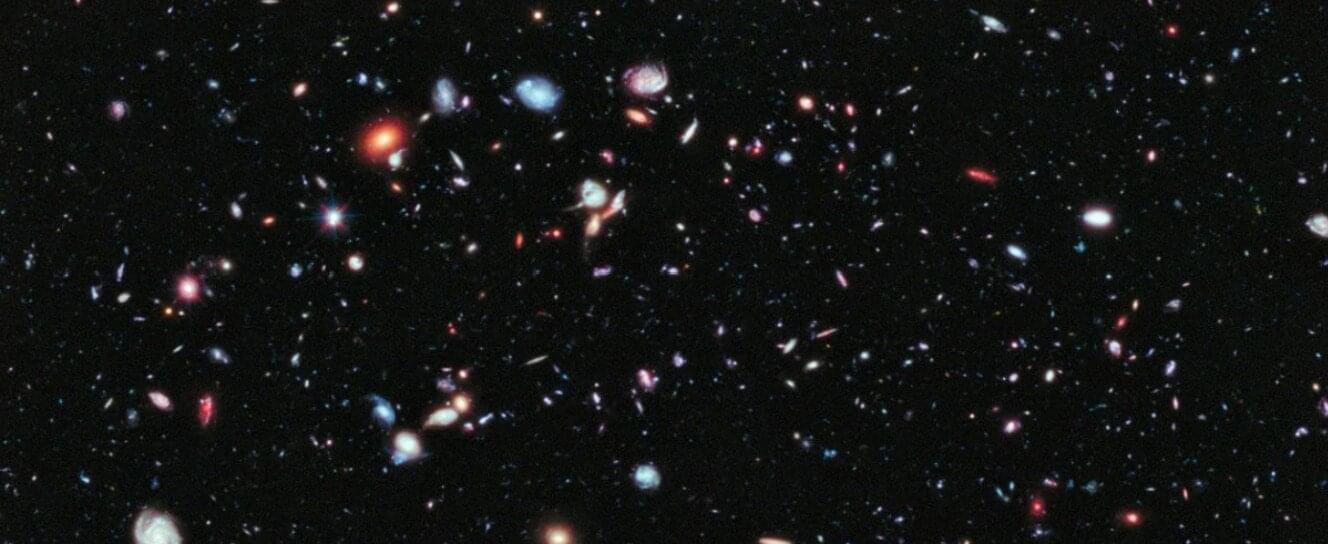
The NASA/ESA/CSA James Webb Space Telescope has topped itself once again, delivering on its promise to push the boundaries of the observable Universe closer to cosmic dawn with the confirmation of a bright galaxy that existed 280 million years after the Big Bang.

By now Webb has established that it will eventually surpass virtually every benchmark it sets in these early years, but the newly confirmed galaxy, MoM-z14, holds intriguing clues to the Universe’s historical timeline and just how different a place the early Universe was than astronomers expected.

“With Webb, we are able to see farther than humans ever have before, and it looks nothing like what we predicted, which is both challenging and exciting,” said Rohan Naidu of the Massachusetts Institute of Technology’s (MIT) Kavli Institute for Astrophysics and Space Research, lead author of a paper on galaxy MoM-z14 published in the Open Journal of Astrophysics.

Initial access hackers switch to Tsundere Bot for ransomware attacks

A prolific initial access broker tracked as TA584 has been observed using the Tsundere Bot alongside XWorm remote access trojan to gain network access that could lead to ransomware attacks.

Proofpoint researchers have been tracking TA584’s activity since 2020 and say that the threat actor has significantly increased its operations recently, introducing a continuous attack chain that undermines static detection.

Tsundere Bot was first documented by Kaspersky last year and attributed to a Russian-speaking operator with links to the 123 Stealer malware.

New sandbox escape flaw exposes n8n instances to RCE attacks

Two vulnerabilities in the n8n workflow automation platform could allow attackers to fully compromise affected instances, access sensitive data, and execute arbitrary code on the underlying host.

Identified as CVE-2026–1470 and CVE-2026–0863, the vulnerabilities were discovered and reported by researchers at DevSecOps company JFrog.

Despite requiring authentication, CVE-2026–1470 received a critical severity score of 9.9 out of 10. JFrog explained that the critical rating was due to arbitrary code execution occurring in n8n’s main node, which allows complete control over the n8n instance.

/* */