Toggle light / dark theme

Get the latest international news and world events from around the world.

Log in for authorized contributors

The Exploration Company completes water-impact tests for its Nyx space capsule

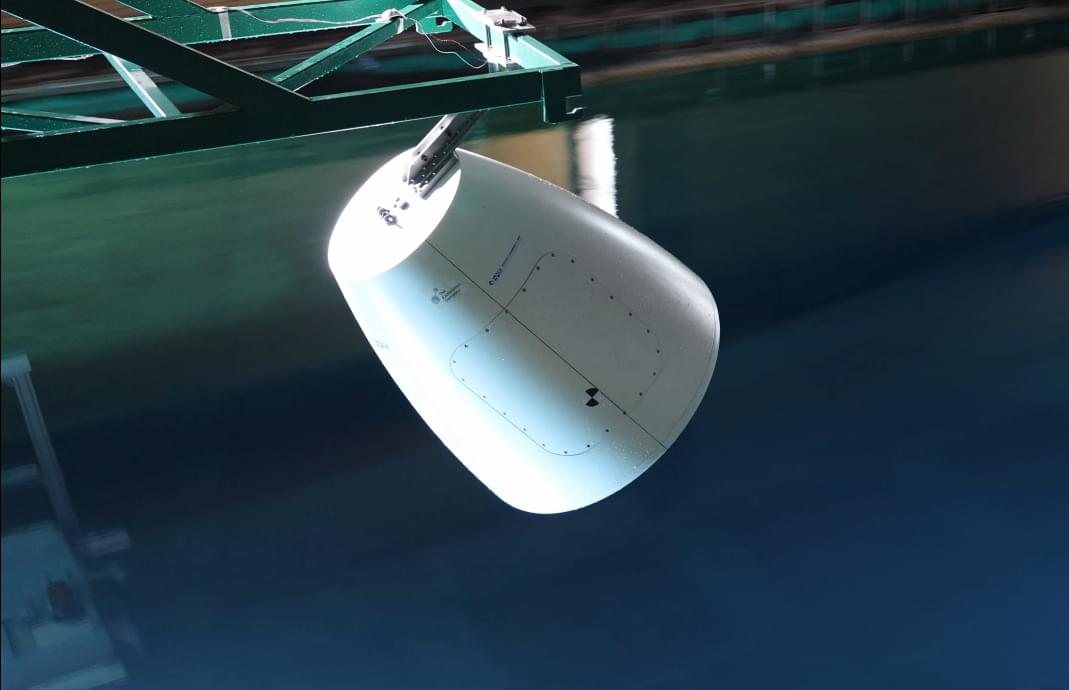
MILAN — The French-German aerospace company The Exploration Company completed mock splashdown tests for its Nyx space capsule, a modular, reusable spacecraft designed to transport cargo and eventually crew to low Earth orbit and beyond. The company conducted water-impact tests on a mock capsule from Jan. 13 through 28.

The testing campaign was not a full splashdown test, but a model-validation exercise carried out at the “Umberto Pugliese” towing tank facility in Italy. The company used a 135-kilogram, 1:4-scale mock-up in a 13.5-meter by 6.5-meter tank to characterize Nyx’s water-impact behavior and validate its numerical models. The testing is intended as a step toward future certification activities and subsequent splashdown activities.

“The primary objective was validation of the numerical splashdown model,” a company spokesperson told SpaceNews. “To do that, we varied release heights and velocities in a controlled way to reproduce multiple impact conditions with high repeatability.”

Copenhagen Atomics reaches pump testing milestone

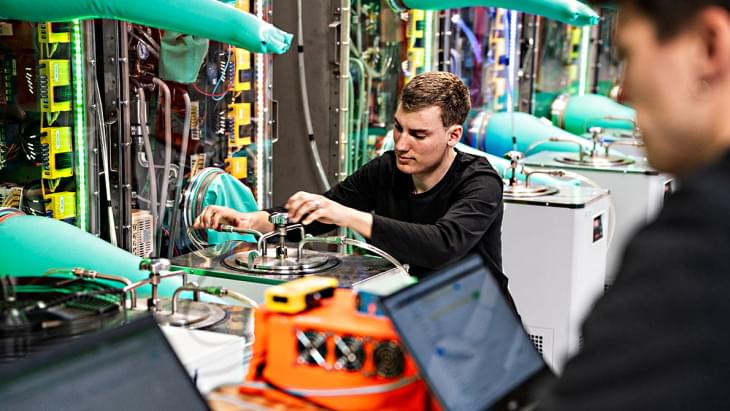
Danish nuclear technology company Copenhagen Atomics has completed two years of continuous operation of a molten salt pump and test loop at its facilities in Copenhagen. The system has been running without issues under high-temperature molten salt conditions, marking one of the longest continuous durability tests of its kind worldwide, it said. ;

A possible first-ever Einstein probe observation of a black hole tearing apart a white dwarf

On July 2, 2025, the China-led Einstein Probe (EP) space telescope detected an exceptionally bright X-ray source whose brightness varied rapidly during a routine sky survey. Its unusual signal immediately set it apart from ordinary cosmic sources, triggering rapid follow-up observations by telescopes worldwide.

Study of the event was coordinated by the EP Science Center of the National Astronomical Observatories, Chinese Academy of Sciences (NAOC), with participation from multiple research institutions in China and abroad. Astrophysicists from the Department of Physics at The University of Hong Kong (HKU), who are integral members of the EP scientific team, worked together with the broader collaboration to interpret the event, proposing that it may mark the moment when an intermediate-mass black hole tears apart and consumes a white dwarf star.

If confirmed, this would be the first observational evidence of such an extreme black hole “feeding” process. The findings have been published as a cover article in Science Bulletin.

Digital twin reveals how eye cells lose their organization in leading cause of vision loss

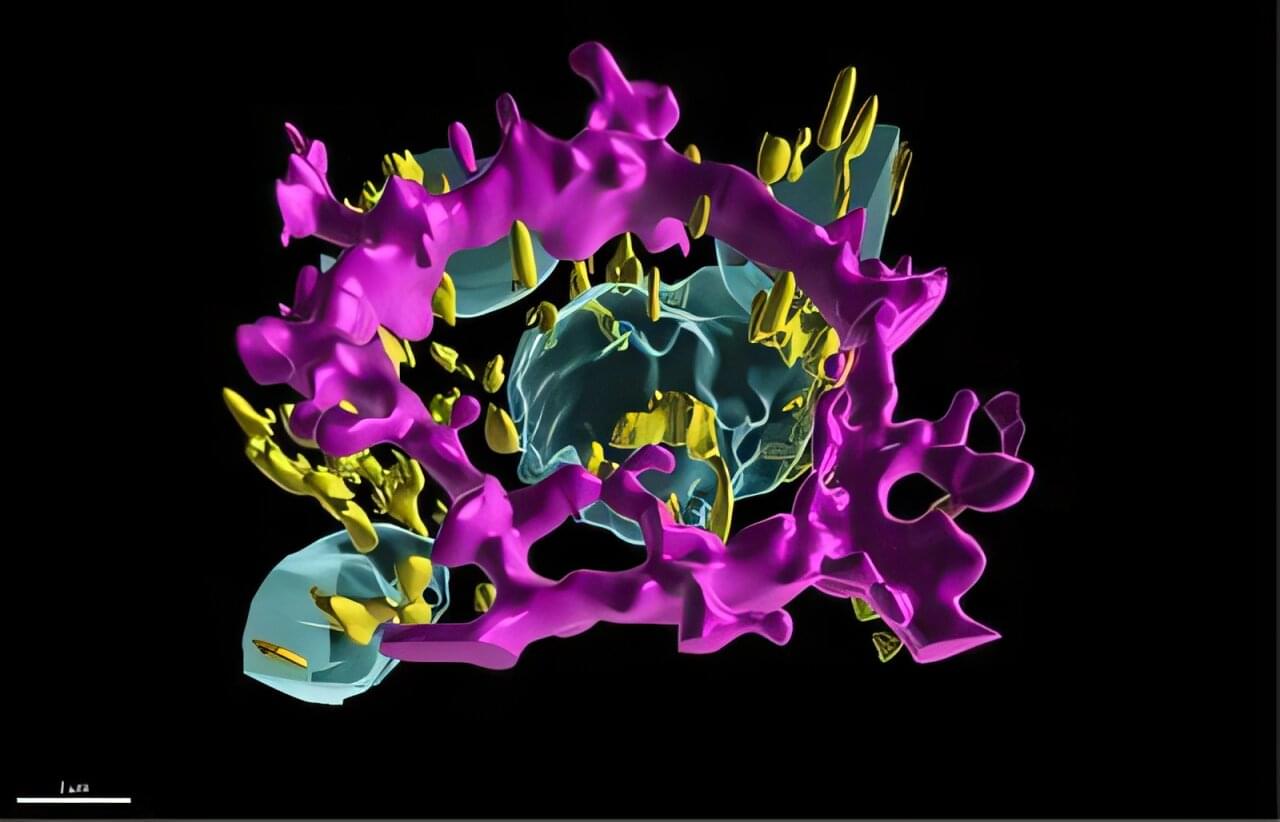
National Institutes of Health (NIH) researchers have developed a digital replica of crucial eye cells, providing a new tool for studying how the cells organize themselves when they are healthy and affected by diseases. The platform opens a new door for therapeutic discovery for blinding diseases such as age-related macular degeneration (AMD), a leading cause of vision loss in people over 50. The study is published in the journal npj Artificial Intelligence.

“This work represents the first-ever subcellular resolution digital twin of a differentiated human primary cell, demonstrating how the eye is an ideal proving ground for developing methods that could be used more generally in biomedical research,” Kapil Bharti, Ph.D., scientific director at the NIH’s National Eye Institute (NEI).

The researchers created a highly detailed, 3D data-driven digital twin of retinal pigment epithelial (RPE) cells, which perform vital recycling and supportive roles to light-sensing photoreceptors in the retina. In diseases such as AMD, RPE cells die, which eventually leads to the death of photoreceptor cells, causing loss of vision.

A New Model for Particle Charging

As flour, plastic dust, and other powdery particles get blown through factory ducts, they become charged through contact with each other and with duct walls. To avoid discharges that could ignite explosions, ducts are metallic and grounded. Still, particles remain an explosive threat if they reach a silo while charged. The microphysics of contact charging is an active area of research, as is the quest to understand the phenomenon as it plays out on larger scales in dust storms, volcanic plumes, and processing plants. Now Holger Grosshans of the German National Metrology Institute in Braunschweig and his collaborators have developed a contact-charging model that can cope with particles and walls made of different materials [1]. What’s more, the model is compatible with computational approaches used to analyze large-scale turbulent flows.

The model treats particles’ acquisition of electric charge from each other and their surroundings as a stochastic process—one that involves some randomness. The resulting charge distributions depend on the amount of charge transferred per impact and other nanoscale parameters that would be tedious to measure for each system. Fortunately, Grosshans and his collaborators found that if they determined all parameters for one system in a controlled experiment, they could readily adjust the parameters to suit other systems.

To test their model, the researchers coupled it to a popular fluid-dynamics solver and simulated 300,000 polymer microparticles stirred by a turbulent flow while confined between four walls. The combination reproduced the complex charging patterns observed in lab experiments—and it did so efficiently: The charging model added less than 0.01% to the simulation’s computational cost.

A Laser Built for Nuclear Timekeeping

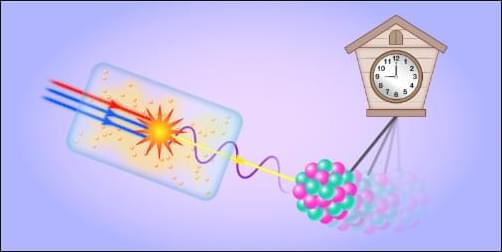
Researchers have designed and demonstrated an ultraviolet laser that removes a major bottleneck in the development of a nuclear clock.

Whereas ordinary atomic clocks keep time using transitions of electrons in atoms, a prospective nuclear clock would harness a transition between states of the nucleus. Compared with electronic transitions, nuclear ones are much less sensitive to environmental disturbances, which would potentially give nuclear clocks unprecedented precision and stability. Such devices could improve GPS systems and enable more sensitive probes of fundamental physics. The main hurdle has been that nuclear transitions are extremely difficult to drive controllably using existing laser technology. Now Qi Xiao at Tsinghua University in China and colleagues have proposed and realized an intense single-frequency ultraviolet laser that can achieve such driving for thorium-229 nuclei [1, 2]. Beyond timekeeping, the team’s laser platform could find uses across quantum information science, condensed-matter physics, and high-resolution spectroscopy.

For most nuclear transitions, the energy difference between the two states lies in the kilo-electron-volt to mega-electron-volt range. Consequently, such transitions are inaccessible to today’s high-precision lasers, which can deliver photons of typically a few electron volts in energy. A long-known exception is the transition between the ground state and first excited state of thorium-229 nuclei. Indirect measurements over the past 50 years have gradually pinned down that transition’s energy difference to only about 8.4 eV. As a result, this transition is being actively investigated as a candidate for developing a nuclear clock.

Water-based electrolyte helps create safer and long-lasting Zn-Mn batteries

Many countries worldwide are increasingly investing in new infrastructure that enables the production of electricity from renewable energy sources, particularly wind and sunlight. To make the best of these energy solutions, one should also be able to reliably store the excess energy created during periods of intense sunlight or wind, so that it can be used later in times of need.

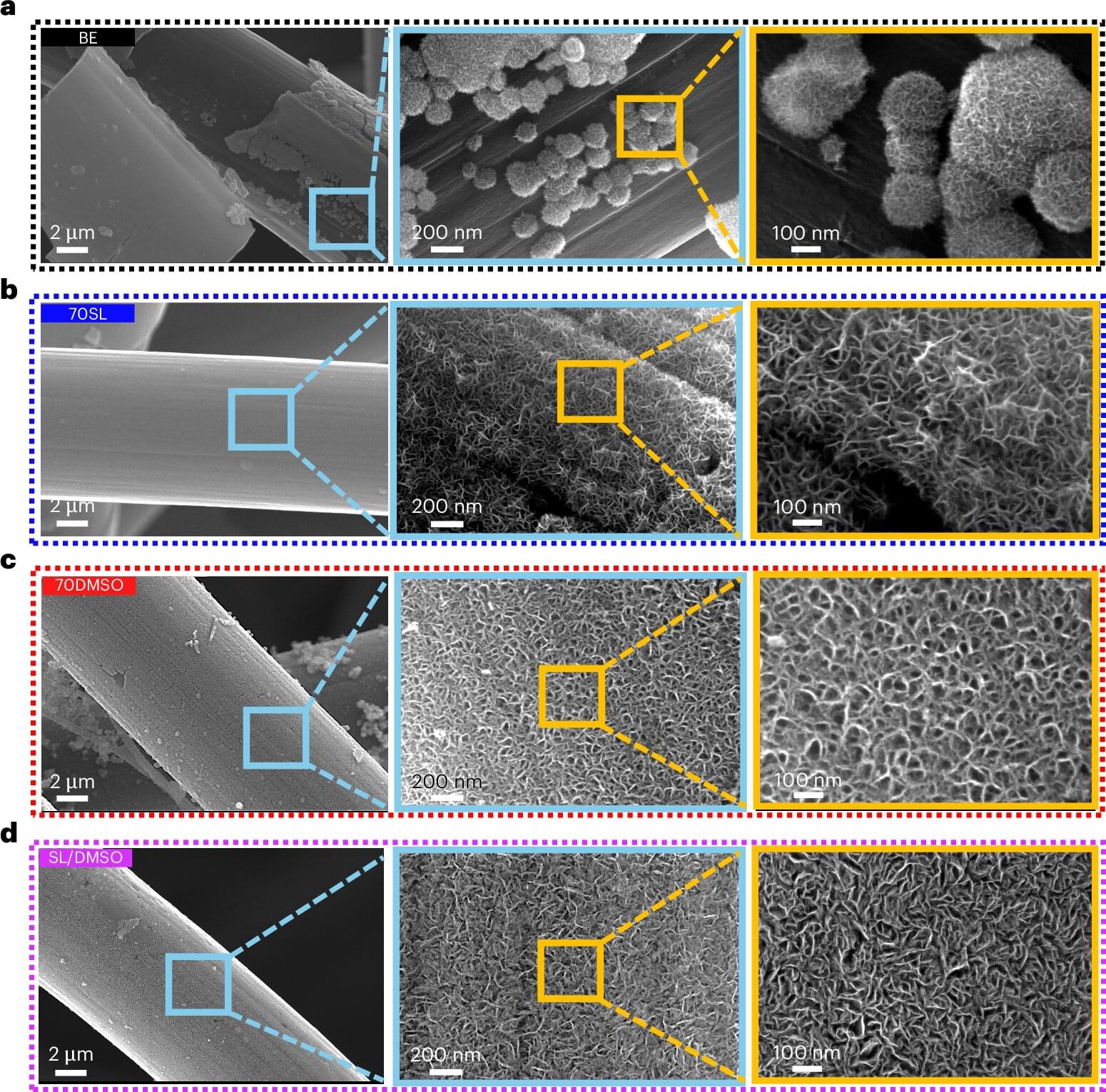
One promising type of battery for this purpose is based on zinc-manganese (Zn-Mn) and utilizes aqueous (i.e., water-based) electrodes instead of flammable organic electrolytes. These batteries rely on processes known as electrodeposition and dissolution, via which solid materials form and dissolve on electrodes as the battery is charging and discharging.

In Zn-Mn batteries, Zn serves as the anode (i.e., the electrode that releases electrons) and manganese dioxide (MnO₂) the cathode (i.e., the electrode from which electrons are gained). A key chemical reaction prompting their functioning, known as the MnO₂/Mn²⁺ conversion reaction, typically can only occur in acidic conditions.

Bio-inspired chip helps robots and self-driving cars react faster to movement

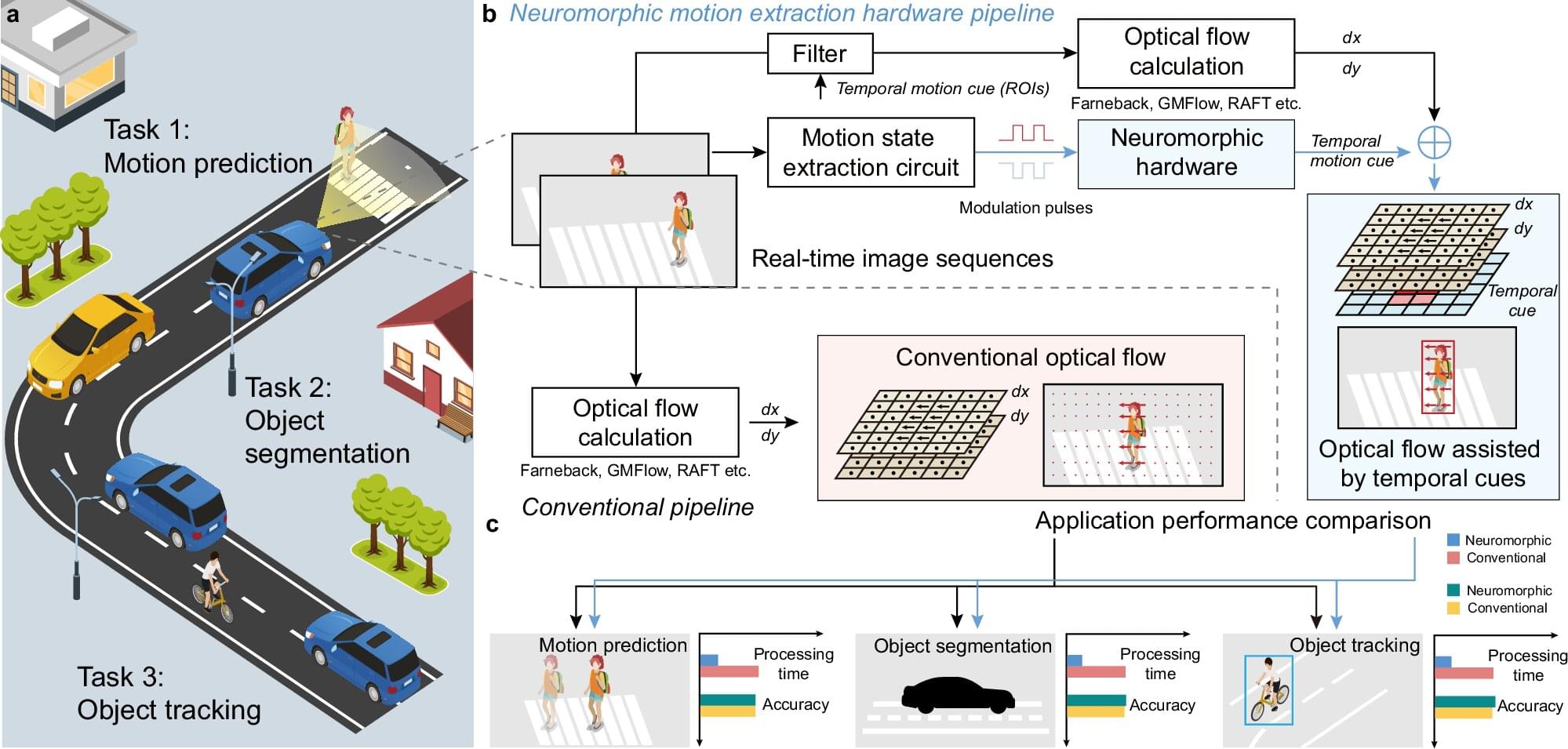
Robots and self-driving cars could soon benefit from a new kind of brain-inspired hardware that can allegedly detect movement and react faster than a human. A new study published in the journal Nature Communications details how an international team built their neuromorphic temporal-attention hardware system to speed up automated driving decisions.

The problem with current robotic vision and self-driving vehicles is a significant delay in processing what they see. While today’s top AI programs can recognize objects accurately, the calculations are so complex that they can take up to half a second to complete. That may not sound like a lot, but at highway speeds, even a one-second delay means a car travels 27 meters before it even begins to react. That is too long and too slow a reaction time.

To solve this problem, the team worked on a hardware solution rather than tinkering with software, modeling it on how human vision works. When we view a situation, our visual system doesn’t analyze every detail at once. It first detects changes in brightness and movement, then processes the more complex details later.

Only humans have chins: Study shows it’s an evolutionary accident

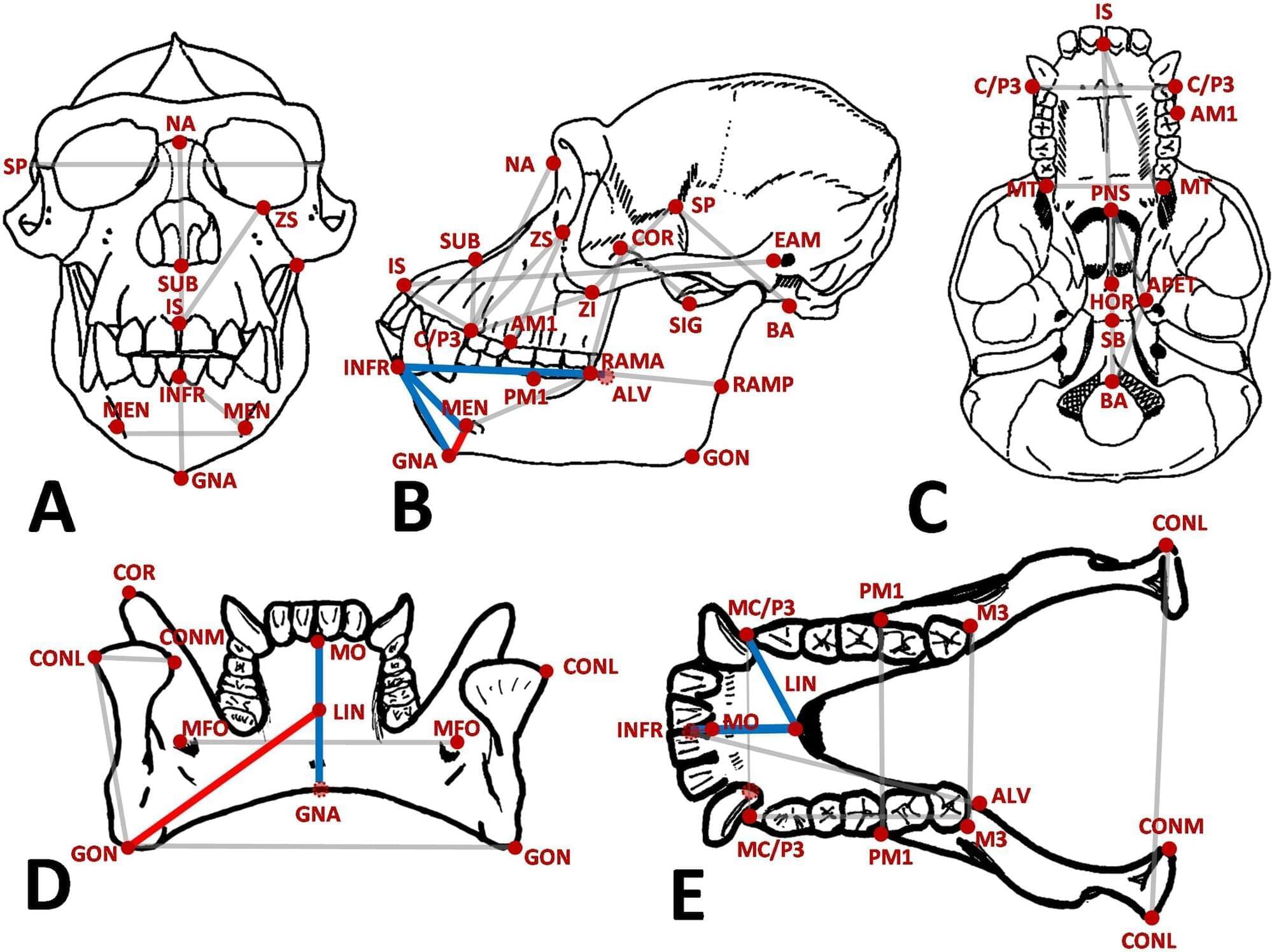
Dashiell Hammett mentioned Sam Spade’s jutting chin in the opening sentence of his novel, “The Maltese Falcon.” Spade’s chin was among the facial features Hammett used to describe his fictional detective’s appearance, but starting with that distinctive chin was—at least from an evolutionary perspective—an unintentional redundancy, since every chin is distinctive in the sense that humans are the only primates to possess that physical characteristic.

Chimpanzees, humans’ closest living relatives, do not have a chin. Neither did Neanderthals, Denisovans, or any other extinct human species. Humans, it turns out, have a unique capacity to “take it on the chin” because we’re uniquely in possession of that physical feature. That exclusive nature makes the chin well suited for identifying Homo sapiens in the fossil record.

In simplest terms, a chin is a bony projection of the lower jaw. So why is it there? How and why did it evolve?

/* */