Toggle light / dark theme

Get the latest international news and world events from around the world.

Log in for authorized contributors

A Glimpse of New Physics? ATLAS Edges Closer to Unlocking Higgs Boson Secrets

The ATLAS collaboration has reported evidence for Higgs bosons decaying into muons and has enhanced the ability to detect Higgs boson decays involving a Z boson and a photon. At the 2025 European Physical Society Conference on High Energy Physics (EPS-HEP) in Marseille, France, research on the Hi

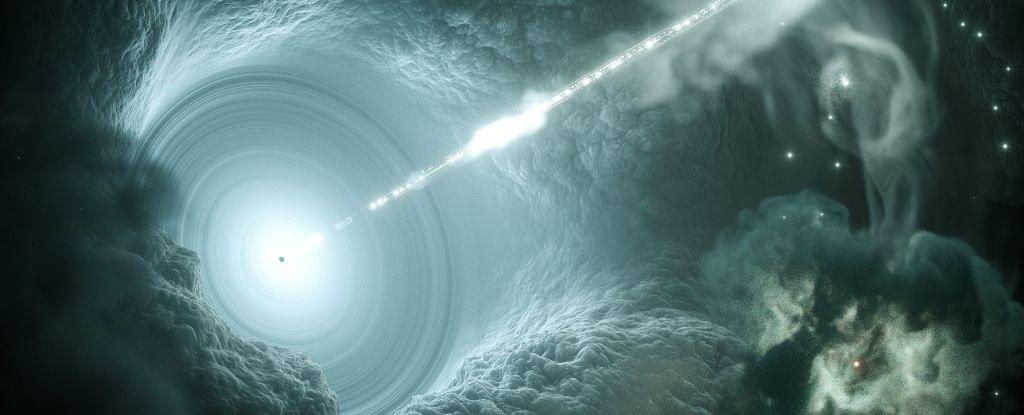
It’s Official: ‘Ghost Particle’ That Smashed Into Earth Breaks Records

The verdict is in. The detection of a cosmic neutrino that smashed into Earth with an unprecedented energy level is not a glitch or an error, but a real detection of a real particle.

In February 2023, a detector called KM3NeT, located deep under the Mediterranean Sea, picked up a signal that seemed to indicate a neutrino with a record-shattering energy of 220 petaelectronvolts (PeV). For reference, the previous record was a mere 10 PeV.

Now, an exhaustive analysis of all the data on and around the event, designated KM3-230213A, not only supports the conclusions that the signal was caused by a 220-PeV neutrino, but adds to the mystery about where the heck in the Universe it came from.


Star Trying to Swallow a Black Hole May Have Triggered a New Type of Supernova

In 2023, astronomers recorded one of the most extraordinary space explosions they had ever seen.

It took place some 750 million light-years away, flaring into the detectors of the Zwicky Transient Facility on 7 July. At first, it looked just like a normal supernova – the explosive death of a star – and astronomers named it SN 2023zkd.

Six months later, a search for cosmic anomalies flagged the explosion as a little odd. A look back at data collected since its initial discovery revealed SN 2023zkd had done something really weird: it brightened again.

New HTTP/2 ‘MadeYouReset’ Vulnerability Enables Large-Scale DoS Attacks

This attack is notable not least because it obviates the need for an attacker to send an RST_STREAM frame, thereby completely bypassing Rapid Reset mitigations, and also achieves the same impact as the latter.

In an advisory, the CERT Coordination Center (CERT/CC) said MadeYouReset exploits a mismatch caused by stream resets between HTTP/2 specifications and the internal architectures of many real-world web servers, resulting in resource exhaustion — something an attacker can exploit to induce a DoS attack.

/* */