Toggle light / dark theme

Get the latest international news and world events from around the world.

Log in for authorized contributors

Women are better at recognizing illness in faces compared to men, study finds

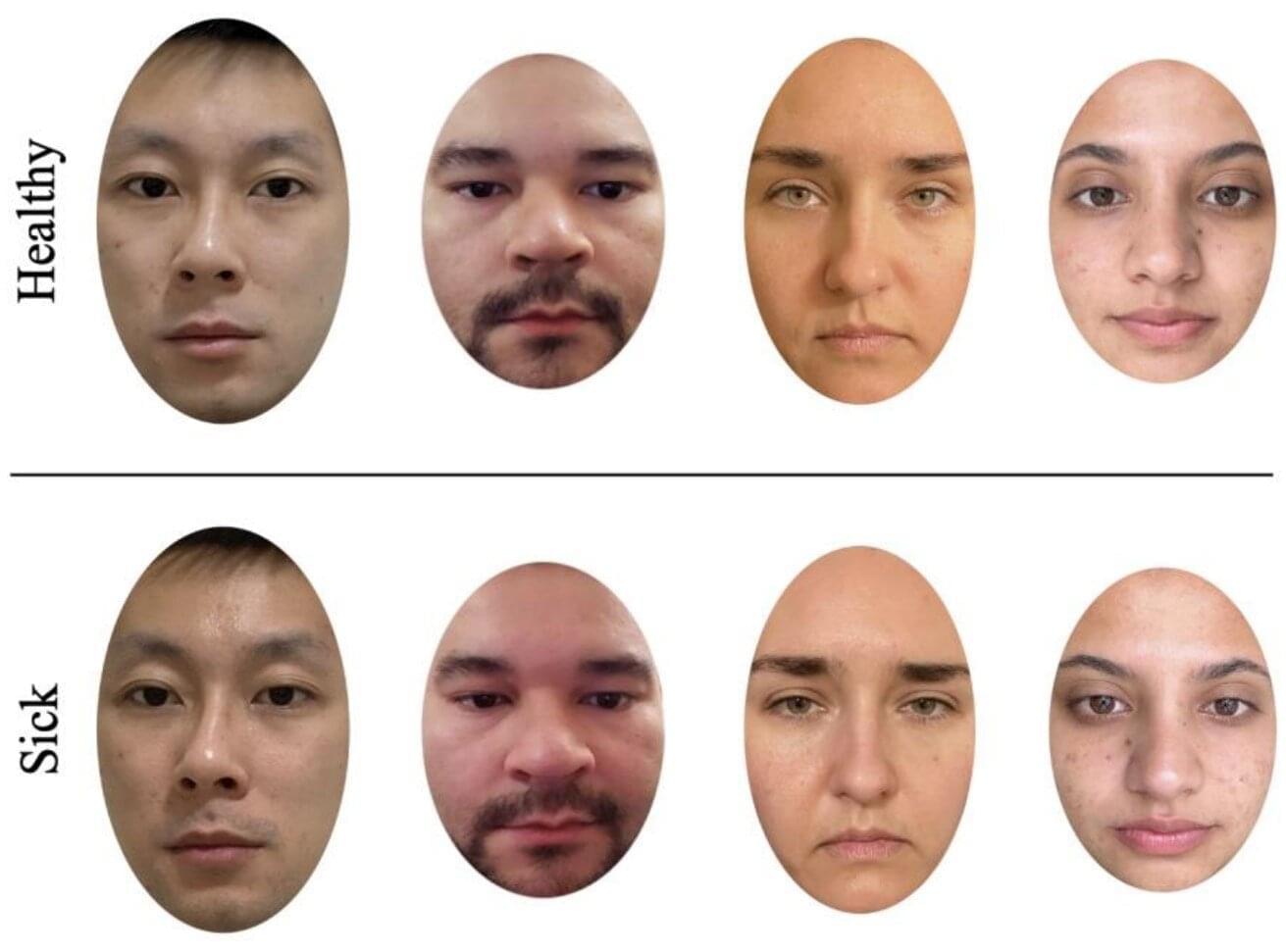
Most people have either been told that they don’t look well when they were sick, or thought that someone else looked ill at some point in their lives. People often use nonverbal facial cues, such as drooping eyelids and pale lips, to detect illness in others, potentially to prevent infection in themselves. A new study, published in Evolution and Human Behavior, finds that women are more sensitive to these subtle cues than men.

In past studies, participants have been asked to rate signs of illness in the faces of others, but some of these studies used manipulated photos or people who had artificially induced sicknesses in the photos. In the new study, the team wanted to see whether naturally sick individuals would be rated as sick-looking, or as having an expression of “lassitude,” by other individuals and whether the recognition differed by sex.

To do this, the team recruited 280 undergraduate students, of which 140 were male and 140 were female, to rate 24 photos. The photos consisted of 12 different faces in times of sickness and health.

Why some brains switch gears more efficiently than others

The human brain is constantly processing information that unfolds at different speeds—from split-second reactions to sudden environmental changes to slower, more reflective processes such as understanding context or meaning.

A new study from Rutgers Health, published in Nature Communications, sheds light on how the brain integrates these fast and slow signals across its complex web of white matter connectivity pathways to support cognition and behavior.

Different regions of the brain are specialized for processing information over specific time windows, a property known as intrinsic neural timescales, or INTs for short.

Exposure to common air pollutants alters adolescent brain development, study finds

Physician-scientists at Oregon Health & Science University warn that exposure to air pollution may have serious implications for a child’s developing brain.

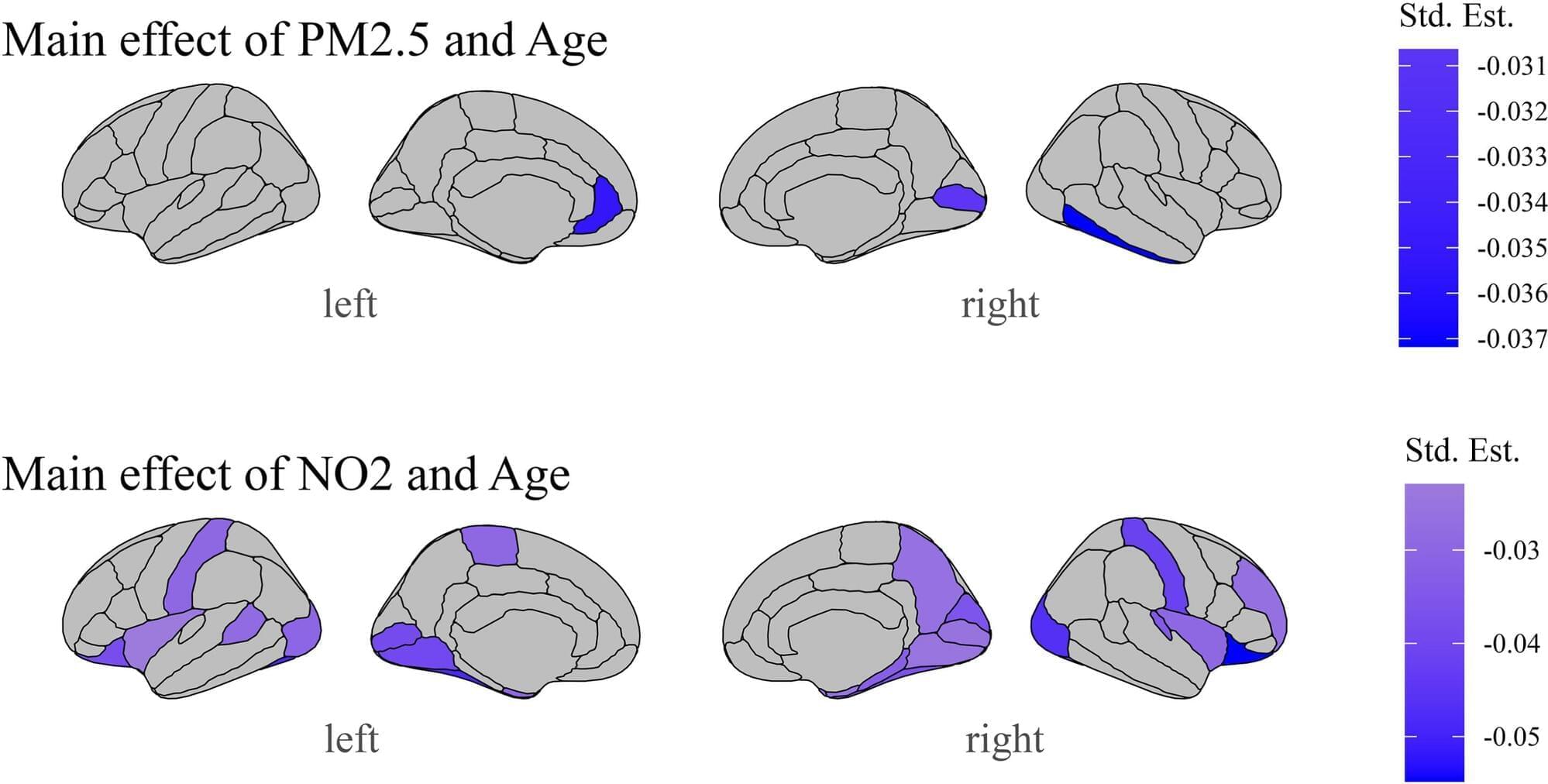
In a recent study published in the journal Environmental Research, researchers in OHSU’s Developmental Brain Imaging Lab found that air pollution is associated with structural changes in the adolescent brain, specifically in the frontal and temporal regions —the areas responsible for executive function, language, mood regulation and socioemotional processing.

Air pollution causes harmful contaminants, such as particulate matter, nitrogen dioxide and ozone, to circulate in the environment. It has been exacerbated over the past two centuries by industrialization, vehicle emissions, and, more recently, wildfires.

Merging nanopores with nanofluidic devices could transform medicine and diagnostics

When disease begins forming inside the human body, something subtle happens long before symptoms appear. Individual molecules such as DNA, RNA, peptides, or proteins begin shifting in quantity or shape. Detecting these tiny molecular changes early could dramatically change how cancer, infections, and other conditions are diagnosed.

For years, scientists have dreamed of reading these changes one molecule at a time. Nanopores, nanometer-sized holes that detect single molecules by sensing changes in electric current, have brought that dream closer to reality, but nanopore sensing has hit several scientific walls.

Molecules rush through too fast to analyze. Signals drown in electrical noise. Proteins stick to pore surfaces and single pores simply cannot provide the scale required for real-world clinical use. So what would it take to make nanopore sensing fast, precise, and robust enough for society?

Measuring how materials hotter than the sun’s surface conduct electricity

Warm dense matter is a state of matter that forms at extreme temperatures and pressures, like those found at the center of most stars and many planets, including Earth. It also plays a role in the generation of Earth’s magnetic field and in the process of nuclear fusion.

Although warm dense matter is found all over the universe, researchers don’t have many good theories to describe the physics of materials under those conditions. Measurements of a material’s electrical conductivity would help test and refine models of warm dense matter. However, classic probes for such measurements require contact with the material. These can’t be used because materials in a warm dense matter state are very hot, often as hot or even hotter than the surface of the sun. Consequently, information about the electrical conductivity has so far been inferred indirectly.

In other words, without direct measurements, “there’s a lot of stuff in the universe happening that we as physicists are still struggling to understand,” said Ben Ofori-Okai, assistant professor at the Department of Energy’s SLAC National Accelerator Laboratory and Stanford University and a researcher at the Stanford PULSE Institute.

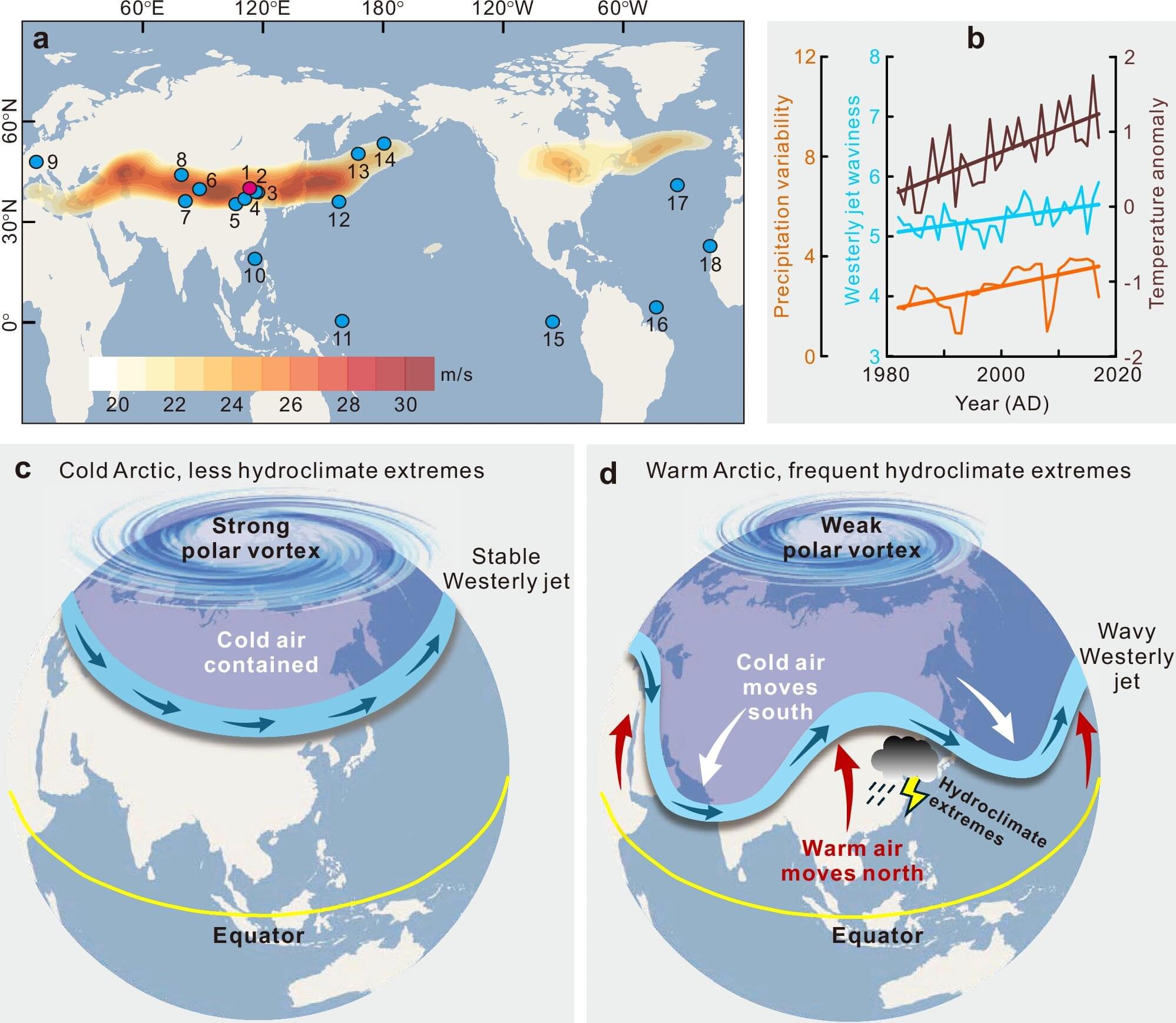
Westerly jet stream emerges as key driver of mid-latitude hydroclimatic extremes

In recent years, the global climate has become increasingly extreme, with intensifying alternations of droughts and floods—particularly in ecologically vulnerable mid-latitude regions. But what is driving this hydroclimatic variability? Scientists have long debated the underlying mechanisms.

A research team led by Prof. Long Hao from the Nanjing Institute of Geography and Limnology of the Chinese Academy of Sciences, drilled a 300.8-meter-long lacustrine sediment core in the Datong Basin of Shanxi Province, located in mid-latitude East Asia (Northern China). By reconstructing more than 5.7 million years of Earth’s history, the researchers revealed that the “waviness” of the westerly jet stream is the primary driver of mid-latitude climate variability. The study was recently published in Nature Communications.

This sediment core acts as a detailed “climate archive,” documenting precipitation changes over approximately 5.7 million years—spanning the Pliocene and Pleistocene epochs. By analyzing chemical indicators within the core, the researchers obtained a high-resolution record of ancient precipitation patterns.

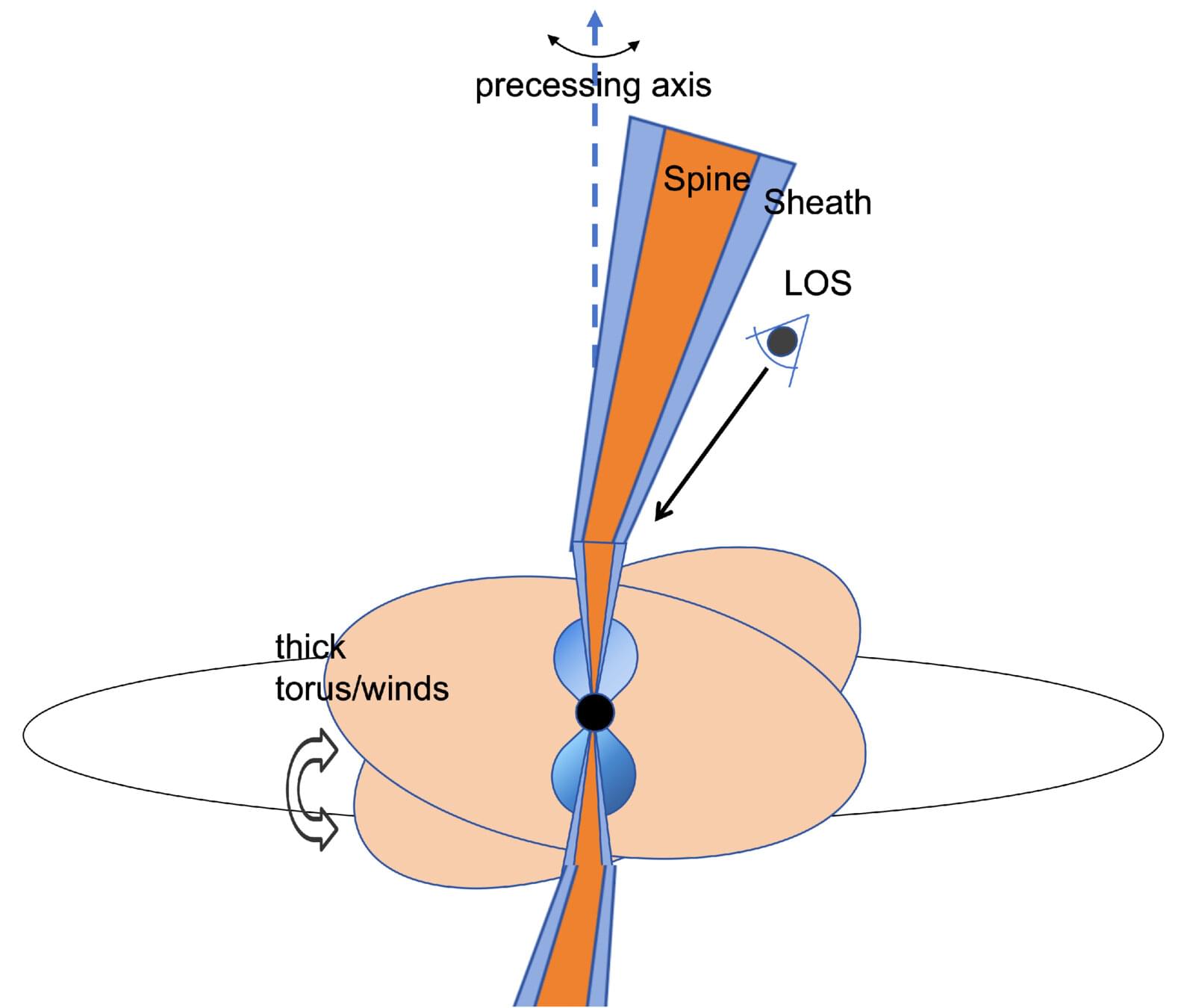
Precessing magnetic jet engine model reveals power source of rare ‘heartbeat’ gamma-ray burst

Prof. An Tao from the Shanghai Astronomical Observatory (SHAO) of the Chinese Academy of Sciences has proposed a novel “precessing magnetic jet engine” model to explain the peculiar gamma-ray burst (GRB) 250702B, a rare cosmic explosion discovered on July 2, 2025.

This GRB exhibited periodic flares approximately every 47 minutes over more than three hours. The new model elucidates the physical origin of this “heartbeat” and resolves the mysteries surrounding its extremely hard spectrum and apparent excess energy. Results were published in The Astrophysical Journal Letters on December 2.

GRB 250702B was detected by high-energy observatories, including the Fermi satellite and Konus-Wind. Its uniqueness lies in its temporal structure. The entire burst lasted approximately 3.2 hours and included three distinct, intense gamma-ray pulses with intervals that were integer multiples of a base period of about 2,825 seconds. Interestingly, approximately one day prior to this event, China’s “Einstein Probe” satellite detected a softer X-ray burst at the same location, acting as a precursor to the main event. This combination of “early warm-up plus hour-scale heartbeat” is extremely rare in GRB observations.

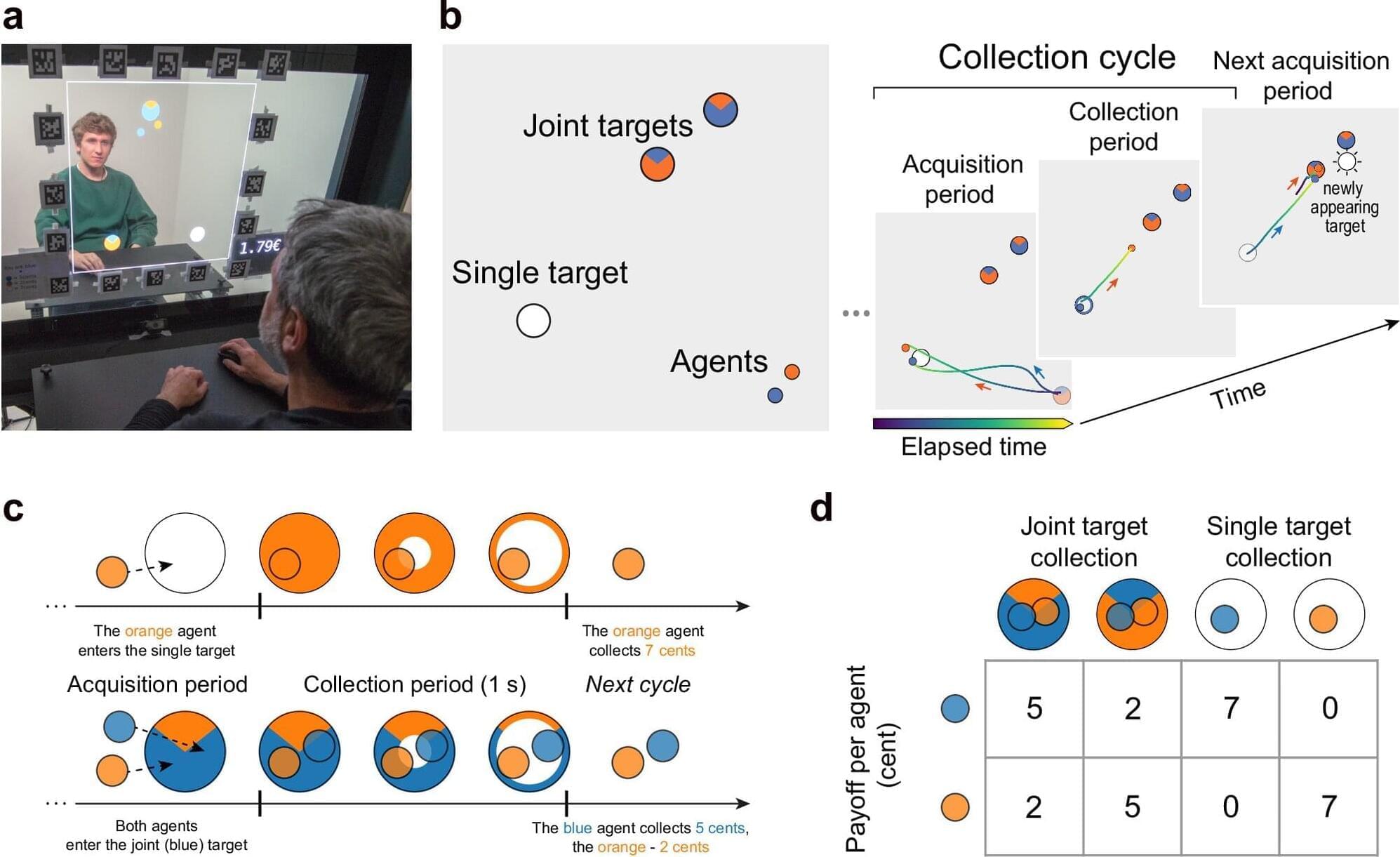
Real-time social interactions reveal how we balance cooperation and competition

When people reach for the same object, walk through a narrow doorway, forage for food, or work together on a shared task, they continuously negotiate—often without noticing—how much to cooperate or compete. Unlike classical laboratory games that force players to choose between fixed options in advance, real-life interactions unfold dynamically, with movement timing and subtle cues shaping social behavior from one moment to the next.

A collaborative research team from the Max Planck Institute for Dynamics and Self-Organization (MPI), the University of Göttingen, and the German Primate Center—Leibniz Institute for Primate Research (DPZ) has developed a novel experimental framework that captures this natural complexity. Their study, published in Communications Psychology, reveals how human pairs spontaneously settle into stable cooperative, intermediate or competitive roles—and how these strategies arise from the interplay between social motives, cost-benefit constraints, and sensorimotor skills.

Laser-engineered nanowire networks could unlock new material manufacturing

A breakthrough development in nanofabrication could help support the development of new wireless, flexible, high-performance transparent electronic devices.

Researchers from the University of Glasgow’s James Watt School of Engineering have developed a new method of interfacial imprinting ultra-thin nanowires onto bendable, transparent polymeric substrates.

The team’s paper, titled “Laser-Engineered Interfacial-Dielectrophoresis Aligned Nanowire Networks for Transparent Electromagnetic Interference Shielding Films,” is published in ACS Nano.

Vapor-deposition method delivers unprecedented durability in perovskite–silicon tandem solar cells

NUS researchers have developed a vapor-deposition method that dramatically improves the long-term and high-temperature stability of perovskite-silicon (Si) tandem solar cells. The findings were published in Science.

This is the first time vapor deposition has been successfully applied to industrial micrometer-textured silicon wafers, the actual wafer structure used in commercial solar cell manufacturing, marking a major milestone for translating laboratory-scale tandem solar cells into real-world products.

The new method enables conformal, high-quality perovskite growth on industrial micrometer-scale textured silicon wafers, a critical requirement for mass production, and delivers more than 30% power-conversion efficiency with operational stability far exceeding 2,000 hours, including T₉₀ lifetimes —the time taken for performance to drop to 90% of initial output—of over 1,400 hours at 85°C under 1-sun illumination, a standard benchmark in solar energy representing a light intensity of 1,000 watts per square meter.

/* */