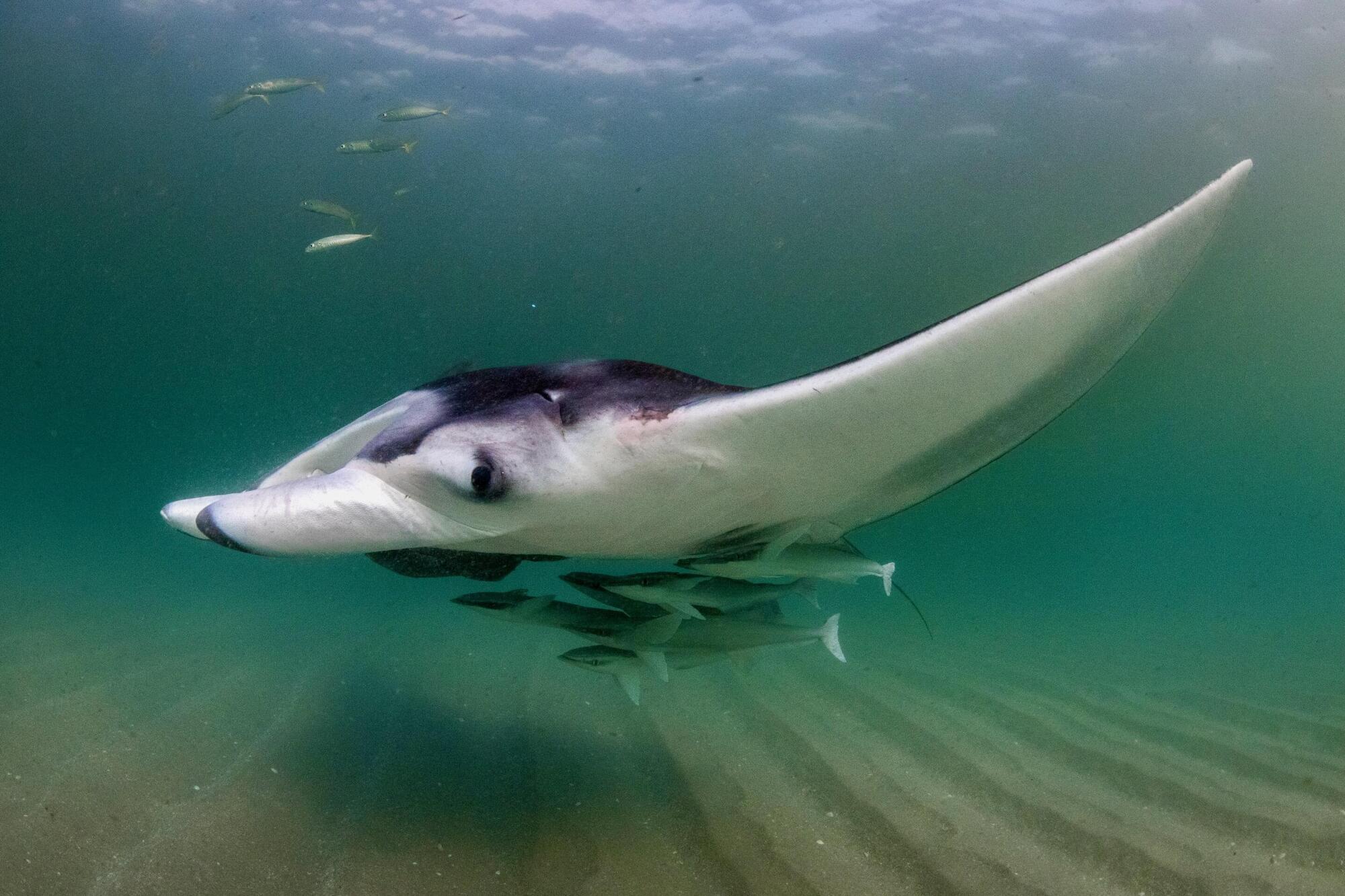
A new study from the University of Miami Rosenstiel School of Marine, Atmospheric, and Earth Science and the Marine Megafauna Foundation finds that young Caribbean manta rays (Mobula yarae) often swim with groups of other fish, creating small, moving ecosystems that support a variety of marine species.
The paper is published in the journal Marine Biology.
South Florida —particularly Palm Beach County—serves as a nursery for juvenile manta rays. For nearly a decade, the Marine Megafauna Foundation has been studying these rays and documenting the challenges they face from human activities near the coast, such as boat strikes and entanglement in fishing gear, which can pose significant threats to juvenile mantas.