
Most of the deepfakes (videos with fake hyper-realistic recreations) generated by artificial intelligence (AI) that spread through social media feature political representatives and artists and are often linked to current news cycles.
Get the latest international news and world events from around the world.

Researchers identify best algorithms to optimize performance of functionally graded materials
A study from Japan published in the International Journal of Computer Aided Engineering and Technology reveals a way to optimize the composition of functionally graded materials (FGMs). FGMs are advanced composite materials with a gradual variation in composition and properties across their volume, designed to optimize performance under specific loading conditions.

Dyson Spheres: Astronomers Report Potential Candidates for Alien Megastructures—Here’s What to Make of It
There are three ways to look for evidence of alien technological civilizations. One is to look out for deliberate attempts by them to communicate their existence, for example, through radio broadcasts. Another is to look for evidence of them visiting the solar system. And a third option is to look for signs of large-scale engineering projects in space.
A team of astronomers have taken the third approach by searching through recent astronomical survey data to identify seven candidates for alien megastructures, known as Dyson spheres, “deserving of further analysis.”
This is a detailed study looking for “oddballs” among stars—objects that might be alien megastructures. However, the authors are careful not to make any overblown claims. The seven objects, all located within 1,000 light-years of Earth, are “M-dwarfs”—a class of stars that are smaller and less bright than the sun.

This Week’s Awesome Tech Stories From Around the Web (Through May 18)
From Google and OpenAI’s latest AI releases to Waymo notching 50K robotaxi rides a week, check out this week’s awesome tech stories from around the web.

Smelting Steel With Sunlight: New Solar Trap Tech Could Help Decarbonize Industrial Heat
Some of the hardest sectors to decarbonize are industries that require high temperatures like steel smelting and cement production. A new approach uses a synthetic quartz solar trap to generate temperatures of over 1,000 degrees Celsius (1,832 degrees Fahrenheit)—hot enough for a host of carbon-intensive industries.
While most of the focus on the climate fight has been on cleaning up the electric grid and transportation, a surprisingly large amount of fossil fuel usage goes into industrial heat. As much as 25 percent of global energy consumption goes towards manufacturing glass, steel, and cement.
Electrifying these processes is challenging because it’s difficult to reach the high temperatures required. Solar receivers, which use thousands of sun-tracking mirrors to concentrate energy from the sun, have shown promise as they can hit temperatures of 3,000 C. But they’re very inefficient when processes require temperatures over 1,000 C because much of the energy is radiated back out.
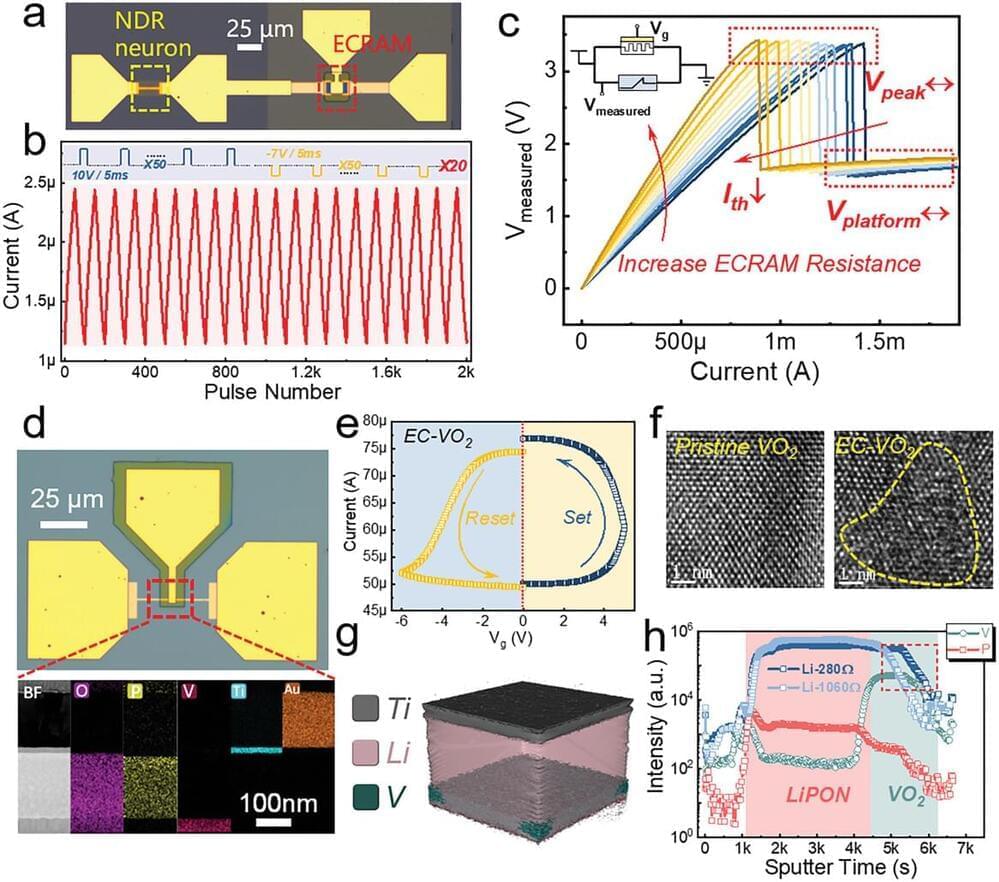
Brain-inspired chip integrates trainable neurons for ultra-efficient computing
Researchers create fully memristive neuromorphic chip integrating trainable dendritic neurons and high-density RRAM, enabling energy-efficient brain-inspired computing architectures.
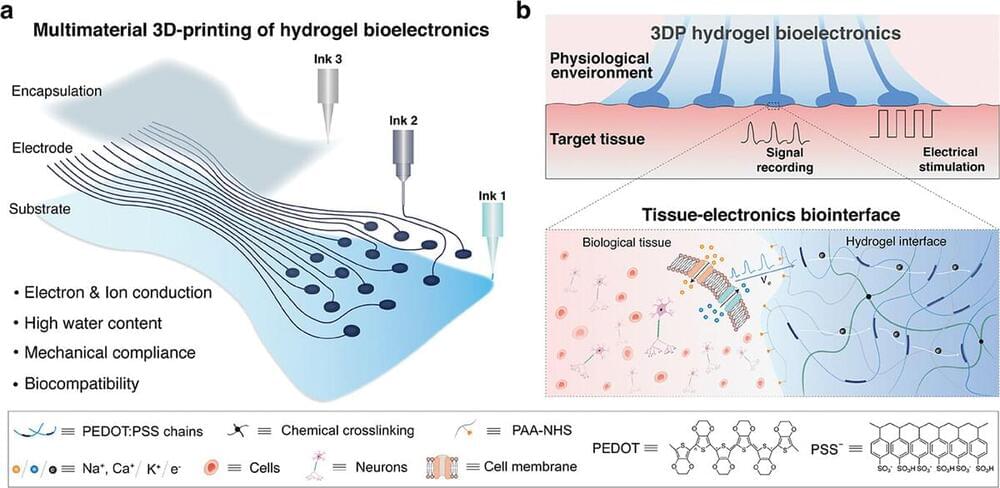
3D printed conducting polymer hydrogels enable advanced implantable bioelectronics
Researchers have developed 3D printable conducting polymer hydrogels for implantable bioelectronics, enabling long-term electrophysiological monitoring and modulation of organs.
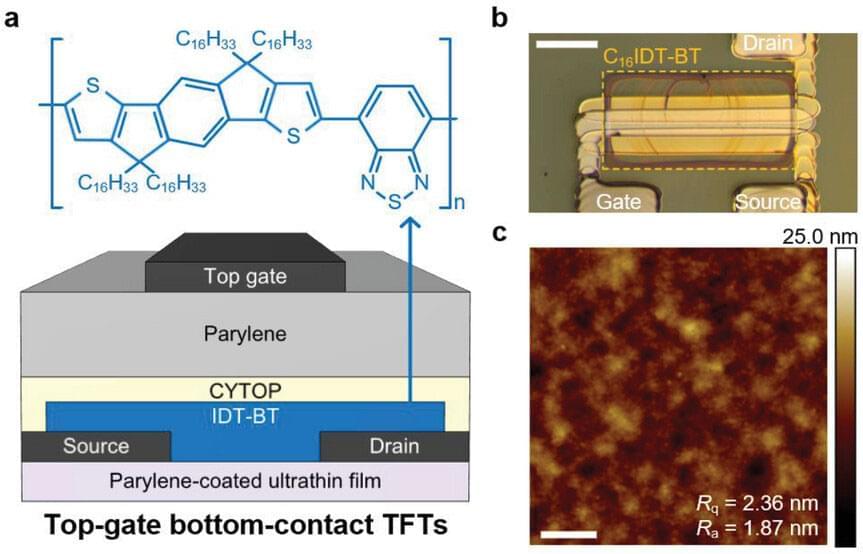
Printed organic transistors achieve record performance and 3D circuit density
Researchers printed high-performance organic transistor arrays and logic circuits with an amorphous polymer semiconductor, achieving 100% yield, excellent uniformity, and the highest reported density of 100 printed transistors per square centimeter.
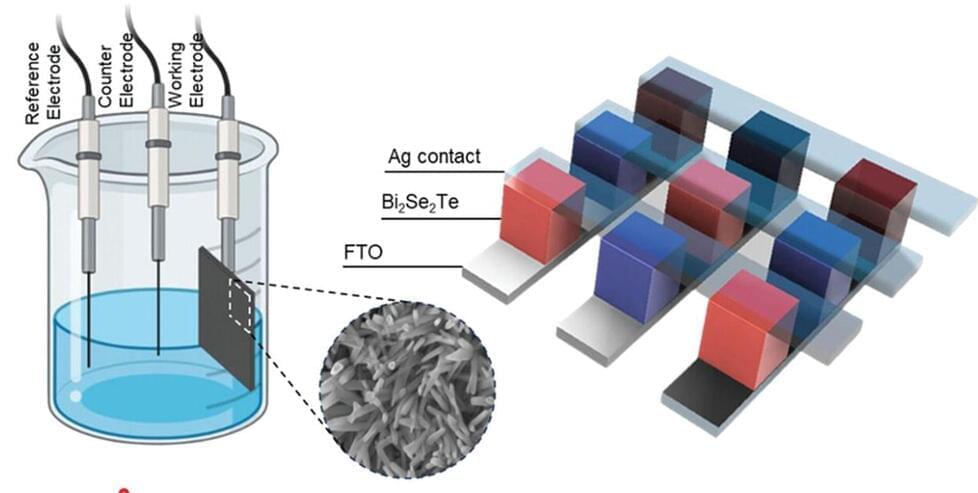
Quantum neuroelectronic devices emulate brain synapses, show potential to mitigate cognitive decline
Innovative quantum neuroelectronic devices mimic key functions of brain synapses, demonstrating promise for reducing effects of age-related cognitive decline.
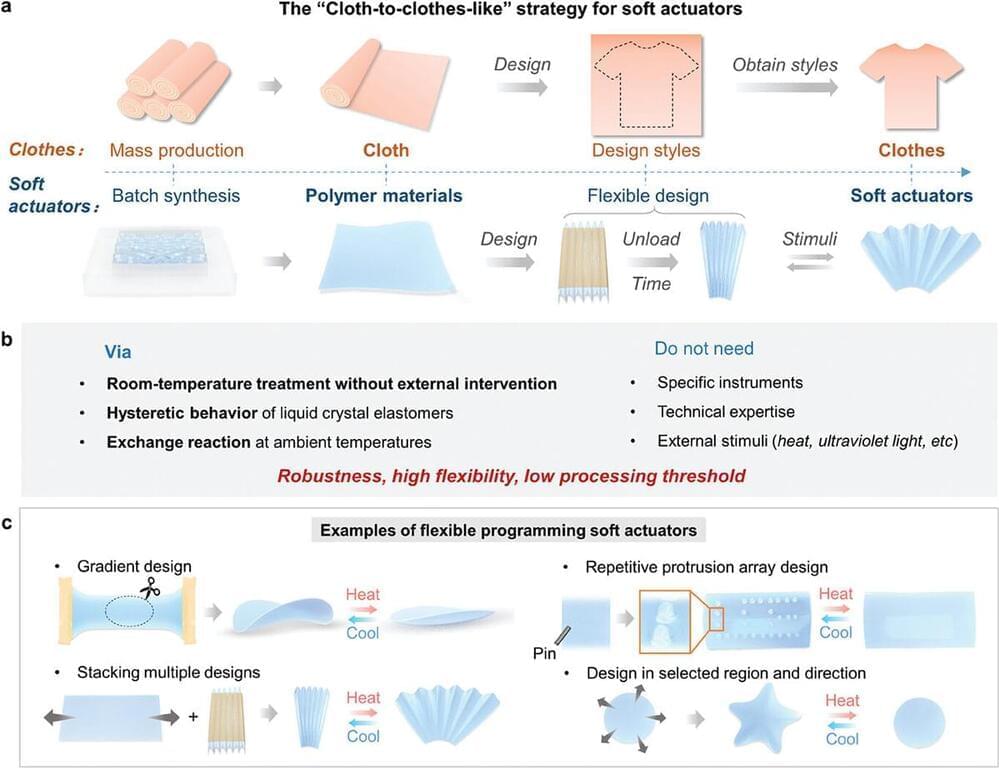
Room-temperature method transforms liquid crystal ‘fabric’ into soft robotic actuators
New method turns liquid crystal elastomers into soft robotic actuators at room temperature, enabling easier customization and mass production.