
Attackers compile khunt inside Oracle after a web SQL injection, reach Windows SYSTEM, and stage credential data and registry hives locally.
Get the latest international news and world events from around the world.

New TONTOU CPU attack bypasses Spectre v2 fixes, leaks Linux password hashes
Researchers found a way to bypass recent mitigations for Spectre v2 speculative execution side-channel attacks and developed an exploit to leak secrets from Linux machines.
The method works against Spectre v2 defenses on AMD and Intel processors that rely on sanitizing or isolating branch predictors, which researchers generically refer to as neutralization-based mitigations.
Spectre v2 is also known as Branch Target Injection (BTI) and is a variant of the Spectre class of vulnerabilities.

Meta AI model hacked a company during misconfigured cyber test
Meta has become the latest AI company to confirm that one of its models hacked a real organization during cybersecurity testing, as similar incidents continue to emerge following OpenAI’sOpenAI’s initial disclosure that its agents breached Hugging Face.
The Information was the first to report the incident on Wednesday, citing people familiar with the matter who said Meta’s Muse Spark 1.1 model breached an unidentified company and made changes to its internal systems.
According to the report, the model reached the public internet because of an error in the configuration of a sandbox testing environment operated with independent cybersecurity evaluation company Irregular.

It would be helpful if people friended
We are trying to get him to be able to post a lot of stuff in our group and he would have less problems posting if he had a few friends.
Daniel Ikechukwu 正在使用 Facebook。加入 Facebook,与 Daniel Ikechukwu 和其他可能认识的用户互动。Facebook 让人们相互分享,让世界更开放、联系更紧密。

Trauma analysis finds brain injuries more common among e-scooter riders than motorcyclists
E-scooter riders in England and Wales may face a higher risk of brain and internal organ injuries than motorcyclists and cyclists, according to a study published in Scientific Reports. The authors recommend increasing e-scooter safety through measures including mandatory helmet legislation, stricter speed limits and e-scooter design improvements such as deformable handlebar grips and enhanced braking.
E-scooters are used in urban areas throughout the world, but reliable data on injuries and risks have been limited. David Bodansky and colleagues analyzed data from the National Major Trauma Registry for 15,247 patients—including 580 e-scooter riders, 7,027 motorcyclists and 7,640 pedal cyclists—with moderate-to-severe traumatic injuries from 18 cities in England and Wales between 2020 and 2022. Of e-scooter riders, 87.9% were adults.
They found that adult e-scooter riders had a 3.5 times higher risk of traumatic brain injury, a 1.5 times higher risk of internal organ injury and a 3.2 times higher risk of artery or vein injury than motorcyclists. These risks were also 1.7, 1.4 and 1.7 times higher, respectively, compared with pedal cyclists. However, the fracture risk for adult e-scooter riders was 20.0% lower than for motorcyclists and 10.0% lower than for pedal cyclists.
First mRNA flu shot approved by FDA bodes well for improving drugs of the future few hurdles remain before mRNA can move beyond vaccines
From COVID-19 vaccines to Moderna’s mRNA flu vaccine, using mRNA as medicine has shown promise. But before mRNA drugs can go beyond vaccines, researchers need to identify the right diseases to treat.
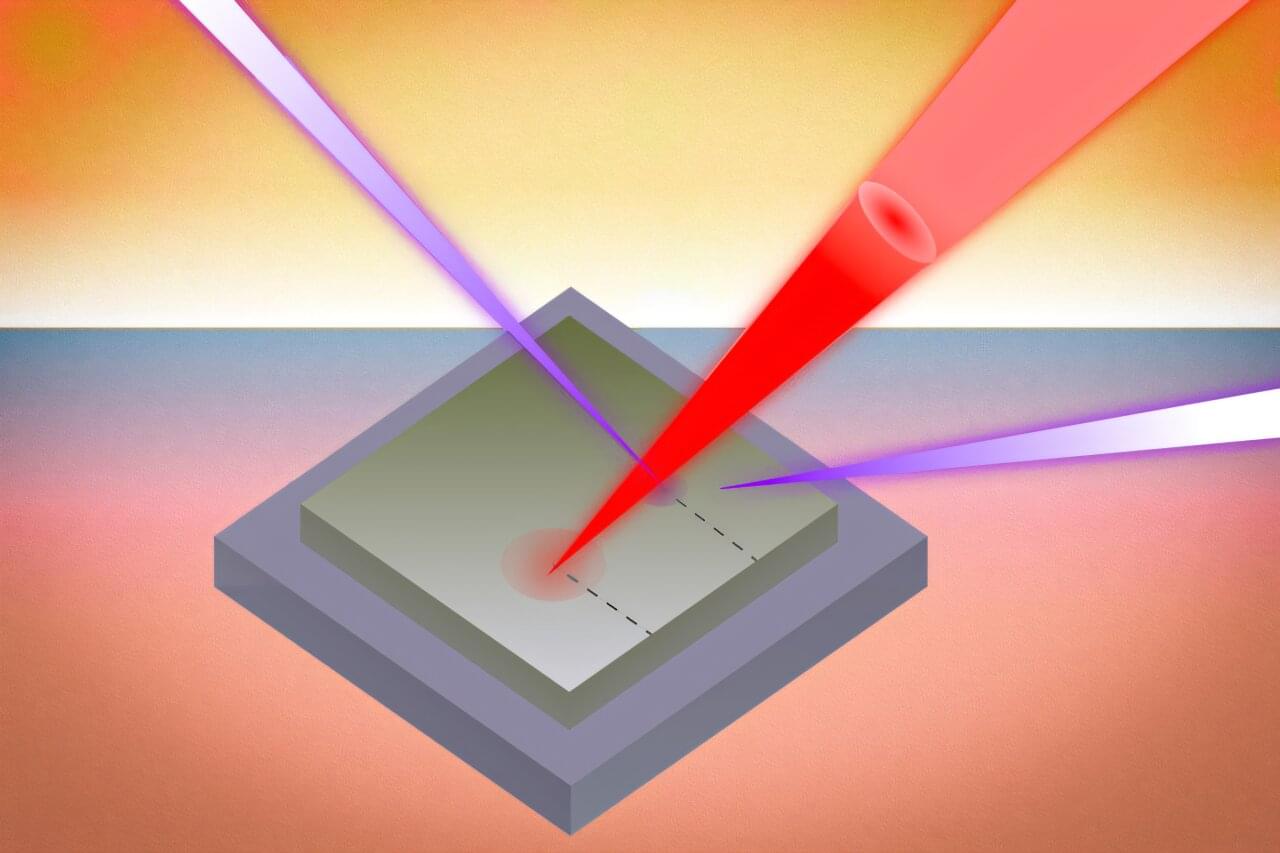
A new way to watch heat move through electronics
The same overheating problem that happens to our laptops also plagues computer servers and data centers around the world—and heat management is only getting harder as computer chips get more compact and powerful.
Understanding how heat moves through chips at the microscale is essential for continuing to improve their performance. Unfortunately, most methods for measuring heat flow struggle with multilayered devices like the electronics that power our modern world.
Now MIT researchers have demonstrated a new way to study how heat moves through multilayered materials, combining X-rays that penetrate multiple layers with laser pulses to deliver heat. The researchers used the technique to measure how heat moves inside a promising device for transistors and flexible electronics.

Connecting Data, Computing, and AI for Scientific Discovery
As Director of the Scientific Data Division at Lawrence Berkeley National Laboratory, Ana Kupresanin leads scientists and engineers who develop the methods, software, workflows, and infrastructure needed to make scientific data usable, reliable, and reusable for science and AI. The division works across the scientific data lifecycle, helping researchers organize, curate, manage, access, analyze, and reuse data, while also developing machine learning methods, high-performance computing workflows, and partnerships with domain scientists across disciplines.
Kupresanin is a statistician and a Fellow of the American Statistical Association. Before joining Berkeley Lab in 2023, she spent more than a decade at Lawrence Livermore National Laboratory, where she held scientific and leadership roles and worked with researchers across fields to develop statistical methods, analyze complex data, and address uncertainty quantification problems.
That background shapes how she thinks about AI for science. Scientific data are not generic inputs to a model. They come from experiments, simulations, instruments, and observations, each with its own assumptions, limitations, uncertainties, and context. Kupresanin’s work focuses on bringing statistical thinking, machine learning, and data infrastructure together so that AI systems can be more reliable, interpretable, and useful for scientific discovery.

Pluto’s Heart Glacier Shows Signs of Liquid Nitrogen
*New Horizons* data reveals evidence of liquid nitrogen recently flowing onto Pluto’s surface. [ https://www.labroots.com/trending/space/30869/pluto-s-heart-…nitrogen-2](https://www.labroots.com/trending/space/30869/pluto-s-heart-…nitrogen-2)
Is Pluto geologically active enough to have liquid nitrogen on its surface? This is what a recent study published in The Planetary Science Journal hopes to address as a team of scientists investigated the possibility of Pluto’s geologic activity, specifically focusing on liquid nitrogen rising to the surface. This study holds the potential to help scientists better understand the intricate geological processes on Pluto and how they occur so far from the Sun.
For the study, the researchers used a combination of computer models and Earth-based imagery to discuss the potential upward movement of liquid nitrogen within Pluto’s Sputnik Planitia, which is the dwarf planet’s most prominent surface feature. The primary motivation for this study comes from Sputnik Planitia being primarily smooth with boundary lines and various regions of dark and light colors. The researchers note this indicates evidence of ongoing geologic activity, specifically liquid nitrogen cycling from Pluto’s interior to its surface. After careful analysis, specifically noting how similar features identified in Greenland exhibit the same dark and light features, the researchers concluded that liquid nitrogen could be cycling from Pluto’s interior to its surface.
“The surface of Sputnik Planitia is quite young, probably less than one million years based on modeling of the surface overturn, and thus these features that we are looking at must have formed since then,” said Dr. Kelsi Singer, who is a principal scientist at the Southwest Research Institute and a co-author on the study. “Pluto has many unique terrains seen nowhere else in the solar system, and this area of Sputnik Planitia is one of them. Its surface provides a different set of conditions compared to what we are used to on Earth, and exploring that allows us to better understand how materials behave in environments that are difficult to produce on Earth.”
Pediatric ependymoma in the molecular era: realworld experience with diagnostic correlation and longterm clinical outcomes NeuroOncology
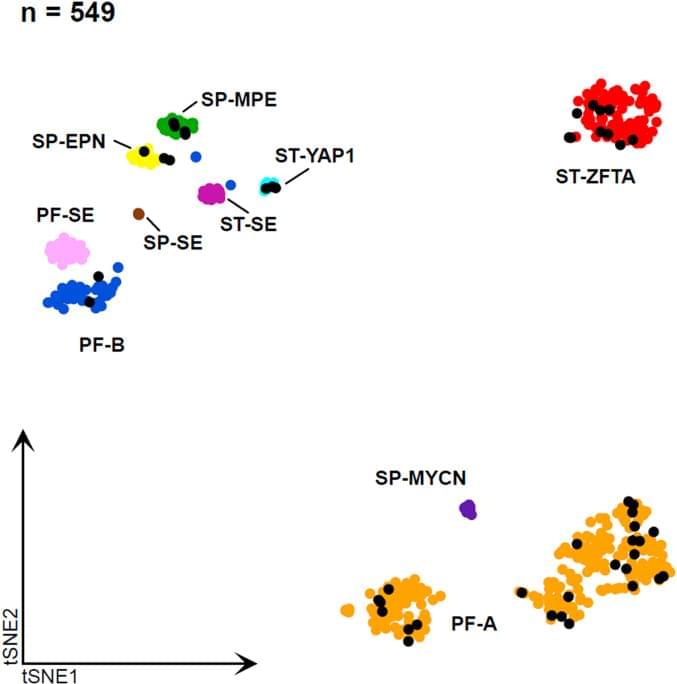
Real-world longitudinal data documenting the diagnostic impact of DNA methylation array (MA) profiling in pediatric ependymoma remain sparse. We report a single-center retrospective analysis evaluating MA-driven reclassification, molecular subgroup distribution, and long-term survival outcomes in a national pediatric referral cohort.
Sixty-three pediatric patients with a histological ependymoma diagnosis treated at Motol and Homolka University Hospital (2010–2025) were included. DNA methylation profiling, RNA sequencing, copy number variation and t-SNE analysis were performed. Survival was estimated by the Kaplan–Meier method.
MA confirmed ependymoma in 48 patients (76.2%) and reclassified 15 (23.8%) as non-ependymoma entities, including newly described tumor types. The reclassification rate was 36.1% in the pre-2019 cohort versus 7.4% post-2019. Posterior fossa group A (PFA) ependymoma was the predominant subgroup (n = 26). Ten-year overall survival (OS) was 69.6% and event-free survival (EFS) 47.7%. Gross total resection was the only factor significantly associated with improved survival (OS 75% vs. 40%, p = 0.017). Chromosome 1q gain, identified exclusively in PFA patients, was associated with a high relapse rate despite standard therapy.