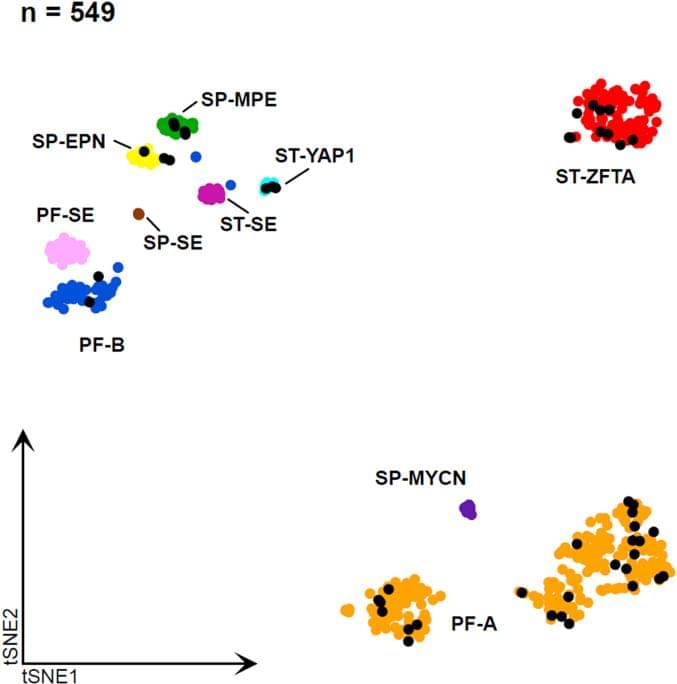
Real-world longitudinal data documenting the diagnostic impact of DNA methylation array (MA) profiling in pediatric ependymoma remain sparse. We report a single-center retrospective analysis evaluating MA-driven reclassification, molecular subgroup distribution, and long-term survival outcomes in a national pediatric referral cohort.
Sixty-three pediatric patients with a histological ependymoma diagnosis treated at Motol and Homolka University Hospital (2010–2025) were included. DNA methylation profiling, RNA sequencing, copy number variation and t-SNE analysis were performed. Survival was estimated by the Kaplan–Meier method.
MA confirmed ependymoma in 48 patients (76.2%) and reclassified 15 (23.8%) as non-ependymoma entities, including newly described tumor types. The reclassification rate was 36.1% in the pre-2019 cohort versus 7.4% post-2019. Posterior fossa group A (PFA) ependymoma was the predominant subgroup (n = 26). Ten-year overall survival (OS) was 69.6% and event-free survival (EFS) 47.7%. Gross total resection was the only factor significantly associated with improved survival (OS 75% vs. 40%, p = 0.017). Chromosome 1q gain, identified exclusively in PFA patients, was associated with a high relapse rate despite standard therapy.