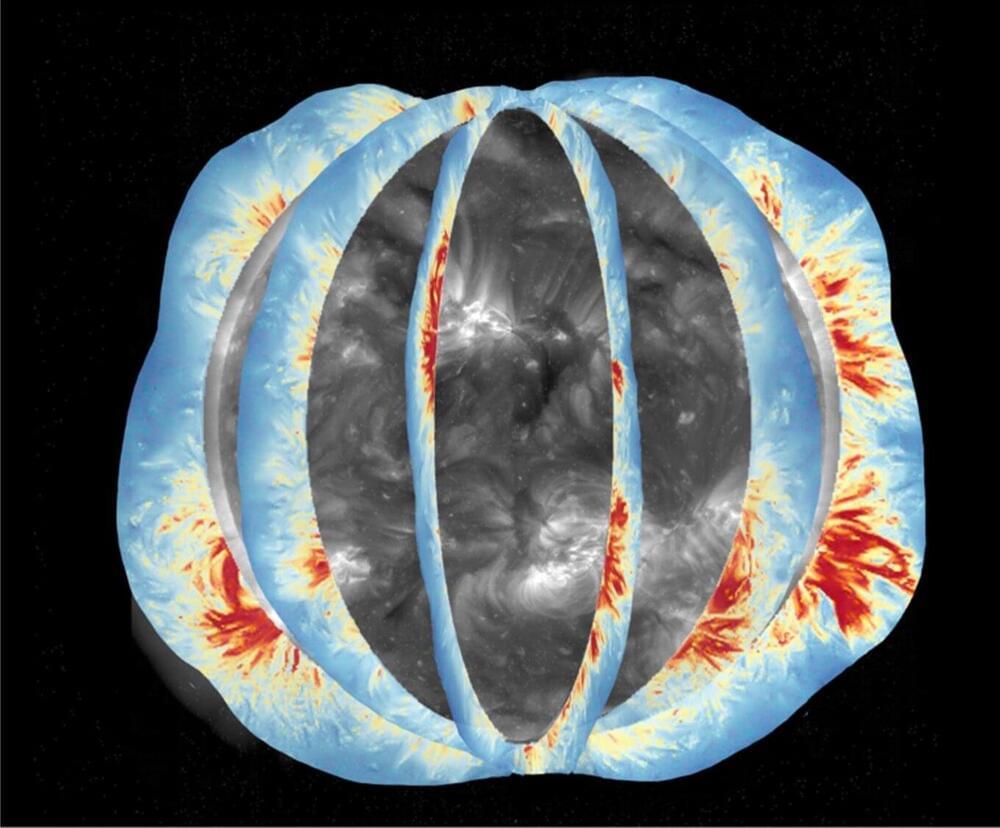
For the first time, scientists have taken near-daily measurements of the sun’s global coronal magnetic field, a region of the sun that has only been observed irregularly in the past. The resulting observations are providing valuable insights into the processes that drive the intense solar storms that impact fundamental technologies, and thus lives and livelihoods, here on Earth.
Get the latest international news and world events from around the world.
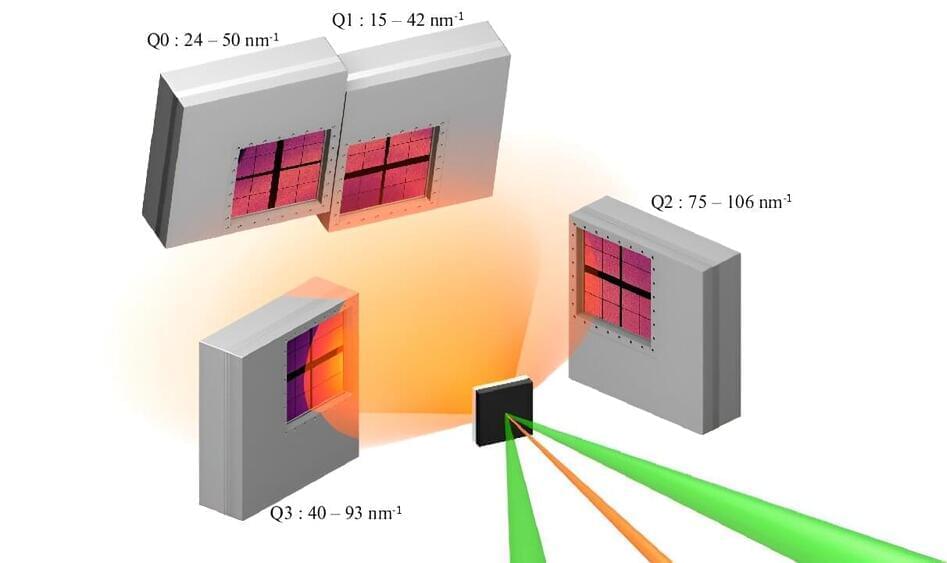
X-rays advance understanding of Earth’s core-mantle boundary and super-Earth magma oceans
Researchers at the Department of Energy’s SLAC National Accelerator Laboratory have revealed new details about Earth’s core-mantle boundary and similar regions found in exoplanets.
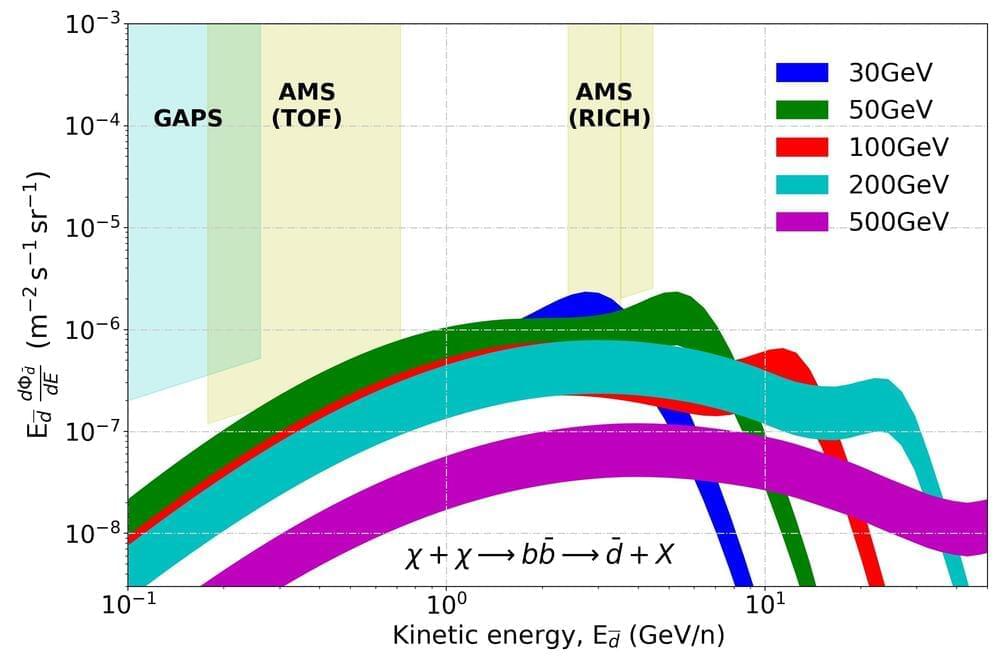
Traces of antimatter in cosmic rays reopen the search for ‘WIMPs’ as dark matter
One of the great challenges of modern cosmology is to reveal the nature of dark matter. We know it exists (it constitutes more than 85% of the matter in the universe), but we have never seen it directly and still do not know what it is.
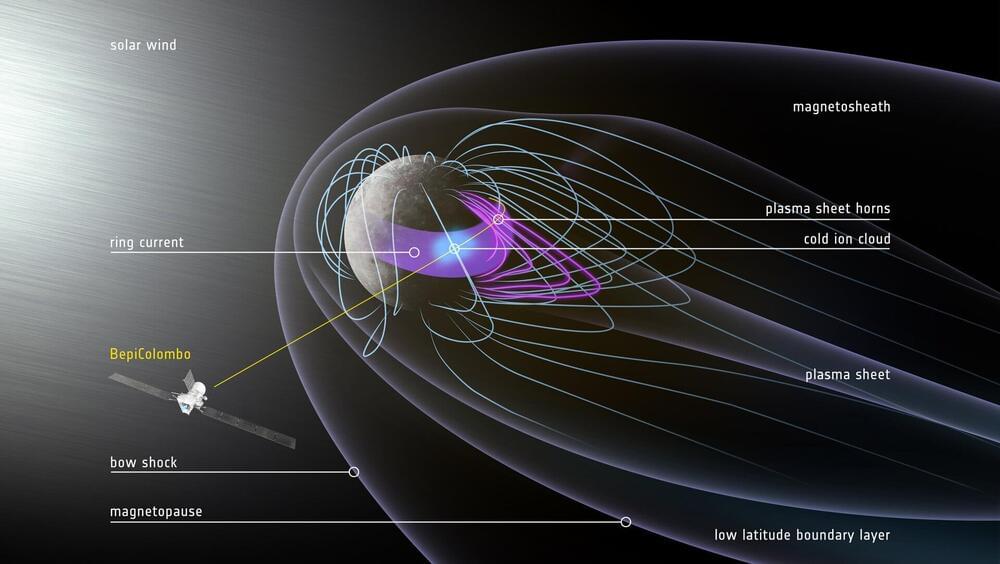
Mercury’s magnetic landscape mapped in 30 minutes
As BepiColombo sped past Mercury during its June 2023 flyby, it encountered a variety of features in the tiny planet’s magnetic field. These measurements provide a tantalizing taste of the mysteries that the mission is set to investigate when it arrives in orbit around the solar system’s innermost planet.
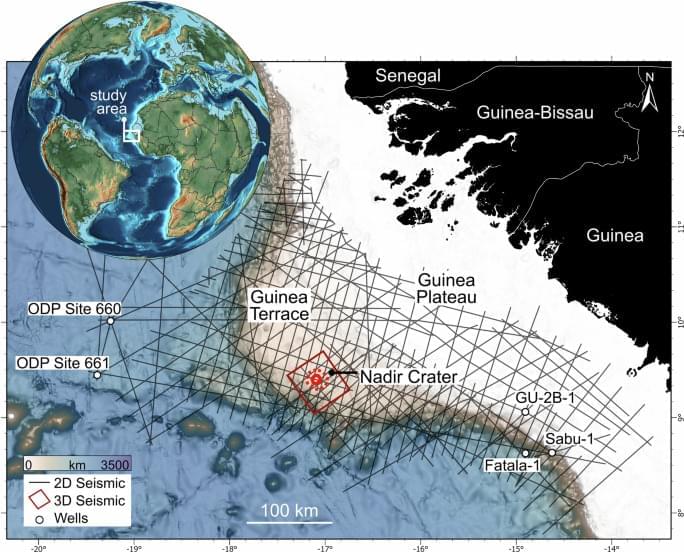
3D anatomy of the Cretaceous–Paleogene age Nadir Crater
A 9.2 km diameter rim, concentric normal faults and an extended damage zone are observed in 3-dimensional seismic reflection data from the Nadir crater offshore Western Africa and provide strong evidence for an impact origin.
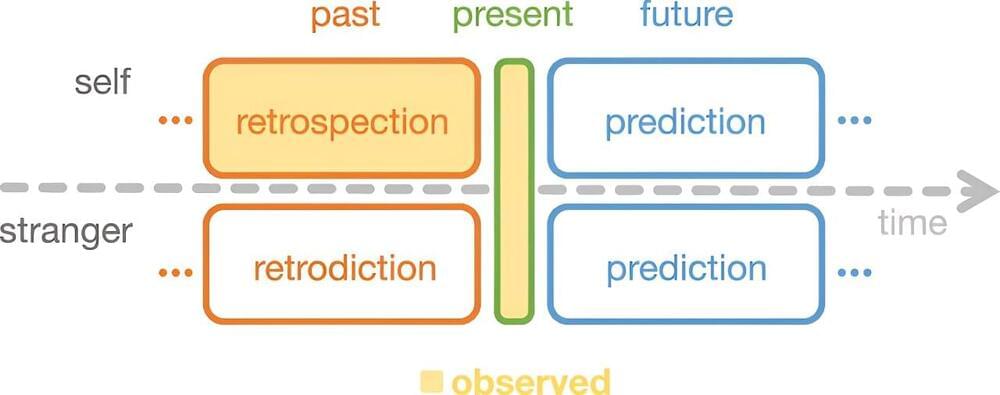
People infer the past better than the future, study finds
If you started watching a movie from the middle without knowing its plot, you’d likely be better at inferring what had happened earlier than predicting what will happen next, according to a new Dartmouth-led study published in Nature Communications.
New microchip captures exosomes for faster, more sensitive lung cancer detection from a blood draw
A new way of diagnosing lung cancer with a blood draw is 10 times faster and 14 times more sensitive than earlier methods, according to University of Michigan researchers.
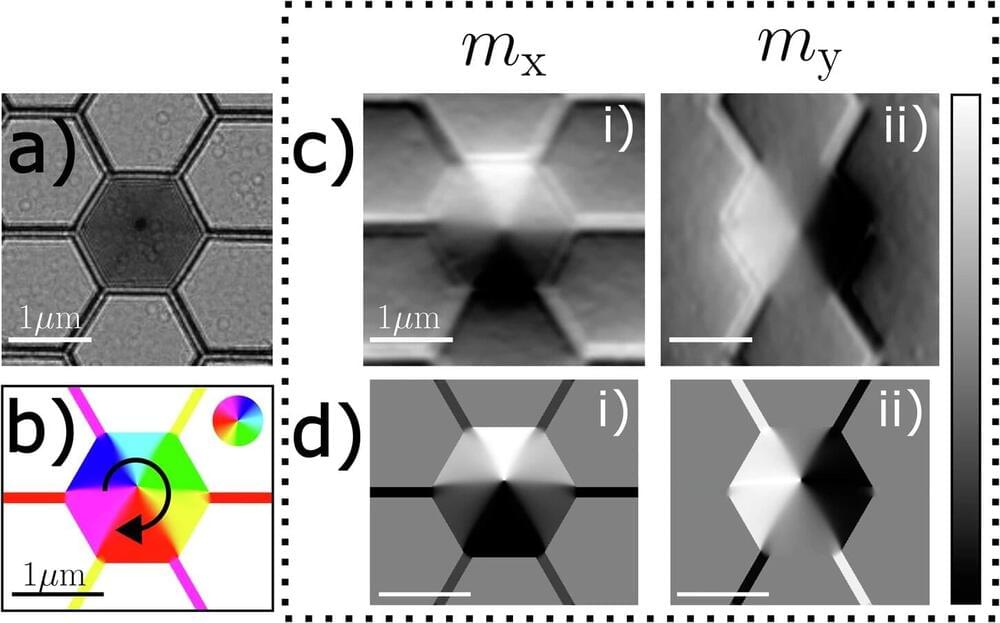
Hexagonal magnetic defects could lead to energy-efficient neuromorphic computing
Artificial intelligence applications are experiencing a boom and expected to be mainstream technologies in the near future. However, these applications run on classic computing hardware and are extremely power-hungry.
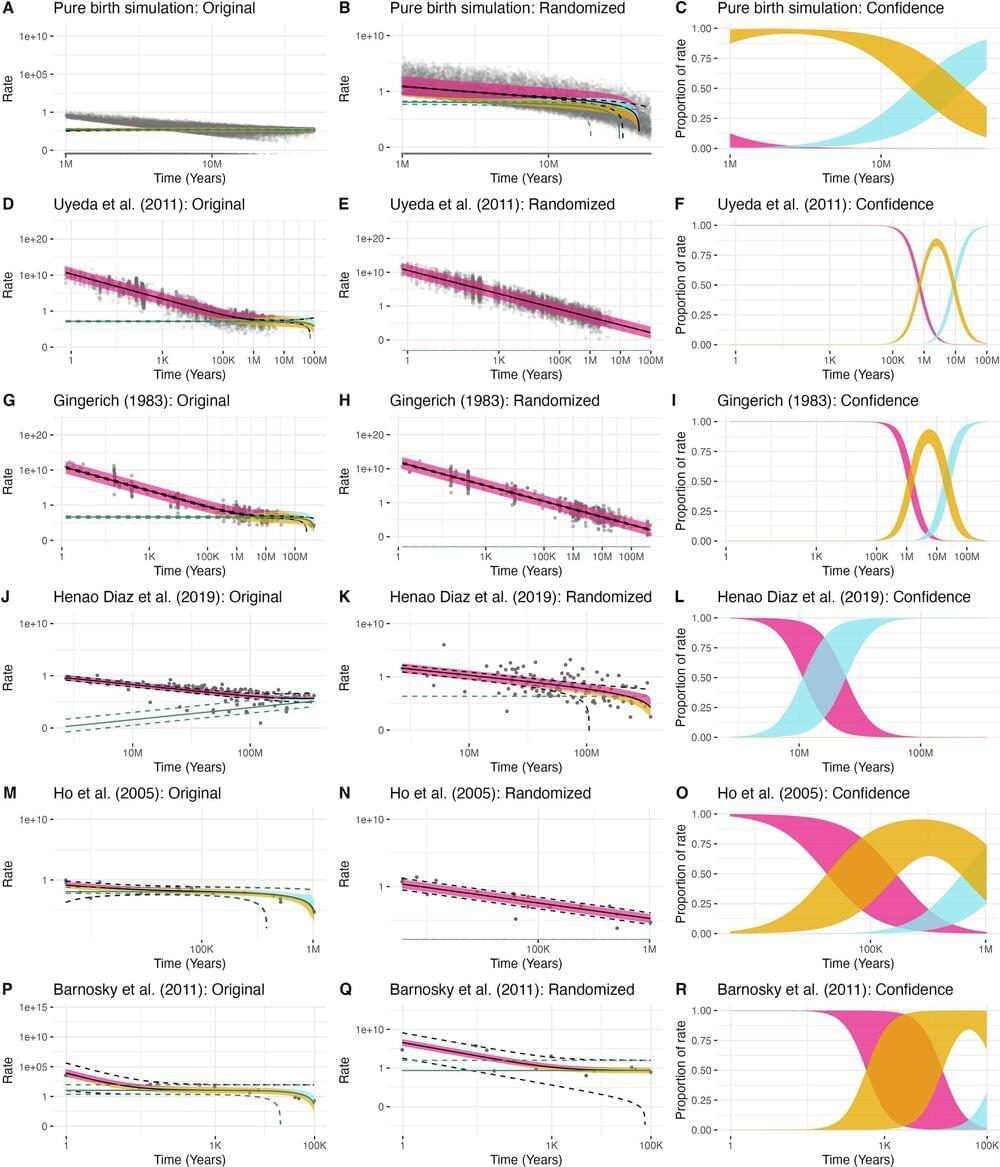
Study suggests statistical ‘noise’ affects perceived evolutionary rates
For decades, researchers have observed that rates of evolution seem to accelerate over short time periods—say five million years versus fifty million years. This broad pattern has suggested that “younger” groups of organisms, in evolutionary terms, have higher rates of speciation, extinction and body size evolution, among other differences from older ones.
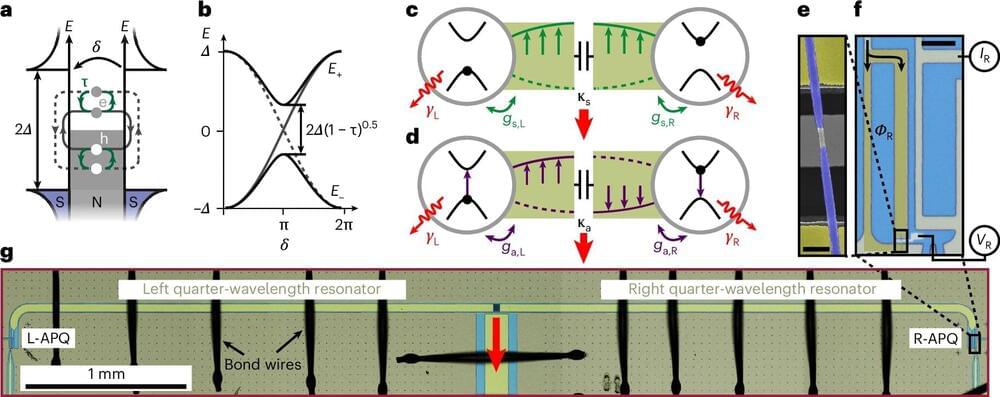
Physicists achieve strong coupling of Andreev qubits via microwave resonator
Physicists from the University of Basel have succeeded in coupling two Andreev qubits coherently over a macroscopic distance for the first time. They achieved this with the help of microwave photons generated in a narrow superconducting resonator. The results of the experiments and accompanying calculations were recently published in Nature Physics, laying the foundation for the use of coupled Andreev qubits in quantum communication and quantum computing.