Toggle light / dark theme

Get the latest international news and world events from around the world.

Log in for authorized contributors

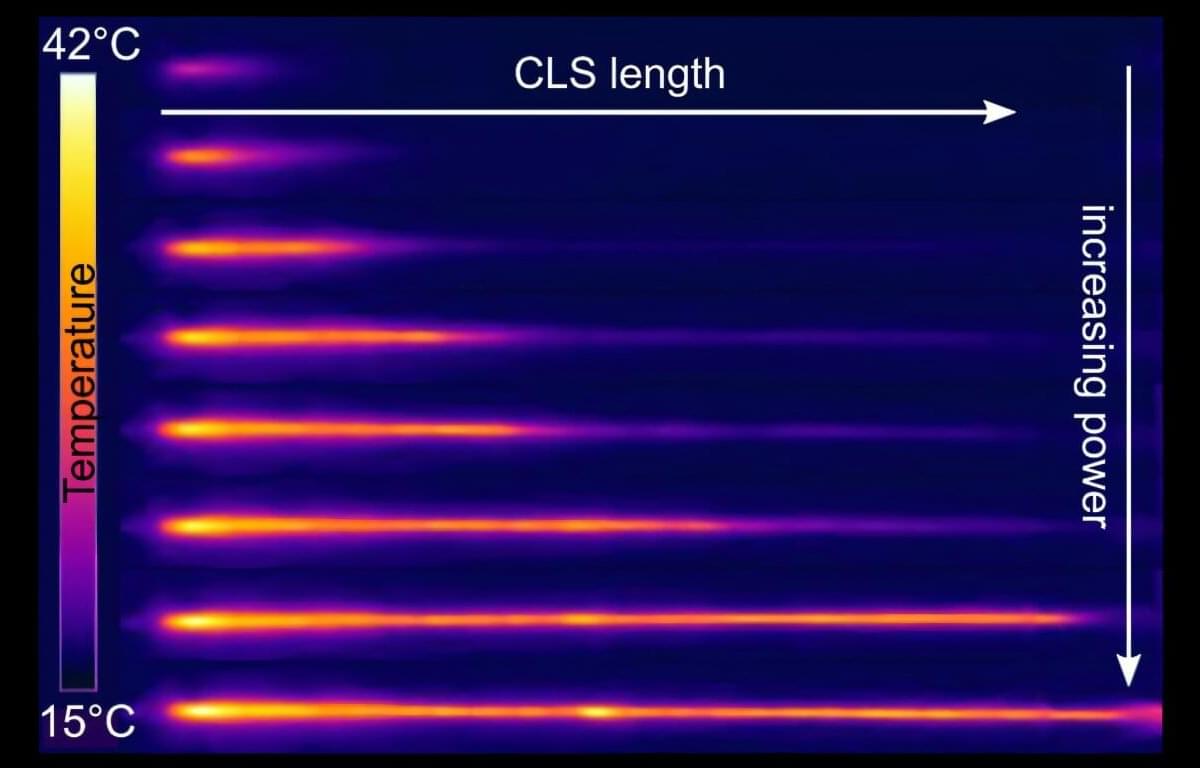
Self-adapting fiber component tackles heat challenges in high-power fiber lasers

Thulium fiber lasers, operating at a wavelength of 2 micrometers, are valued for applications in medicine, materials processing, and defense. Their longer wavelength makes stray light less damaging compared to the more common ytterbium lasers at 1 micrometer.

Yet, despite this advantage, thulium lasers have been stuck at around 1 kilowatt of output power for more than a decade, limited by nonlinear effects and heat buildup. One promising route to break this barrier is inband pumping—switching from diode pumping at 793 nm to laser pumping at 1.9 µm. This approach improves efficiency and reduces heat, but it introduces new challenges for fiber components, especially the cladding light stripper (CLS).
Long-standing puzzle in electron scattering deepens with new measurement

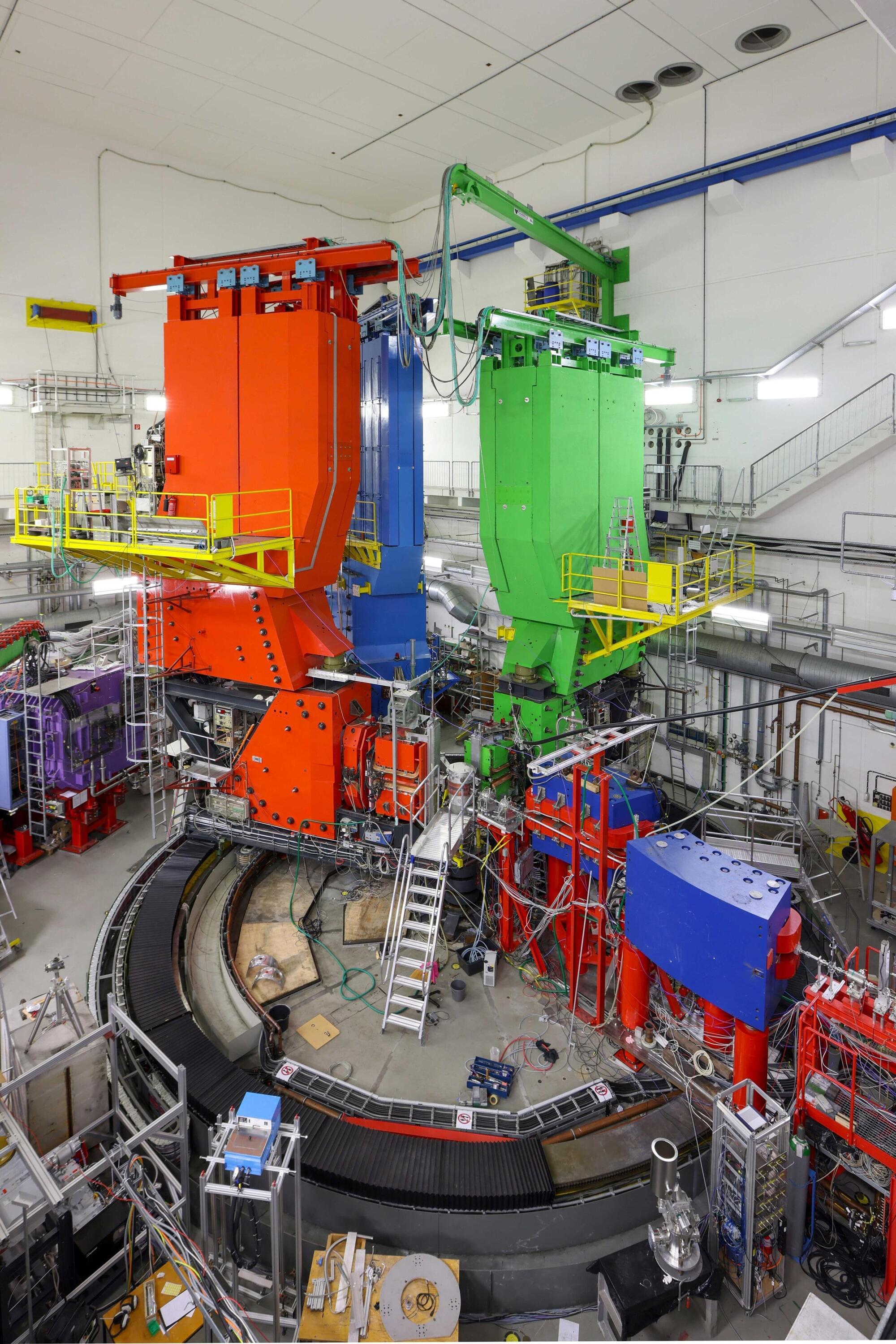
Why does lead behave so differently from every other atomic nucleus when struck by electrons? A team of physicists at Johannes Gutenberg University Mainz (JGU) has taken an important step toward answering this question, only to find that the mystery is even deeper than previously thought. The findings were published in the journal Physical Review Letters.

Electrons usually scatter from atomic nuclei in ways that can be predicted with remarkable accuracy. One well-tested feature is that flipping the spin of the incoming electrons should slightly change the scattering pattern, an effect driven by the exchange of two “virtual photons” between the electron and the nucleus.

For most nuclei, theory predicts exactly how large this tiny effect should be, and decades of experiments have confirmed those predictions. Lead, however, has always stood out. Earlier measurements performed at the U.S. Department of Energy’s Thomas Jefferson National Accelerator Facility showed that, for lead, this spin-dependent effect seemed to vanish entirely, a result that no existing theory could explain.

Terahertz device sets performance record and opens new quantum horizons

A prototype device that has demonstrated record-breaking longevity could help open up new frontiers in next-generation communications and computing technologies.

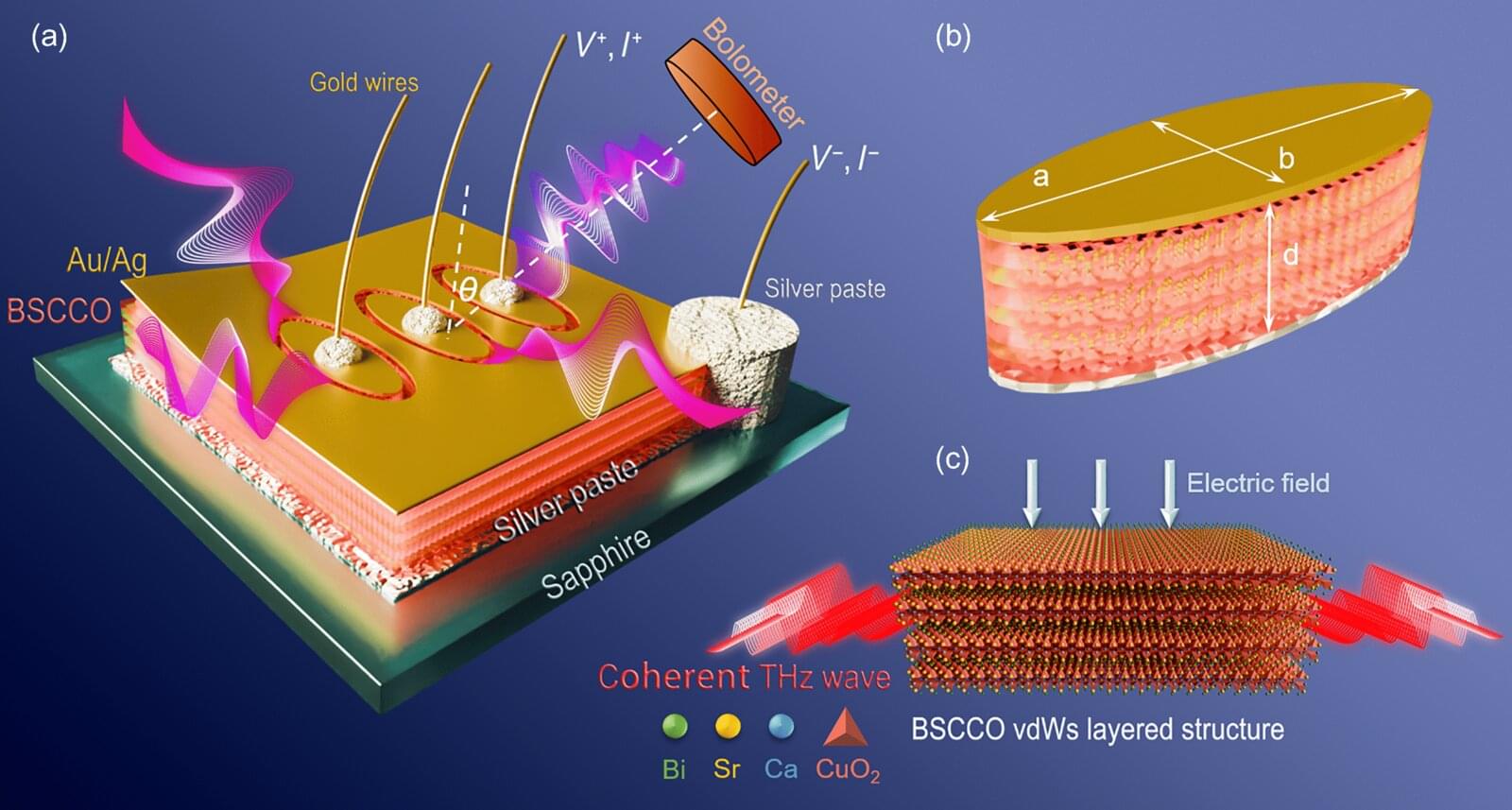
An international team of researchers from Scotland, the U.S. and Japan are behind the development of the terahertz-wave device, which was fabricated more than 11 years ago and still works as well as it did the day it was made.

The team’s tiny terahertz emitter device, which has elements that are less than the width of a human hair and can be powered by a single volt, could help overcome one of the key challenges holding back the widespread adoption of terahertz-wave technologies.

Tightening the net around the elusive sterile neutrino

Neutrinos, though nearly invisible, are among the most numerous matter particles in the universe. The Standard Model recognizes three types, but the discovery of neutrino oscillations revealed they have mass and can change identity while propagating.

For decades, puzzling experimental anomalies have suggested the presence of a fourth, “sterile” neutrino, one that interacts even more weakly. Finding it would transform our understanding of particle physics.

New look at hidden structure inside subatomic particles

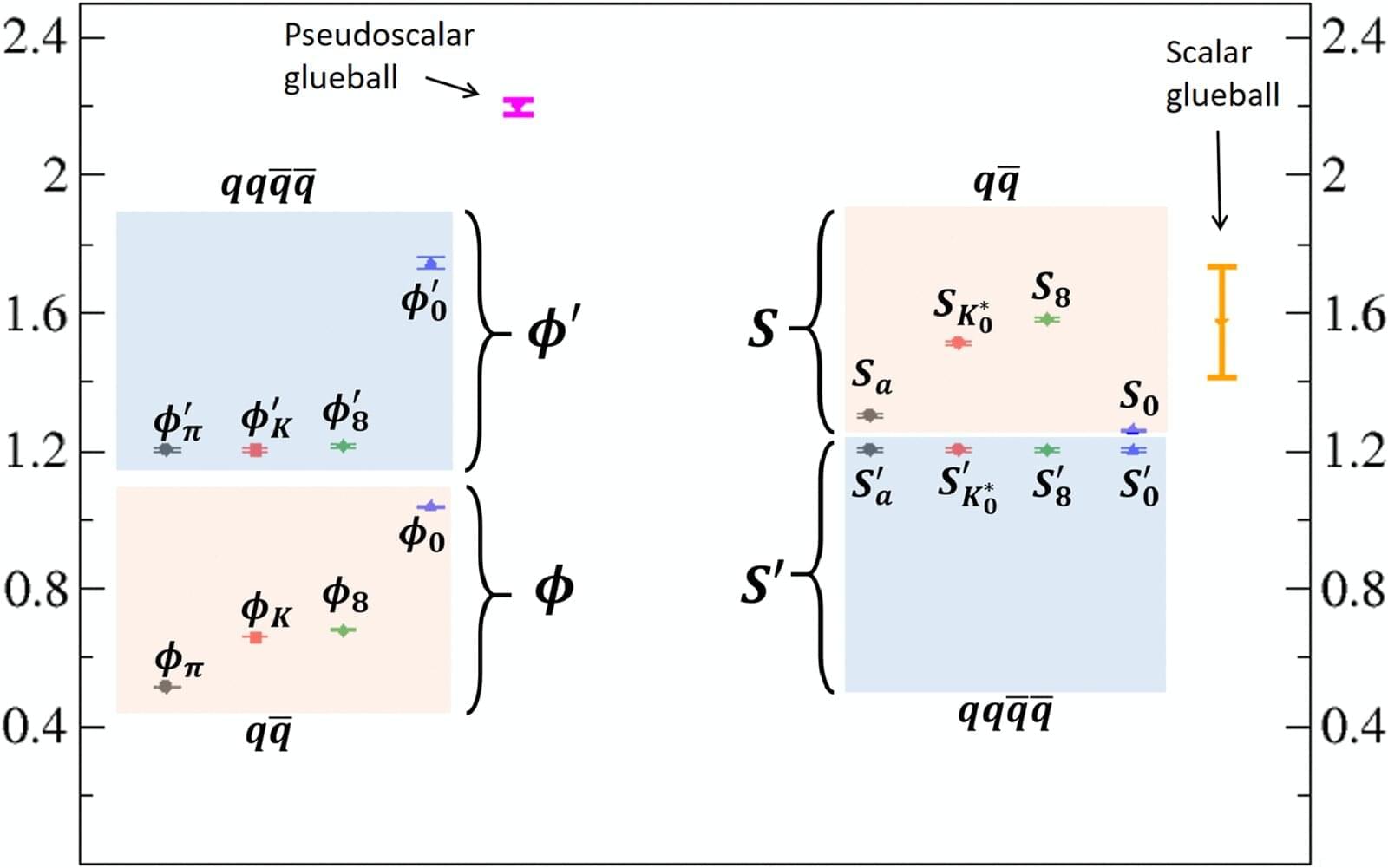
SUNY Poly Professor of Physics Dr. Amir Fariborz recently published a paper in Physical Review D titled “Spinless glueballs in generalized linear sigma model.” The work takes on a central challenge in modern physics: understanding how the strongest force in nature shapes the inner structure of matter, and how it may produce an unusual form of matter made entirely from the carriers of that force.

Here’s the quick background. Everything is made of atoms. Atoms have a nucleus made of protons and neutrons, and those are made of even smaller pieces called quarks. Quarks are held together by gluons, which carry the strong interaction described by quantum chromodynamics (QCD).

Composite subatomic particles—hadrons—are built from quarks and gluons. Hadrons fall into two main groups: mesons and baryons. QCD does a great job explaining what happens when particles collide at very high energies, but at lower energies it becomes much harder to calculate, so researchers use well-tested models that still follow QCD’s rules.

/* */