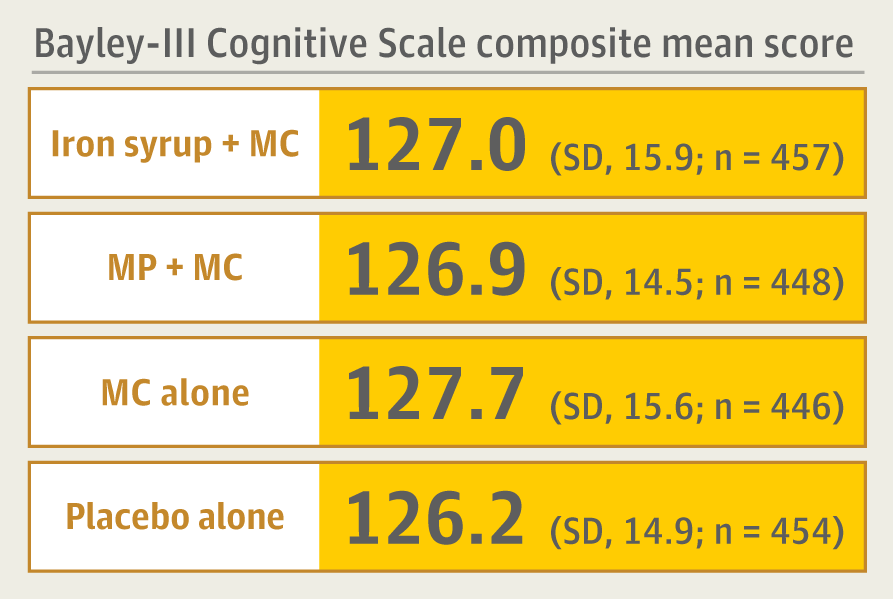
This study evaluated whether universal iron supplementation, provided with malaria chemoprevention (MC), improves child cognitive outcomes and is safe regarding infection risk in rural Malawi.
Get the latest international news and world events from around the world.

Geneedited dogs lack the protein that causes allergies
A company has created dogs that do not have the main protein that provokes allergies, and hopes to get approval to start selling them

Discovery reveals aging human brains receive immune cell reinforcements from blood
The brain’s immune system has long been thought to exist independently from the rest of the body, complete with its own specialized immune cells and a blood-brain barrier that limits what can travel into the brain.
Now, Stanford researchers have found that aging brings with it a large influx of immune cells into the brain, a discovery that not only upends current thinking but could also open new avenues for treating neurological disease. The researchers describe their results in the journal Nature.
“We usually think of the brain as a closed system,” said Julia Belk, a postdoctoral scholar in pathology at Stanford Medicine and first author on the new study. “What we found is that actually a lot of immune cells enter the human brain during aging.”
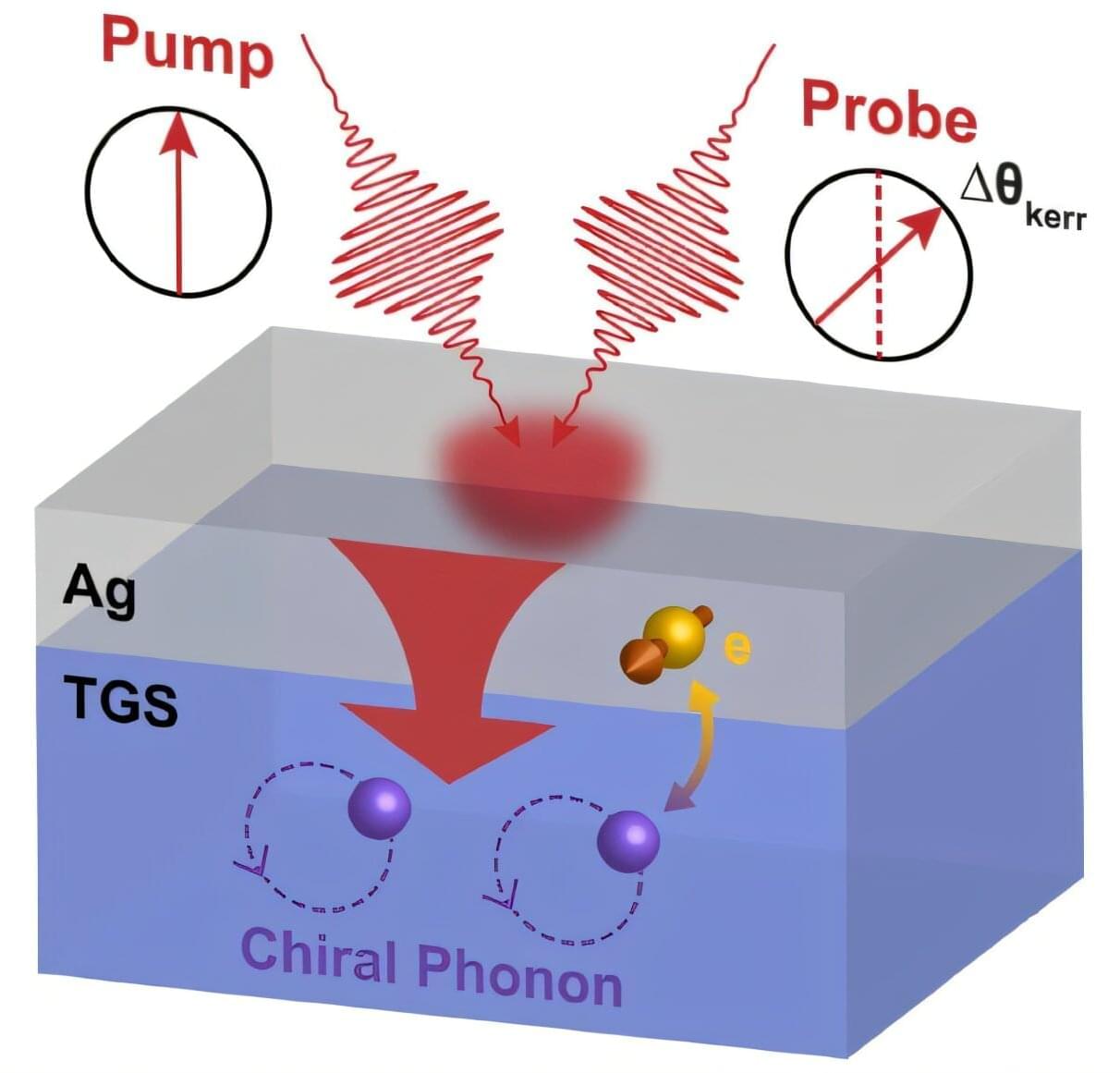
Electric field reverses phonon chirality and spin direction in ferroelectric crystal
Chiral phonons are groups of atoms that move in a circular direction when excited by an energy source, such as heat. As the phonons move through a material, they propagate that circular motion, or angular momentum, through the material. The angular momentum serves as the source of spin, and the chirality dictates the direction of the spin, enabling spin control in spintronics.
Chirality, in simple terms, means that a molecule or material cannot be superimposed on its mirror image—think of your left and right hands, for example. A left-handed glove does not fit on your right hand, and vice versa.
In a new study, researchers used an electric field to switch the chirality of phonons within a ferroelectric crystal. The work could lead to the creation of faster and more energy-efficient spintronic devices.
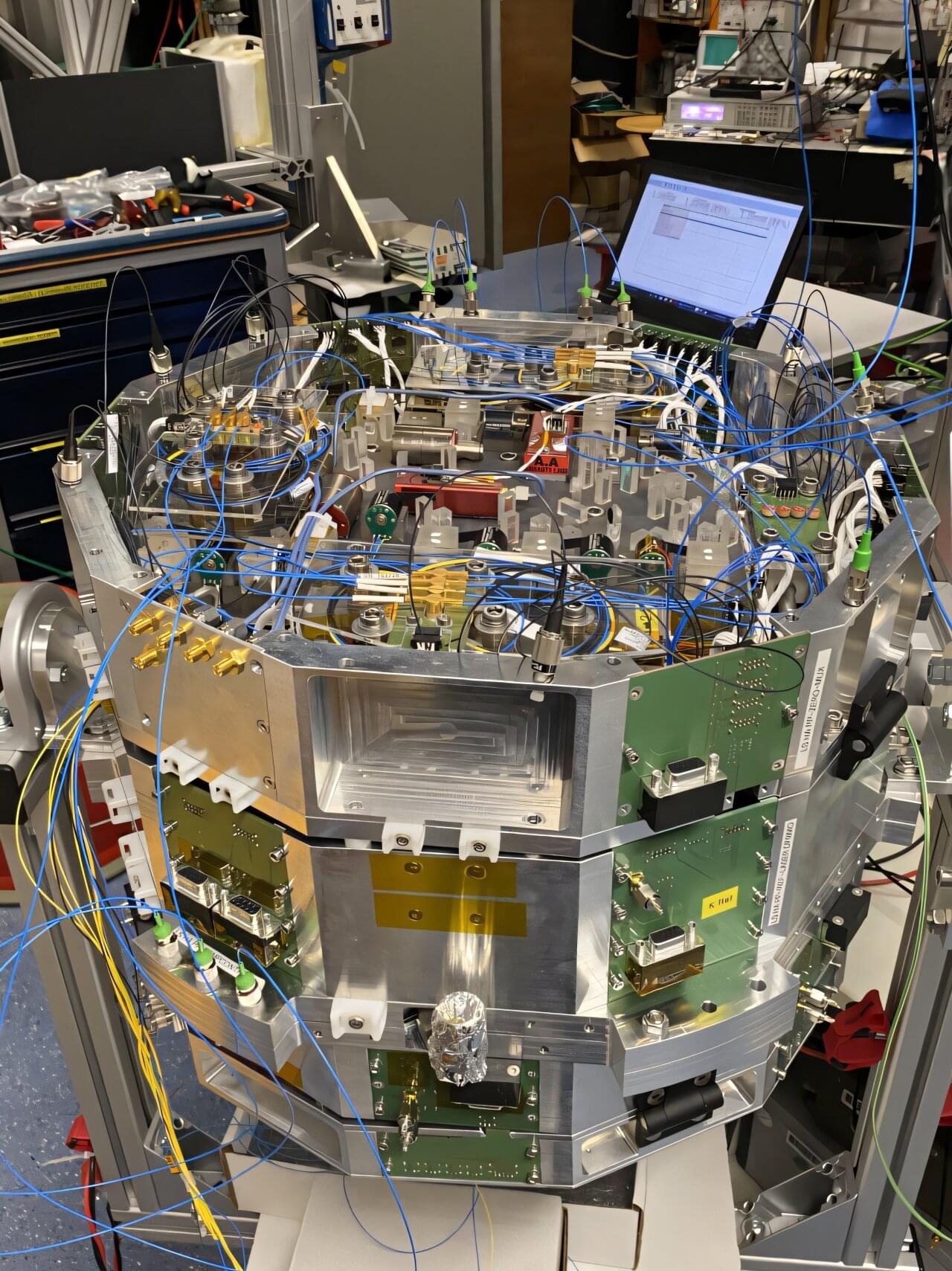
Miniaturized laser technology paves the way for fundamental physics experiments in space
An international team of researchers has succeeded in producing atomic quantum gas mixtures with an unprecedented particle flux. In the journal Nature Communications, the scientists report on experiments conducted with the MAIUS-B apparatus, in which Bose–Einstein condensates (BECs) consisting of two different atomic species—rubidium and potassium—were generated and studied under microgravity conditions in the Einstein Elevator at Leibniz University Hannover in Germany.
A key contribution to this achievement came from a technological development at Johannes Gutenberg University Mainz (JGU): the highly sophisticated and compact optical system used to control the atoms.
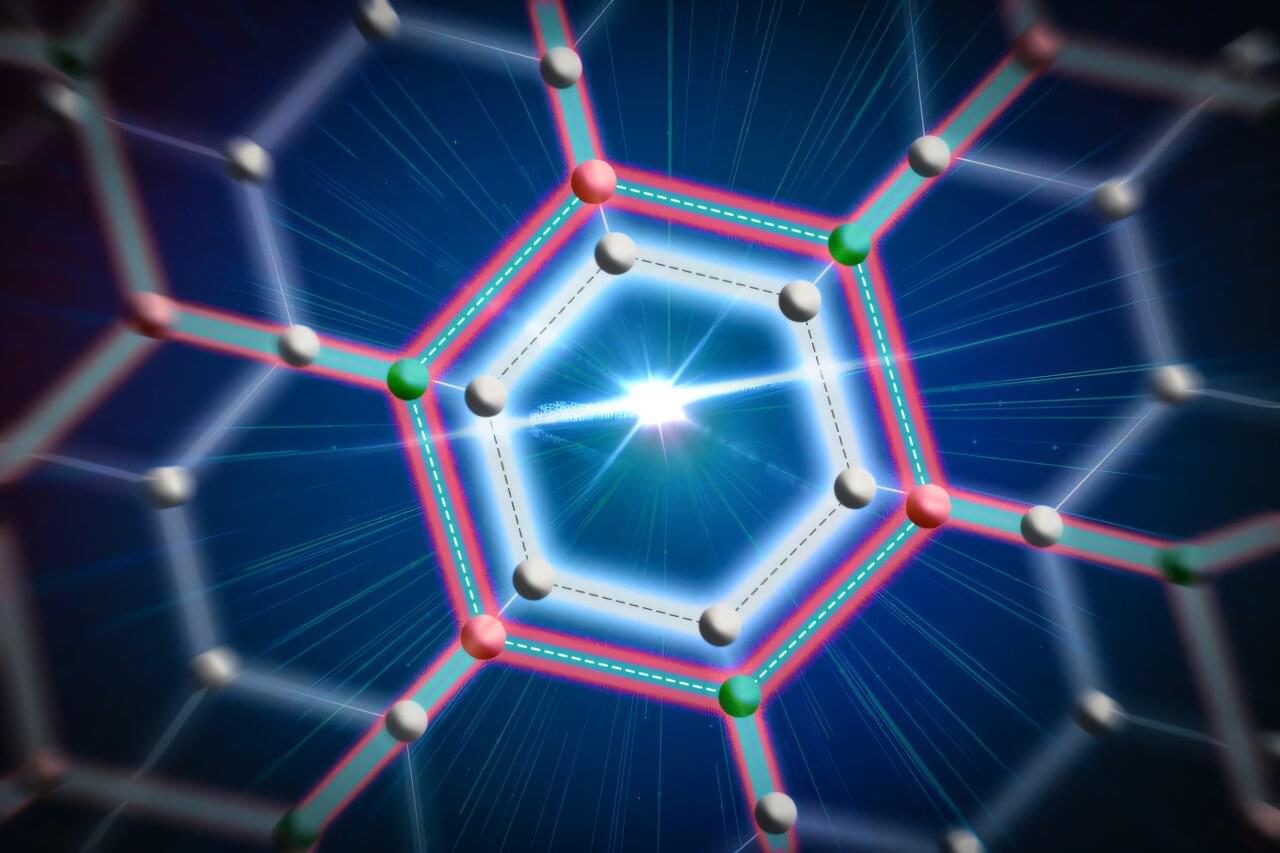
Air-stable, ultrathin superconductors developed for more scalable quantum devices
Super-thin superconducting materials, which are only one or a few atoms thick, have unique properties scientists can leverage to produce more compact, scalable, and efficient quantum devices. But these fragile materials degrade so rapidly in air that they are difficult to study or manufacture.
Now, researchers from MIT and elsewhere have discovered and harnessed a method to generate a large, uniform area of ultrathin superconducting material that remains stable in air.
They “grow” the superconducting material, called niobium diselenide, underneath another atomically thin material, carbon-based graphene. The graphene layer protects the fragile superconductor from oxidation, while guiding it to grow in a smooth layer over a large wafer-scale area.

Using the Earth’s magnetic field to hunt for axions and dark photons
Dark matter’s existence is all but certain—astronomers believe it makes up about a quarter of the universe’s total energy content—yet its true identity has eluded us for decades. Two of the leading candidates for dark matter are the hypothetical particles ultralight axions and dark photons, which in the range studied here would be some 19 to 21 orders of magnitude lighter than the electron.
Conventional axion searches tend to involve converting them into photons with the help of strong laboratory magnets. However, research in a laboratory inherently limits the space over which such a field can be applied.
A collaborative team of researchers from Kyoto University, Hiroshima University and Nihon University realized that, by contrast, Earth’s own magnetic field spans a scale no laboratory could match. Their paper is published in the journal Progress of Theoretical and Experimental Physics.

Attosecond X-ray method maps early electron motions that trigger chemical reactions
All chemistry starts with a push from electrons. In the early moments of a chemical reaction, it’s the movement of electrons that initiates the breaking of old chemical bonds and forging of new ones, transforming one molecule into another.
When an electron is removed from a molecule faster than the molecule can react—called “impulsive ionization”—the other electrons in the molecule enter excited quantum states that evolve on ultrafast timescales. Scientists have long sought to map the ultrasmall, ultrafast electronic motions behind chemical reactions on their natural timescales.
Now, researchers at the Department of Energy’s SLAC National Accelerator Laboratory have created a movie of early electron motion in an impulsively excited molecule. Each frame captures changes happening in mere attoseconds, just billionths of a billionth of a second.
New semiconductor maser operates continuously above room temperature
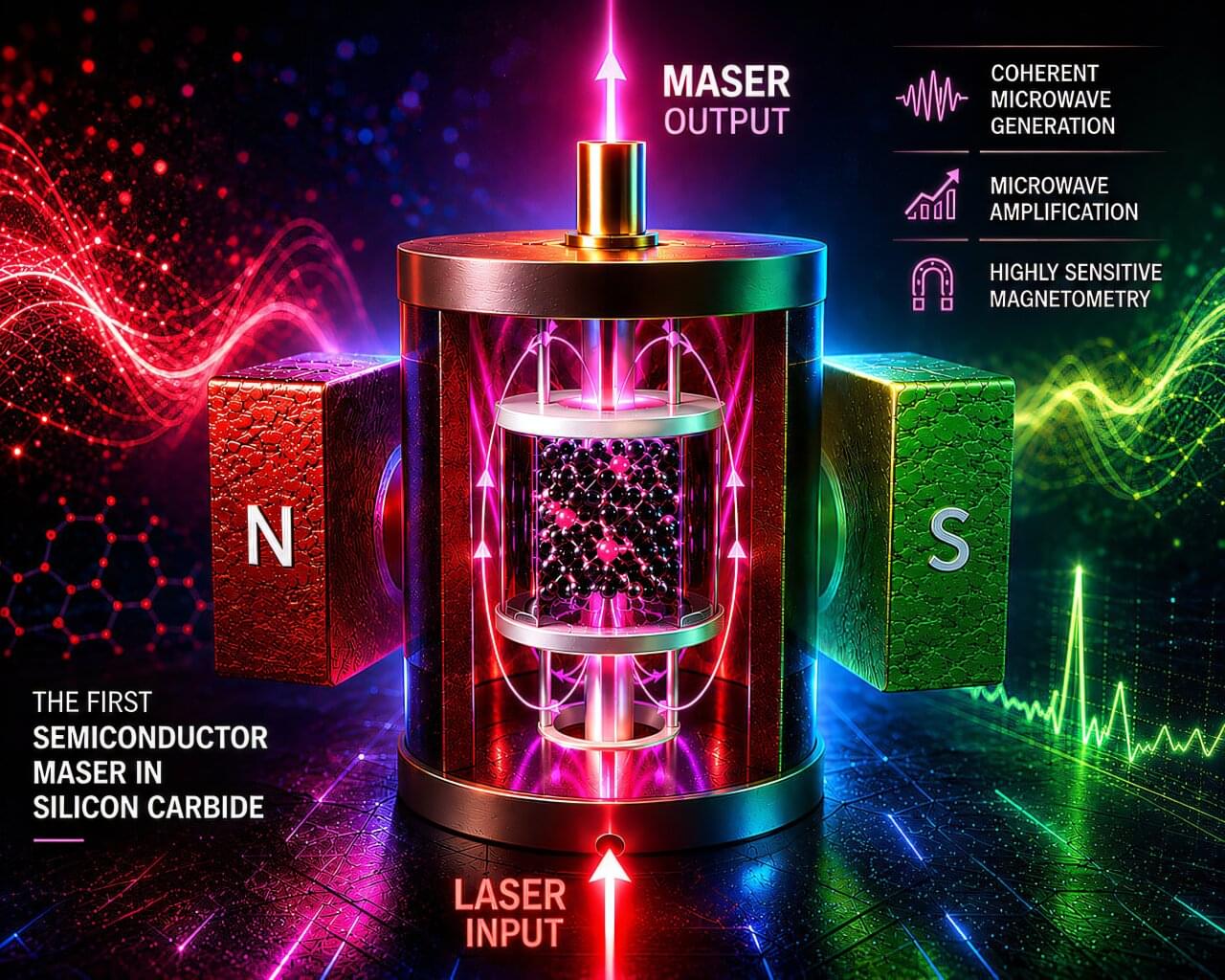
Lasers have become indispensable in everyday life and research, with applications ranging from data transmission and metrology to manufacturing. Masers, by contrast, have so far found hardly any practical applications.
The acronym MASER stands for Microwave Amplification by Stimulated Emission of Radiation. In fact, the maser preceded the laser and works according to the same physical principle. However, instead of producing and amplifying light, it generates and amplifies microwave radiation. Despite their great potential, masers have so far mostly depended on technically demanding operating conditions, such as very low temperatures. This has hindered their widespread application.
A research team led by Professor Vladimir Dyakonov and Privatdozent Dr. Andreas Sperlich from the Chair of Experimental Physics 6 at Julius-Maximilians-Universität Würzburg (JMU) has made a significant breakthrough toward practical maser systems.
Tiny vortices discovered on the sun’s surface
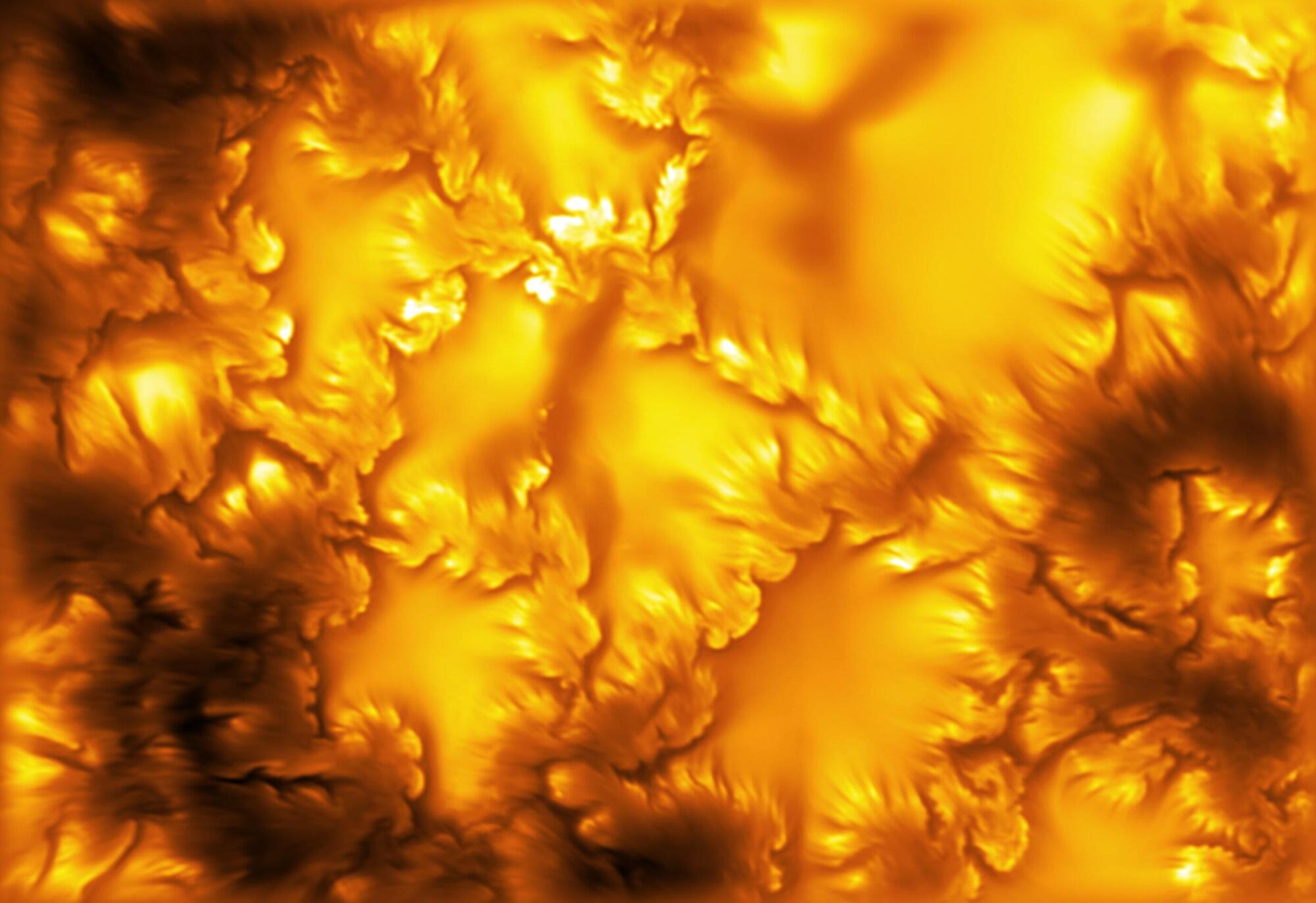
Researchers from the U.S. National Science Foundation National Solar Observatory (NSF NSO), the Max Planck Institute for Solar System Research (MPS) in Germany, and the High Altitude Observatory (HAO) in the U.S. have made a discovery in solar physics. New images of the sun’s surface taken with the world’s largest solar telescope, the NSF Daniel K. Inouye Solar Telescope, built and operated by the NSO in Hawaii, along with sophisticated computer simulations, reveal tiny plasma vortices that had never before been visible.
“To detect the vortices, we needed to resolve structures on the solar surface about 20 kilometers (12 miles) in size. That is at the limit of what even the world’s largest solar telescope and state-of-the-art simulations can achieve,” said MPS scientist and co-author of the new publication Michiel van Noort, who, among other things, contributed to the observations and conducted the data reduction and image restoration. The researchers used a broadband imaging camera provided by MPS.
The vortices occur at the edges of so-called granules, which densely cover the sun’s visible surface. They measure between 500 and 2,000 kilometers (310 to 1,240 miles) in diameter. Taken together, they form the sun’s granulation: a pattern reminiscent of bubbles in a boiling liquid.