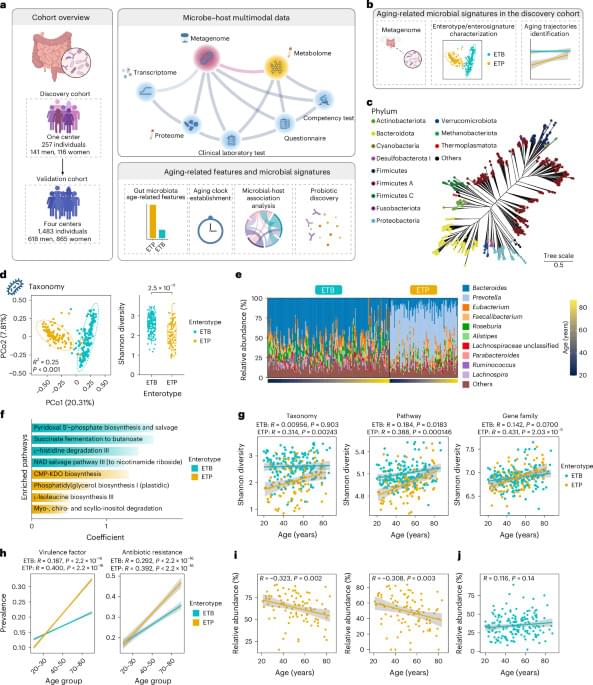
Age-related shifts in the gut microbiome contribute to systemic decline, yet specific geroprotective pathways remain poorly understood. Analyzing human aging cohorts, researchers identified Bifidobacterium pseudocatenulatum as a key bacterium whose abundance declines sharply with age, correlating with advanced biological age via a novel microbiome aging clock. Mechanistically, the team traced this geroprotective effect to 5-aminovaleric acid betaine (5-AVAB), a circulating metabolite produced by the bacterium that also decreases in aging humans. In vivo studies in aged mice demonstrated that supplementing either the live bacterium or 5-AVAB significantly improved memory, motor coordination, and mood-related behaviors. Crucially, both interventions attenuated multi-organ chronic inflammation (“inflammaging”) across the liver, lungs, muscles, and heart. These findings establish a clear causal link between age-associated microbial depletion and systemic decline, suggesting that replenishing specific lost microbes or their functional metabolites offers a targeted, translatable strategy to counteract inflammaging and extend healthspan.
Interrogating the role of the microbiome in aging, here the authors utilize multi-omics human cohort data to show that the abundance of Bifidobacterium pseudocatenulatum and its metabolite 5-aminovaleric acid betaine declines with age. Mouse studies confirm that both reduce inflammaging and extend healthspan.