
Ivanti ICS flaws exploited from Dec 2024–July 2025 to deploy MDifyLoader, Cobalt Strike, and Go tools.
Get the latest international news and world events from around the world.

Critical NVIDIA Container Toolkit Flaw Allows Privilege Escalation on AI Cloud Services
Critical NVIDIA vulnerability CVE-2025–23266 impacts 37% of cloud services, allowing privilege escalation and data tampering.

CERT-UA Discovers LAMEHUG Malware Linked to APT28, Using LLM for Phishing Campaign
APT28 targets Ukrainian government officials with a phishing campaign delivering LAMEHUG malware, utilizing Alibaba Cloud’s LLM for data harvesting.
Neuroprotective Power of Magnesium: A Daily Habit to Preserve Brain Health
How One Mineral May Slow Brain Aging and Lower Dementia Risk.
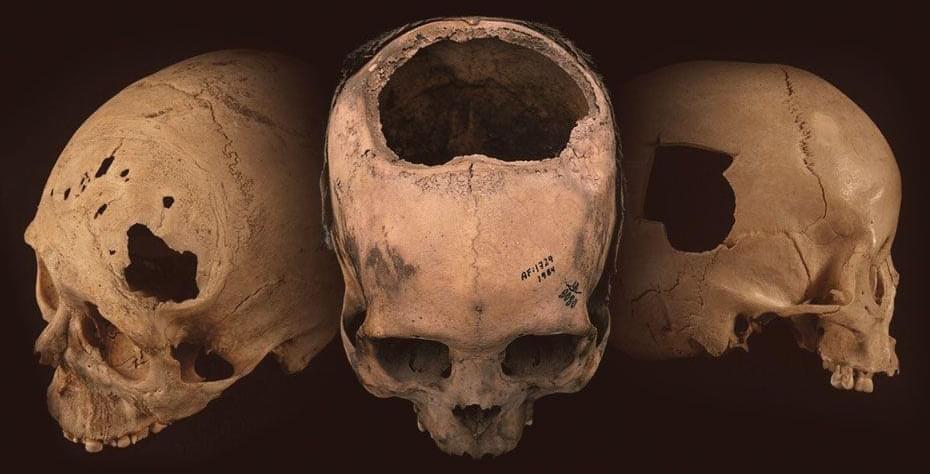
Inca Skull Surgeons Had Better Success Rates Than American Civil War Doctors
Survival rates among later Inca cultures was significantly higher. However, the 19th-century soldiers were facing trauma caused by industrial-age warfare

FDA clears first blood test for detecting Alzheimer’s
The Food and Drug Administration May 16 announced it cleared the first blood test to diagnose Alzheimer’s disease.
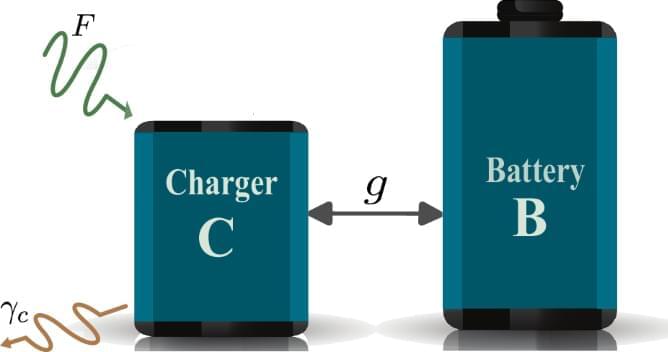
Dephasing enabled fast charging of quantum batteries
We propose and analyze a universal method to obtain fast charging of a quantum battery by a driven charger system using controlled, pure dephasing of the charger. While the battery displays coherent underdamped oscillations of energy for weak charger dephasing, the quantum Zeno freezing of the charger energy at high dephasing suppresses the rate of transfer of energy to the battery. Choosing an optimum dephasing rate between the regimes leads to a fast charging of the battery. We illustrate our results with the charger and battery modeled by either two-level systems or harmonic oscillators. Apart from the fast charging, the dephasing also renders the charging performance more robust to detuning between the charger, drive, and battery frequencies for the two-level systems case.
npj Quantum Inf ormation volume 11, Article number: 9 (2025) Cite this article.

Extracellular vesicles from antler blastema progenitor cells reverse bone loss and mitigate aging-related phenotypes in mice and macaques
Antler blastema progenitor cells (ABPCs) are a distinct population of skeletal mesenchymal stem cells found in regenerating deer antlers, with strong stemness and renewal capacity in vitro. Stem cell-derived extracellular vesicles (EVs) are emerging as potential therapeutic candidates that can mediate donor cells’ beneficial effects. Here, we tested the effects of ABPC-derived EVs (EVsABPC) on aging in mice and rhesus macaques (Macaca mulatta). We identified a variety of unique factors in EVsABPC and showed that in vitro, EVsABPC attenuated phenotypes of senescence in bone marrow stem cells. In aged mice and macaques, EVsABPC substantially increased femoral bone mineral density. Further, intravenous EVsABPC improved physical performance, enhanced cognitive function and reduced systemic inflammation in aged mice, while reversing epigenetic age by over 3 months. In macaques, EVABPC treatment was also neuroprotective, reduced inflammation, improved locomotor function and reduced epigenetic age by over 2 years. Our findings position ABPCs as an emerging and practical source of EVs with translational value for healthy aging interventions.
Inspired by the regenerative capacity of deer antlers, Hao and colleagues report that antler blastema progenitor cell-derived extracellular vesicle treatment counteracts bone loss and epigenetic aging and is neuroprotective in mice and macaques.
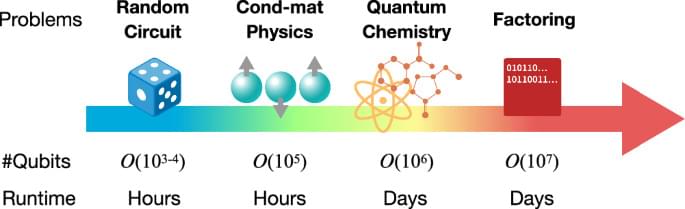
Hunting for quantum-classical crossover in condensed matter problems
The intensive pursuit for quantum advantage in terms of computational complexity has further led to a modernized crucial question of when and how will quantum computers outperform classical computers. The next milestone is undoubtedly the realization of quantum acceleration in practical problems. Here we provide a clear evidence and arguments that the primary target is likely to be condensed matter physics. Our primary contributions are summarized as follows: 1) Proposal of systematic error/runtime analysis on state-of-the-art classical algorithm based on tensor networks; 2) Dedicated and high-resolution analysis on quantum resource performed at the level of executable logical instructions; 3) Clarification of quantum-classical crosspoint for ground-state simulation to be within runtime of hours using only a few hundreds of thousand physical qubits for 2d Heisenberg and 2d Fermi-Hubbard models, assuming that logical qubits are encoded via the surface code with the physical error rate of p = 10–3. To our knowledge, we argue that condensed matter problems offer the earliest platform for demonstration of practical quantum advantage that is order-of-magnitude more feasible than ever known candidates, in terms of both qubit counts and total runtime.
Yoshioka, N., Okubo, T., Suzuki, Y. et al. Hunting for quantum-classical crossover in condensed matter problems. npj Quantum Inf 10, 45 (2024). https://doi.org/10.1038/s41534-024-00839-4

Quantum eMotion Finalizes QRNG Hybrid Chip Design, Commences Manufacturing with TSMC
Quantum eMotion has completed and validated its first-generation QRNG chip design based on quantum tunneling, marking a key milestone.