
Mitel fixes critical MiVoice and MiCollab flaws that allow account access and SQL attacks. Users must update to avoid system compromise.
Get the latest international news and world events from around the world.

Fire Ant Exploits VMware Flaws to Compromise ESXi Hosts and vCenter Environments
Fire Ant exploited VMware flaws to breach ESXi and vCenter, targeting isolated systems for persistent access.
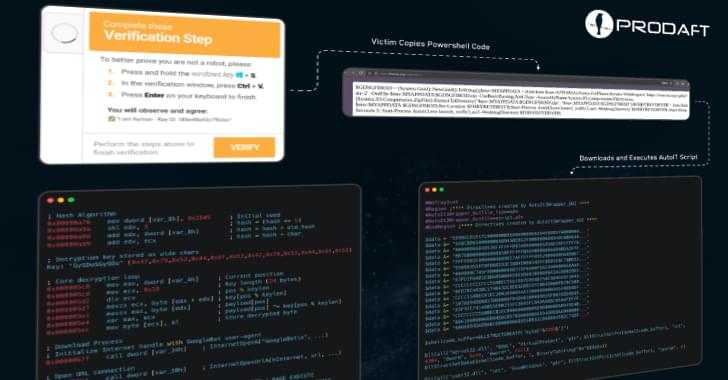
CastleLoader Malware Infects 469 Devices Using Fake GitHub Repos and ClickFix Phishing
CastleLoader malware infected 469 devices via ClickFix, GitHub, and phishing since May 2025. Malware delivery is evolving fast.

Watch This Webinar to Uncover Hidden Flaws in Login, AI, and Digital Trust — and Fix Them
Discover 2025’s top identity trends from Auth0. Learn how AI reshapes logins, trust, and security.

Europol Arrests XSS Forum Admin in Kyiv After 12-Year Run Operating Cybercrime Marketplace
XSS.is admin arrested in Kyiv after years enabling cybercrime; Europol disrupts major forum of 50K users.

Storm-2603 Exploits SharePoint Flaws to Deploy Warlock Ransomware on Unpatched Systems
Storm-2603 exploits SharePoint flaws to deploy Warlock ransomware, affecting 400+ victims. Microsoft urges mitigation.

Hackers Deploy Stealth Backdoor in WordPress Mu-Plugins to Maintain Admin Access
Malware hidden in WordPress mu-plugins grants attackers full access and admin control, putting websites and users at serious risk.

New Koske Linux malware hides in cute panda images
A new Linux malware named Koske may have been developed with artificial intelligence and is using seemingly benign JPEG images of panda bears to deploy malware directly into system memory.
Researchers from cybersecurity company AquaSec analyzed Koske and described it as “a sophhisticated Linux threat.” Based on the observed adaptive behavior, the researchers believe that the malware was developed using large language models (LLMs) or automation frameworks.
Koske’s purpose is to deploy CPU and GPU-optimized cryptocurrency miners that use the host’s computational resources to mine over 18 distinct coins.

Hacker sneaks infostealer malware into early access Steam game
A threat actor called EncryptHub has compromised a game on Steam to distribute info-stealing malware to unsuspecting users downloading the title.
A few days ago, the hacker (also tracked as Larva-208), injected malicious binaries into the Chemia game files hosted on Steam.
Chemia is a survival crafting game from developer ‘Aether Forge Studios,’ which is currently offered as early access on Steam but has no public release date.
Hackers breach Toptal GitHub account, publish malicious npm packages
Hackers compromised Toptal’s GitHub organization account and used their access to publish ten malicious packages on the Node Package Manager (NPM) index.
The packages included data-stealing code that collected GitHub authentication tokens and then wiped the victims’ systems.
Toptal is a freelance talent marketplace that connects companies with software developers, designers, and finance experts. The company also maintains internal developer tools and design systems, most notably Picasso, which they make available through GitHub and NPM.