Toggle light / dark theme

Get the latest international news and world events from around the world.

Log in for authorized contributors

Researchers Uncover a Hidden Molecular Machine Parasites Need To Survive

Researchers have visualized two key stages of RNA processing in parasites that cause diseases such as sleeping sickness, Chagas’ disease, and leishmaniasis.

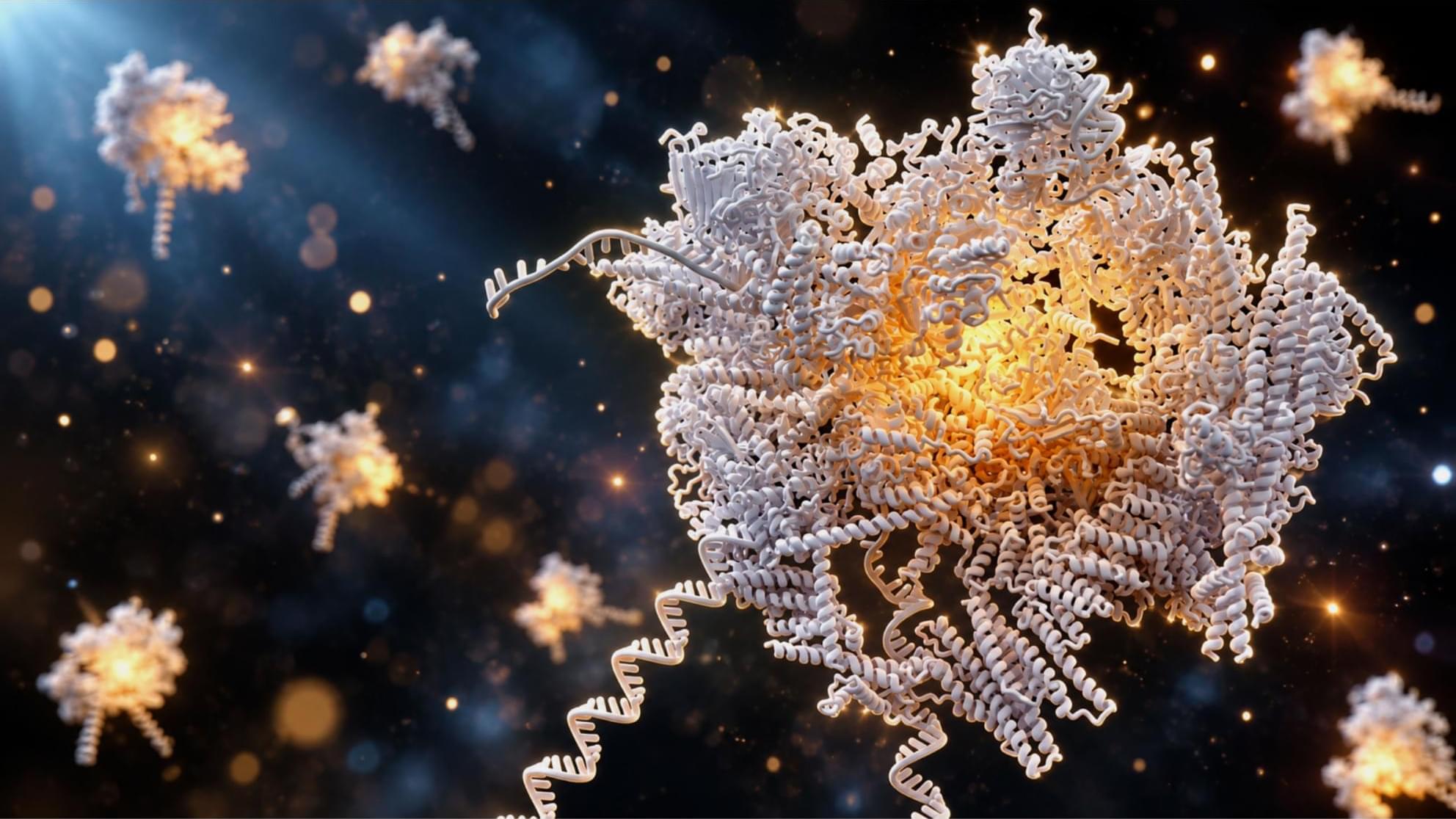
For nearly 40 years, scientists have known that trypanosomatid parasites depend on an unusual system for processing RNA. Now researchers have captured that machinery at near-atomic resolution, showing how its components assemble and operate during a reaction the parasites need to survive.

The study, conducted by researchers at the University of Liège and Rockefeller University, reconstructed the three-dimensional architecture of the trans-spliceosome, a massive molecular machine that prepares genetic messages for use inside trypanosomatid cells. The structures also identify features that differ from the RNA processing machinery found in humans, providing a potential starting point for developing drugs that interfere selectively with the parasites.


When Your Eyes Mislead You, the Brain Finds Common Ground

A mouse study suggests that neighboring visual areas may build agreement by sustaining shared activity patterns while mismatches fade.

A shape in the dark might briefly resemble a face, or an orange might momentarily look like an apple. To make sense of what we see, the brain must coordinate information from regions with different specialties. A study in mice now suggests how two neighboring visual areas may reach a consistent interpretation, with shared activity persisting while mismatches quickly fade.

The research, published in Nature Neuroscience, examined the primary visual cortex, known as V1, and the lateromedial visual area, or LM. Both belong to the visual cortex, the part of the brain that processes sight. When activity patterns in the two areas agreed, they lasted longer. When the patterns disagreed, the mismatch dissipated within a fraction of a second.

Could Earth’s Magnetic Field Be Secretly Influencing How We Age?

A longer life with a physical cost

For the study, published in Aging, the team used a specially designed shielding system to reduce the magnetic field surrounding the flies to near zero. They tested healthy flies alongside flies carrying a defect in Pink1, a gene associated with inherited early-onset Parkinson’s disease in humans. Comparing the two groups allowed them to investigate how flies with impaired mitochondrial function responded to the same environmental change.

The Pink1 flies lived about 20% longer under magnetic shielding, but their physical performance declined. Healthy flies showed improved movement along with changes in their health span, or the time spent in good health. The results suggest that an animal’s metabolic state helps determine its response to magnetic field strength, with longer survival and better physical function not necessarily going together.

Could Advanced Aliens Be Living Nearby? Scientists Say It’s Unlikely

Even planets billions of years older than Earth may host only microbes if photosynthesis supplies too little energy.

Science fiction often imagines Earth’s galactic neighborhood teeming with hyper-advanced extraterrestrial civilizations, but the actual cosmos near us may be far quieter.

A study published in the International Journal of Astrobiology, led by Chris Doughty, a professor of ecoinformatics at Northern Arizona University, proposes that the evolution of complex life on exoplanets depends heavily on cumulative plant energy rather than just the passage of time. Although many of the planets orbiting Earth’s stellar neighbors are several billion years older than our world, worse conditions for cumulative photosynthesis mean life on those planets likely evolved much more slowly.

China to Complete Geological Map of Mars by 2028

China plans to complete a geological map of the entire planet Mars by the end of 2028. This was reported by Xinhua News Agency, a partner of TV BRICS.

Hou Zengqian, an academician at the Chinese Academy of Sciences and chief scientist of the Tianwen-3 mission, spoke about the plans. According to him, based on the new data, experts will develop a Chinese system for the geological periodisation of Mars.

Research by the Zhurong rover has shown that around 3.5 billion years ago, an ancient ocean of continental scale existed on Mars. Scientists have also discovered evidence of a possible short-lived flood that may have occurred around 1.6 billion years ago. This data will be used in the compilation of the new map.

Citrix NetScaler Post-Exploitation Payload Creates Superuser, Maps Web Shell to CSS-Like URLs

Threat actors have been observed exploiting a critical pre-authentication command injection vulnerability in Citrix NetScaler ADC and NetScaler Gateway to drop web shells and attempt theft of configuration data.

LevelBlue’s Threat Hunt Operations & Research (THOR) team, which analyzed the exploitation activity across multiple customer environments, said it identified malicious NetScaler authentication events containing attacker-controlled usernames designed to weaponize CVE-2026–88771.

CVE-2026–88771 (CVSS score: 9.5) is an improper input validation vulnerability that could allow an unauthenticated attacker to execute arbitrary commands.

Cisco Warns of Attackers Exploiting Critical Authentication Bypass in SD-WAN Manager

Attackers are exploiting a new critical zero-day flaw in Cisco Catalyst SD-WAN Manager, the system companies use to manage their Cisco SD-WAN networks, Cisco said in an advisory on September 30.

The flaw, CVE-2026–76504, could allow a remote attacker with no login access to use the Manager’s API as the admin user. Fixed releases are available, and there is no workaround. It carries a CVSS score of 9.8 out of 10. It sits in the part of the Manager’s API that handles login sessions.

The Manager mishandles URI encoding in an HTTP request. A crafted request can therefore bypass an authentication rule intended to restrict access to a single API endpoint.

Russian state hackers use new RedFlick technique to push malware

The Russian state actor Star Blizzard has been using a new malware installation tactic dubbed “RedFlick” to deploy its signature CosmicPulse backdoor.

Although the tactic is not a new cybersecurity technique, it is a new delivery approach for the threat actor, allowing it to further automate attacks and reduce victim interaction.

Microsoft researchers say that Star Blizzard expanded its phishing operations and streamlined malware delivery in 2026.