Toggle light / dark theme

Get the latest international news and world events from around the world.

Log in for authorized contributors

Emerging PET Imaging Agents and Targeted Radioligand Therapy: A Review of Clinical Applications and Trials

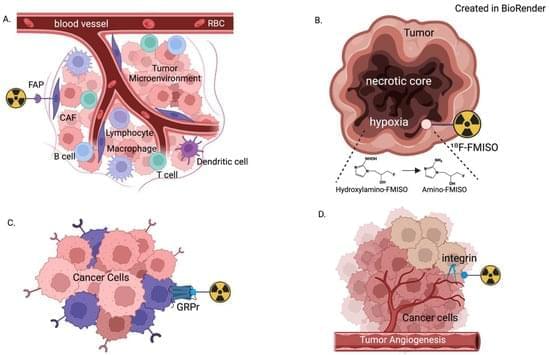
Targeted radioligand therapy (RLT) is an emerging field in anticancer therapeutics with great potential across tumor types and stages of disease. While much progress has focused on agents targeting somatostatin receptors and prostate-specific membrane antigen (PSMA), the same advanced radioconjugation methods and molecular targeting have spurred the development of numerous theranostic combinations for other targets. A number of the most promising agents have progressed to clinical trials and are poised to change the landscape of positron emission tomography (PET) imaging. Here, we present recent data on some of the most important emerging molecular targeted agents with their exemplar clinical images, including agents targeting fibroblast activation protein (FAP), hypoxia markers, gastrin-releasing peptide receptors (GRPrs), and integrins. These radiopharmaceuticals share the promising characteristic of being able to image multiple types of cancer. Early clinical trials have already demonstrated superiority to 18F-fluorodeoxyglucose (18F-FDG) for some, suggesting the potential to supplant this longstanding PET radiotracer. Here, we provide a primer for practicing radiologists, particularly nuclear medicine clinicians, to understand novel PET imaging agents and their clinical applications, as well as the availability of companion targeted radiotherapeutics, the status of their regulatory approval, the potential challenges associated with their use, and the future opportunities and perspectives.
Diabetic Foot Ulcers: Pathophysiology, Immune Dysregulation, and Emerging Therapeutic Strategies

Diabetic foot ulcers (DFUs) are among the most common and debilitating complications of diabetes mellitus (DM), affecting approximately 15–25% of patients and contributing to over 85% of non-traumatic amputations. DFUs impose a substantial clinical and economic burden due to high recurrence rates, prolonged wound care, and frequent hospitalizations, accounting for billions in healthcare costs worldwide. The multifactorial pathophysiology of DFUs involves peripheral neuropathy, peripheral arterial disease, chronic inflammation, and impaired tissue regeneration. Recent studies underscore the importance of immune dysregulation—specifically macrophage polarization imbalance, regulatory T cell dysfunction, and neutrophil impairment—as central mechanisms in wound chronicity.

Cannabinoid pathways may offer targets for kidney disease as CKD affects 850 million people

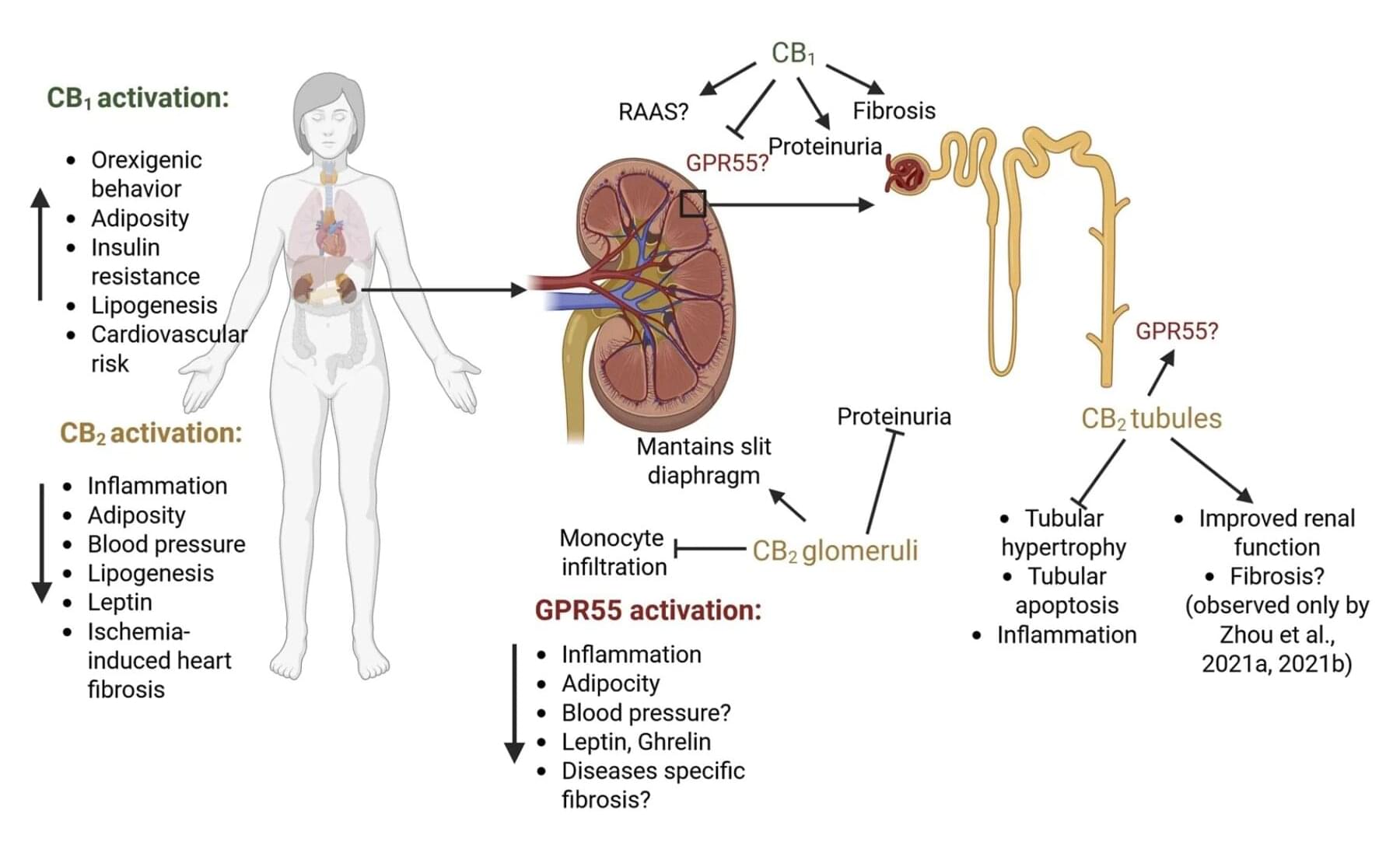
Approximately 850 million people globally (9.1% of the world’s population) have chronic kidney disease (CKD). The number of affected individuals has grown steadily during the past 20 years and is on track to continue rising. Existing drugs, such as RAAS inhibitors and angiotensin receptor blockers, are commonly prescribed, but their effectiveness varies from patient to patient. Moreover, these drugs can slow disease progression but cannot stop it.

Now, a research team from the Autonomous University of Aguascalientes in Aguascalientes, Mexico, argues that cannabinoid pathways may serve as a novel therapeutic target. Their discussion of this possibility appears in Frontiers in Pharmacology.

New tool identifies the sources of fake videos

Artificial intelligence can generate videos so realistic that distinguishing them from authentic footage is becoming increasingly difficult. But a computer science team led by researchers at UC Riverside has developed a tool that moves beyond simply identifying whether a video is fake. It also determines which AI system created it.

AI‑designed gene‑editing enzymes expand the CRISPR toolbox

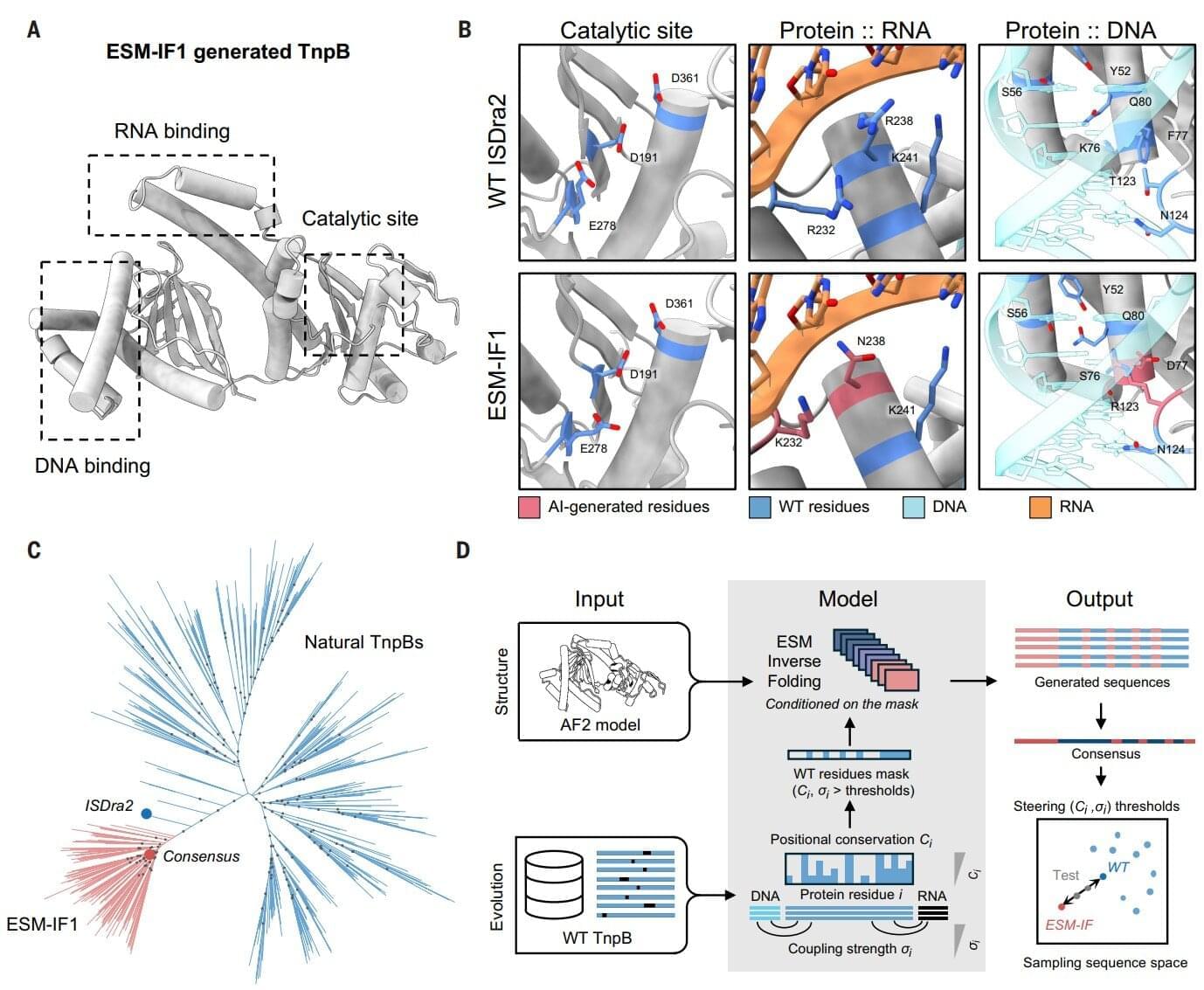
Scientists have made many advances using traditional CRISPR technology, especially in medicine, but they are now seeking ways to create genuinely new gene-editing enzymes with properties that have not already evolved naturally. A new study, published in Science, describes a new AI-designed synthetic TnpB enzyme, called SynTnpBs, that has outperformed the natural reference enzyme.

Creating new gene editors CRISPR tools use a programmable guide RNA to direct an enzyme to a specific target in the genome to edit (cut, insert or correct) DNA. The TnpB enzyme is a compact ancestor of certain CRISPR enzymes, called CRISPR-Cas12 enzymes. Researchers think its small size could make it useful in situations where delivery space is limited, like some kinds of gene editing in plants. However, these enzymes can be difficult to redesign.

While AI has been useful for automating complex genome editing and predicting DNA repair outcomes, most AI methods used for generating gene-editing enzymes have produced versions that are still very similar to natural proteins. When researchers have attempted to create new editors with novel, useful properties, they have found it challenging to change the protein without breaking the molecular contacts needed for DNA editing.

CERN Experiments Detect Signs of the Universe’s Primordial Matter

All four major LHC experiments have found new evidence that collisions between oxygen and neon may produce the extreme state of matter that existed during the first microseconds after the Big Bang.

Inside the Large Hadron Collider (LHC), collisions between relatively light oxygen and neon nuclei may be producing matter from the earliest moments of the Universe. One year after the collider’s first oxygen runs, all four major LHC experiments, ALICE, ATLAS, CMS, and LHCb, have reported signs of quark–gluon plasma (QGP).

QGP forms under immense pressure at temperatures more than 100,000 times hotter than the center of the Sun. In these conditions, composite particles break apart into quarks and the gluons that normally bind them together. This state of matter is thought to have filled the Universe during the first millionths of a second after the Big Bang. Nearly 14 billion years later, physicists can briefly recreate it through high-energy nuclear collisions at the LHC.

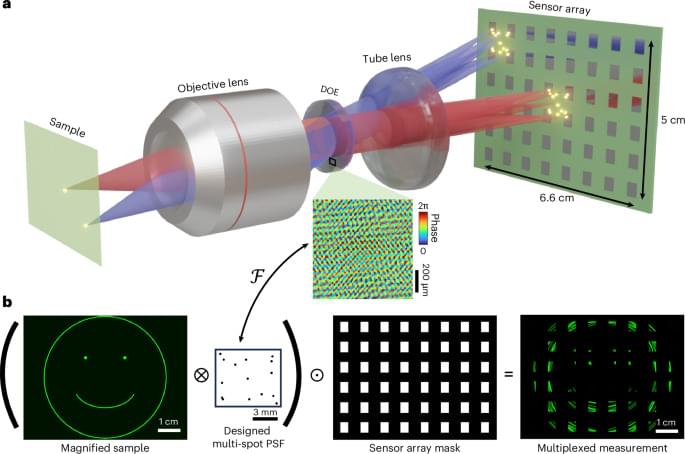
Largescale compressive microscopy via diffractive multiplexing across a sensor array Photonics

By combining an array of 48 sensors with a diffractive mask and compressive sensing, researchers developed a 25 gigapixel-per-second computational microscope that can image at micrometre resolution across multi-centimetre areas at 120 frames per second.

/* */