Toggle light / dark theme

Get the latest international news and world events from around the world.

Log in for authorized contributors

Long-hypothesized dynamic transition seen in deeply supercooled water for the first time

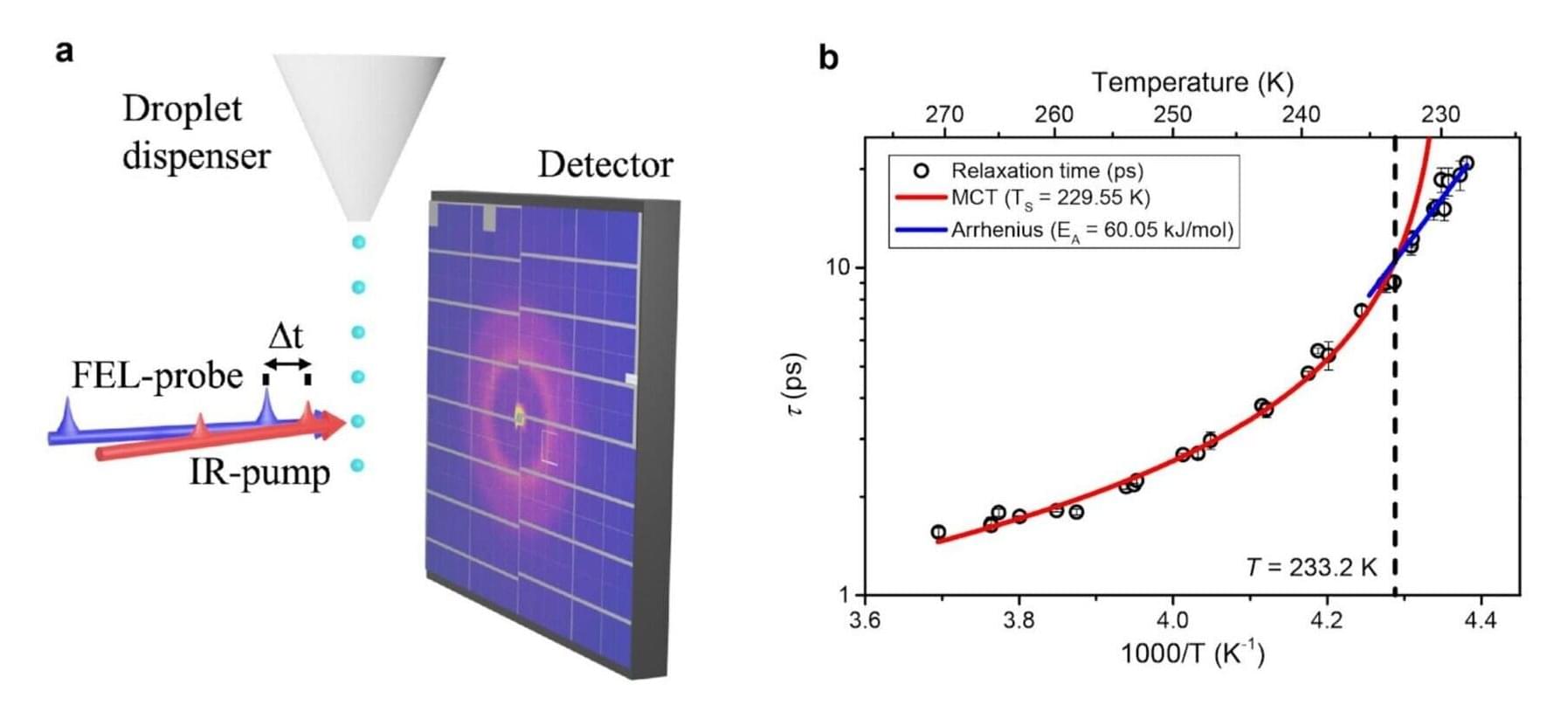
In a new study published in Nature Physics, researchers have achieved the first experimental observation of a fragile-to-strong transition in deeply supercooled water, resolving a scientific puzzle that has persisted for nearly three decades.

Water has anomalous properties when cooled below freezing without crystallization. Previous studies have tracked how water’s viscosity changes with temperature, predicting it would diverge to infinity around ~227 K (−46°C), meaning liquid water’s motion would essentially freeze.

However, this prediction conflicted with other known properties of water. As a result, scientists proposed that the viscosity trend must undergo a change at a specific low temperature—the so-called fragile-to-strong transition (FST).
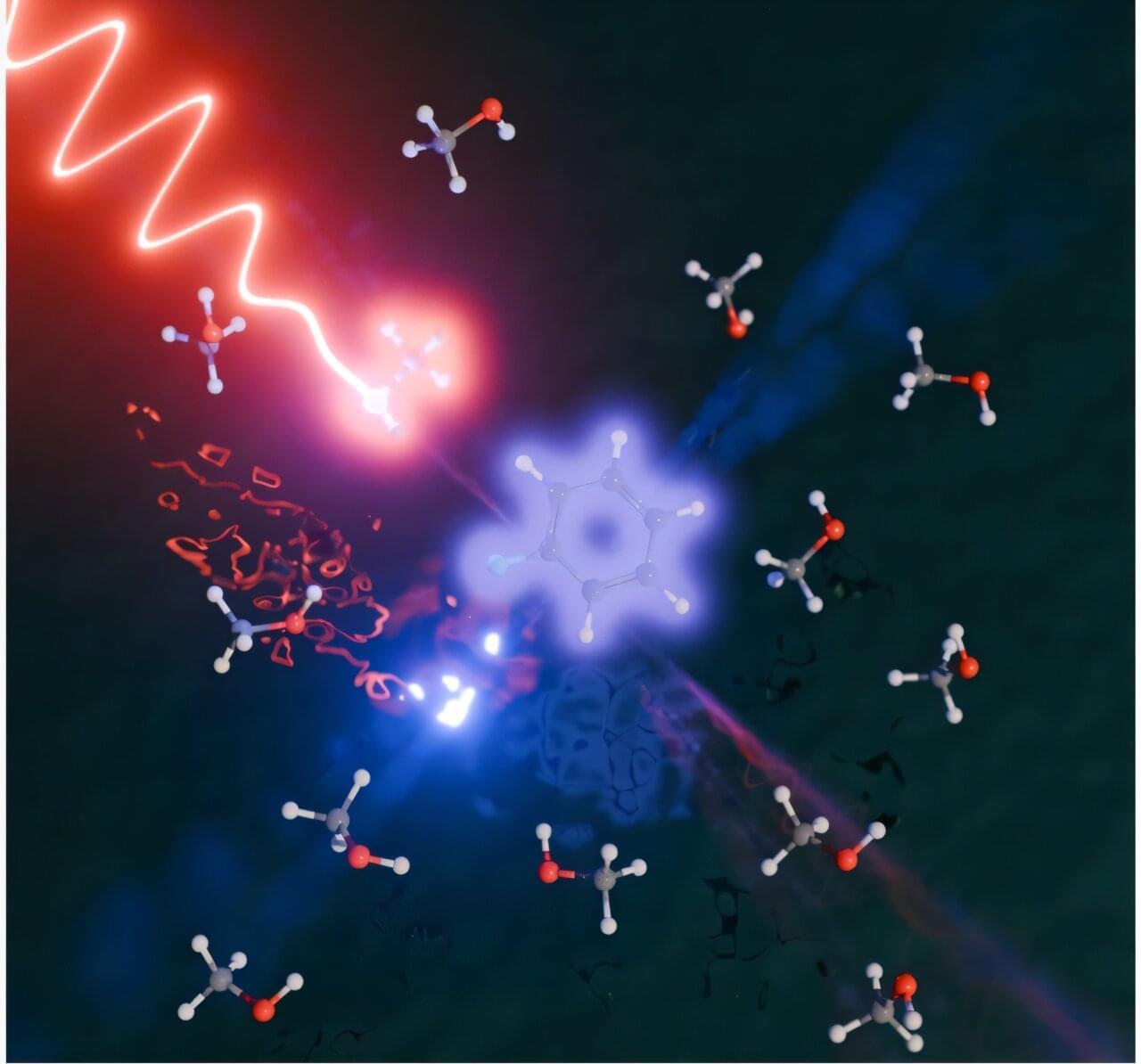
Ultrashort laser pulses catch a snapshot of a ‘molecular handshake’

Liquids and solutions are complex environments—think, for example, of sugar dissolving in water, where each sugar molecule becomes surrounded by a restless crowd of water molecules. Inside living cells, the picture is even more complex: tiny liquid droplets carry proteins or RNA and help organize the cell’s chemistry.

Despite their importance, liquid environments are notoriously difficult to study at the level of individual molecules and electrons. The core challenge is that liquids lack a fixed structure, and the ultrafast interactions between solute and solvent—where chemistry actually happens—have remained largely invisible to scientists.

Psychiatric Disorders Share Far More DNA Than Scientists Realized

A global research team co-led by VCU expert Kenneth Kendler has produced the most comprehensive genetic map so far, identifying five families of disorders that show a high degree of overlap. An international team of scientists is offering new insight into why people are so often affected by more

Scientists Discover How To “Purify” Light, Paving the Way for Faster, More Secure Quantum Technology

University of Iowa scientists have identified a new way to “purify” photons, a development that could improve both the efficiency and security of optical quantum technologies.

The team focused on two persistent problems that stand in the way of producing a reliable stream of single photons, which are essential for photonic quantum computers and secure communication systems. The first issue, known as laser scatter, arises when a laser is aimed at an atom to trigger the release of a photon, the basic unit of light. Although this method successfully generates photons, it can also produce extra, unwanted ones. These additional photons reduce the efficiency of the optical system, similar to how stray electrical currents interfere with electronic circuits.

A second complication comes from the way atoms occasionally respond to laser light. In uncommon cases, an atom releases more than one photon at the same time. When this happens, the precision of the optical circuit suffers because the extra photons disrupt the intended orderly flow of single photons.

Ongoing SoundCloud issue blocks VPN users with 403 server error

Users accessing the SoundCloud audio streaming platform through a virtual private network (VPN) connection are denied access to the service and see a 403 ‘forbidden’ error.

SoundCloud is a large audio distribution platform focused on user-uploaded content, built around independent creators rather than licensed music from major labels. It has at least 140 million registered users and 40 million creators.

Due to its open, unmoderated nature, the platform has been banned in China since 2014, in Russia since 2022, and is restricted in Venezuela, Kazakhstan, and other countries. Because of this, users in these regions rely on a VPN or proxy solution to bypass the blocks.

/* */