Toggle light / dark theme

Get the latest international news and world events from around the world.

Log in for authorized contributors

Control of cell cycle transcription during G1 and S phases

The accurate transition from G1 phase of the cell cycle to S phase is crucial for the control of eukaryotic cell proliferation, and its misregulation promotes oncogenesis. During G1 phase, growth-dependent cyclin-dependent kinase (CDK) activity promotes DNA replication and initiates G1-to-S phase transition. CDK activation initiates a positive feedback loop that further increases CDK activity, and this commits the cell to division by inducing genome-wide transcriptional changes. G1–S transcripts encode proteins that regulate downstream cell cycle events. Recent work is beginning to reveal the complex molecular mechanisms that control the temporal order of transcriptional activation and inactivation, determine distinct functional subgroups of genes and link cell cycle-dependent transcription to DNA replication stress in yeast and mammals.

Quantum photonic chip integrates light-emitting molecules with single-mode waveguides

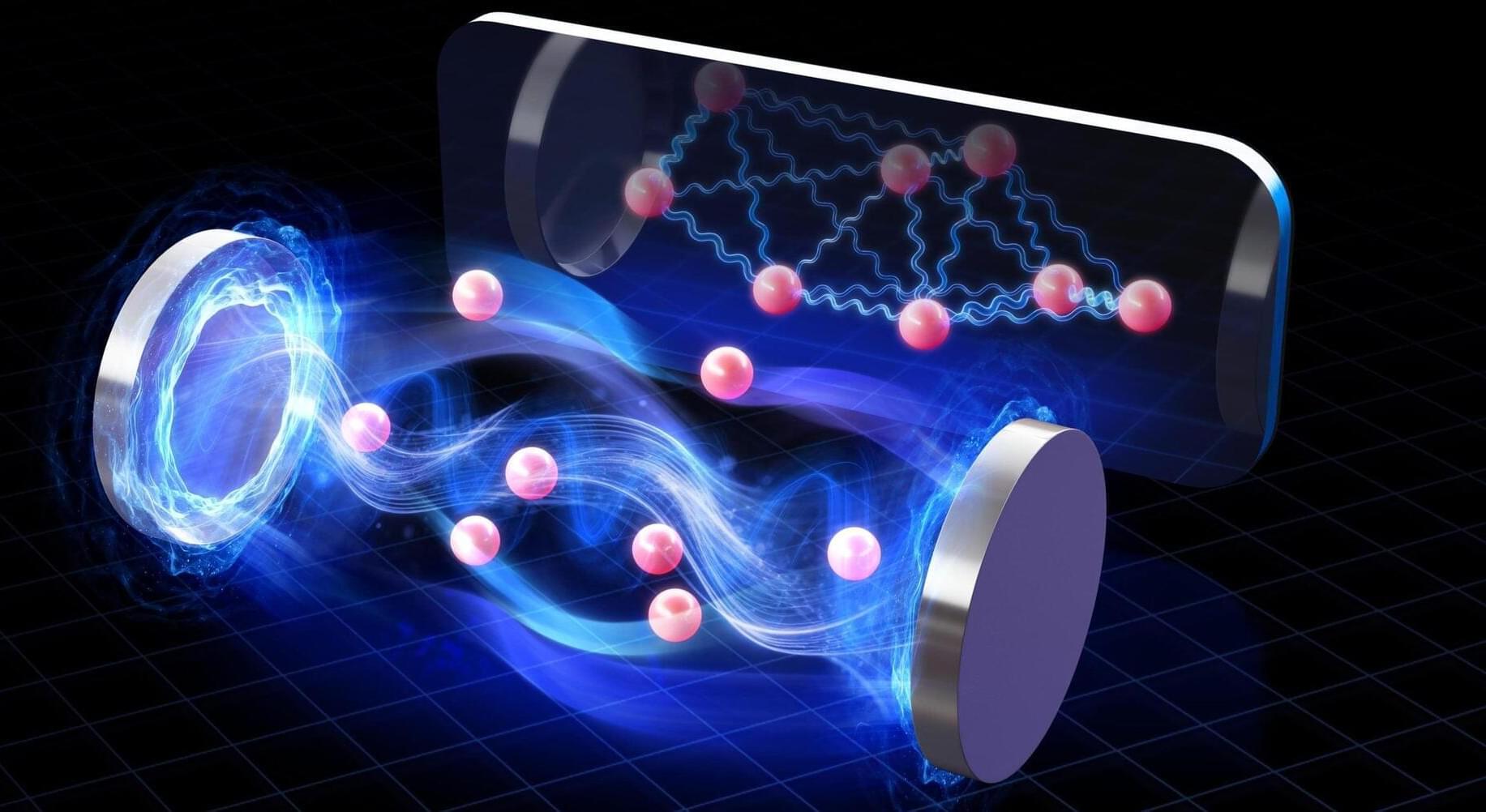
Photonic quantum processors, devices that can process information leveraging quantum mechanical effects and particles of light (photons), have shown promise for numerous applications, ranging from computations and communications to the simulation of complex quantum systems.

To be deployed in real-world settings, however, these photonic chips should reliably integrate many deterministic and indistinguishable single-photon sources on a single chip.

So far, achieving this has proved highly challenging. Most such photonic quantum chips developed so far utilize solid-state single-photon emitters that are limited by so-called spectral diffusion (i.e., the random “wandering” of their emission frequency).

Biological age measured by DNA methylation clocks and frailty: a systematic review and meta-analysis

Higher GrimAge EAA is consistently associated with higher frailty. Future research should focus on developing and validating DNA methylation clocks that integrate molecular surrogates of health risk and are specifically trained to predict frailty in large, harmonised, longitudinal cohorts, enabling their translation into clinical practice.

Neuroscientist finds her brain shrinks while taking birth control

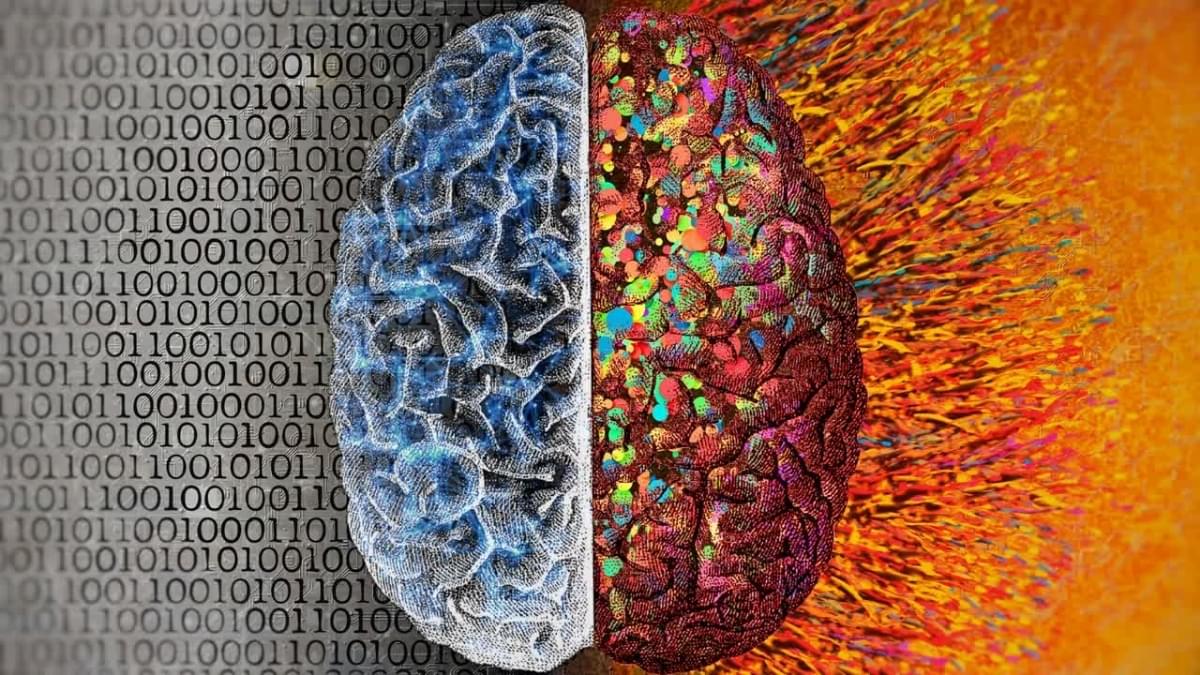
A researcher who completed numerous brain scans found that her cerebral cortex volume was 1% smaller while using hormonal contraceptives.

Read this article at.


A researcher who underwent dozens of brain scans discovered that the volume of her cerebral cortex was 1 per cent lower when she took hormonal contraceptives.

By Grace Wade

The “Impossible” LED: Cambridge Team Successfully Powers Insulating Nanoparticles

Scientists have discovered how to electrically power insulating nanoparticles using molecular antennas, creating exceptionally pure near-infrared LEDs with wide-ranging potential. A newly developed approach uses “molecular antennas” to direct electrical energy into nanoparticles that normally can

Light is born from the vacuum: laser modeling confirms a quantum physics prediction

Physicists from Oxford and Lisbon have run a full 3D, time-resolved simulation showing that empty space can act like a nonlinear medium. Their model finds that three intense laser pulses make photons rebound and forge a fourth beam, echoing a long-standing prediction from quantum electrodynamics.

Classical physics treats vacuum as an absence. Quantum theory disagrees. The vacuum teems with flickering pairs of virtual electrons and positrons that borrow energy briefly and vanish. Strong electromagnetic fields can polarize those pairs. That tiny response turns “nothing” into a medium with a faint optical nonlinearity.

When three high-power laser pulses cross at the right angles and frequencies, quantum electrodynamics (QED) predicts four-wave mixing in vacuum. The combined fields nudge virtual pairs, which then mediate photon‑photon scattering. A new, phase‑matched beam should appear with a frequency and direction dictated by the input pulses.

/* */