Toggle light / dark theme

Get the latest international news and world events from around the world.

Log in for authorized contributors

Electric fields offer new hope against aggressive brain cancer

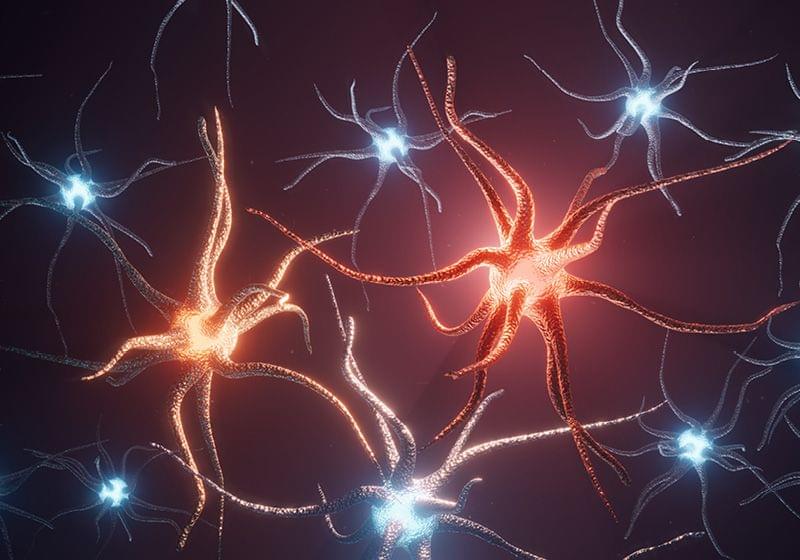
More than a decade ago, Dr. Matthew Hebb was treating patients with Parkinson’s disease using deep brain stimulation by implanting tiny electrodes into the brain and delivering electrical signals to control tremors. He wondered if the same basic technology could be used against brain cancer.

Hebb, a neurosurgery professor at Western University’s Schulich School of Medicine & Dentistry, took tumor samples removed during surgery back to his laboratory, implanted electrodes and stimulated the cancer cells. The tumors responded.

That unexpected observation set in motion years of research into what is now called Intratumoral Modulation Therapy, or IMT—an original approach that uses low-amplitude electric fields to disrupt the growth of glioblastoma, one of the most aggressive and difficult-to-treat brain cancers.
Scientists uncover ‘hidden switch’ that helps cancer cells hide from the immune system

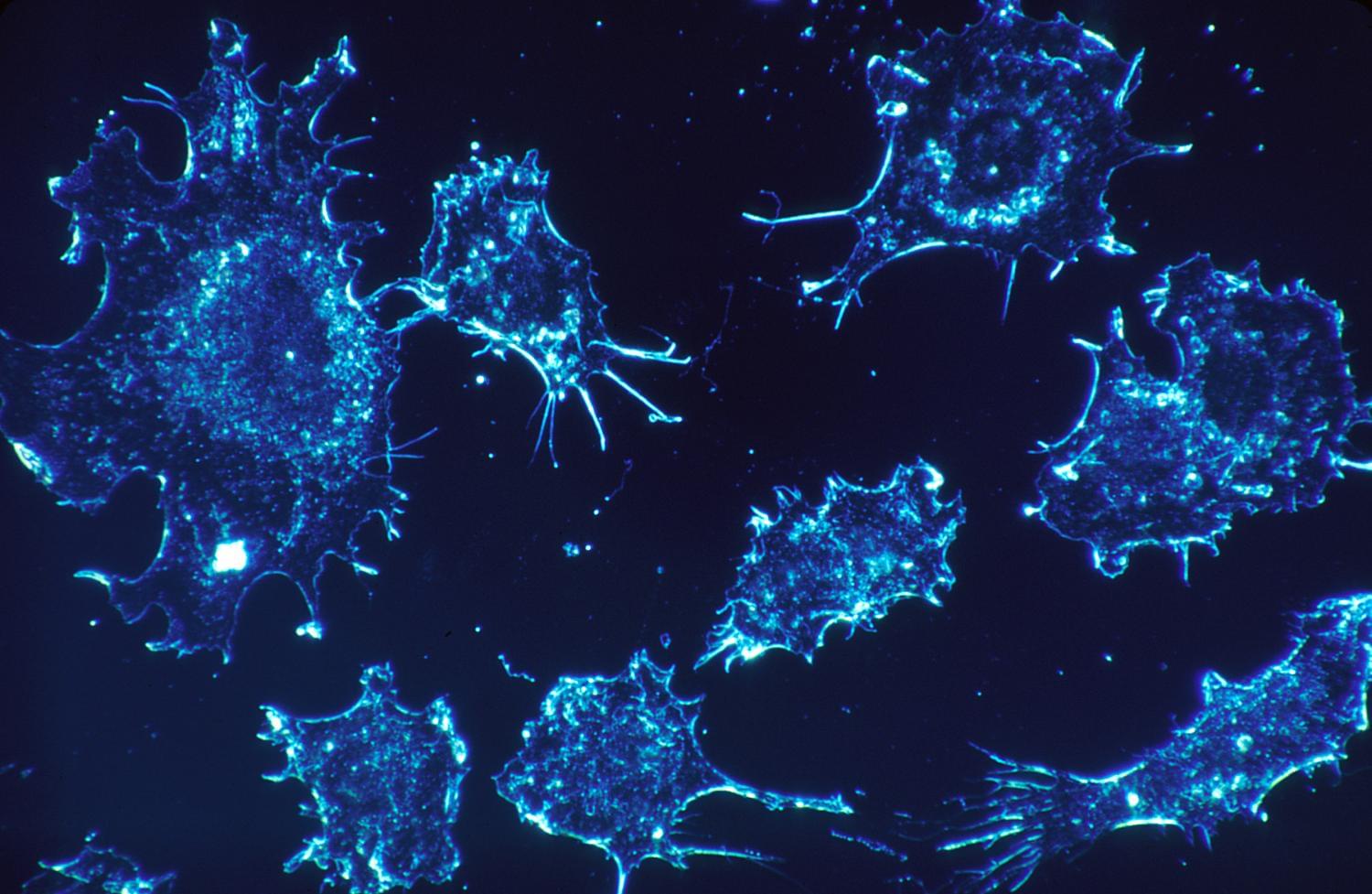
Researchers from the Cancer Science Institute of Singapore (CSI Singapore) at the National University of Singapore (NUS) have uncovered a previously unknown mechanism that helps cancer cells evade detection by the body’s immune system. The finding could pave the way for the development of more effective cancer immunotherapies.

Published in Science Immunology, the study identifies the RNA helicase DDX6 as a previously unrecognized “hidden switch” that prevents the immune system from recognizing cancer cells. Targeting DDX6 could make tumors more visible to the immune system, improving existing or new immunotherapies.

TESS discovers a rare brown dwarf orbiting a massive, aging star

For decades, astronomers lumped brown dwarfs into a single category defined by mass alone—too big to be classified as planets but too small to become stars. However, this definition ignores the two very different mechanisms that can form them: the direct collapse of gas clouds and formation within the accretion disks of massive stars.

Through a new analysis of NASA’s Transiting Exoplanet Survey Satellite (TESS), astronomers led by Nino Ephremidze at Harvard University have made the clearest observation to date of a brown dwarf in orbit around a massive, aging star, potentially offering important new clues about how these planet-like bodies form. Their results have been posted to the arXiv preprint server.

Protein-like nanoparticles sort themselves inside growing crystals, enabling controlled release

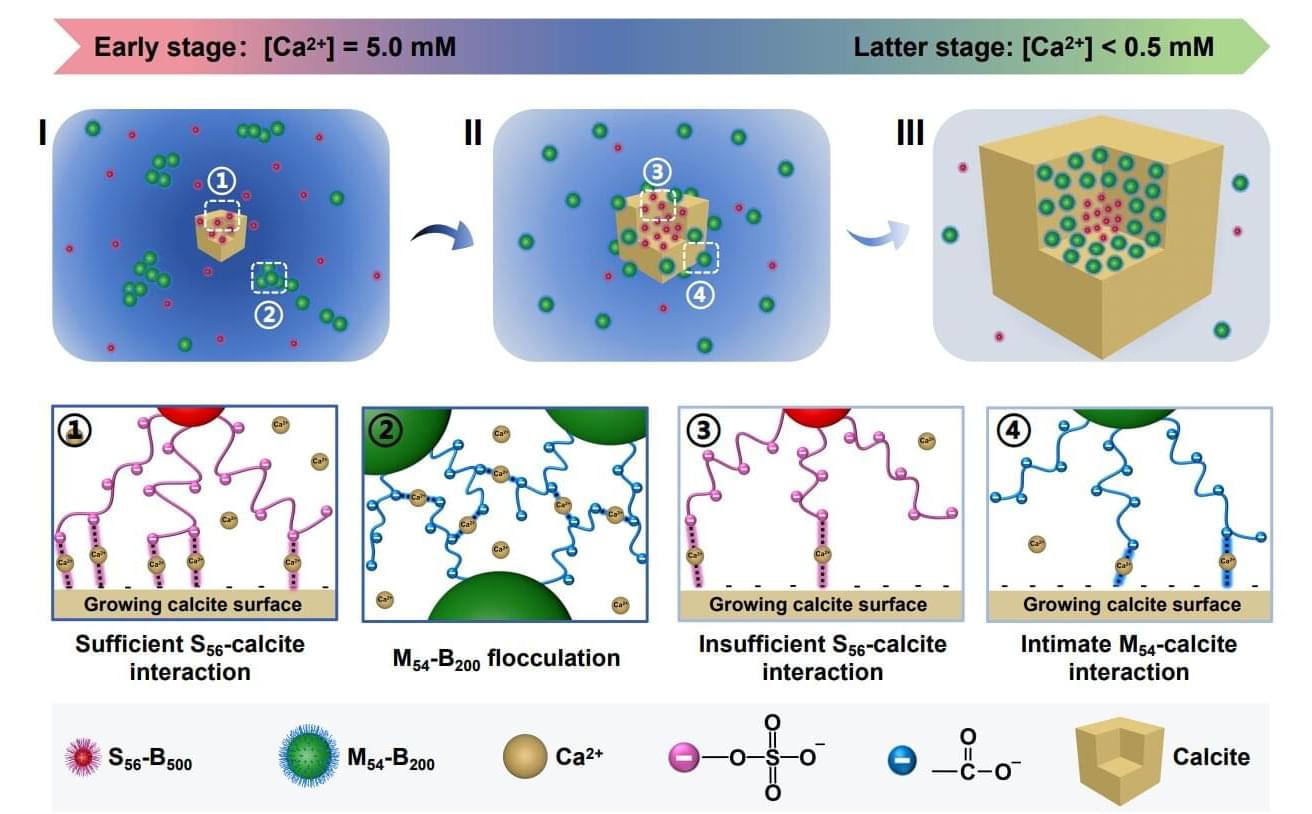
The tiny bones in your fingers withstand countless taps and swipes thanks to a precise blend of materials. Flexible collagen fibers form the framework, reinforced by hard calcium phosphate hydroxyapatite crystals. This is just one of countless examples in which living organisms weave organic materials directly into inorganic crystals with exquisite precision. In a recent study published in Nature Communications, scientists attempted to recreate such precise spatial arrangements in biomimetic composite materials.

The researchers made two types of tiny diblock copolymer nanoparticles designed to mimic pseudo-proteins. The first consisted of solid spheres about 100 nanometers big, with a poly(benzyl methacrylate) core and a shell of sulfate-containing chains tagged with a red fluorescent dye. The second consisted of hollow, bubble-like particles about 300 nanometers across. They had the same polymer core but a carboxylate-rich outer shell tagged with a green fluorescent dye.

These tiny polymer nanoparticles, engineered with different sizes and compositions, much like protein molecules, sorted themselves naturally as growing calcite crystals trapped them. Instead of mixing randomly, the two types ended up in separate regions of the crystal, creating an artificial biomineral with a distinctly organized structure—all driven by differences in the nanoparticles’ surface chemistry.

Complex suicidal somersault behavior in male redback spiders may be explained by surprisingly simple genetics

The Australian redback spider (Latrodectus hasselti), a cousin of the North American black widow spider, is known to practice sexual cannibalism, which is somewhat common among spider species. However, the male Australian redback has also been observed facilitating the process with strange moves. Despite the complexity of these behaviors, a new study, published in Biology Letters, indicates that one of these behaviors arises from simple genetics, while another may be more complex.

Australian redback males perform an extraordinary mating somersault that places their abdomen near the female’s fangs while mating. Although this results in a form of self-sacrifice, the behavior can help males mate longer and father more offspring. This means that even if the female eats them, they were successful from an evolutionary point of view. Some redback spiders also exhibit abdominal narrowing, which makes it more difficult for the female to bite them during mating, delaying death long enough for the male to complete a second mating.

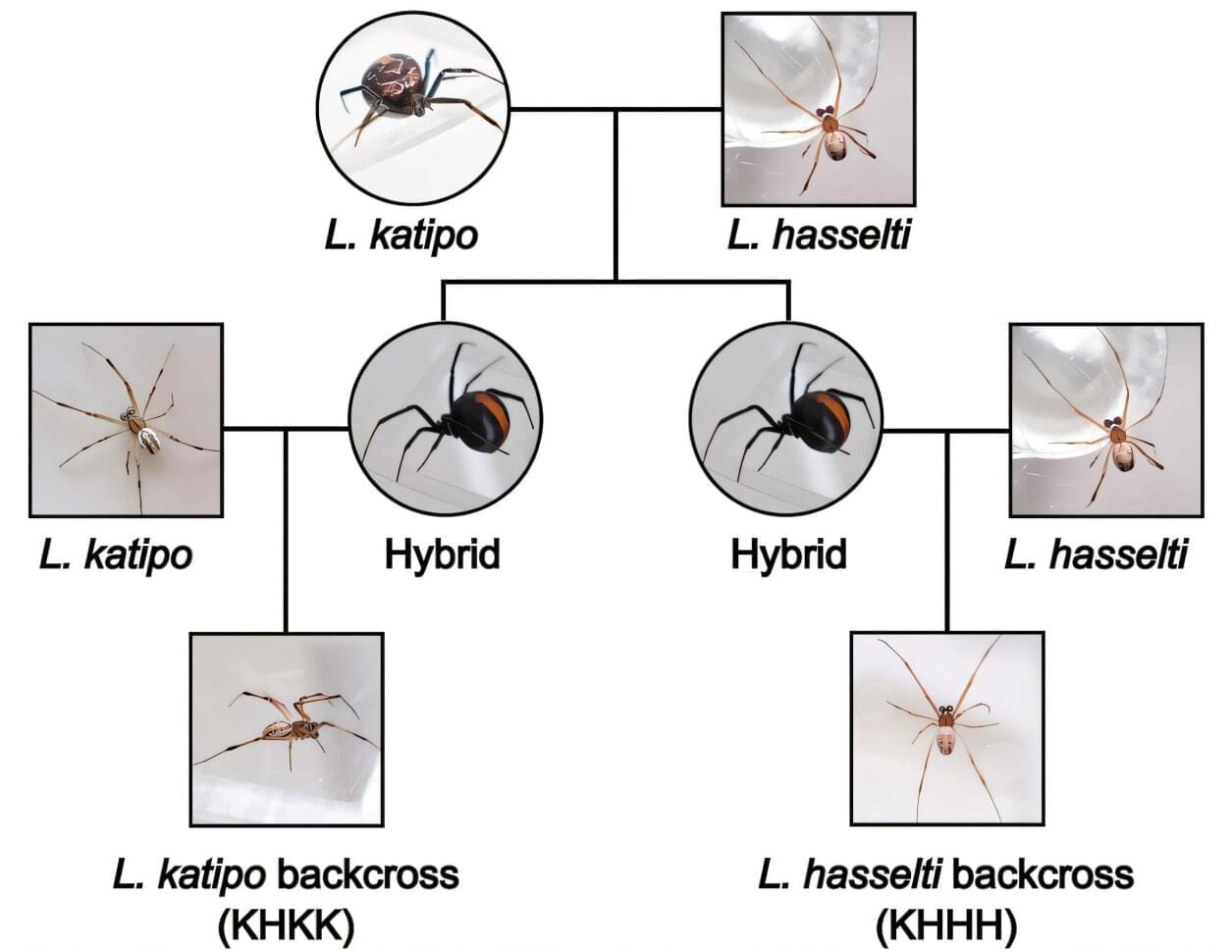
A close New Zealand relative of the Australian redback, the katipo spider, lacks both male self-sacrifice traits and does not exhibit cannibalistic mating behavior. Yet, the two species are capable of mating, producing hybrids. This, however, is only possible with a katipo female and redback male, since the redback female displays only aggressive behavior toward the katipo male.

/* */