Neil Rimer, the venture capitalist who co-founded Index Ventures, predicts the historic wealth AI is generating in Silicon Valley will have to be redistributed, voluntarily or involuntarily.
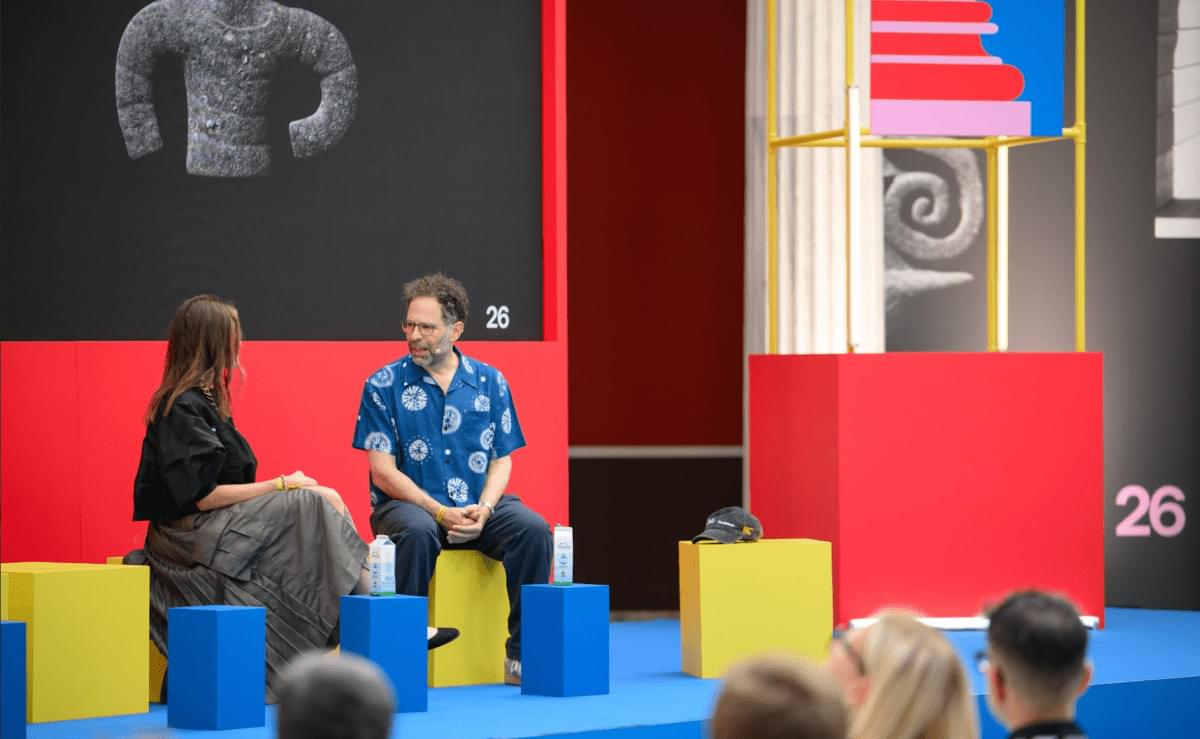
In a recent demo, Lisa Su showed off a compact AI PC powered by AMD’s Ryzen AI Max+ 395.
The key feature is not just speed. It is memory.
Ryzen AI Halo systems support up to 128GB of unified memory, which gives the CPU and GPU access to a much larger shared memory pool than most consumer PCs usually have for AI workloads.
That matters because large AI models do not just need compute. They need enough memory to actually fit and run.
For developers, researchers, founders, and power users, that is why cloud GPUs, hosted AI tools, API credits, and monthly subscriptions have become such a normal part of the workflow.
If hardware like this makes local AI more practical, the economics start to change.
Instead of renting compute every month, you own the machine. Instead of uploading sensitive files to external servers, more work stays on your desk. And instead of dealing with usage limits, you have a local system you can keep using.
Cloud AI platforms like ChatGPT, Claude, Gemini, and Cursor are not going away. For most people, they are still easier and more capable.
But for local agents, private documents, coding workflows, research, and anyone juggling multiple AI subscriptions, this feels like a serious step toward a different model.
The future of AI will still include massive data centers. But more of it may also run on personal computers than people expect.
Source: AMD
#amd #ai #artificialintelligence #technology #localai #lisasu #founder #ceo #entrepreneur #businessmindset
Join us on Patreon! / michaellustgartenphd.
Discount Links/Affiliates:
Blood testing (where I get the majority of my labs, for those who blood test with Quest): https://www.ultalabtests.com/partners… those who blood test with LabCorp: https://www.anrdoezrs.net/click-10161… At-Home Metabolomics: https://www.iollo.com?ref=michael-lus… Use Code: CONQUERAGING At Checkout Clearly Filtered Water Filter: https://get.aspr.app/SHoPY Epigenetic, Telomere Testing: https://trudiagnostic.com/?irclickid=… Use Code: CONQUERAGING NAD+ Quantification: https://www.jinfiniti.com/intracellul… Use Code: ConquerAging At Checkout Oral Microbiome: https://www.bristlehealth.com/?ref=mi… Enter Code: ConquerAging SiphoxHealth Blood Testing (ApoB, GrimAge): https://siphoxhealth.com/mlustgarten Green Tea: https://www.ochaandco.com/?ref=fqbtflod Use Code: ML10OFF Diet Tracking: https://shareasale.com/r.cfm?b=139013… If you’d like to support the channel, you can do that with the website, Buy Me A Coffee: https://www.buymeacoffee.com/mlhnrca Conquer Aging Or Die Trying Merch! https://my-store-d4e7df.creator-sprin…
Blood Testing Essentials (Biological Age, CVD-Risk, Kidney Health and Function):
PhenoAge (Biological Age): https://www.ultalabtests.com/partners…
Measure the Bortz biological clock biomarkers: https://www.ultalabtests.com/partners…
Calculate your biological age using the Bortz clock: https://www.longevity-tools.com/human…
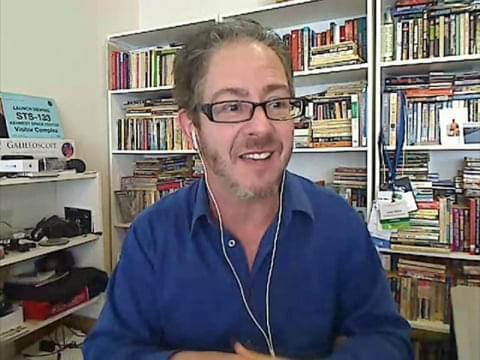
Fifteen years ago, I sat down with a man whose job title made no sense: science comedian.
Brian Malow has performed for Apple, JPL, NIST, and the American Chemical Society. He made audio essays for Neil deGrasse Tyson and trained scientists to speak like humans for the National Science Foundation. He got laughs from rooms full of chemists, which may be the hardest crowd in comedy.
But the reason this 2011 conversation still matters is not the resume. It’s the thesis.
Brian argued that comedy and science are the same discipline. Both refuse to accept the world as presented. Both look deeper. Both require you to see the familiar with fresh eyes and notice what everyone else walked past.
We covered the tension between humor and scientific truth, his favorite science fiction writers, his insect photography, and his take on the technological singularity, including our chances of surviving it.
His answer to that last question? Listen for yourself.
MIT engineers are building a chip reaching one petabit per second. See how this hardware processes data faster than any current consumer tech. This video examines the technical details behind the new MIT processor chip designed to push data limits. We explore how researchers are utilizing interferometer technology to achieve speeds of a thousand terabits on a surface thinner than a human hair. This breakdown is for engineers, students, and tech enthusiasts interested in the future of high-speed hardware. By analyzing the electronic components and the specific measurement diagrams, you will better understand the engineering hurdles involved in reaching a petabit per second. You will see how this data processing speed milestone compares to existing silicon-based architectures and why this specific design is capable of such massive throughput.
Subscribe for weekly engineering breakdowns, and comment below if you want to see a deep dive on how interferometers are used in modern computing.
Can humanity ever know everything? Explore the hard limits of knowledge: cosmic horizons, quantum measurement, chaos, computation, lost meaning, AI, wisdom, and the shoreline of the unknown.
Get Nebula using my link for 50% off an annual subscription: https://go.nebula.tv/isaacarthur.
Watch my exclusive video Colonizing Ocean Worlds: https://nebula.tv/videos/isaacarthur–… out Gods & Monsters: https://nebula.tv/curiousarchive/gods… 🛒 SFIA Merchandise: https://isaac-arthur-shop.fourthwall… 🌐 Visit our Website: http://www.isaacarthur.net ❤️ Support us on Patreon: / isaacarthur ⭐ Support us on Subscribestar: https://www.subscribestar.com/isaac-a… 👥 Facebook Group:
/ 1,583,992,725,237,264 📣 Reddit Community:
/ isaacarthur 🐦 Follow on Twitter / X:
/ isaac_a_arthur 💬 SFIA Discord Server:
/ discord Credits: What Are the Limits of Human Knowledge? Written, Produced & Narrated by: Isaac Arthur Music Courtesy of Stellardrone & Chris Zabriskie Editor: Donagh Broderick Select imagery/video supplied by Getty Images Chapters 0:00 Intro 1:58 The Horizon of Observation 7:01 The Horizon of Measurement 11:45 The Sealed Envelope 14:02 The Horizon of Computation 21:34 The Horizon of Meaning 26:25 The Horizon of Mind and Wisdom 31:09 Gods & Monsters 32:24 The Expanding Shoreline.
Check out Gods \& Monsters: https://nebula.tv/curiousarchive/gods…
🛒 SFIA Merchandise: https://isaac-arthur-shop.fourthwall…
🌐 Visit our Website: http://www.isaacarthur.net.
❤️ Support us on Patreon: / isaacarthur.
⭐ Support us on Subscribestar: https://www.subscribestar.com/isaac-a…
👥 Facebook Group: / 1583992725237264
📣 Reddit Community: / isaacarthur.
🐦 Follow on Twitter / X: / isaac_a_arthur.
💬 SFIA Discord Server: / discord.
Credits:
What Are the Limits of Human Knowledge?
Written, Produced \& Narrated by: Isaac Arthur.
Music Courtesy of Stellardrone \& Chris Zabriskie.
Editor: Donagh Broderick.
Select imagery/video supplied by Getty Images.
Chapters.
0:00 Intro.
1:58 The Horizon of Observation.
7:01 The Horizon of Measurement.
11:45 The Sealed Envelope.
14:02 The Horizon of Computation.
21:34 The Horizon of Meaning.
26:25 The Horizon of Mind and Wisdom.
31:09 Gods \& Monsters.
32:24 The Expanding Shoreline
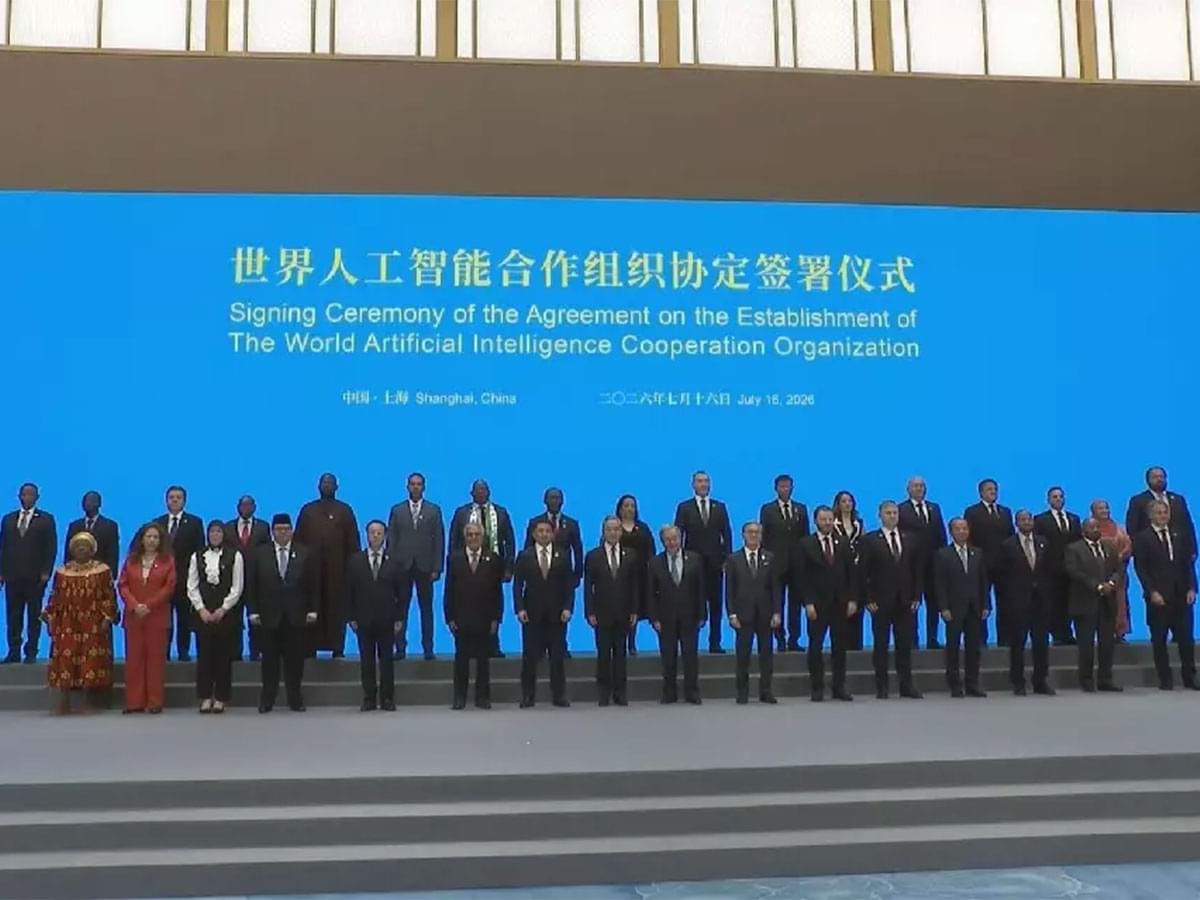
Shanghai, July 16 (QNA) – A total of 29 countries signed today an agreement in Shanghai establishing the World Artificial Intelligence Cooperation Organization.
Under the terms of the agreement, the World Artificial Intelligence Cooperation Organization will be an independent intergovernmental international organization headquartered in Shanghai.
The agreement was signed on the sidelines of the 2026 World Artificial Intelligence Conference and the High-Level Meeting on Global AI Governance in China.
Nature is humanity’s lifeline. Human health, food, economies and well-being depend on nature. Yet nature is in crisis. One million of the world’s estimated 8 million species of plants and animals are threatened with extinction. Meanwhile, ecosystem degradation is affecting the well-being of 40 per cent of the global population.
The spotlight on nature and biodiversity highlights updates from around the UN System, from partners and others, helping to call attention to the need for a just, prosperous and sustainable future for all.
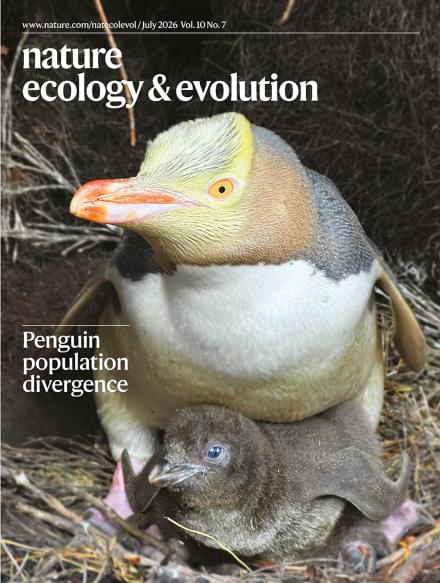
Yellow-eyed penguins, also known as hoiho or takaraka (Megadyptes antipodes, pictured), are an endangered species endemic to Aotearoa (New Zealand) with only around 3,000 individuals left in the wild, and the only living member of the genus Megadyptes. In collaboration with Ngāi Tahu iwi (tribe) of the South Island of Aotearoa, whole-genome sequencing of 249 individuals that span the entire species range has identified 3 phylogenetically distinct lineages, which suggests that they exist as 3 subspecies that have been isolated from each other for several thousand years. Genome scans also reveal candidate gene variants associated with differential susceptibility to neonatal respiratory distress syndrome.
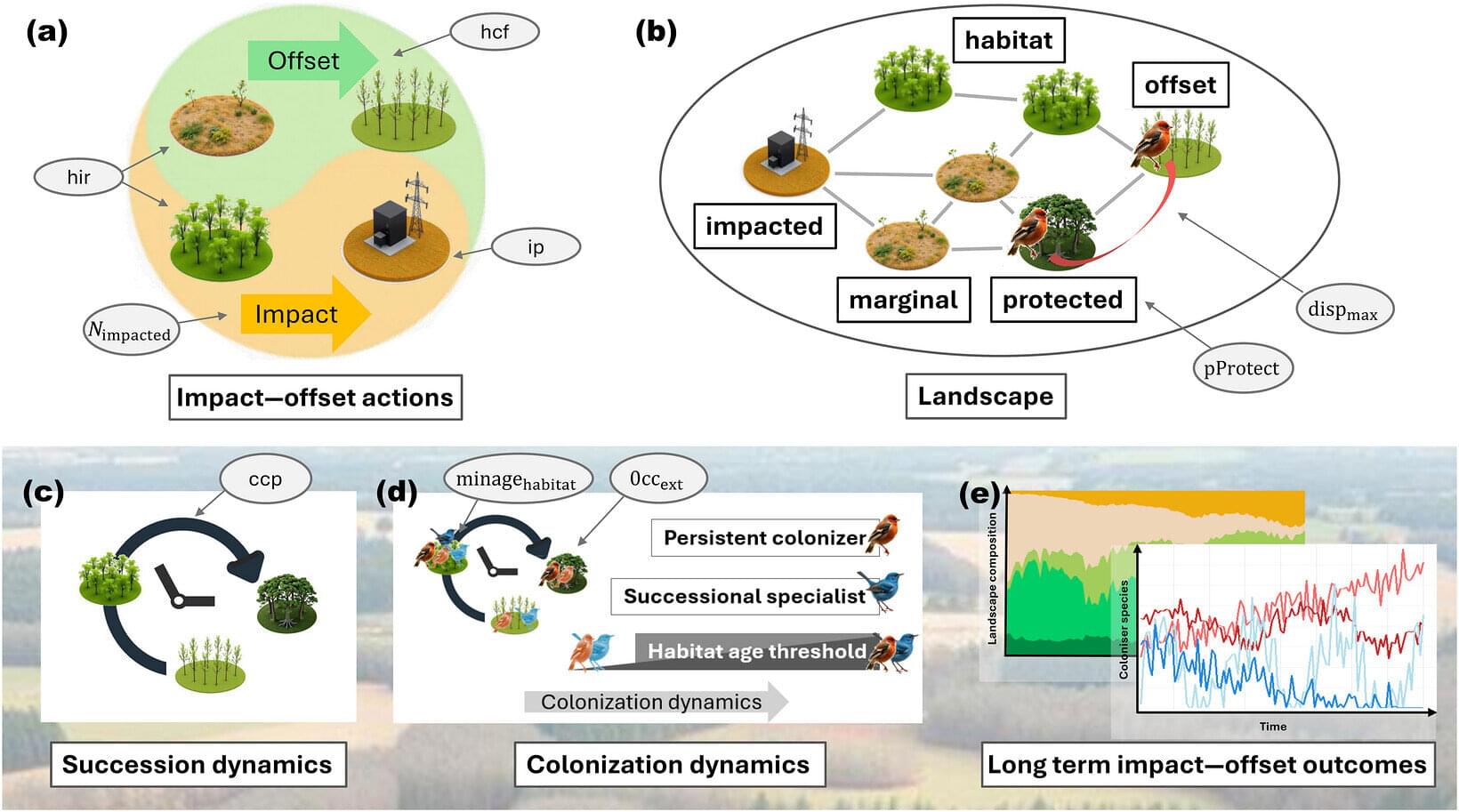
A new study identifying the ecological conditions needed for biodiversity offsetting to achieve conservation goals could provide important guidance for governments and industries as they expand biodiversity net gain (BNG) and nature restoration policies. The research is published in the journal Conservation Biology.
Biodiversity offsetting is increasingly used to compensate for environmental damage caused by development. It sees habitat loss in one location compensated through habitat restoration or protection elsewhere, with the aim of achieving no net loss of biodiversity.
The latest research, led by Swansea University in collaboration with the UK Centre for Ecology & Hydrology (UKCEH) and Forest Research, shows that biodiversity offsets are far more likely to succeed when restoration areas are larger than impacted habitats, are protected over long timescales and are designed around how ecosystems recover over time.