
A new DARPA challenge seeks to help defense and commercial wireless users cohabitate on airwaves, but DOD’s CIO warns “there is a physical limitation to how fast we can move” to free up frequencies.
Get the latest international news and world events from around the world.

Lockheed Martin joins race to build hypersonic jetliners, weapons
DARPA, NASA spend millions to develop the needed technologies to go really fast.

A Xerox Machine for Super Solar Panels
Researchers at Xerox PARC are working on a way to cheaply print efficient solar cells at a large scale.

The robot takeover is inevitable
Blue Prism (LON: PRSM) — Proactive speaks to a leading mind in the field of artificial intelligence to talk about the latest developments in robotic process automation.
Unlocking the gates to quantum computing

Researchers from Griffith University and the University of Queensland have overcome one of the key challenges to quantum computing by simplifying a complex quantum logic operation. They demonstrated this by experimentally realising a challenging circuit — the quantum Fredkin gate — for the first time.
“The allure of quantum computers is the unparalleled processing power that they provide compared to current technology,” said Dr Raj Patel from Griffith’s Centre for Quantum Dynamics.
“Much like our everyday computer, the brains of a quantum computer consist of chains of logic gates, although quantum logic gates harness quantum phenomena.”

Microsoft takes chatbot tayandyou offline after offensive Tweets
Artificial-intelligence software designed by Microsoft to tweet like a teenage girl has been suspended after it began spouting offensive remarks.

The Race Is On to Control Artificial Intelligence, and Tech’s Future
Amazon, Google, IBM and Microsoft are using high salaries and games pitting humans against computers to try to claim the standard on which all companies will build their A.I. technology.
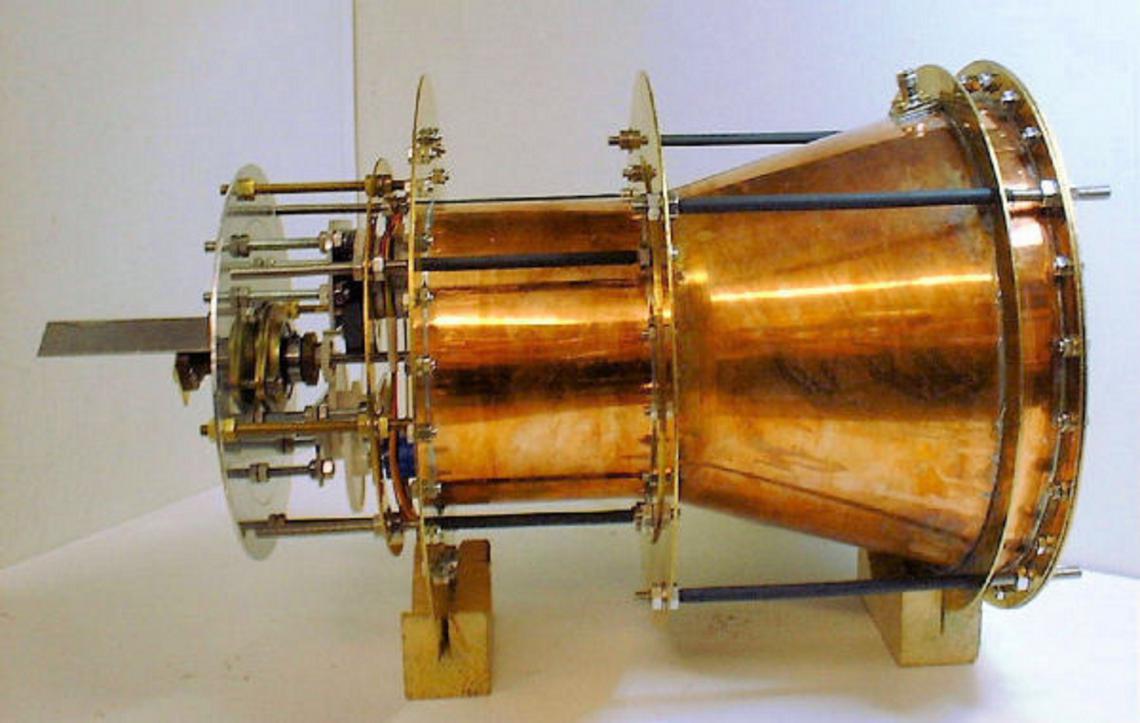
The EmDrive Finally Will Undergo Peer Review
The unbelievable drive that’s nominally connected to NASA is reportedly about to be analyzed by others in the industry.

Movie review: Virtual reality blurs the line in ‘Creative Control’
There are some kernels of brilliance scattered amid the dead spaces of “Creative Control,” a microbudgeted techno-drama.
In a near-future Brooklyn, marketing consultant David (played by Benjamin Dickinson, the film’s director and co-writer) is assigned to create an ad campaign for Augmenta, a new form of augmented-reality glasses that will add a high-tech layer to the viewer’s reality. After deciding to give a pair to a hip artist — in this case, the musician/comedian Reggie Watts, here wittily sending up his own image — David starts noodling with a pair himself.
While he ignores his flighty yoga-instructor girlfriend, Juliette (Nora Zehetner), David starts to create a sexy avatar based on Sophie (Alexia Rasmussen), the fashion-designer girlfriend of his best friend, Wim (Dan Gill), a philandering photographer. David and Sophie start crushing on each other, but it’s nothing to the sparks David feels with her simulated version.
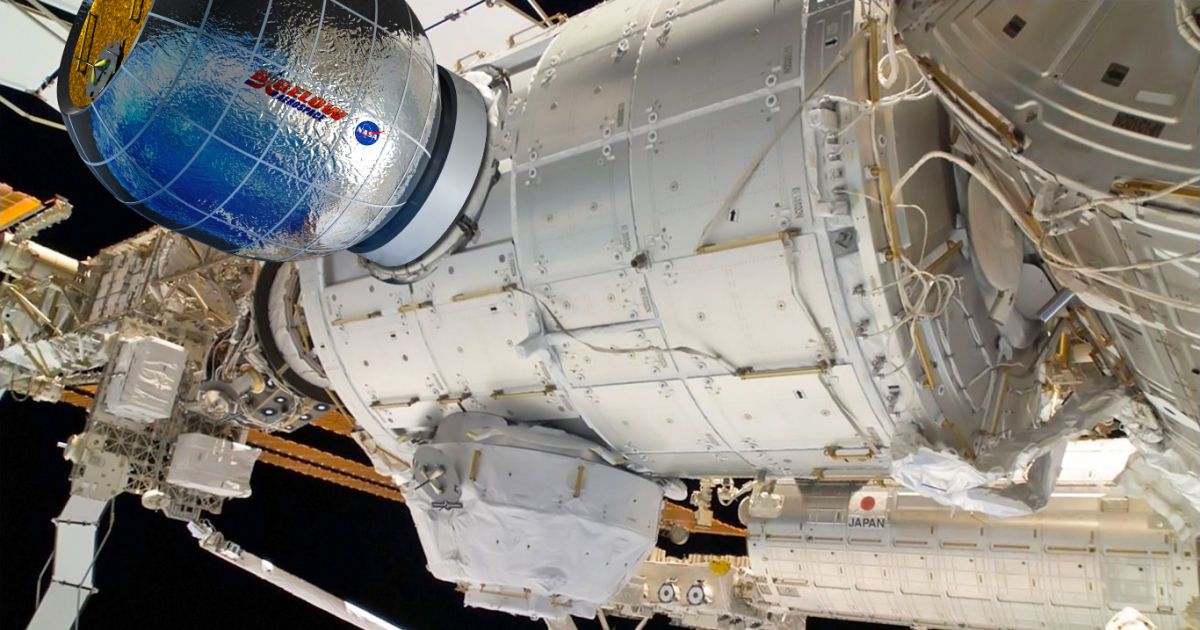
NASA to use the ISS as a testbed for inflatable living modules
NASA, perhaps more than anyone else, knows that there’s only so much room for packing stuff onto a spacecraft. That’s why it’s testing expandable living modules on the International Space Station prior to sending them to Mars for work and living spaces. The Bigelow Expandable Activity Module will ride along in an upcoming SpaceX Dragon resupply mission to the ISS and from there will be unpacked and attached to the side of the station.
After that it’ll be filled with air to expand from just over five feet in depth and almost eight in diameter to 12 feet deep and over 10 feet in diameter and have its pressure equalized with the rest of the station. In the video below, NASA says that it’s all going to be done pretty slowly given that it’s the first experiment of its kind.
The BEAM needs to prove its mettle against cosmic radiation, durability and long-term leak performance prior to going into deep space, however. Before the expandable spaces go near the red planet, they’ll have to survive two years on the ISS with crew members poking and prodding it for the aforementioned reasons. The video below is a rendering, and admittedly moves along much faster than NASA says the installation process will actually go, but it should give you an idea of what the ISS will look like when the bolt-on test module is in place.