
“More than five years after the last Harry Potter film was released, Warner Bros. is preparing to delve back into the Wizarding World with Fantastic Beasts and Where to Find Them. And Disney will release its temperately anticipated Star Wars spinoff Rogue One this December in US cinemas.”
Get the latest international news and world events from around the world.
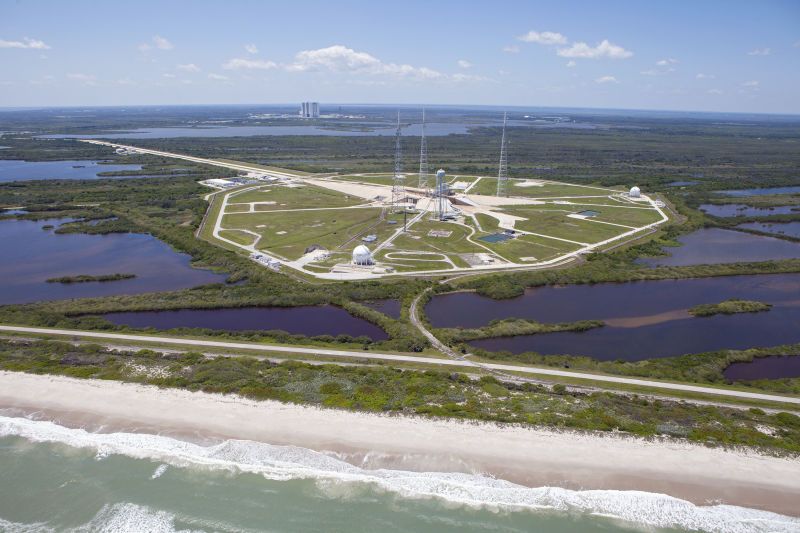
The Biggest Threat to NASA’s Future Is the Ocean — By Maddie Stone | Gizmodo
“That’s a troubling question for NASA, an agency whose most valuable piece of real estate—the $10.9 billion sandbar called Kennedy Space Center—is also its most threatened.”

An ancient drought-friendly farming process could become the next organics — By Renuka Rayasam | Quartz
“Drip irrigation came to California in the 1970s, letting farmers plant more fruits, vegetables, and nuts more closely together and in desert areas not naturally suited for agriculture.”

The National Guard Is Using A Robot To Blow Up A Dangerous Chemical
The bunker door will be opened because the igniter, also called nitrocellulose, burns very rapidly and is only explosive when confined, Brian Salvatore, chairman of the chemistry and physics department at Louisiana State University in Shreveport and a member of the Camp Minden citizens’ advisory committee, said last week.
A magazine holding 114,000 pounds of igniter is scheduled for burning Saturday. Another one holding 84,000 pounds of igniter and 40,000 pounds of M6 artillery propellant is to be burned Oct. 29.

China Has Overtaken the U.S. In AI Research
In Brief:
- The United States’ current levels of R&D spending on AI are one-half to one-quarter of the levels that would be best for economic growth.
- Lagging behind in AI research could put the U.S. at a disadvantage if other countries get the opportunity to dictate how the technology is used.
The U.S. may be trailing behind China in artificial intelligence (AI) research — or at least in journal articles that mention “deep learning” or “deep neural network” — according to the White House’s National Artificial Intelligence Research and Development Strategic Plan.
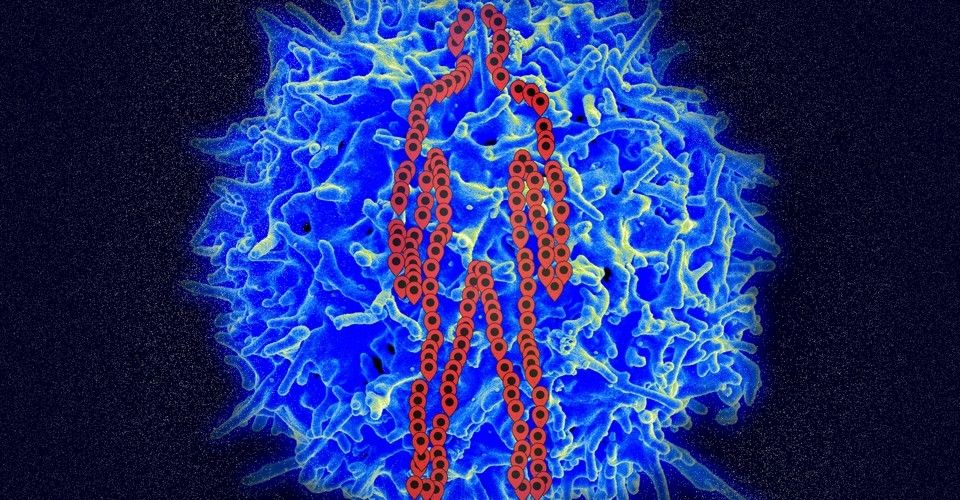
A Google Maps for the Human Body
A group of scientists has taken the first important steps towards creating the Human Cell Atlas—a complete inventory of our staggeringly diverse cells.
Augmented Reality In Healthcare Will Be Revolutionary
Augmented reality is one of the most promising digital technologies at present – look at the success of Pokémon Go – and it has the potential to change healthcare and everyday medicine completely for physicians and patients alike.

Google is going to win the next major battle in computing
With Google Assistant, Google is far ahead of the competition when it comes to artificial intelligence.
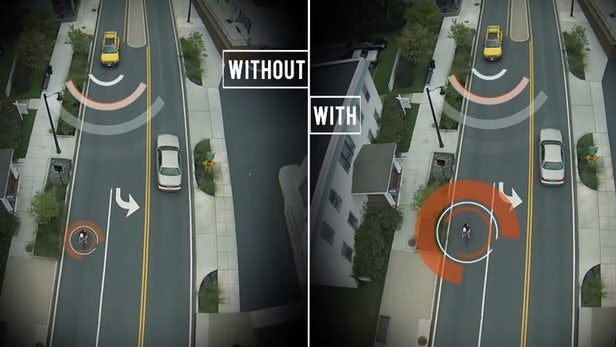
Simple gadget puts bikes on cars’ radar
In the near future, we’re going to see an increasing number of Collision Avoidance System-equipped cars on the roads. Stated simply, the technology uses an integrated forward-looking radar system to alert drivers when they’re rapidly approaching obstacles such as other vehicles. If those other vehicles are bicycles, however, their rear profile can make them difficult for the radar to detect. That’s where iLumaware’s Shield TL comes in.
Inventors Chris Mogridge and Alexis Stobbe created the device by analyzing how stealth technology works, then essentially going in the opposite direction – whereas stealth vehicles are designed to evade radar signals, the Shield is made to catch those signals and reflect them back to the cars. It does this purely via its unique shape, not emitting any actual signal itself.
In field tests, it boosted bicycles’ radar signature by up to 100 percent, and thus increased the distance at which they could be detected by Collision Avoidance Systems.

For the first time, scientists have measured sun’s real-time energy
Physicists on the Borexino neutrino experiment at Italian physics laboratory INFN in Gran Sasso announced in Nature that they have detected neutrinos produced deep inside the sun.
Neutrinos, which constantly stream through us, interact very rarely with other matter. When created in nuclear reactions inside the sun, they fly through dense solar matter in seconds and can reach the Earth in eight minutes.