Urban VPN extensions collect AI prompts, responses, and browsing data from millions through hidden code.




Users accessing the SoundCloud audio streaming platform through a virtual private network (VPN) connection are denied access to the service and see a 403 ‘forbidden’ error.
SoundCloud is a large audio distribution platform focused on user-uploaded content, built around independent creators rather than licensed music from major labels. It has at least 140 million registered users and 40 million creators.
Due to its open, unmoderated nature, the platform has been banned in China since 2014, in Russia since 2022, and is restricted in Venezuela, Kazakhstan, and other countries. Because of this, users in these regions rely on a VPN or proxy solution to bypass the blocks.

Audio streaming platform SoundCloud has confirmed that outages and VPN connection issues over the past few days were caused by a security breach in which threat actors stole a database exposing users’ email addresses and profile information.
The disclosure follows widespread reports over the past four days from users who were unable to access SoundCloud when connecting via VPN, with attempts resulting in the site displaying 403 “forbidden” errors.
In a statement shared with BleepingComputer, SoundCloud said it recently detected unauthorized activity involving an ancillary service dashboard and activated its incident response procedures.

Kali Linux has released version 2025.4, its final update of the year, introducing three new hacking tools, desktop environment improvements, the preview of Wifipumpkin3 in NetHunter, and enhanced Wayland support.
Kali Linux is a distribution designed for cybersecurity professionals and ethical hackers to perform red-teaming, penetration testing, security assessments, and network research.
The distribution is available as an installable operating system or a live environment and supports a wide range of hardware, including Raspberry Pi devices and compatible Android phones through Kali NetHunter.
Free unofficial patches are available for a new Windows zero-day vulnerability that allows attackers to crash the Remote Access Connection Manager (RasMan) service.
RasMan is a critical Windows system service that starts automatically, runs in the background with SYSTEM-level privileges, and manages VPN, Point-to-Point Protocol over Ethernet (PPoE), and other remote network connections.
ACROS Security (which manages the 0patch micropatching platform) discovered a new denial-of-service (DoS) flaw while looking into CVE-2025–59230, a Windows RasMan privilege escalation vulnerability exploited in attacks that was patched in October.

Google is discontinuing its “dark web report” security tool, stating that it wants to focus on other tools it believes are more helpful.
Google’s dark web report tool is a security feature that notifies users if their email address or other personal information was found on the dark web.
After Google scans the dark web and identifies your personal information, it will notify you where the data was found and what type of data was exposed, encouraging users to take action to protect their data.
Genie 3 is a world builder powered by generative AI. It appears that it could in principle be built into a game engine.
One thing I’d like to do is have procedural generation as the backbone, and have generative AI modify things further that regular proc-gen textures just are not able to accomplish.
Introducing Genie 3, a general purpose world model that can generate an unprecedented diversity of interactive environments. Given a text prompt, Genie 3 can generate dynamic worlds that you can navigate in real time at 24 frames per second, retaining consistency for a few minutes at a resolution of 720p.
Watch the Google DeepMind episode on Genie 3 with Hannah Fry here: • Genie 3: An infinite world model | Shlomi…
Our team has been pioneering research in simulated environments for over a decade, from training agents to master real-time strategy games to developing simulated environments for open-ended learning and robotics. This work motivated our development of world models, which are AI systems that can use their understanding of the world to simulate aspects of it, enabling agents to predict both how an environment will evolve and how their actions will affect it.
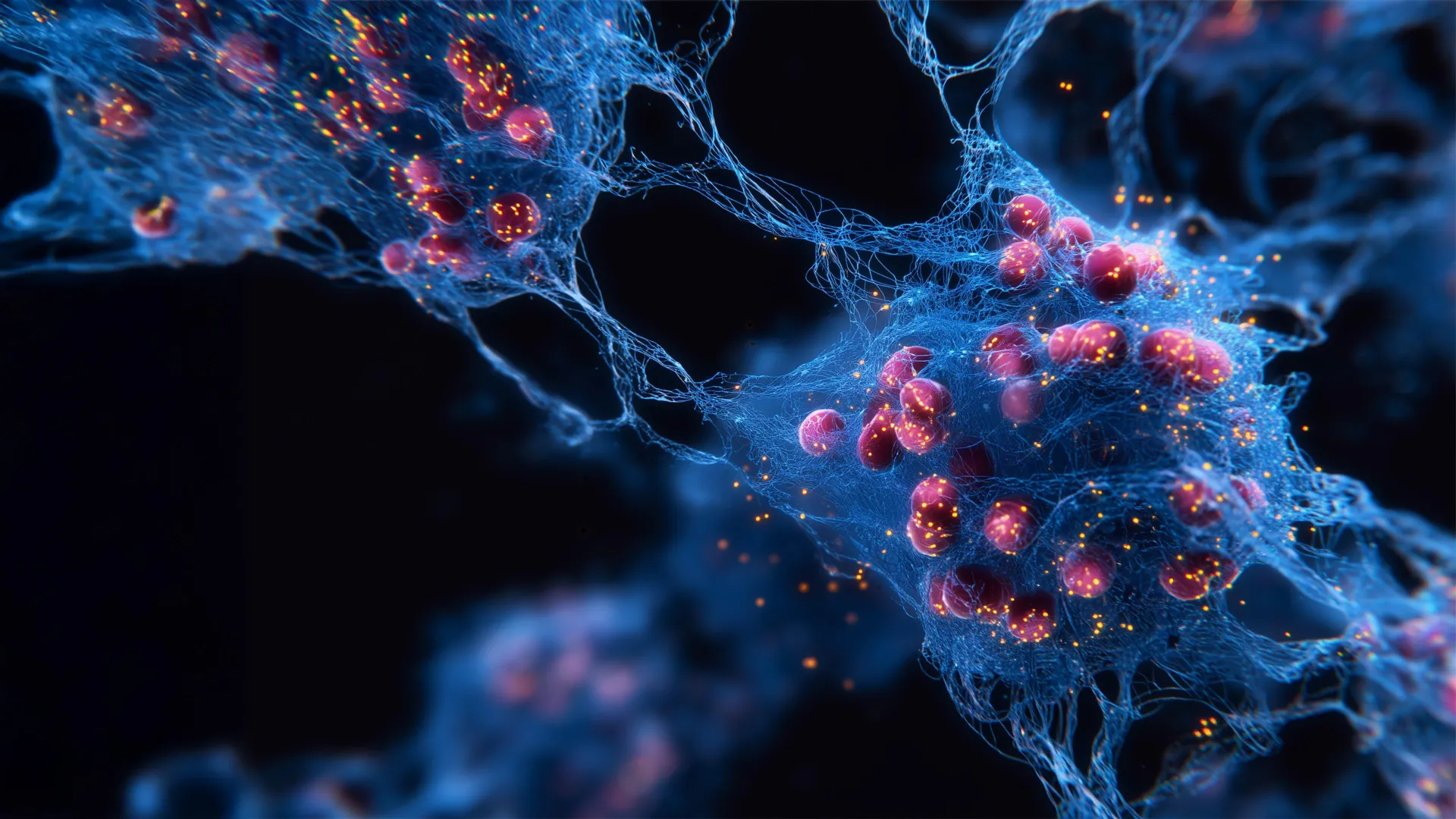
Senescent “zombie” cells are linked to aging and multiple diseases, but spotting them in living tissue has been notoriously difficult. Researchers at Mayo Clinic have now taken an inventive leap by using aptamers—tiny, shape-shifting DNA molecules—to selectively tag these elusive cells. The project began as an offbeat conversation between two graduate students and quickly evolved into a collaborative, cross-lab effort that uncovered aptamers capable of binding to unique surface proteins on senescent cells.