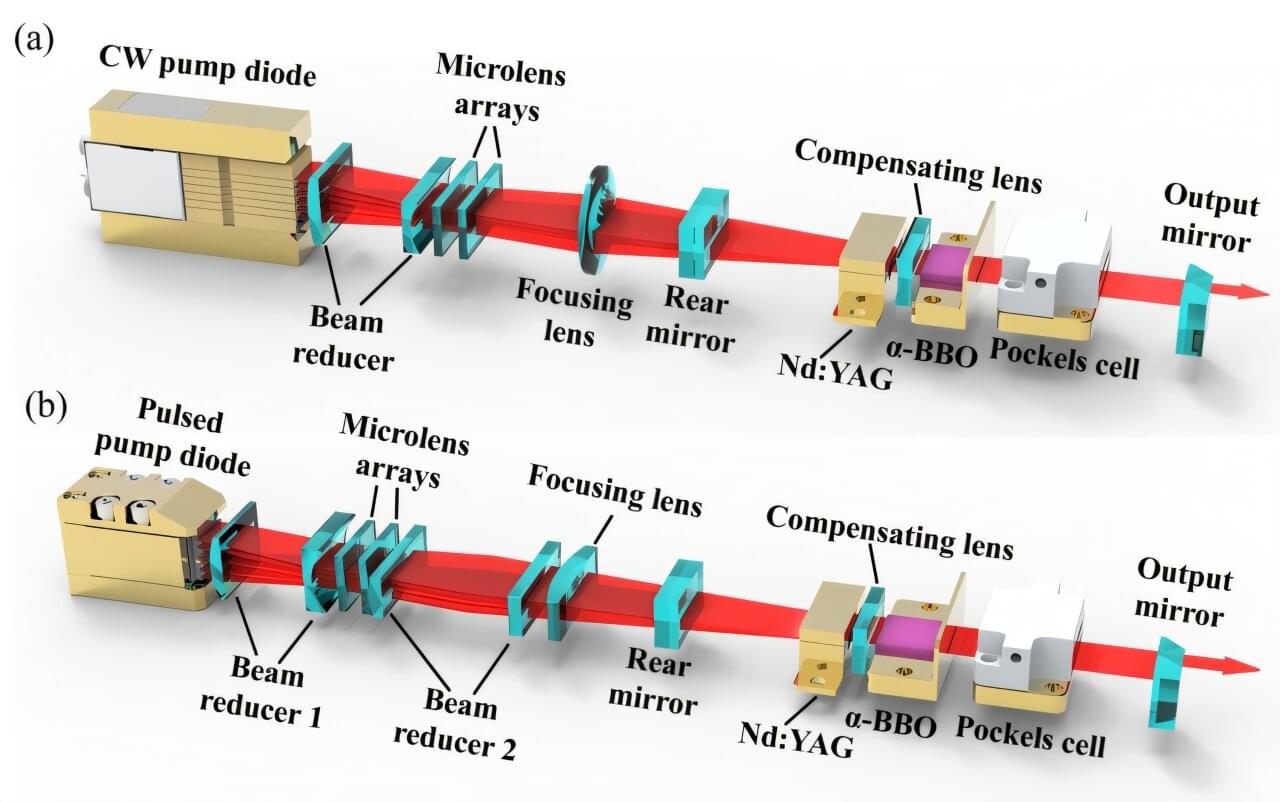
A research team led by Prof. Zhang Tianshu from the Hefei Institutes of Physical Science of the Chinese Academy of Sciences has developed a low-stress electro-optic switch based on large-aperture β-barium borate (BBO) slab crystals and integrated it into an Nd:YAG hybrid-cavity Innoslab laser system. Their study, published in Optics Express on January 13, addresses long-standing challenges in high-energy laser systems, particularly those related to switching modulation consistency and operational stability.
Get the latest international news and world events from around the world.

Topological antenna could pave the way for 6G networks
Using ideas borrowed from topological photonics, researchers in Singapore, France and the US have designed a compact antenna capable of handling information-rich terahertz (THz) signals. Reporting their results in Nature Photonics, the team, led by Ranjan Singh at the University of Notre Dame, say that with further refinements, the design could help underpin future sixth-generation (6G) wireless networks, allowing data to be shared at unprecedented speeds.
In the not-too-distant future, 6G networks are expected to enable data rates of around one terabit per second—the same as transferring roughly half the storage of a mid-range smartphone in a single second. Achieving such speeds will require wireless systems to operate at terahertz frequencies, far higher than those used by today’s 5G networks.
However, before THz frequencies can be used reliably, major improvements are needed in the antennas that transmit and receive these signals.
Ordered ‘supercrystal’ could make lasers faster, smaller and more efficient
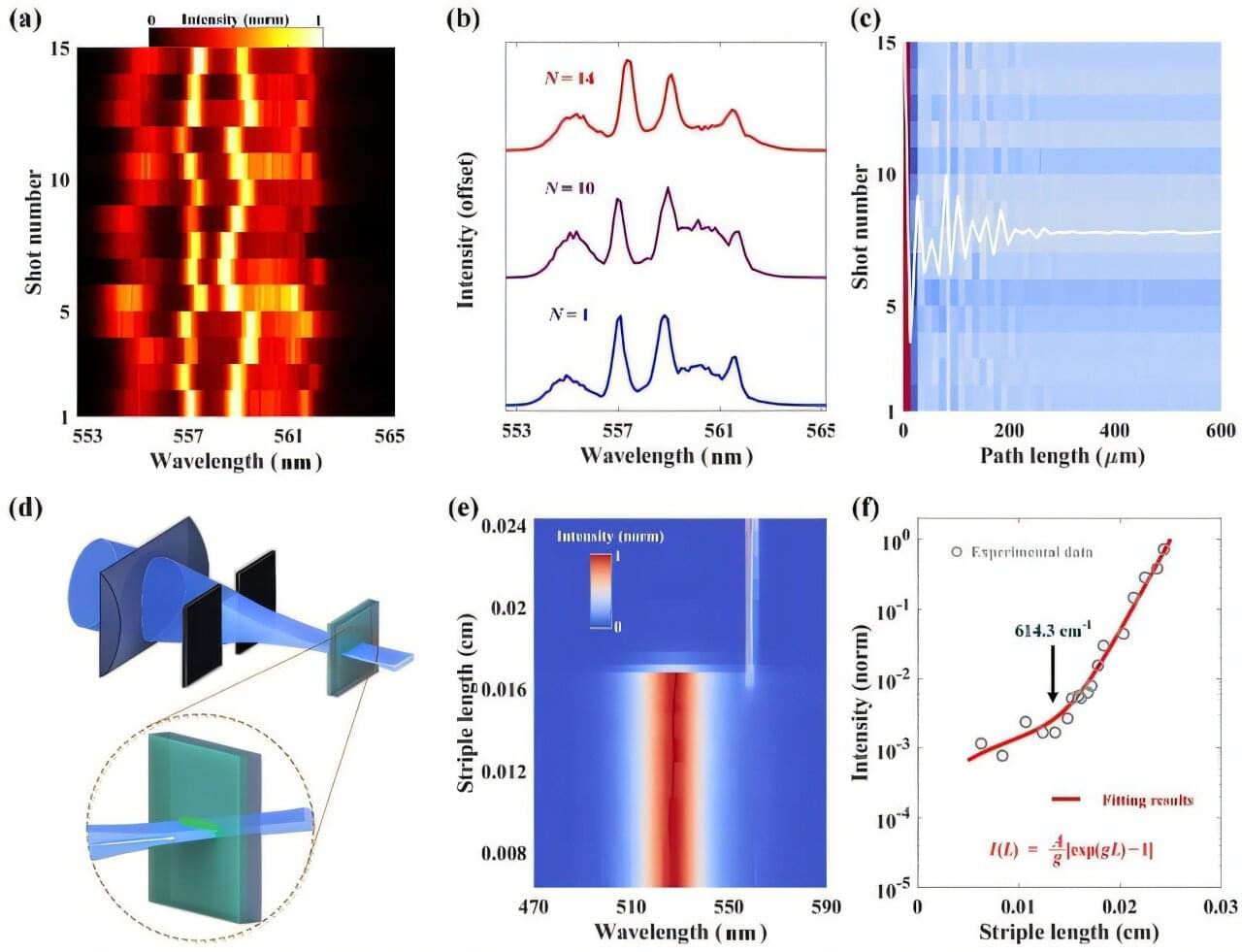
An advance from Monash University could pave the way for faster, smaller, and more energy-efficient lasers and other light-based technologies. Engineers have developed a new type of perovskite material arranged into an ordered “supercrystal.” In this structure, tiny packets of energy called excitons work together rather than individually, allowing the material to amplify light far more efficiently. The findings, published in Laser & Photonics Reviews, could have applications in communications, sensors, and computing, improving the performance of devices that rely on light, such as sensors in autonomous vehicles, medical imaging, or electronics.
Corresponding author Professor Jacek Jasieniak at Monash Materials Science and Engineering highlighted the potential for faster, more energy-efficient optical devices. “What’s exciting here is that we’re not changing the material itself, but how it’s organized. By assembling nanocrystals into an ordered supercrystal, the excitations created by light can cooperate rather than compete, which allows light to be amplified much more efficiently,” Professor Jasieniak said.
Dr. Manoj Sharma, who led the experimental work at Monash, said their approach revealed new possibilities in nanocrystal assemblies. “By assembling nanocrystals into a highly ordered supercrystal, we show that optical gain is no longer limited by single-particle biexcitons, which are inefficient and prone to energy losses, but instead arises from collective excitonic interactions across the whole structure,” Dr. Sharma said.

Halley’s Comet Has the Wrong Name, New Research Suggests
Evidence from medieval chronicles suggests that the periodic nature of Halley’s Comet was recognized centuries earlier than previously believed.

A Simple Chemical Tweak Unlocks One of Quantum Computing’s Holy Grails
Even supercomputers can stall out on problems where nature refuses to play by everyday rules. Predicting how complex molecules behave or testing the strength of modern encryption can demand calculations that grow too quickly for classical hardware to keep up. Quantum computers are designed to tackle that kind of complexity, but only if engineers can build systems that run with extremely low error rates.
One of the most promising routes to that reliability involves a rare class of materials called topological superconductors. In plain terms, these are superconductors that also have built-in “protected” quantum behavior, which researchers hope could help shield delicate quantum information from noise. The catch is that making materials with these properties is famously difficult.

Scientists Map the Invisible Fault That Could Trigger the Next Major Earthquake
A new 3D subsurface model shows how variations in rock strength beneath the Marmara Sea could trigger future large earthquakes along the North Anatolian Fault. The findings improve understanding of fault mechanics and support better earthquake forecasting for the Istanbul region. Türkiye lies in
Asteroid Bennu Just Changed the Origin Story of Life
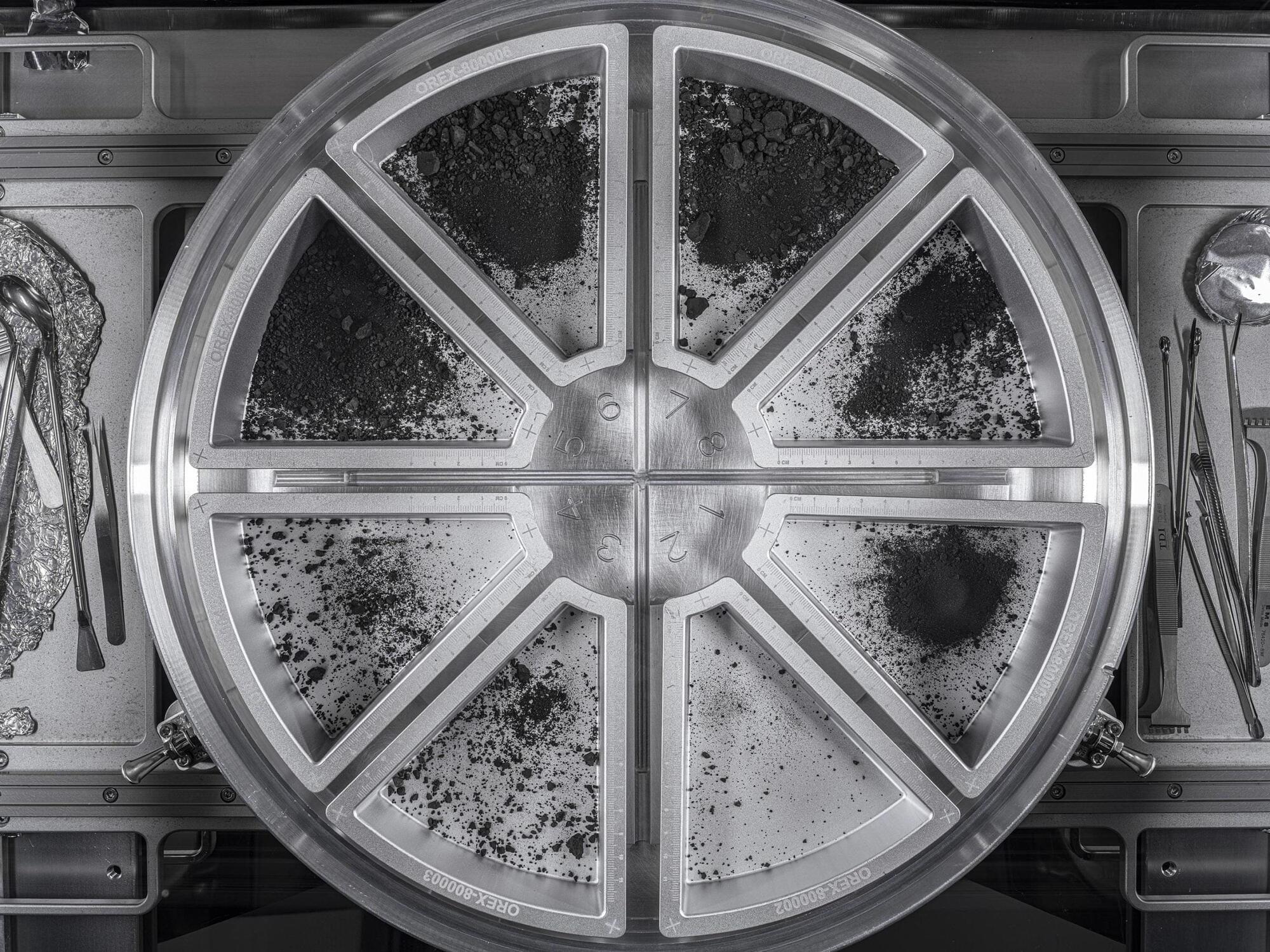
Tiny grains of dust from asteroid Bennu are reshaping how scientists think life’s ingredients formed in space.
Scientists Discover a Giant Hidden Lava Tunnel Beneath Venus
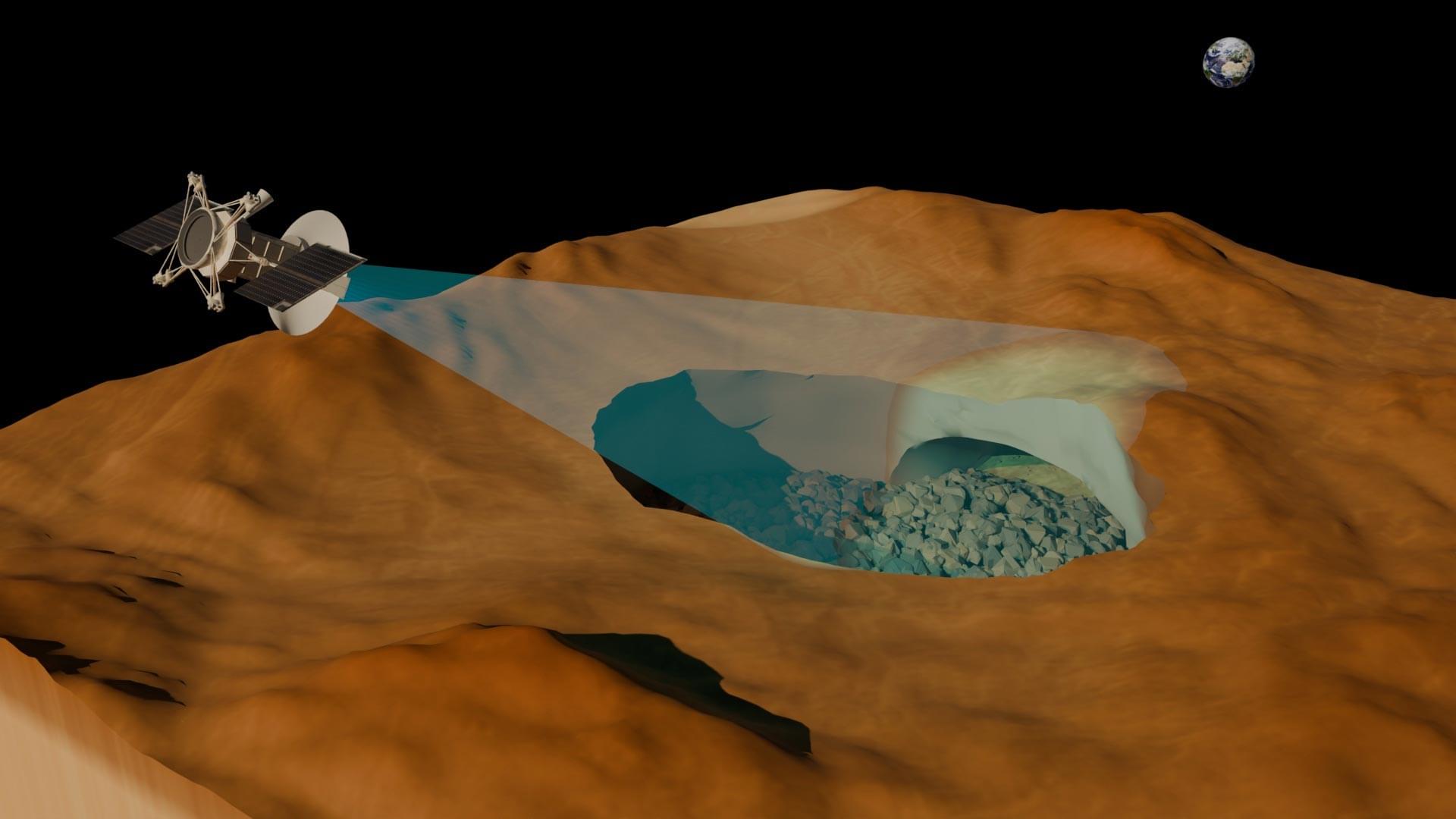
Scientists have uncovered evidence of a gigantic empty lava tunnel beneath Venus, revealing a hidden volcanic world on Earth’s mysterious twin.

Breakthrough AI Tool Identifies 25 Previously Unknown Magnetic Materials
New research may help reduce reliance on rare earth elements used to power modern technology.

SolarWinds Web Help Desk Exploited for RCE in Multi-Stage Attacks on Exposed Servers
Microsoft links SolarWinds WHD exploits to RCE, lateral movement, and domain compromise in multi-stage attacks.