Toggle light / dark theme

Get the latest international news and world events from around the world.

Log in for authorized contributors

Surprising optics breakthrough could transform our view of the Universe

FROSTI revolutionizes mirror control in gravitational-wave detectors, opening the door to a far deeper view of the cosmos. FROSTI is a new adaptive optics system that precisely corrects distortions in LIGO’s mirrors caused by extreme laser power. By using custom thermal patterns, it preserves mirror shape without introducing noise, allowing detectors to operate at higher sensitivities. This leap enables future observatories like Cosmic Explorer to see deeper into the cosmos. The technology lays the groundwork for vastly expanding gravitational-wave astronomy.

Gravitational-wave detectors may soon get a major performance boost, thanks to a new instrumentation advance led by physicist Jonathan Richardson of the University of California, Riverside. In a paper published in the journal Optica, Richardson and his colleagues describe FROSTI, a full-scale prototype that successfully controls laser wavefronts at extremely high power inside the Laser Interferometer Gravitational-Wave Observatory, or LIGO.

LIGO is an observatory that measures gravitational waves — tiny ripples in spacetime created by massive accelerating objects such as colliding black holes. It was the first facility to directly detect these waves, providing strong support for Einstein’s Theory of Relativity. Using two 4-km-long laser interferometers located in Washington and Louisiana, LIGO senses incredibly small disturbances, giving scientists a new way to study black holes, cosmology, and matter under extreme conditions.


Everything in the universe is a quantum wave

A radical new interpretation of quantum mechanics is offered here. Professor of Quantum Information Science at the University of Oxford, Vlatko Vedral, argues that everything in the universe is a quantum wave. The difficulty of uniting the classical world and the quantum world is overcome; everything is quantum, and the quantum gives rise to the classical. His theory also overcomes the measurement problem, the observer problem, and the problem of quantum entanglement (spooky action at a distance). Poof goes the classical world!

There are, I believe, two main reasons why physics seems stuck at present. The last revolution was quantum mechanics and it began with Heisenberg’s famous paper exactly 100 years ago. And since then, not a single experiment has challenged the quantum description of reality. Not one. The first reason for this century-long absence of a new fundamental theory is that we simply haven’t had the appropriate experimental technology to probe regions where something could go wrong. This has now changed rapidly with the ongoing worldwide race to build a universal quantum computer. The technologies that go into this enterprise and that are being pursued by all the major industrial players are becoming sophisticated enough to test fundamental physics in a non-trivial way. However, there is a second reason for being stuck. It is the fact that we still haven’t agreed on the way to understand quantum mechanics. It is for this reason that I’d like to offer my own interpretation.

Watch: Vine-like robot lifts delicate cargo — including human bodies

Although they’re constantly improving, robots aren’t necessarily known for their gentle touch. A new robotic system from MIT and Stanford takes a unique stab at changing that, with a robot that uses vine-like tendrils to do its lifting.

The system the engineers developed consists of a series of pneumatic tubes that deploy from a pressurized box on one side of a robotic arm, use air pressure to snake under or around a specific object, then rejoin the arm on the other side where they are clamped in place. Once clamped, the arm itself can move, or the tube can be wound up to lift or rotate the object in its grasp. The ability to deploy the tubes and then recapture them is the real breakthrough here, improving on previous vine-based robots by allowing the system to close its own loops.

“People might assume that in order to grab something, you just reach out and grab it,” says study co-author Kentaro Barhydt, from MIT’s Department of Mechanical Engineering. “But there are different stages, such as positioning and holding. By transforming between open and closed loops, we can achieve new levels of performance by leveraging the advantages of both forms for their respective stages.”

Nearly 7,000 of the world’s 8,808 data centers are built in the wrong climate, analysis find — vast majority located outside optimal temperature range for cooling, 600 in locations considered too hot

Most facilities sit outside the temperature range recommended for efficient operation, as AI growth pushes data centers into hotter regions.

Ignorance Is the Greatest Evil: Why Certainty Does More Harm Than Malice

The most dangerous people are not the malicious ones. They’re the ones who are certain they’re right.

Most of the harm in history has been done by people who believed they knew what was right — and acted on that belief without recognizing the limits of their own knowledge.

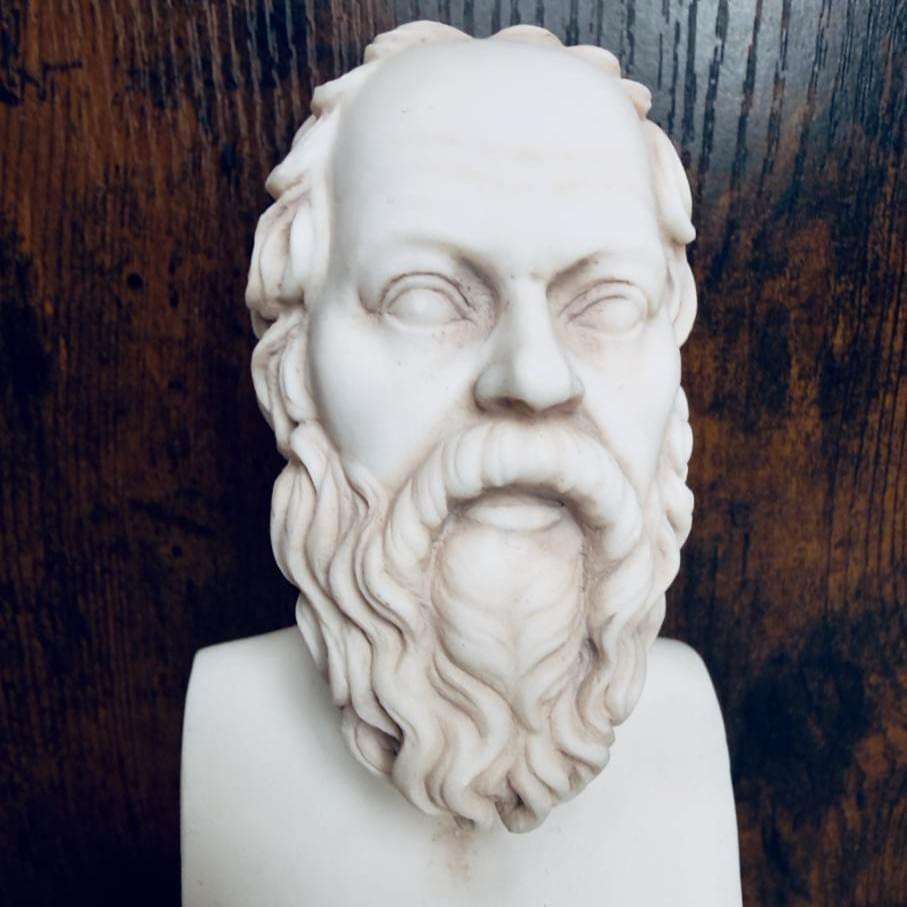
Socrates understood this long ago: the most dangerous is not *not knowing*, but *not knowing that we don’t know* — especially when paired with power.

Read on to find why:

* certainty often does more harm than malice * humility isn’t weakness, it’s discipline * action doesn’t require certainty, only responsibility * and why, in an age of systems, algorithms, and institutions, has quietly become structural.

This isn’t an argument for paralysis or relativism.

It’s an argument for acting without pretending we are infallible.

/* */