Toggle light / dark theme

Get the latest international news and world events from around the world.

Log in for authorized contributors

Nearly isotropic superconducting property revealed in trilayer nickelate

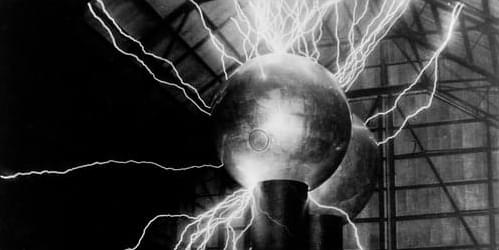
A research team led by Prof. Zhang Jinglei from Hefei Institutes of Physical Science, Chinese Academy of Sciences, found that the trilayer nickelate La4Ni3O10-δ exhibits a nearly isotropic upper critical field under high pressure. This finding provides important experimental insight into the superconducting mechanism of nickel-based materials.

The study is published in Physical Review X.

Since the discovery of superconductivity with a transition temperature (Tc) approaching 80 K under high pressure in the bilayer Ruddlesden–Popper (RP) nickelate La3Ni2O7-δ, bulk superconductivity (Tc≈20 K) has also been verified in single crystals of the trilayer isostructural compound La4Ni3O10-δ under pressure. However, probing its properties remains technically demanding, as experiments must simultaneously achieve ultra-high pressure, strong magnetic fields and cryogenic temperatures.

New macOS malware embeds fake errors to confuse AI analysis tools

A newly discovered macOS malware dubbed “Gaslight” is designed to confuse AI-assisted malware analysis tools by hiding prompt injection strings and fake debugging data within the executable.

Cybersecurity researchers are increasingly using AI-powered tools to assist with malware analysis and reverse engineering.

The malware contains strings that attempt to gaslight AI-assisted analysis tools into believing there is an analysis error or other issue, potentially causing the tools to abort, truncate, or otherwise interfere with the analysis.

Astrochemical model digs into the universe’s missing sulfur

Sulfur is one of the most abundant elements in the universe. If you peer into a diffuse interstellar cloud, you find loads of it—about the amount expected based on fusion patterns in the stars it was born in. However, if you look at a dense, cold molecular cloud—the kind where those stars actually form—it seems like 99% of the sulfur expected to be there is missing. Scientists have puzzled over this “missing sulfur problem” for decades, though a leading theory is that the element hides in icy dust grains, making it hard to detect.

A new paper published in Astronomy & Astrophysics from the Max Planck Institute for Extraterrestrial Physics and the Centro de Astrobiologia describes a new computer simulation model aimed at supporting the interpretation of laboratory results and testing our current understanding of sulfur evolution in interstellar ices.

The simulation was written in pyRate—a Python-based application that calculates how chemicals interact, especially between ice and gas phases. The paper marks the first successful model of the chemistry of a multicomponent interstellar ice analog with a rate-equation simulation. Scientists love “firsts,” but what does that actually mean in practice in this case?

/* */