Toggle light / dark theme

Get the latest international news and world events from around the world.

Log in for authorized contributors

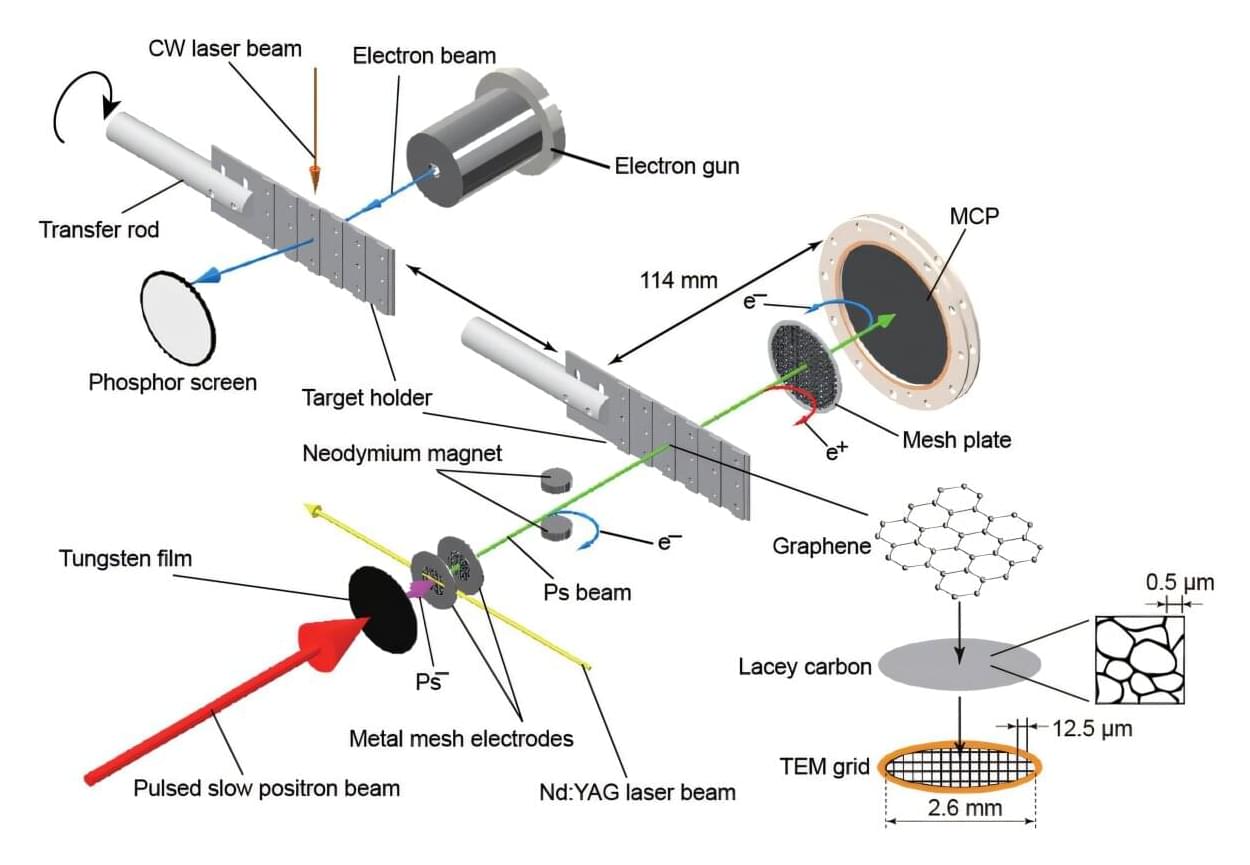
Observing the positronium beam as a quantum matter wave for the first time

One of the discoveries that fundamentally distinguished the emerging field of quantum physics from classical physics was the observation that matter behaves differently at the smallest scales. A key finding was wave-particle duality, the revelation that particles can exhibit wave-like properties.

This duality was famously demonstrated in the double-slit experiment. When electrons were fired through two slits, they created an interference pattern of light and dark fringes on a detector. This pattern showed that each electron behaved like a wave, with its quantum wave-function passing through both slits and interfering with itself. The same phenomenon was later confirmed for neutrons, helium atoms, and even large molecules, making matter-wave diffraction a cornerstone of quantum mechanics.

Stealth quantum sensors unlock possibilities anywhere GPS doesn’t work

As commercial interest in quantum technologies accelerates, entrepreneurial minds at the University of Waterloo are not waiting for opportunities—they are creating them.

Among them is Alex Maierean (MMath ‘24), CEO of Phantom Photonics and part-time Ph.D. student at the Institute for Quantum Computing (IQC). Her startup is developing ultra-sensitive quantum sensors that can filter out background noise and detect the faintest signals, even down to a single photon—the smallest unit of light. This offers new levels of precision and stealth for industries operating in extreme environments, from the depths of the ocean to outer space.

Launched in 2023, the Velocity startup emerged from fundamental research at an IQC lab led by Dr. Thomas Jennewein, IQC affiliate and adjunct faculty in the Department of Physics and Astronomy. Today, the startup is based at Velocity where it has established a dedicated lab space to continue to develop its quantum sensor technology and build its core team.

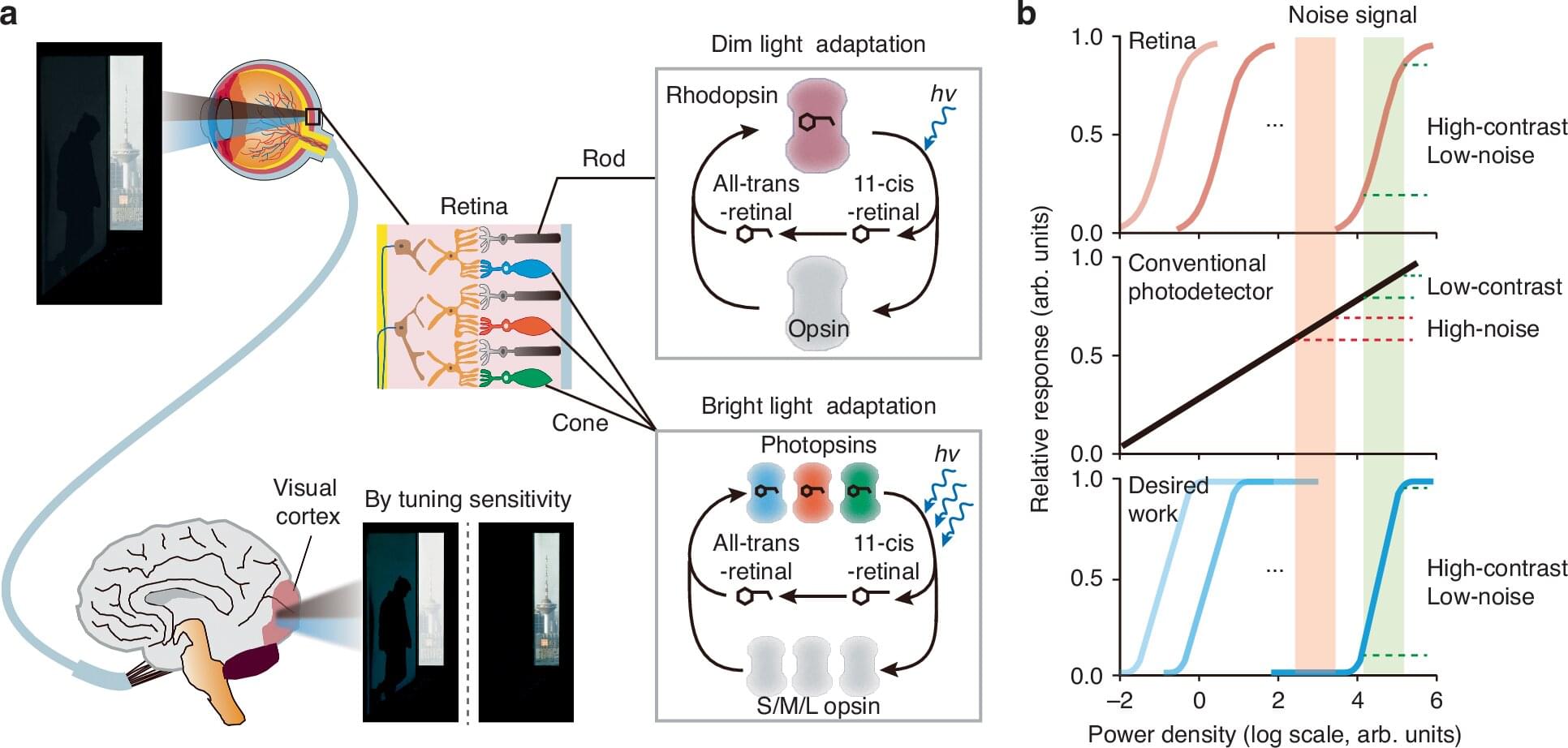
Bioinspired phototransistor achieves high-sensitivity detection of low-contrast targets

Drawing inspiration from the remarkable adaptability of the human eye, researchers from the Institute of Metal Research (IMR) of the Chinese Academy of Sciences have developed a novel phototransistor with tunable sensitivity.

This breakthrough provides an efficient solution for detecting low-contrast targets in complex visual environments, which is a critical challenge for advanced machine vision systems in applications such as precision guidance and smart surveillance.

The results are published in Light: Science & Applications.

/* */