Toggle light / dark theme

Get the latest international news and world events from around the world.

Log in for authorized contributors

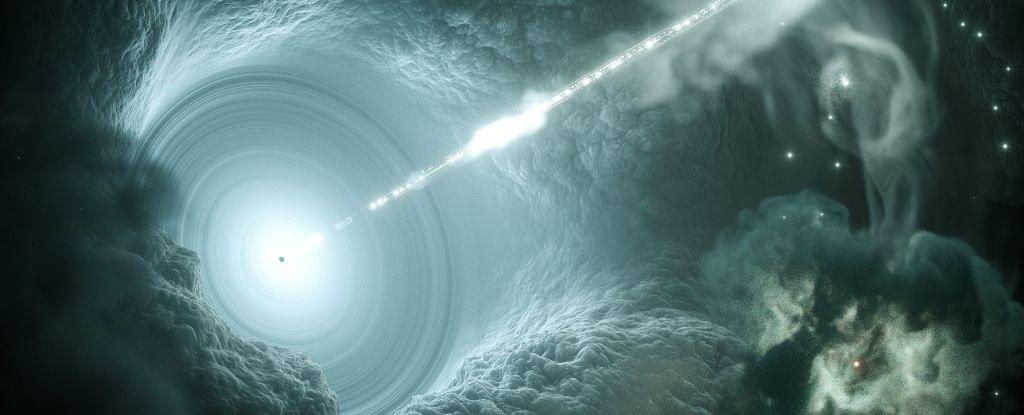
It’s Official: ‘Ghost Particle’ That Smashed Into Earth Breaks Records

The verdict is in. The detection of a cosmic neutrino that smashed into Earth with an unprecedented energy level is not a glitch or an error, but a real detection of a real particle.

In February 2023, a detector called KM3NeT, located deep under the Mediterranean Sea, picked up a signal that seemed to indicate a neutrino with a record-shattering energy of 220 petaelectronvolts (PeV). For reference, the previous record was a mere 10 PeV.

Now, an exhaustive analysis of all the data on and around the event, designated KM3-230213A, not only supports the conclusions that the signal was caused by a 220-PeV neutrino, but adds to the mystery about where the heck in the Universe it came from.


Star Trying to Swallow a Black Hole May Have Triggered a New Type of Supernova

In 2023, astronomers recorded one of the most extraordinary space explosions they had ever seen.

It took place some 750 million light-years away, flaring into the detectors of the Zwicky Transient Facility on 7 July. At first, it looked just like a normal supernova – the explosive death of a star – and astronomers named it SN 2023zkd.

Six months later, a search for cosmic anomalies flagged the explosion as a little odd. A look back at data collected since its initial discovery revealed SN 2023zkd had done something really weird: it brightened again.

New HTTP/2 ‘MadeYouReset’ Vulnerability Enables Large-Scale DoS Attacks

This attack is notable not least because it obviates the need for an attacker to send an RST_STREAM frame, thereby completely bypassing Rapid Reset mitigations, and also achieves the same impact as the latter.

In an advisory, the CERT Coordination Center (CERT/CC) said MadeYouReset exploits a mismatch caused by stream resets between HTTP/2 specifications and the internal architectures of many real-world web servers, resulting in resource exhaustion — something an attacker can exploit to induce a DoS attack.

/* */