Toggle light / dark theme

Self Contained Ion Powered Aircraft Charlene Model Outdoors

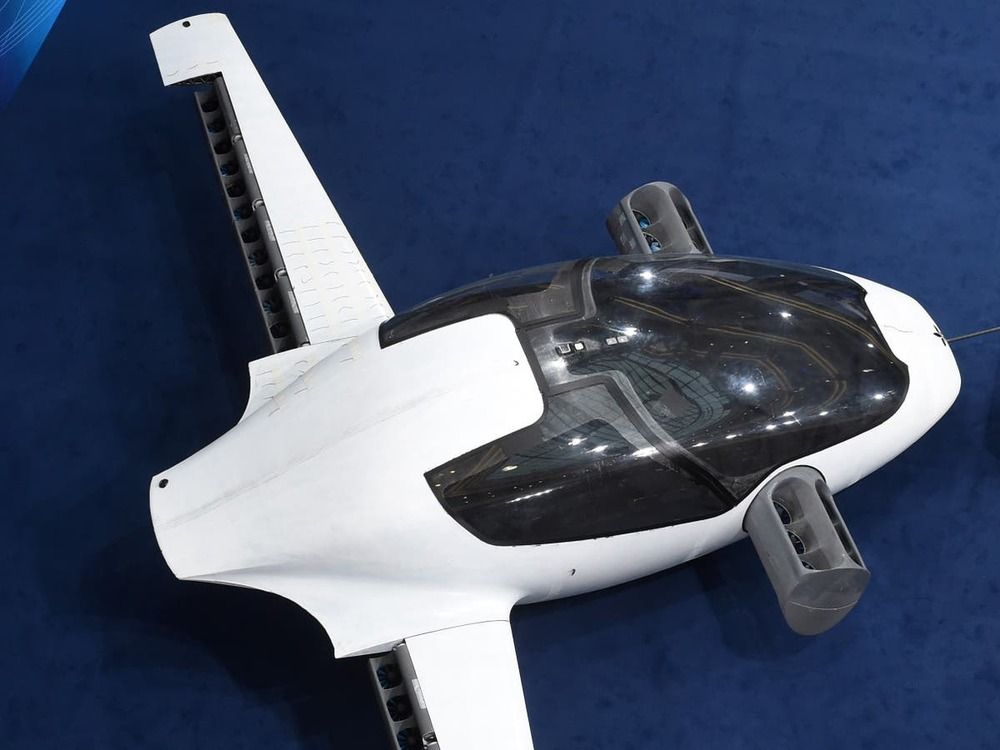
This is the only solely ion propelled series of aircrafts that can lift their power supplies against earth’s gravity. These prototypes were patented specifically for lifting their onboard power supplies and the widely published patent has been in effect since 2014.

While the craft wasn’t working at full power for this test footage since their was a power loss, the safety tether still went completely loose when the craft was energized, and it is also shown flying outdoors. There is an indoor flight that lasted for almost 2 minutes continually when it was flying at its best. There is a video of that and other sustained flights on this YouTube channel.

Previously all heavier than air ion propelled aircrafts had to be connected through thin wires to large heavy power supplies that remained fixed to the ground.

This series of prototypes have been independently verified to fly with onboard power since 2006. It was necessary to increase the EAD thrust to weight ratio by several orders of magnitude as well as other upgrades to get it operational.

Here is a link to a broadcast about the craft with the host of NPR Jeff Saint Clair. His article and radio program certifies fist hand, that this ion propelled aircraft US Patent number 10119, 527, lifts its power supply:

https://radio.wosu.org/post/exploradio-oberlin-inventor-push…t#stream/0

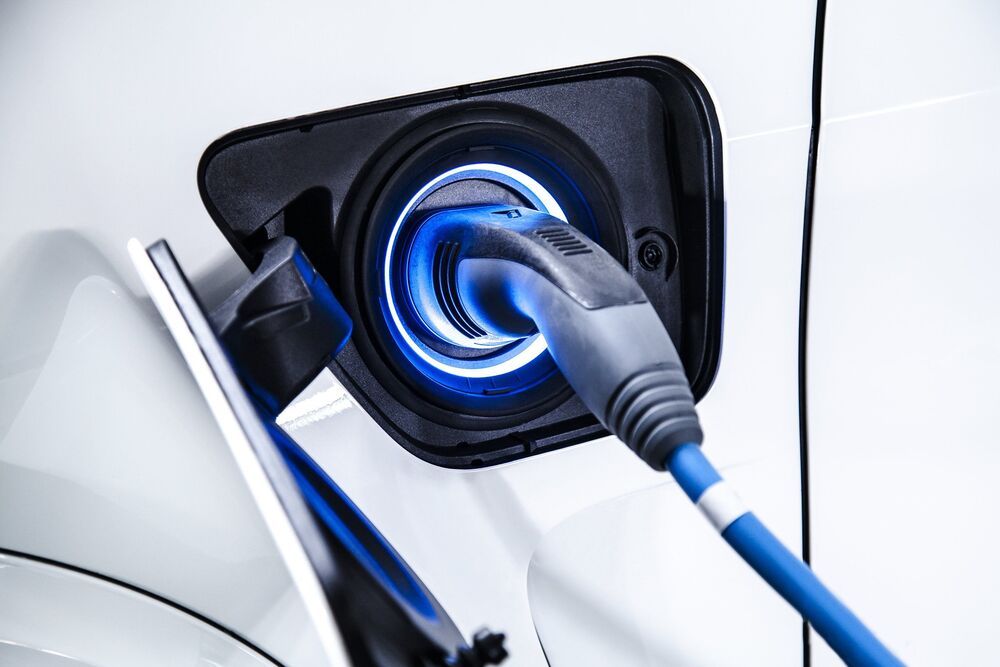
New Cheap Electric Cars Show How Automakers Are Conning The U.S. Market, Inflating Prices

European automaker Renault debuted its new cheap electric cars, the Kwid series, in India for a little over $6000 USD. The incredibly low price has left many consumers wondering why certain counties have access to cheap EV cars, while buyers in Europe and the United States are expected to pay more than quadruple that price for similar vehicles. It turns out there is a conspiracy and Europeans and North Americans who want electric cars are getting gouged by automakers, and it all has to do with gaining access to new markets.

The Kwid specifications are nearly identical to a Dacia, also a Renault brand. The difference: a European Dacia is double the price of an Indian Kwid. Meanwhile, the U.S. market misses entirely on either of these vehicles. The only electric cars available in America are dominated by premium brands and high price tags, making them unaffordable for most.

Cheap electric cars are available. The question is, why are Americans and Europeans being ripped off by electric vehicle manufacturers?

Passenger plane that can fly at over 3,000mph unveiled

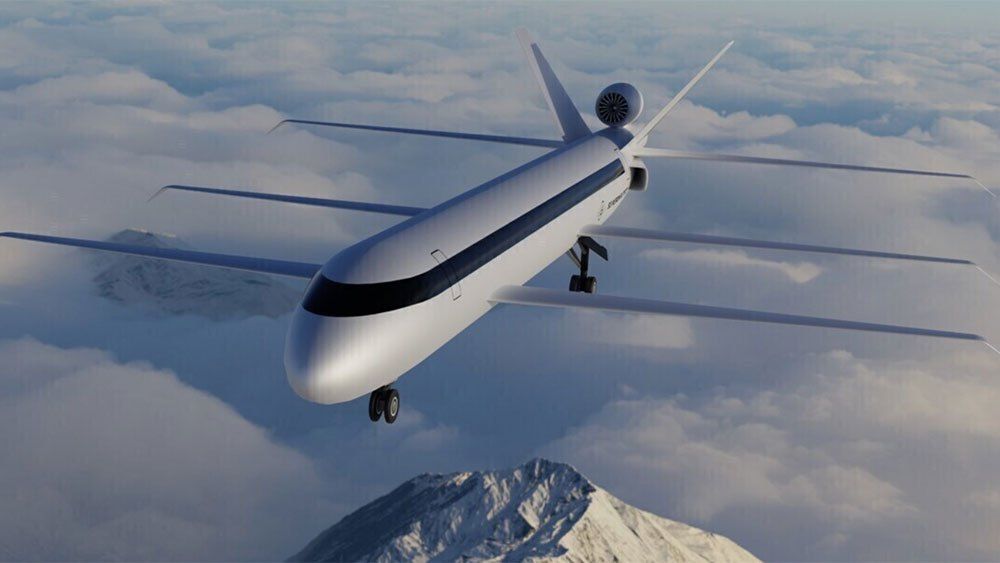
Los Angeles to Tokyo in 2.5 HOURS: Supersonic jet firm unveils plane that can transport 50 people at over 3000mph…


However, by the end of the decade, that time could be reduced to just two and a half hours if the vision of Florida-based supersonic jet firm Aerion comes to fruition.

This week it unveiled a ‘first glimpse’ of its AS3TM airliner, designed to transport up to 50 passengers at up to ‘Mach 4+’ — or at least 3000mph.

Opinion | How many aliens are out there? Why a new estimate is raising eyebrows

‘Humans are extraordinarily special’. Not new but well worth remembering.


Either way, their conclusion is that, like stick-shift cars, extraterrestrial civilizations are few and far between. The implication is that our nearest cosmic chums are at least several thousand light-years away.

You may wonder why this story has raised eyebrows. Well, it would make Homo sapiens extraordinarily special, despite the fact that the galaxy is stuffed with planets. It discomfits scientists (including me) because, historically, every time we’ve thought we occupy a privileged position in the universe, we were wrong. Remember that six centuries ago, learned folk would have assured you that Earth was the center of the cosmos.

Russia to debut world’s first electric plane at MAKS 2021 airshow

According to the CEO of CIAM Mikhail Gordin, this is one of the most important projects in modern aviation. The use of a hybrid power plant based on the high-temperature superconducting platform, or HTSP, is designed to solve a number of technological issues that air transport is already facing, he said.


“This is what was done with the Fund of Advanced Studies – an electric airplane based on superconductivity principles,” Borisov said. The electric motor is part of the hybrid powertrain demonstrator that Russia’s Central Institute of Aviation Motors (CIAM) is developing.

An innovative electric motor based on high-temperature superconductors with a capacity of 500 kW (679 HP) was created by materials specialist Superox.

Trials of a promising superconductive aircraft electric motor started on February 5. A special flying laboratory has been created on the basis of the Yak-40 aircraft.

Exoskeleton with eyes and AI — scientists are developing special robotic legs for disabled people

You are constantly adjusting your walking parameters based on the feedback you’re getting from your environment. You walk differently on a soft surface, you prepare yourself before using stairs. Meanwhile robots cannot really do that, especially exoskeletons. These robotic legs could help disabled people walk again on their own, but how could they prepare to stop, climb stairs, make a sharp turn? Scientists believe that in the future exoskeletons are going to be smart thanks to cameras and artificial intelligence.

Currently exoskeletons need to be controlled manually via smartphone applications or joysticks. This is less than ideal, because the disabled person can’t walk as intuitively as an able-bodied person can. And his or her hands are always occupied with these controls. That kind of a cognitive load is extremely tiring and can be dangerous over time. Could you imagine needing to take out your phone every time you want to climb a set of stairs or walk through a strip of sand? Scientists want to borrow a page from a book about autonomous cars and therefore are optimizing AI computer software to process the video feed to accurately recognize stairs, doors and other features of the surrounding environment.

Brokoslaw Laschowski, leader of the ExoNet research project, said: “Our control approach wouldn’t necessarily require human thought. Similar to autonomous cars that drive themselves, we’re designing autonomous exoskeletons that walk for themselves.”

Where Electric Car Batteries Go When They Die

Global battery recycling industries are a new beginning for old energy storage.


When your kid looks at you with those big, innocent eyeballs and asks, “Where do lithium ion electric car batteries go when they die?” Without hesitation—because kids that age still believe you know everything—you read them this article:

Mighty Volkswagen—the carmaker that certainly looks like it is going to lead the world in the production of electric cars someday—now looks like it might lead the world in recycling electric car batteries, with the announcement that it has opened its first battery recycling plant in Salzgitter, Germany. OK, at a projected 3600 batteries recycled a year, maybe it won’t lead the world, but it will certainly lead battery recycling in Lower Saxony, between Hildesheim and Braunschweig. Globally speaking, all this battery recycling stuff is still being sorted out.

This content is imported from YouTube. You may be able to find the same content in another format, or you may be able to find more information, at their web site.

/* */