“Building a house by hand can be both time-consuming and expensive. Some homebuilders have chosen to automate part of the construction instead.”

“Building a house by hand can be both time-consuming and expensive. Some homebuilders have chosen to automate part of the construction instead.”
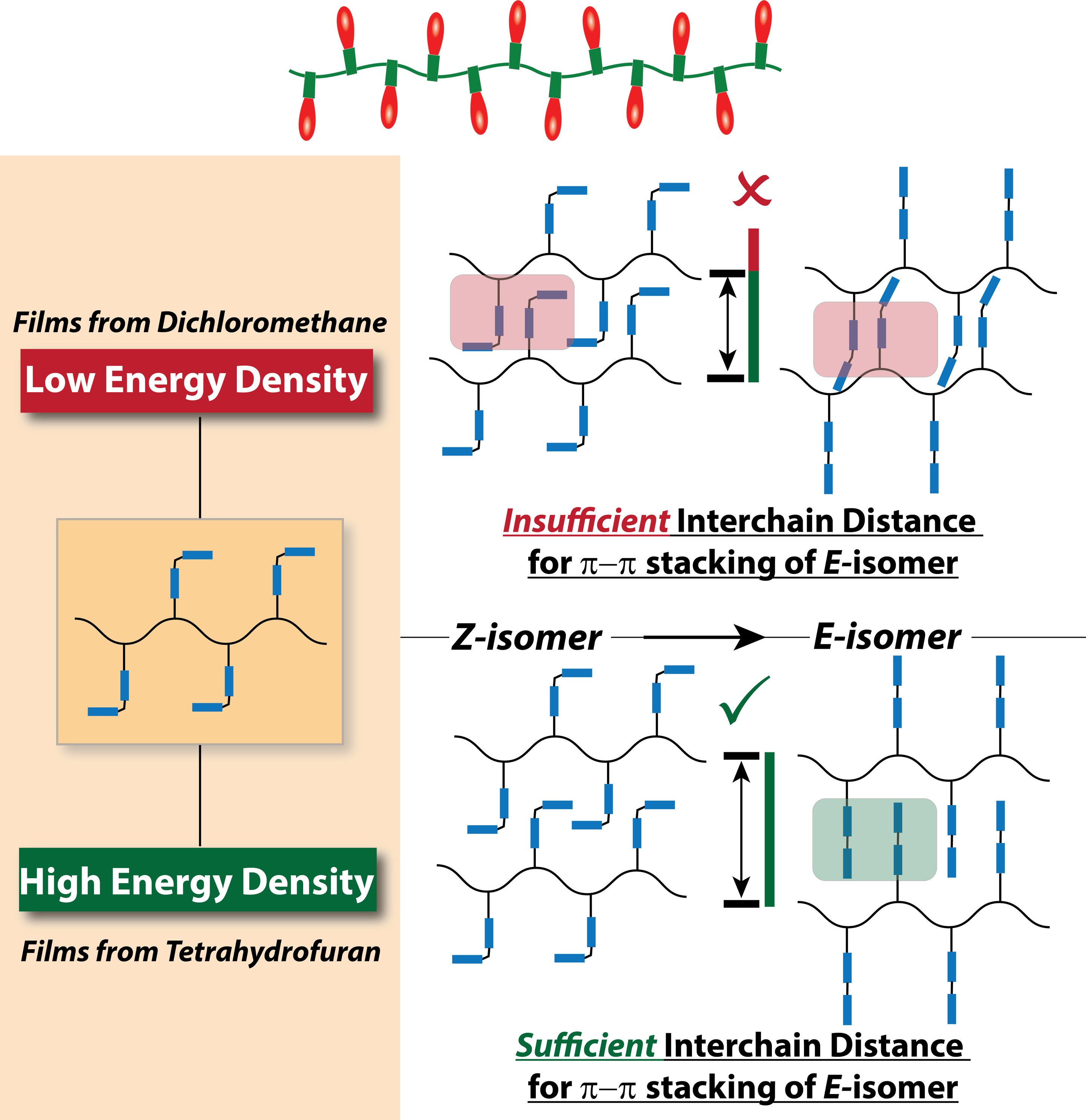
Materials chemists have been trying for years to make a new type of battery that can store solar or other light-sourced energy in chemical bonds rather than electrons, one that will release the energy on demand as heat instead of electricity — addressing the need for long-term, stable, efficient storage of solar power.
Now a group of materials chemists at the University of Massachusetts Amherst led by Dhandapani Venkataraman, with Ph.D. student and first author Seung Pyo Jeong, Ph.D. students Larry Renna, Connor Boyle and others, report that they have solved one of the major hurdles in the field by developing a polymer-based system. It can yield energy storage density — the amount of energy stored — more than two times higher than previous polymer systems. Details appear in the current issue of Scientific Reports.
Venkataraman and Boyle say that previous high energy storage density achieved in a polymeric system was in the range of 200 Joules per gram, while their new system is able to reach an average of 510 Joules per gram, with a maximum of 690. Venkataraman says, “Theory says that we should be able to achieve 800 Joules per gram, but nobody could do it. This paper reports that we’ve reached one of the highest energy densities stored per gram in a polymeric system, and how we did it.”
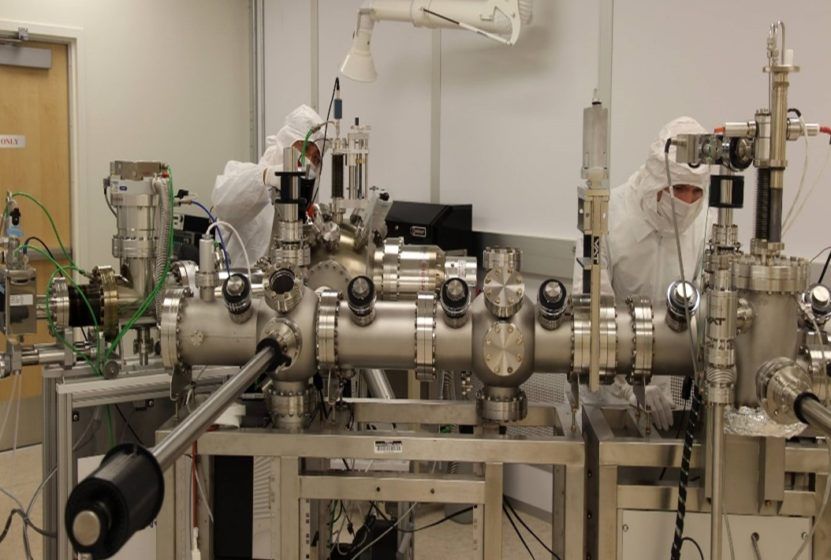
Although solar panels might appear bright and shiny, in desert environments, where they are most frequently installed, layers of dust and other particles can quickly coat their surface. These coatings can affect the panels’ ability to absorb sunlight and drastically reduce the conversion of the sun’s rays into energy, making it necessary to periodically wash the panels with water. But often, in areas like Nevada, water resources are scarce.
Consequently, NEXUS scientists have turned their attention toward developing technologies for waterless cleaning. NASA has already been using such techniques to wash panels in the lunar and Mars missions, but their developed methodologies prove too expensive for widespread public application. NEXUS scientist Biswajit Das of UNLV and his team are aiming to develop a water-free cleaning technology that will be cost-effective for large-scale photovoltaic generation, whereby they look to nanotechnology, rather than water, to clean the panels. “Our mission is to develop a waterless, or at least a less-water cleaning technique to address the effect of dust on solar panels,” Das says. “Once developed, this method will significantly reduce water use for the future PV generation.”


China is now the proud owner of the world’s first all-electric cargo ship and has already put the vehicle to use.
As reported by China Daily, the 2,000-metric-ton ship was launched in the city of Guangzhou last month and runs in the inland section of the Pearl River.
Constructed by Guangzhou Shipyard International Company Ltd, it can travel 80 kilometres (approximately 50 miles) after being charged for two hours. As noted by Clean Technica, two hours is roughly the amount of time it would take to unload the ship’s cargo while docked.
These glass bricks serve as solar panels AND windows.

by Tracey Follows, Founder/Director of the Female Futures Bureau
Jennifer Gidley is a former President of the World Futures Studies Federation (2009−2017), a UNESCO and UN partner and global peak body for futures studies scholarship, she led a network of hundreds of world leading futures scholars and researchers from around the globe. An adjunct Professor at the Institute for Sustainable Futures, UTS in Sydney, futurist, author, psychologist and educator, Jennifer is a prolific author of dozens of academic papers, serves on several academic boards, and most recently authored Postformal Education: A Philosophy for Complex Futures (Springer, 2016) & The Future: A Very Short Introduction (Oxford, 2017).
Tracey: I spoke to Jennifer about her perspective on Female Futures.
One of the issues we discuss a lot at The Female Futures Bureau is why more female futurists don’t have a higher profile. And Jennifer agrees that it’s not because they aren’t around:
“I actually believe there are a large number of female futurists globally, and probably always have been. I would suggest that there are as many women involved in futures studies and foresight work as there are men…”

“The attention of architects and designers is radically improving life on water. A new book “Rock The Boat”, out now from Gestalten, explores their work, and shows that “aquatecture” isn’t all portholes and painted timber, but rather modern, innovative and resourceful.”
Poverty rates have fallen faster in the past 30 years than at any other time on record. The UN wants extreme poverty to disappear by 2030. We assess the data to see if this is achievable.
Click here to subscribe to The Economist on YouTube: http://econ.st/2AfBchr
It is estimated that somebody escapes extreme poverty every 1.2 seconds. According to the World Bank, anyone on less than $1.90 per day is living in extreme poverty unable to afford basic food, clothing, healthcare and shelter.
Absolute poverty rates have fallen faster in the past 30 years than in any other time on record. This is a remarkable achievement but the task of taking people put of the worst poverty remains a huge challenge. The impressive fall is the result of changes in just two countries, China and India.
In the 1980s the majority of people in both of these countries were living in extreme poverty. But now the share of the poorest has fallen to 21% in India, and less than 2% in China.
Increased productivity in farms and a mass migration from poor rural areas to the booming cities enabled many Chinese and Indian people to better their lives. Asia is moving into a new phase but can other parts of the world copy their model of moving people to factory jobs in cities?
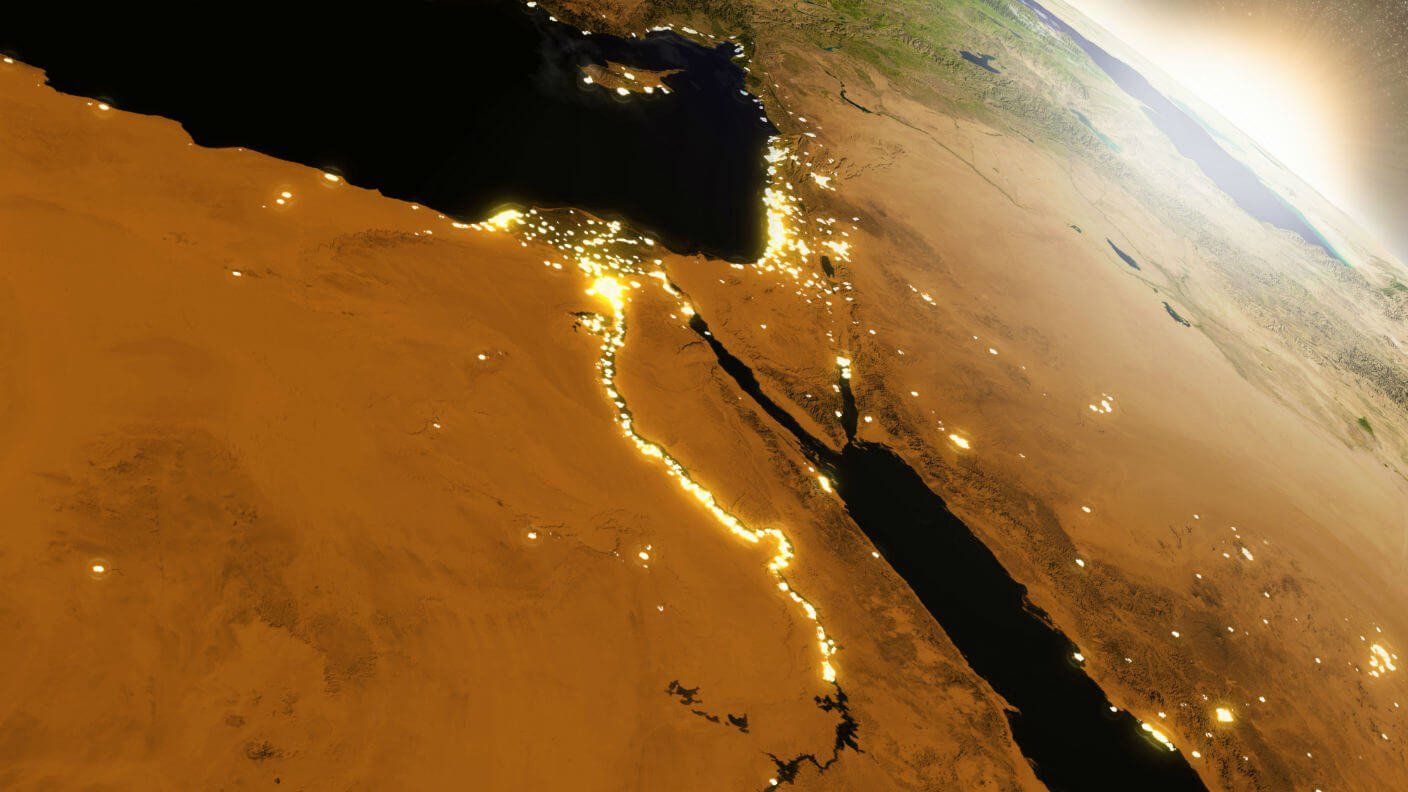
Just need 400 billion and 1.2% of the land area.
Desertec continues in a smaller form; they’re still building power plants in Morocco to supply the local energy needs of that country. Perhaps a ground-up approach, where MENA countries increase their own solar production in the desert before becoming net exporters, will provide the solution. This project is not the first wildly ambitious scheme to provide for the world’s energy needs that has stalled; historians remember Atlantropa, a scheme to dam the Strait of Gibraltar and use it for hydroelectric power that had some interest in the 1920s.
Yet the prospect remains tantalizing. Surely, when only a tiny fraction of the Earth’s surface need be devoted to energy production to provide us with more power than we could ever dream of consuming, we won’t wreck the planet by getting that energy through dirty and dangerous means. To starry-eyed idealists, it must seem equivalent to being on a raft in a lake full of drinking water—and choosing instead to swig from a bottle of seawater in your backpack. Solar power in the world’s deserts is one of the few feasible, renewable ways of providing energy on the scale we currently demand as humans. Someday, we will make better use of the abundant energy from the sun. We’ll have to.
Image Credit: https://www.shutterstock.com/image-illustration/egypt-surrou...-444689929”">Harvepino / https://www.shutterstock.com/”">Shutterstock.com
