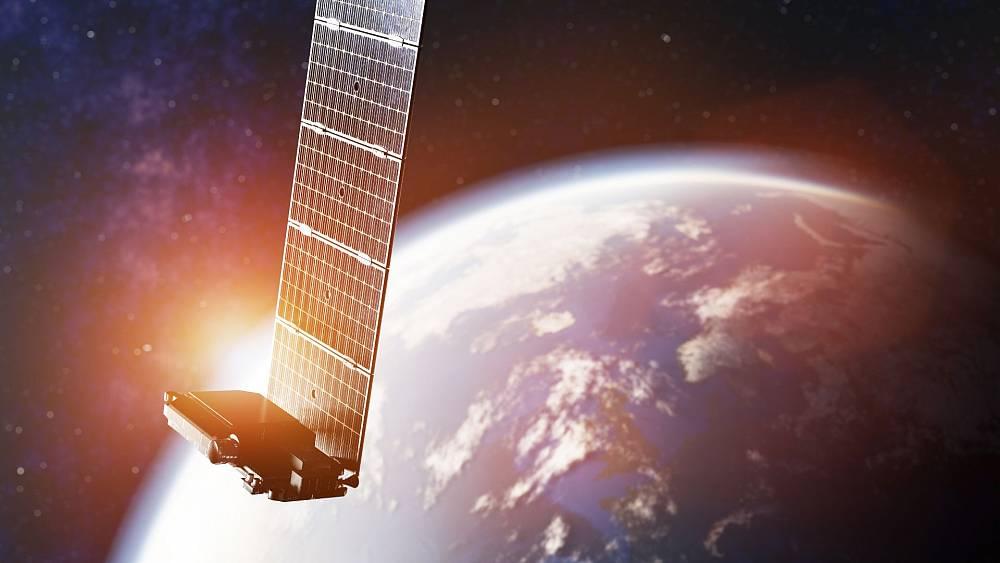
Eviation was the first to reach the aviation milestone, with an electric plane designed from scratch that took to the skies September 27th.
Category: sustainability – Page 330
What if a Human Lived 1,000 Years?😱
Hi, if you came to this video, you’re probably wondering what would happen if a man lived 1,000 years or more? What possibilities would be open to mankind and how many useful things could be done, if such a thing were possible? Well, then make some tea, make yourself comfortable, and let’s go!
00:00 — Intro.
00:36 — Problems we will face.
2:07 — Is it possible to realize this?
3:19 — How to make it happen?
5:27 — Repair System.
7:26 — Is humanity ready for such a long life?
8:55 — Final.
#Future #technology #top10
Science fictionfuture2050 technology robots skyscrapers flying carshologramsvoitures volantes futur drone future world in 2050real future of earth future earth technologies future transportation technology future invention what will happen in the future#6what 2050 will be like future events self-driving car search 2050 the world in 2050 2100space exploration science super all cars of the future2020 the future 2050 technology the future BBC documentaries PBS documentaries BBC documentary nat geo documentary national geographic documentary history channel documentaries national geographic documentaries history channel documentary discovery channel documentaries The World In 2050 Future Of Earth Earth in 2050 Future of The World global warming people in the future people in 2050 worldearthfutureenergybbcTop Class Documentaries.
Space For All: From Goal to Reality
Of their yearly balance of about €3 million, nearly the entirely is spent on the main congress and other events and conferences. Over the last few years, addressing geography, generation, and gender equities (3G), the International Astronautical Federation established itself as the youngest and most diverse space organization in the world. Over the same period, the IAF President Pascale Ehrenfreund, has pushed her excellent Global Innovation Agenda which “has brought emerging countries to our space family through conferences, expanded work with partner organizations, and created innovative systems for sharing information among members” [1].In his first newsletter [2] the incumbent President, Clay Mowry, communicated the IAF agenda for next 3 years: “Sustainability, Investment and Security”. According to Mowry, “the IAF should seek to influence conversations around the sustainability of the space environment. Securing orbits, spacecraft, frequencies, and physical resources is critical to the future viability of space exploration.” And: “The coming three years will see a shift towards the commercial development of low Earth orbit and major push to field systems in lunar orbits and on the surface of the Moon. We must be prepared to tackle the challenges of growing investment in the space sector head-on. Security refers to the freedom to operate safely in the space domain. Without it, investors and nation states can hardly be expected to pour the continued resources and attention required to secure humanity’s future beyond Earth.”
An agenda oriented to civilian space development? We may say yes, moderately. We want to encourage and further develop this orientation, and we’ll do our best to move IAF more on the side of human expansion into the Geo-Lunar space and the Solar System.
As we said in all of our presentations at IAC 73, “Space for All” is an excellent motto, yet today it is still not yet a reality. We have to work for the realization of that goal, that all Earthers wishing to emigrate into outer space can do it safely, as soon as possible. Such a goal is in perfect continuity with the fully inclusive spirit of IAF! Prominent among the concepts we presented in various symposia and discussions in Paris is that of a modern Eutopia [3] for our time: a fully sustainable inclusive society, one which allows for the healthy and continued growth of 8 billion people. Such an idea cannot be realized within the boundaries of our closed world; but it could be realized through expansion into our celestial frontier.
Water batteries could soon power 130,000 homes in San Diego at night time
The San Diego County Water Authority is planning to use its San Vicente Reservoir to store solar power making clean energy in the region viable, according to an article by NPR published on Friday.
Powering 130,000 homes
The project will take ten years to be built and will see large underground pipes connect San Vicente’s lake to a new reservoir about 1,100 feet higher. California’s solar power will pump water into that upper reservoir, storing electricity.
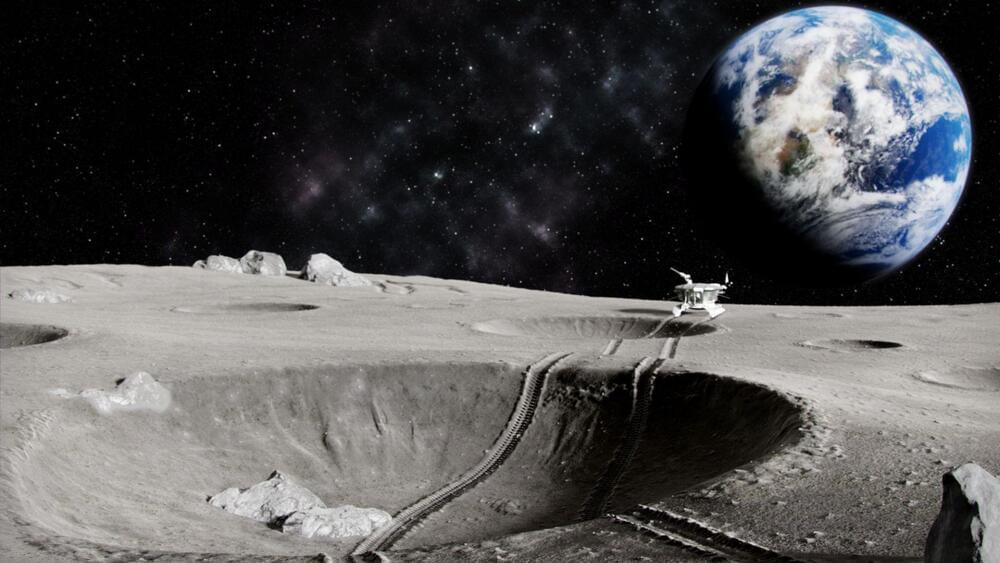
The future of space construction may have just been revolutionized by a new walking robot
The E-Walker has been tried and tested on Earth, but it’s yet to prove itself in space.
Large construction projects in space may be one step closer to reality, thanks to a new walking space robot. Researchers have designed the E-Walker — a state-of-the-art walking robot — to take on the behemoth task of space construction. A robot prototype has already been tested here on Earth by assembling a 25m Large Aperture Space Telescope. The telescope would usually be built in space, which is the E-Walker’s future duty.
Doubling up on its potential duties, a smaller-scale prototype of the same robot has also been created and shows promise for large construction applications on Earth, such as maintenance of wind turbines.
The team’s findings were presented in the journal Frontiers in Robotics and AI.
IStock/Vitaly Kusaylo.
Researchers have designed the E-Walker – a state-of-the-art walking robot – to take on the behemoth task of space construction. A robot prototype has already been tested here on Earth by assembling a 25m Large Aperture Space Telescope. The telescope would usually be built in space, which is the E-Walker’s future duty.
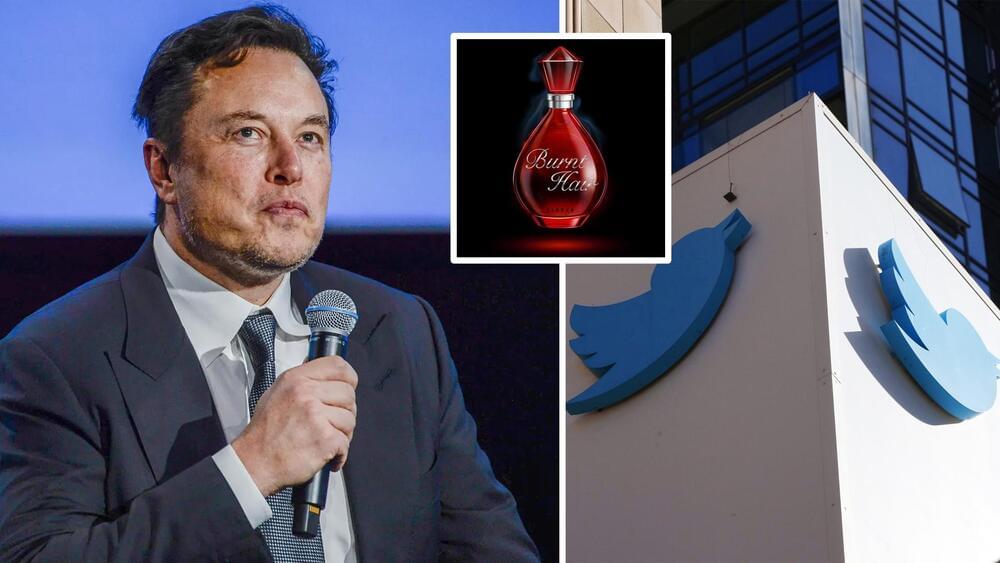
Elon Musk says he’s selling Perfume to gather cash for Twitter buyout
With a fresh comment, Elon Musk, the brains behind Tesla and SpaceX, has ignited Twitter once again. “Please purchase my perfume, so I can buy Twitter,” reads his most recent tweet. For those who are unaware, Elon Musk agreed to buy the social networking site Twitter in April 2022.
Twitter said in October 2022 that it had spoken with Elon Musk and that he had verified his willingness to pay the $44 billion sum in question. Musk now plans to make some money by offering perfume for sale online.
In the beginning, Musk bought a 9.2 percent share on Twitter. Musk, however, made the decision to fully acquire Twitter owing to several differences and a desire to promote “Free Speech” on the social networking platform. In April 2022, a settlement was reached between the two sides, and $54.20 per share in cash was agreed upon.