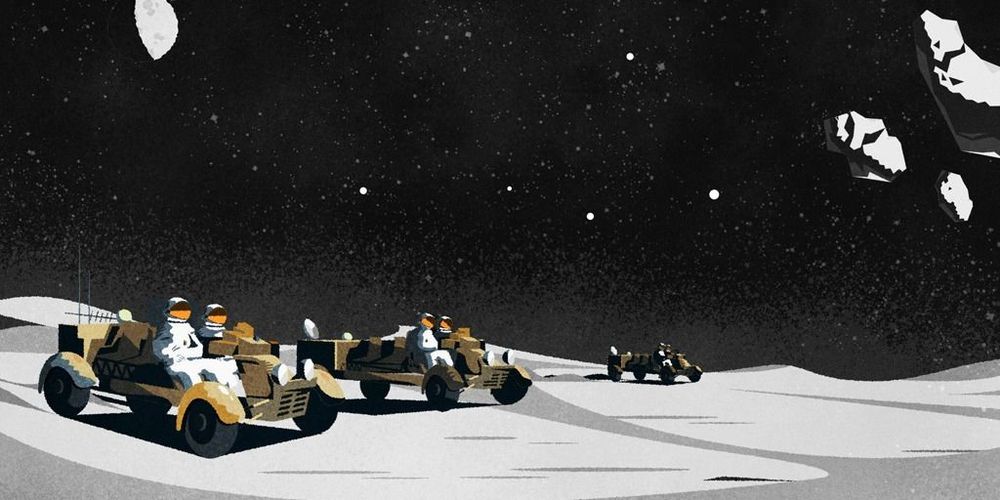
The ingredients for the development of life are present on Saturn’s moon, Enceladus…But did life actually appear? Encelus is a priority target for future missions. Credit: NASA.
Category: space – Page 956
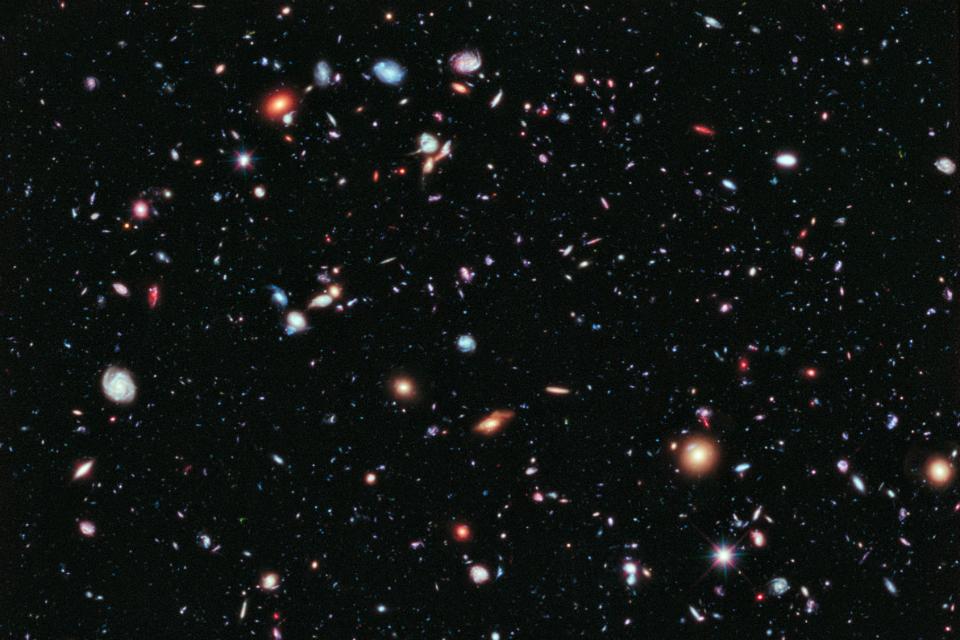
How fast is the universe expanding? The mystery endures
Scientists have known for decades that the universe is expanding, but research in the past few years has shaken up calculations on the speed of growth — raising tricky questions about theories of the cosmos. Current latest trending Philippine headlines on science, technology breakthroughs, hardware devices, geeks, gaming, web/desktop applications, mobile apps, social media buzz and gadget reviews.
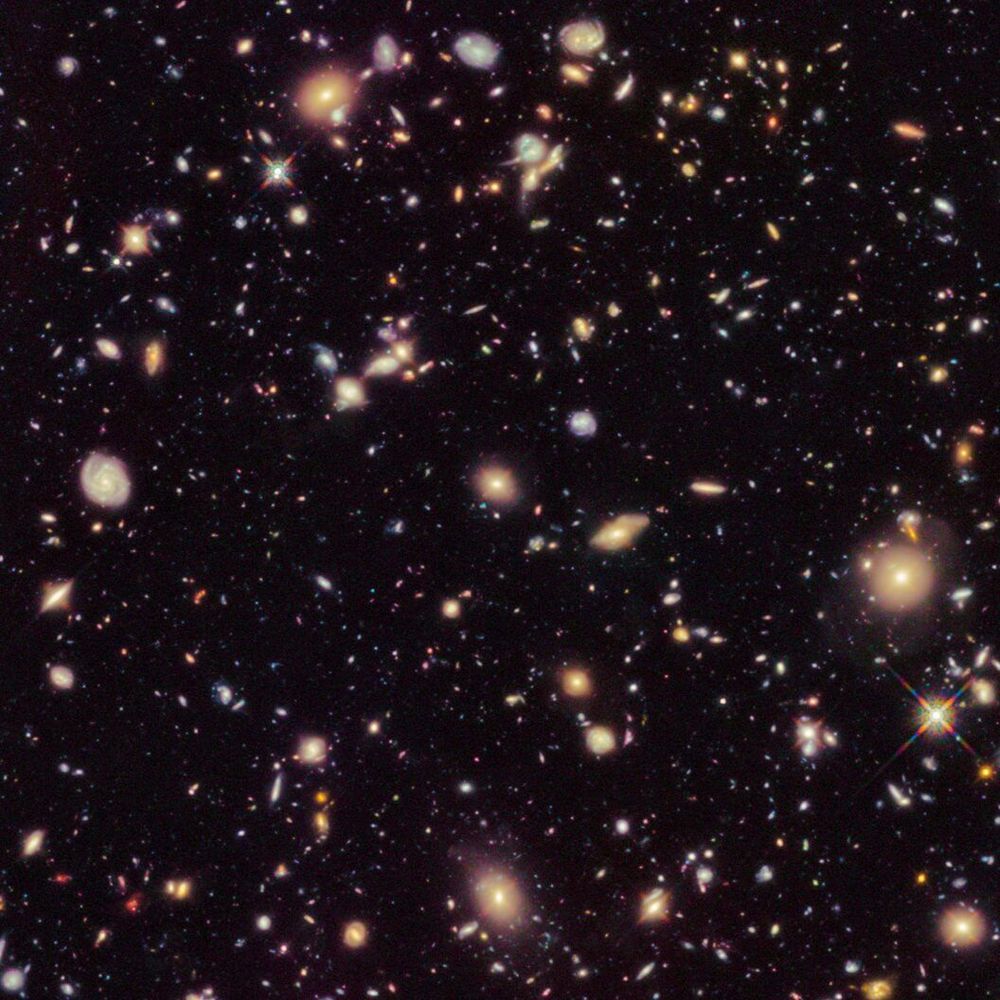
Universe might be 2 billion years younger, shocking study says
The universe is assumed to be roughly 13.7 billion years old, but a stunning new study says it could be significantly younger than that — by a couple of billion years.
According to the study, researchers used new calculations that took different approaches to figure out just how old the universe really is.
“We have large uncertainty for how the stars are moving in the galaxy,” the study’s lead author, Inh Jee, of the Max Planck Institute, told the Associated Press. The research has been published in Science.

Meet the pioneers running Kyrgyzstan’s all-woman space agency
In a country where women are seen first and foremost as wives and mothers, Kyrgyzstan’s all-female space agency defies expectations. Aged between 18 and 24, the eight-woman team are building a one-kilo satellite that will be the country’s first foray into the cosmos as an independent state. Based in Bishkek, they told The Calvert Journal what this project means for them— and thousands of girls like them.
Newly discovered comet is likely interstellar visitor
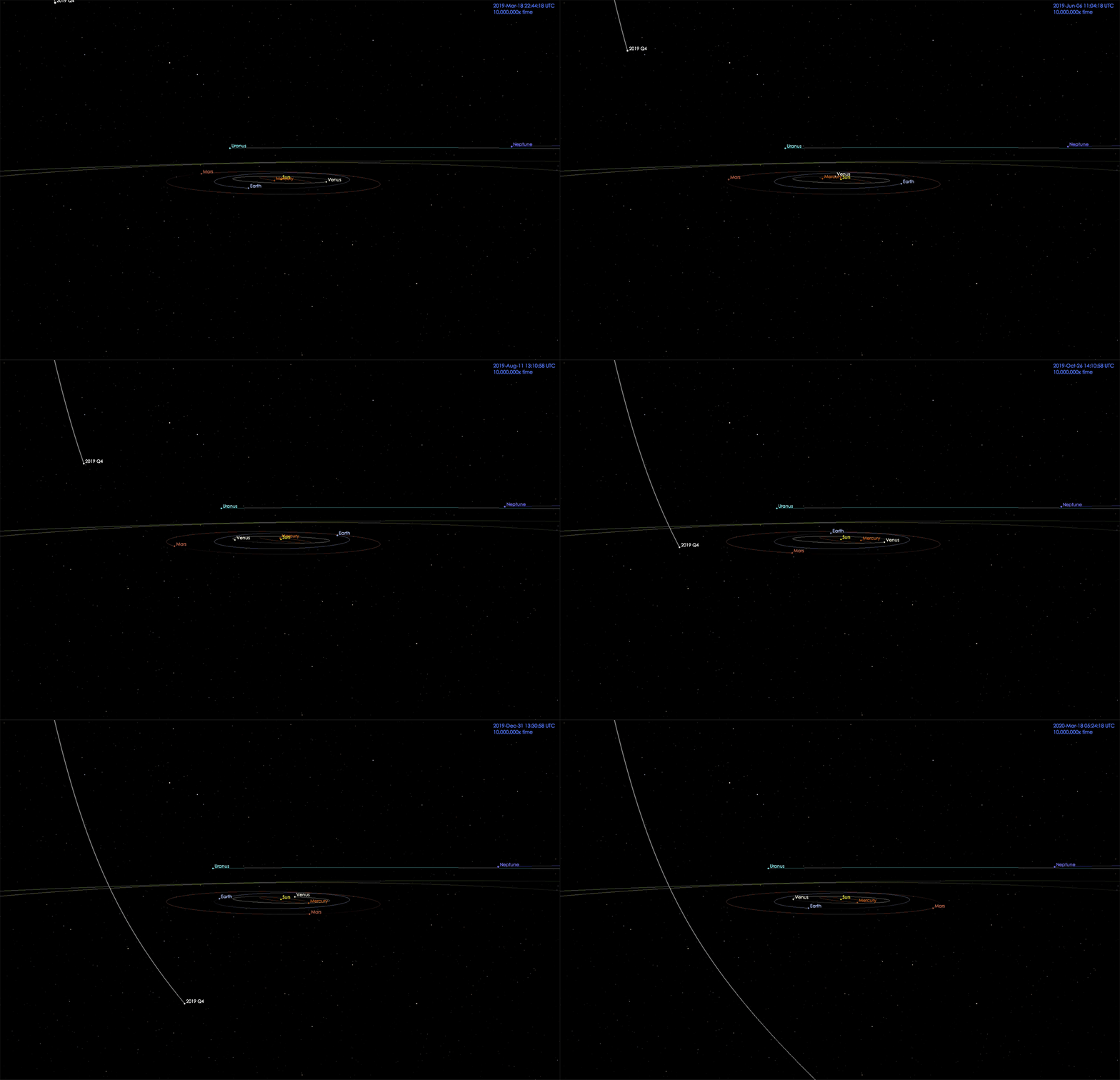
A newly discovered comet has excited the astronomical community this week because it appears to have originated from outside the solar system. The object—designated C/2019 Q4 (Borisov) — was discovered on Aug. 30, 2019, by Gennady Borisov at the MARGO observatory in Nauchnij, Crimea. The official confirmation that comet C/2019 Q4 is an interstellar comet has not yet been made, but if it is interstellar, it would be only the second such object detected. The first, Oumuamua, was observed and confirmed in October 2017.
The new comet, C/2019 Q4, is still inbound toward the Sun, but it will remain farther than the orbit of Mars and will approach no closer to Earth than about 190 million miles (300 million kilometers).
After the initial detections of the comet, Scout system, which is located at NASA’s Jet Propulsion Laboratory in Pasadena, California, automatically flagged the object as possibly being interstellar. Davide Farnocchia of NASA’s Center for Near-Earth Object Studies at JPL worked with astronomers and the European Space Agency’s Near-Earth Object Coordination Center in Frascati, Italy, to obtain additional observations. He then worked with the NASA-sponsored Minor Planet Center in Cambridge, Massachusetts, to estimate the comet’s precise trajectory and determine whether it originated within our solar system or came from elsewhere in the galaxy.

Toyota Wants to Slather Solar Panels All Over Its Prius Hybrid
Since July, Toyota has been working on a brand-new design. It features special, much higher efficiency solar panels that are mounted on the hood, roof and even hatchback of the car, charging the car’s batteries even when it’s moving.
Panel Van
The new solar system could allow the Prius to cover 50 kilometers, four days a week, on solar alone, Bloomberg reports.