
The TOI Tech Desk is a dedicated team of journalists committed to delivering the latest and most relevant news from the world of technology to readers of The Times of India. TOI Tech Desk’s news coverage spans a wide spectrum across gadget launches, gadget reviews, trends, in-depth analysis, exclusive reports and breaking stories that impact technology and the digital universe. Be it how-tos or the latest happenings in AI, cybersecurity, personal gadgets, platforms like WhatsApp, Instagram, Facebook and more; TOI Tech Desk brings the news with accuracy and authenticity.
Category: space – Page 91
On March 23, 2178, Pluto Will Complete Its First Full Orbit Since Its Discovery
Sadly, we doubt you’ll be around for Pluto’s NYE party.

Quantum calculations expose hidden chemistry of ice
When ultraviolet light hits ice—whether in Earth’s polar regions or on distant planets—it triggers a cascade of chemical reactions that have puzzled scientists for decades.
Now, researchers at the University of Chicago Pritzker School of Molecular Engineering (UChicago PME) and collaborators at the Abdus Salam International Center for Theoretical Physics (ICTP) have used quantum mechanical simulations to reveal how tiny imperfections in ice’s crystal structure dramatically alter how ice absorbs and emits light. The findings, published in Proceedings of the National Academy of Sciences, pave the way for scientists to better understand what happens at a sub-atomic scale when ice melts, which has implications including improving predictions of the release of greenhouse gases from thawing permafrost.
“No one has been able to model what happens when UV light hits ice with this level of accuracy before,” said Giulia Galli, Liew Family Professor of Molecular Engineering and one of the senior authors of the new work. “Our paper provides an important starting point to understand the interaction of light with ice.”
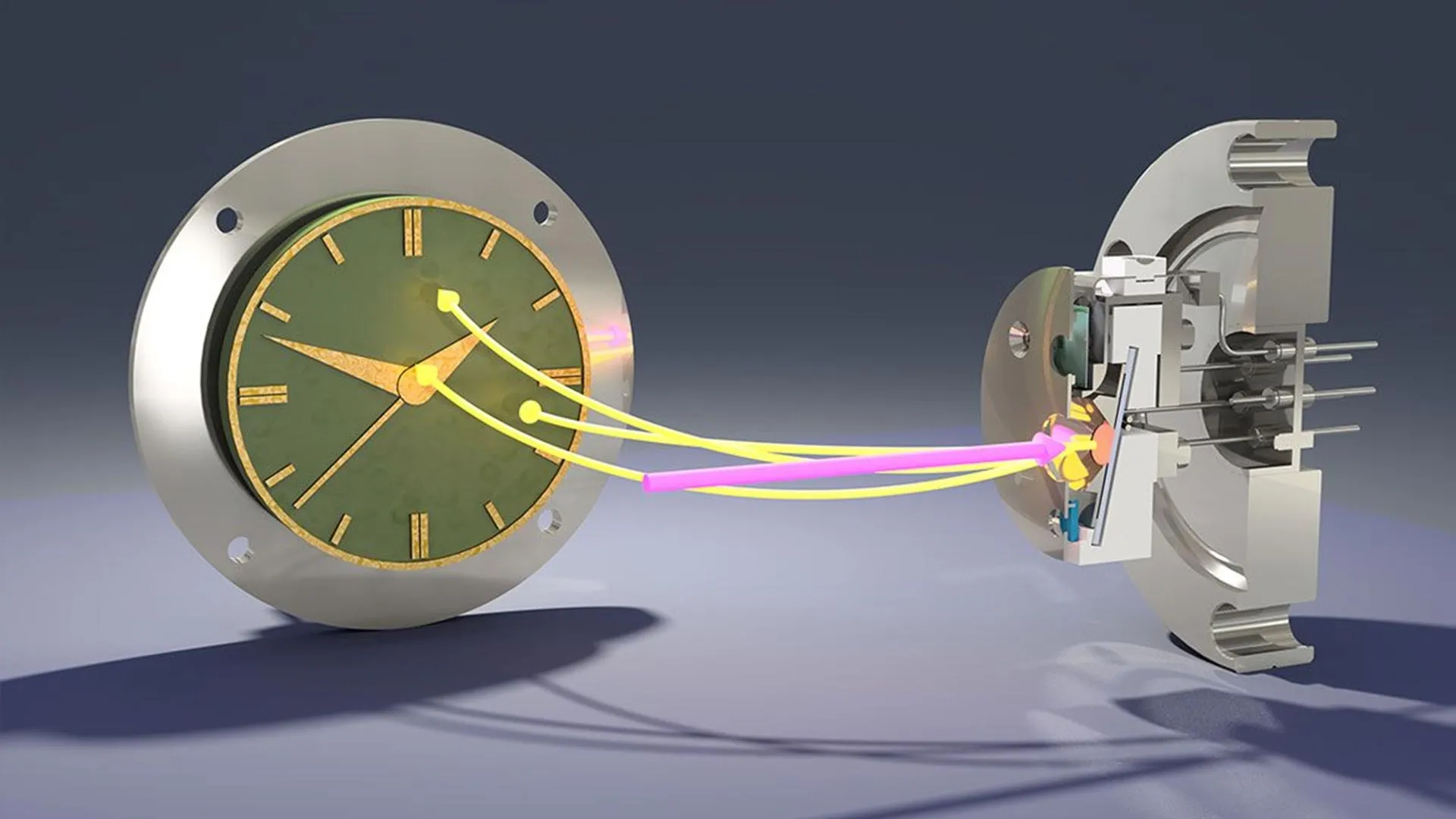
An old jeweler’s trick could change nuclear timekeeping
A team of physicists has discovered a surprisingly simple way to build nuclear clocks using tiny amounts of rare thorium. By electroplating thorium onto steel, they achieved the same results as years of work with delicate crystals — but far more efficiently. These clocks could be vastly more precise than current atomic clocks and work where GPS fails, from deep space to underwater submarines. The advance could transform navigation, communications, and fundamental physics research.
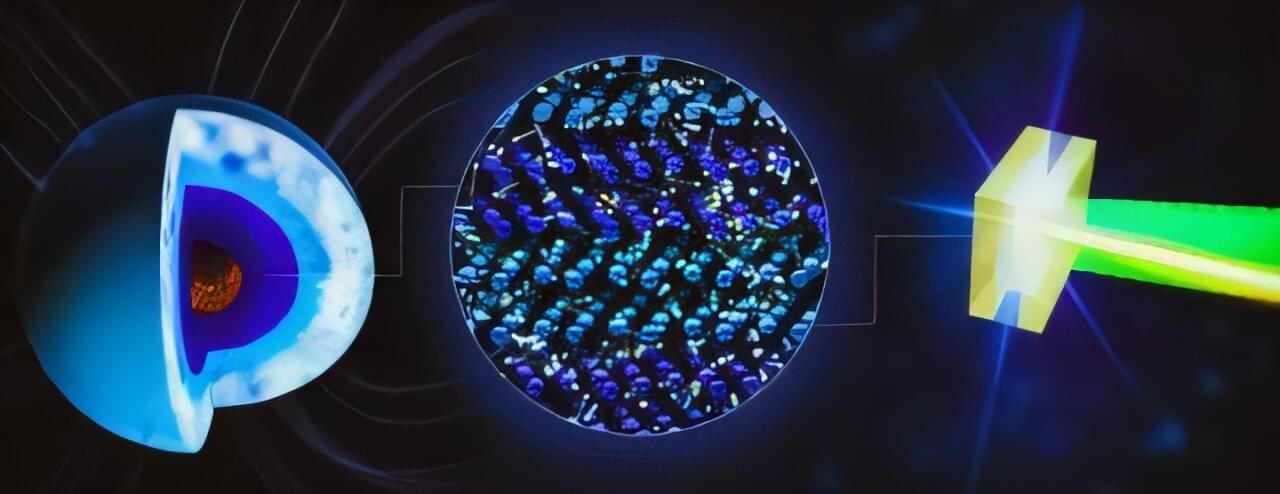
Simultaneous packing structures in superionic water may explain ice giant magnetic fields
Superionic water—the hot, black and strangely conductive form of ice that exists in the center of distant planets—was predicted in the 1980s and first recreated in a laboratory in 2018. With each closer look, it continues to surprise researchers.
In a recent study published in Nature Communications, a team including researchers at the Department of Energy’s SLAC National Accelerator Laboratory has made a surprising discovery: Multiple atomic packing structures can coexist under identical conditions in superionic water.
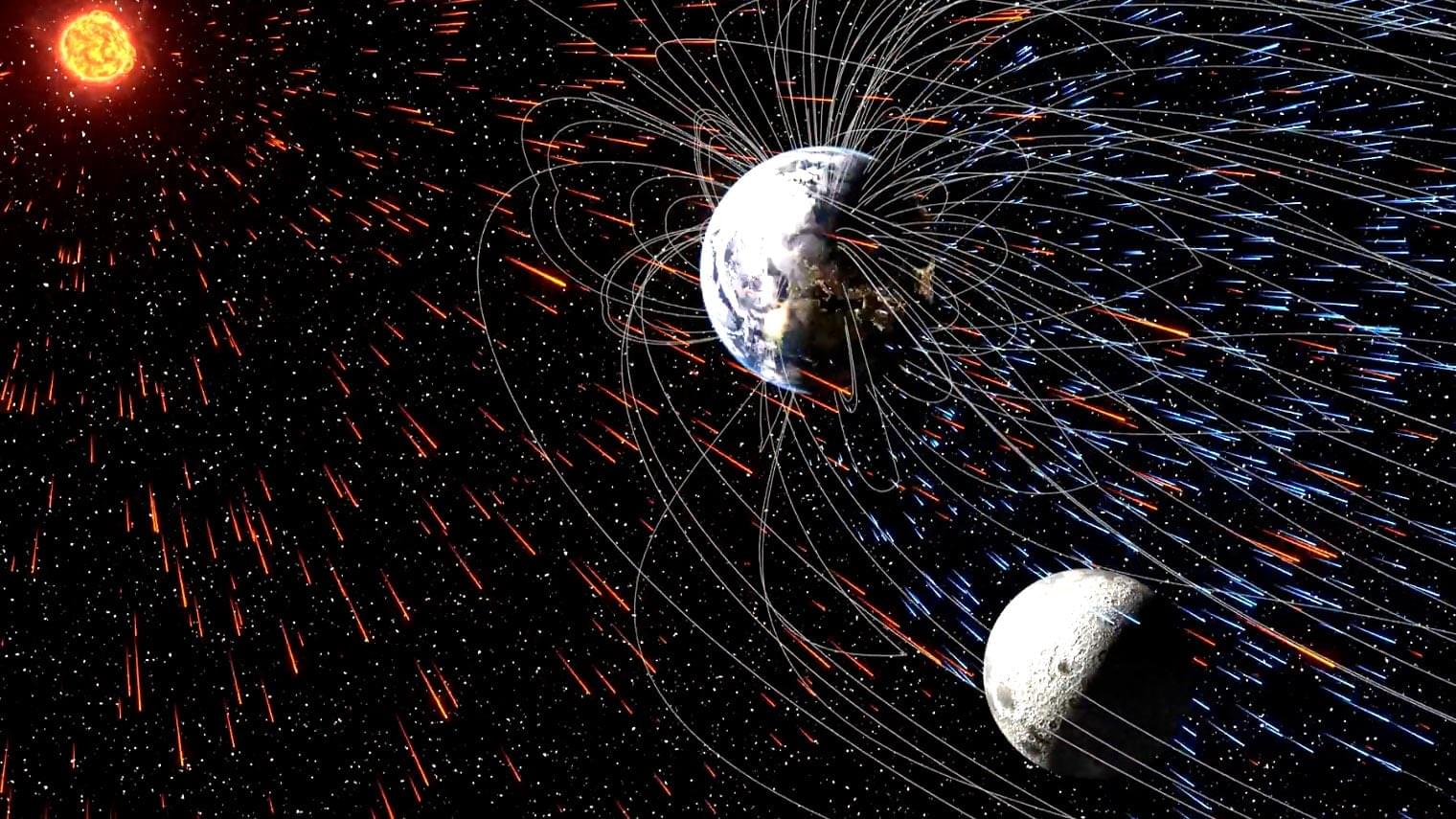
Earth May Have Seeded the Moon With Life-Supporting Elements
Earth’s magnetic field may have been seeding the moon with pieces of our atmosphere for billions of years.
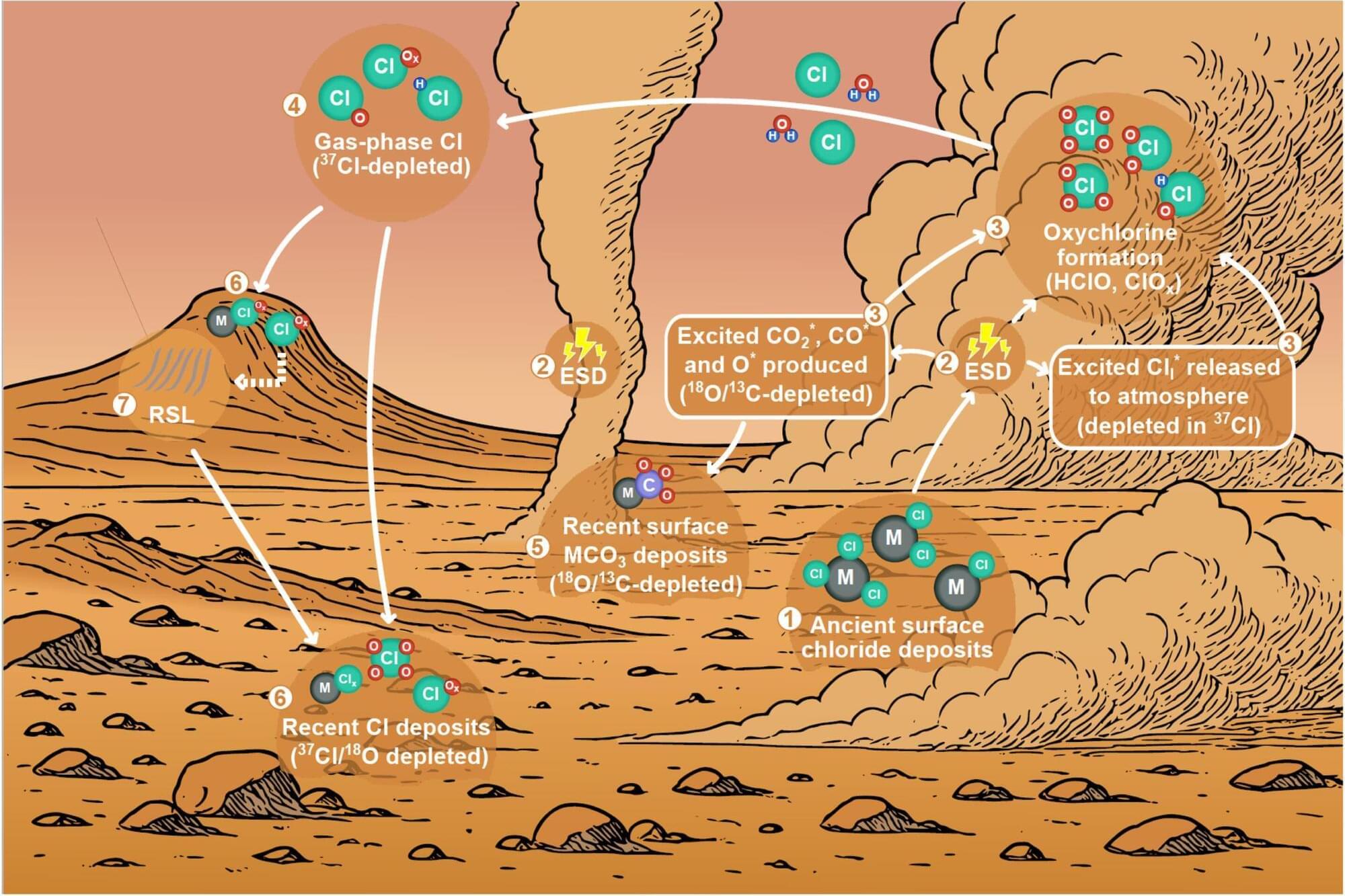
The electrifying science behind Martian dust
Mars, often depicted as a barren red planet, is far from lifeless. With its thin atmosphere and dusty surface, it is an energetic and electrically charged environment where dust storms and dust devils continually reshape the landscape, creating dynamic processes that have intrigued scientists.
Planetary scientist Alian Wang has been shedding light on Mars’s electrifying dust activities through a series of papers. Her latest research, published in Earth and Planetary Science Letters, explores the isotopic geochemical consequences of these activities.

Astronomers discover a region of space that defies everything we thought we knew
Deep in the early Universe, scientists have identified an extraordinary stellar nursery—a place where stars are forming at a breathtaking rate. In this region, activity is up to 180 times greater than in our own galaxy, offering a rare glimpse into how matter behaves in an environment far denser than anything we experience today.
The Milky Way may feel relatively calm now, but the young Universe was anything but. According to a study published in Monthly Notices of the Royal Astronomical Society, researchers have pinpointed an extremely hot and active zone dating back to the Universe’s earliest epochs, where conditions were far more intense than those around us today.
This area functions as a massive stellar nursery. Packed with dust and gas and flooded with radiation that generates heat, it creates the perfect conditions for particles to collide, stick together, and eventually form new stars.
2025: The year in LLMs
This is the third in my annual series reviewing everything that happened in the LLM space over the past 12 months. For previous years see Stuff we figured out about AI in 2023 and Things we learned about LLMs in 2024.
It’s been a year filled with a lot of different trends.
Making the invisible visible: Space particles become observable through handheld invention
You can’t see, feel, hear, taste or smell them, but tiny particles from space are constantly raining down on us.
They come from cosmic rays—high-energy particles that can originate from exploding stars and other extreme astrophysical events far beyond our solar system. When the rays collide with atoms high in Earth’s protective atmosphere, they trigger a cascade of secondary particles. Among the most important of these new particles are muons, which can pass through the atmosphere and even penetrate into the ground.
An invention by University of Delaware physics professor Spencer Axani called CosmicWatch is putting the science of muons in the palms of experienced scientists and high school students alike.