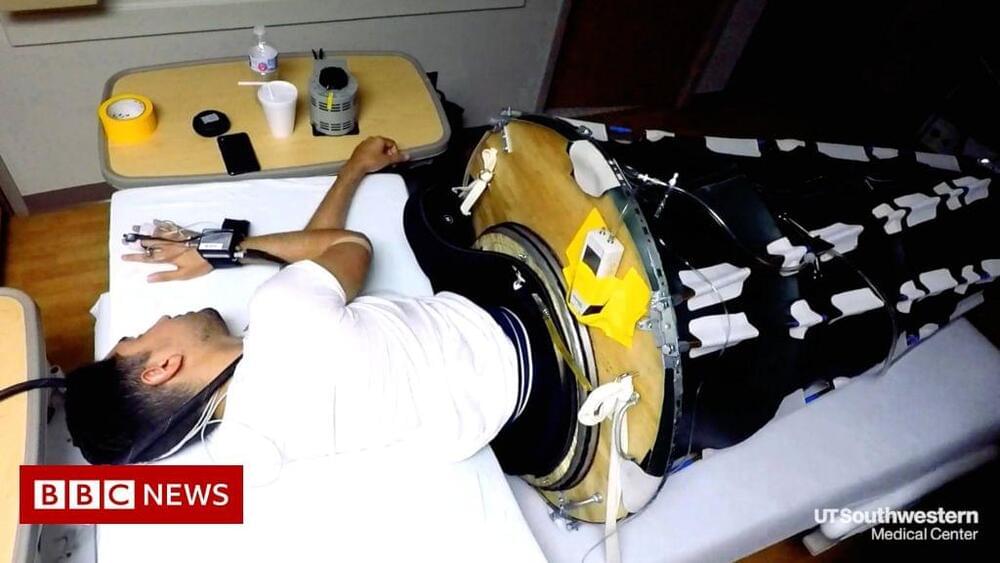
Scientists hope the hi-tech sleeping bag will stop eyeballs being squashed by zero-gravity in space.
Category: space – Page 700

3D Printed Architecture that prove the endless possibilities of this innovative technique!
Nowadays almost everything is being 3D printed, so why should architecture be an exception? Many architectural firms are adopting 3D printing as their preferred technique to build structures. And 3D printed architecture is slowly but surely gaining a lot of popularity and momentum. This emerging trend is paving a path for itself in modern architecture. And I mean, no wonder, it has a ton of benefits! It’s a simple, efficient, and innovative technique that lowers the risks of errors, and also manages to save on time. 3D printing eradicates a lot of tedious steps during the construction process and simplifies it. It is being used to build homes, habitats on Mars, and even floating islands! The potential and possibilities of 3D printing in architecture are endless and mind-blowing. We’ve curated a collection of 3D-printed architectural structures that are our absolute favorites – from a 3D printed sustainable office pod to a 3D printed housing community for the homeless, every single one of these designs unleashes the magic and potential of 3D printing!

The $11-billion Webb telescope aims to probe the early Universe
If everything goes to plan, Webb will remake astronomy by peering at cosmic phenomena such as the most distant galaxies ever seen, the atmospheres of far-off planets and the hearts of star-forming regions swaddled in dust. Roughly 100 times more powerful than its predecessor, the Hubble Space Telescope, which has transformed our understanding of the cosmos over the past 31 years, Webb will reveal previously hidden aspects of the Universe.
Three decades after it was conceived, Hubble’s successor is set for launch. Here’s why astronomers around the world can’t wait.
(December 18, 2021) AIAA LA-LV Space Philosophy Gathering
December 18th i will give a short speech at AIAA Space Philosophy Gathering 2021!
Here’s the link to register and follow the conference:
Sat, Dec 18 at 9 AM PST.
Interested.
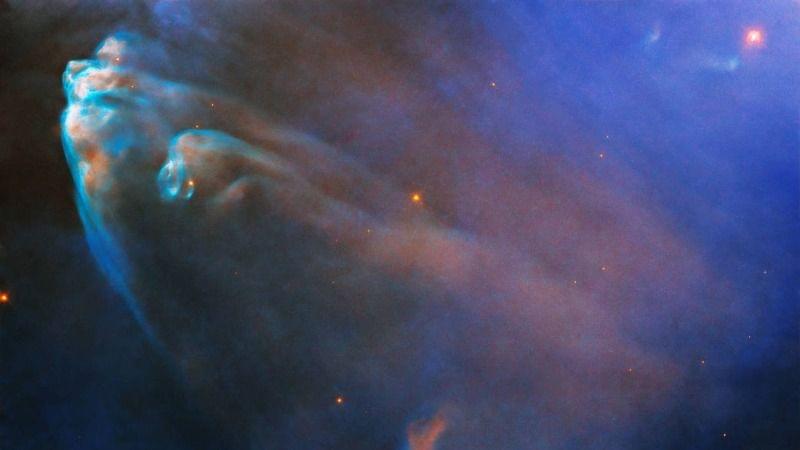
Shock! Hubble telescope traces collisions in ‘Running Man’ nebula
Newborn stars contributed to this chaos.
Any parent of newborns know just how powerful even small things are.
The same is true in space, where baby stars in a section of a nebula, or gas cloud, create a series a powerful shockwaves visible in a new Hubble Space Telescope image.
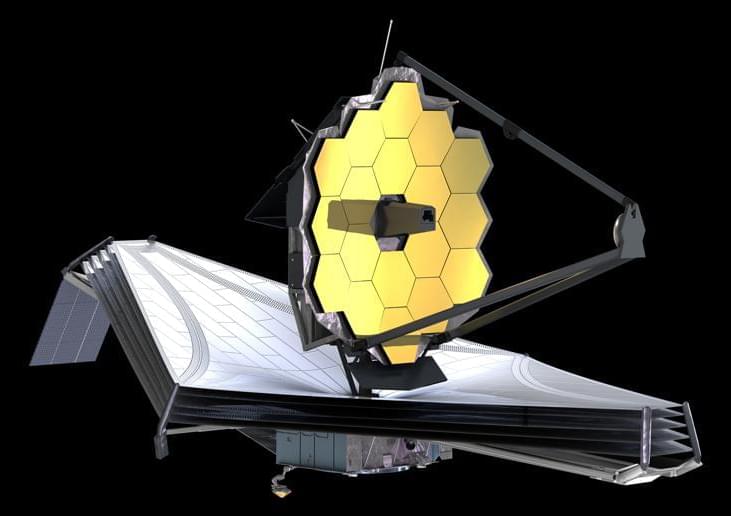
7 Things You Didn’t Know About Webb, NASA’s $10 Billion Space Telescope On The Cusp Of A Nervous Launch
Unlike Hubble, which orbits Earth and was visited by NASA astronauts for fixes and upgrades, Webb is going a million miles away to Lagrange Point 2—so Webb almost certainly can’t be fixed if anything goes wrong (though never write-off NASA).
NASA’s $10 billion James Webb Space Telescope (JWST or “Webb” for short) is due to go skywards—at long, long last—on December 18, 2021.
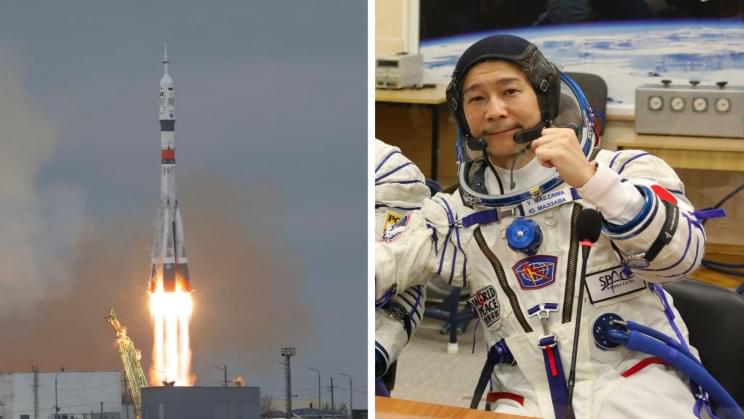
Japanese Billionaire Launches to the ISS Aboard a Soyuz Rocket
And he will also be the first space tourist to go to the moon in 2023.
Japanese billionaire and entrepreneur Yusaku Maezawa is on his way to the International Space Station (ISS), after launching from the Baikonur Cosmodrome in Kazakhstan aboard Russia’s Soyuz MS-20 crew ship today, December 8, at 2:38 am ET (07:38 GMT).
“Dream come true,” the entrepreneur tweeted before boarding the three-seat Soyuz spacecraft that would launch him up into orbit. He is joined by Russian cosmonaut and pilot Alexander Misurkin and film producer Yozo Hirano, who will document the expedition for Maezawa’s YouTube channel.
A ‘dream’ mission for Yuzaku Maezawa.

‘Concerning’ asteroid will break into Earth’s orbit in a week: NASA
NASA has warned that a giant asteroid bigger than the Eiffel Tower will break into Earth’s orbit in just over a week.
The 1,082-foot space rock is heading our way and should skim past us on December 11.
NASA has its eye on Asteroid 4,660 Nereus because it’s well over 492 feet long and will come within 4.6 million miles of Earth.

Space Force Installs Huge Radar System to Track Tiny Objects in Orbit
The US Space Force installed a high tech new radar system this week that it says will be able to detect objects the size of baseballs in orbit.
The massive monitoring system, dubbed the Long Range Discrimination Radar (LRDR), is located at the Clear Space Force Base near Fairbanks, Alaska, according to The Anchorage Daily News. The radar is slated to support the US missile defense system and provide reconnaissance data in space.
“Today marks an extremely important milestone for US homeland defense,” US Missile Defense Agency (MDA) director Jon Hill said in a press release yesterday. “The LRDR has finished construction, and we can now begin the testing phase that will lead to the full operational use of this vital system.”
China achieves crown of quantum supremacy
This website is dedicated to space and new developments in technology sector including new discoveries.