Toggle light / dark theme

Scientists have seen the shockwave from a star’s collapsing core for the first time

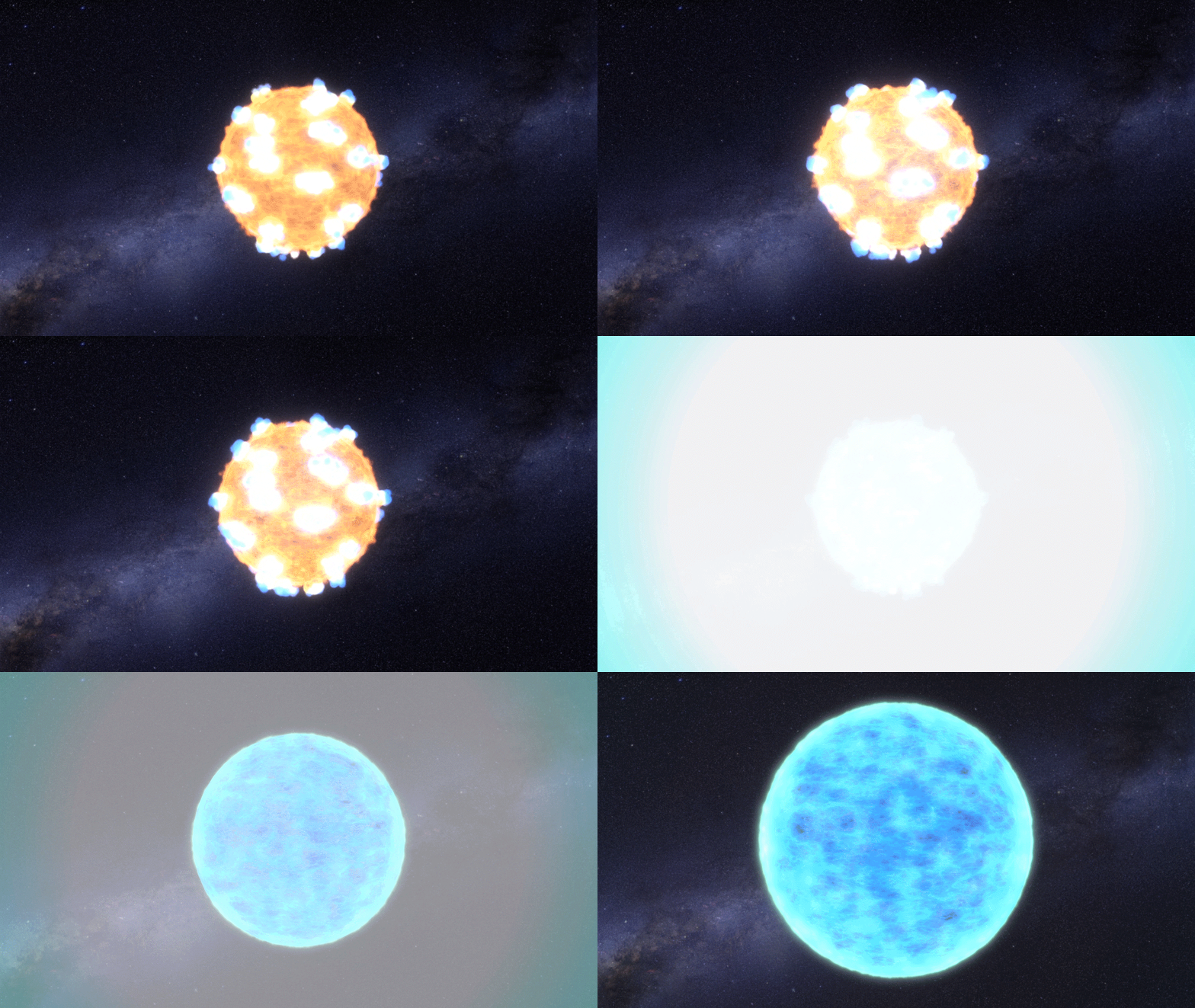
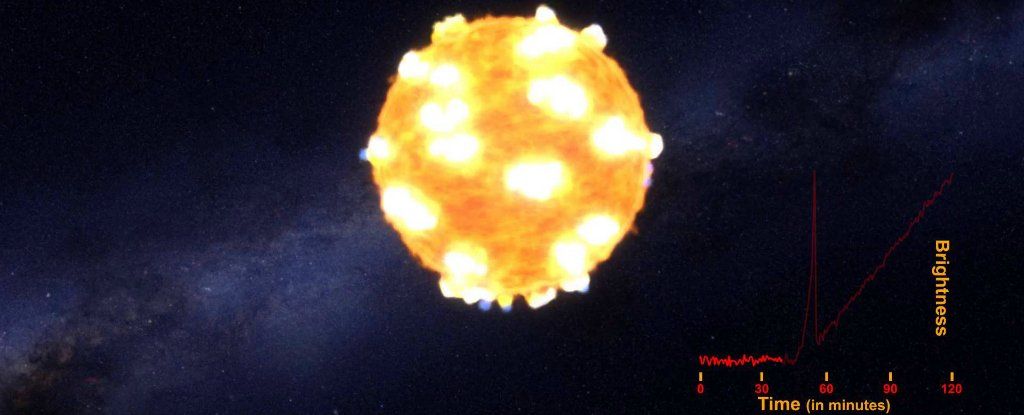
Astronomers have for the first time seen a shockwave generated by a star’s collapsing core and captured the earliest minutes of two exploding stars.

An international team of scientists found a shockwave only in the smaller supernova, a finding that will help them understand these complex explosions which create many of the elements that make up humans, the Earth and the Solar System.

“It’s like the shockwave from a nuclear bomb, only much bigger, and no one gets hurt,” says Brad Tucker from the Australian National University (ANU).

Robot-Built Landing Pad Could Pave the Way for Construction on Mars

A robot has built a prototype launch-and-landing pad in Hawaii, potentially helping pave the way for automated construction projects on the moon and Mars.

The robotic rover, named Helelani, assembled the pad on Hawaii’s Big Island late last year, putting together 100 pavers made of locally available material in an effort to prove out technology that could do similar work in space.

“The construction project is really unique. Instead of concrete for the landing pad, we’re using lunar and Mars material, which is exactly like the material we have here on the Big Island — basalt,” Rob Kelso, executive director of the Pacific International Space Center for Exploration (PISCES) in Hawaii, told Hawaiian news outlet Big Island Now. PISCES partnered with NASA on the project, which is part of a larger program called Additive Construction with Mobile Emplacement, or ACME for short. [The Boldest Mars Missions in History].
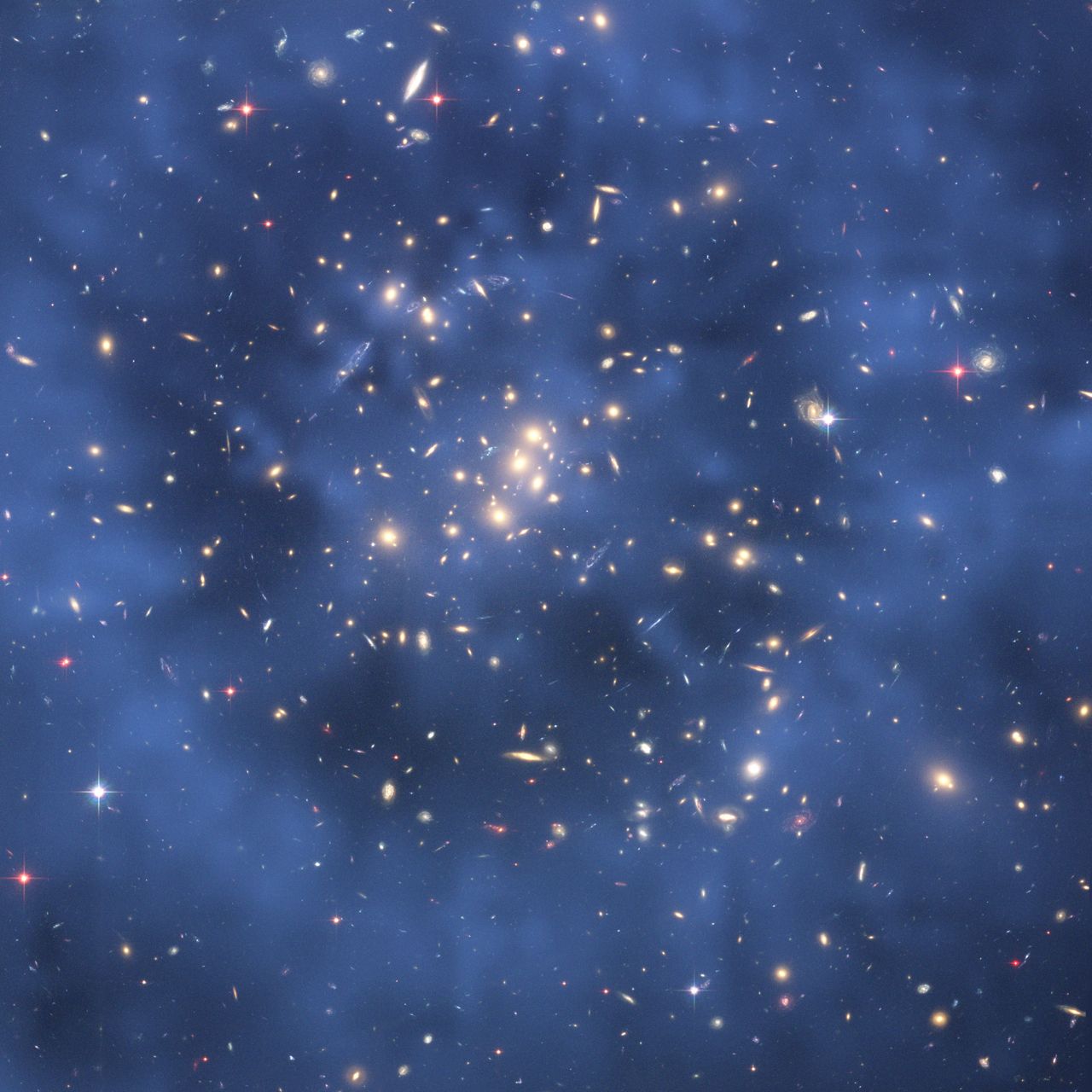
New Dark Matter Theory Weighs Superheavy Particle

Dark matter could be made of particles that each weigh almost as much as a human cell and are nearly dense enough to become miniature black holes, new research suggests.

While dark matter is thought to make up five-sixths of all matter in the universe, scientists don’t know what this strange stuff is made of. True to its name, dark matter is invisible — it does not emit, reflect or even block light. As a result, dark matter can currently be studied only through its gravitational effects on normal matter. The nature of dark matter is currently one of the greatest mysteries in science.

If dark matter is made of such superheavy particles, astronomers could detect evidence of them in the afterglow of the Big Bang, the authors of a new research study said. [Dark Matter Explained (Infographic)].

Astronomers discovered unexpected activity on a giant asteroid that could point to something huge

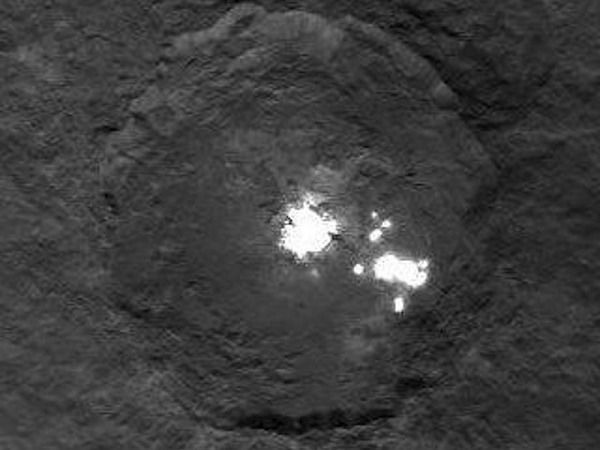
(NASA/JPL-Caltech/UCLA/MPS/DLR/IDA) Ceres’ unusually bright spots.

Nestled 250 million miles from Earth, between the orbits of Mars and Jupiter, is the largest object in the asteroid belt: Ceres.

It’s home to some of the most puzzling features ever observed in our solar system, including a giant pyramid that dwarfs many mountains on Earth and several dazzling bright spots inside a 50-mile-wide crater.

US Bets $100 Million on Machines That Think More Like Humans

“One small step for man, one giant leap for mankind.”

When Neil Armstrong stepped onto the dusty surface of the moon on July 20, 1969, it was a victory for NASA and a victory for science.

Backed by billions and led by NASA, the Apollo project is hardly the only government-organized science initiative to change the world. Two decades earlier, the Manhattan Project produced the first atomic bomb and restructured modern warfare; three decades later, the Human Genome Project published the blueprint to our DNA, heralding the dawn of population genomics and personalized medicine.

Kuiper Belt Objects Point The Way To Planet 9

On January 20th, 2016, researchers Konstantin Batygin and Michael E. Brown of Caltech announced that they had found evidence that hinted at the existence of a massive planet at the edge of the Solar System. Based on mathematical modeling and computer simulations, they predicted that this planet would be a super-Earth, two to four times Earth’s size and 10 times as massive. They also estimated that, given its distance and highly elliptical orbit, it would take 10,000 – 20,000 years to orbit the Sun.

Since that time, many researchers have responded with their own studies about the possible existence of this mysterious “Planet 9”. One of the latest comes from the University of Arizona, where a research team from the Lunar and Planetary Laboratory have indicated that the extreme eccentricity of distant Kuiper Belt Objects (KBOs) might indicate that they crossed paths with a massive planet in the past.