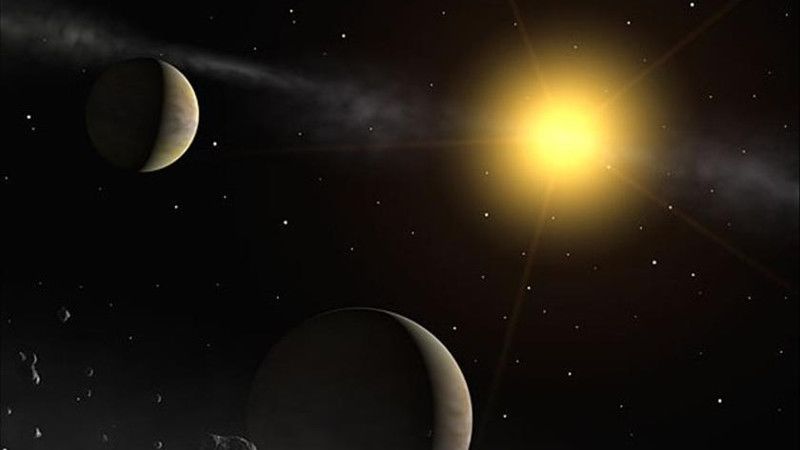
For years, scientists have known that Gliese 710 will come excruciatingly close to our Solar System in about a million years. An updated analysis suggests this star will come considerably closer than we thought, during which time it’s expected to spawn dangerous cometary swarms.
Category: space – Page 1,183
Russia Tests Another Anti-Satellite Weapon as Battleground Space Looms
Just another reminder that America’s supremacy in space is increasingly unsecured.
- The War Zone
- Space
- Anti-satellite
- Direct Ascent
- Russia
- Battlefield Space
- Nudol
- Low Earth orbit
- X-37B
- PL-19
- satlets

AP.
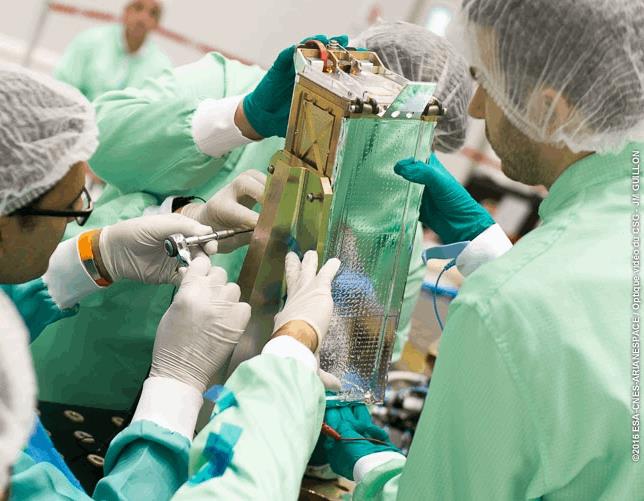
Fiber Optics For Quantum Technology Research
Back in September 2015, Gooch & Housego reported on our work with cold atom technology on the FreezeRay project. Now, just over a year later, we’re happy to say that Gooch & Housego has successfully won funding for involvement in two further programs, CASPA and REVEAL, in a competition for the commercialization of quantum technologies. The contest is supported by Innovate UK and the UK National Quantum Technologies Programme.
CASPA (Cold Atom Space Payload) has the aim of developing a payload compatible with CubeSat and capable of producing cold atoms in space. As with all such projects, we are breaking new ground here and an effective demonstration of the prototype system – in this instance space will be the crucial first step towards commercializing instrumentation systems capable of recording minuscule changes in the earth’s gravitational strength. Such changes when mapped across the earth’s surface have the potential to be used in resource exploration or to geo-monitoring of polar ice mass, ocean currents and sea level changes.
CASPA will also evaluate the viability of using the technology in the provision of higher precision timing sources for next generation global positioning system (GPS) and also for deep space navigation. The program partners are e2v technologies Ltd, ClydeSpace, XCAM, Covesion, the University of Birmingham and the University of Southampton.
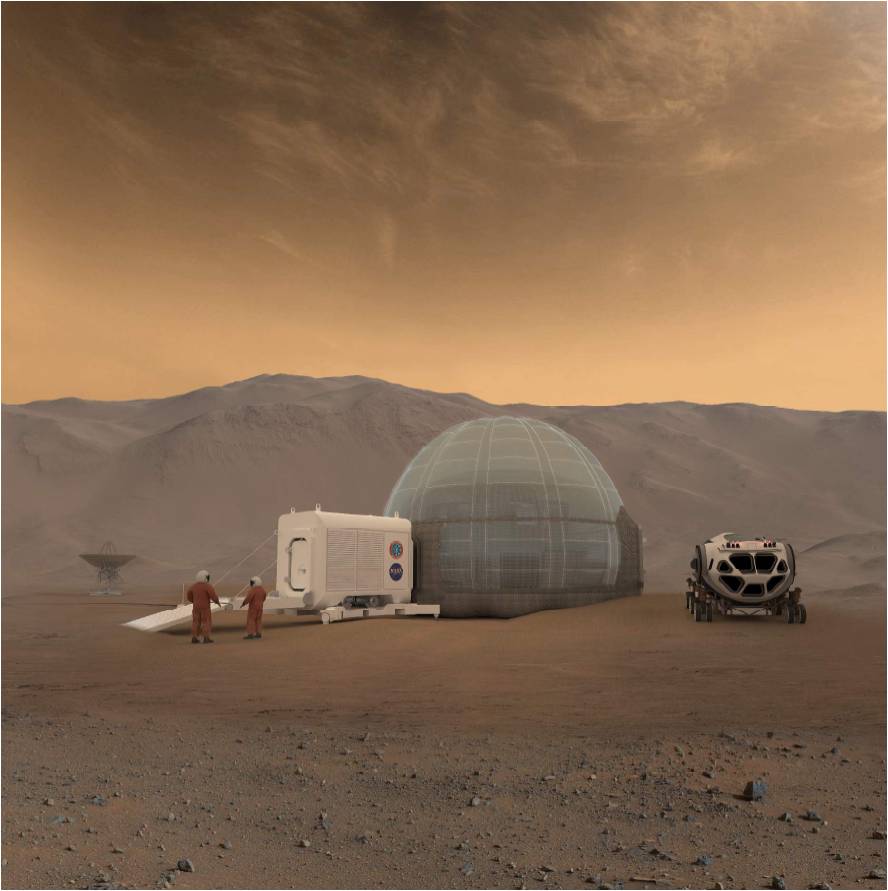
‘Mars Ice Home’: Team Chips Away at Off-Earth House’s Design
The first pioneers on Mars may build their homes using the ice beneath their feet.
In November, a University of Texas research team reported that Mars’ Utopia Planitia region contains about as much water, in the form of buried ice, as Lake Superior does here on Earth.
This ice layer, which spans a greater area than the state of New Mexico, lies in Mars’ mid-northern latitudes and is covered by just 3 feet to 33 feet (1 to 10 meters) of soil, the scientists determined. [Photos: The Search for Water on Mars].
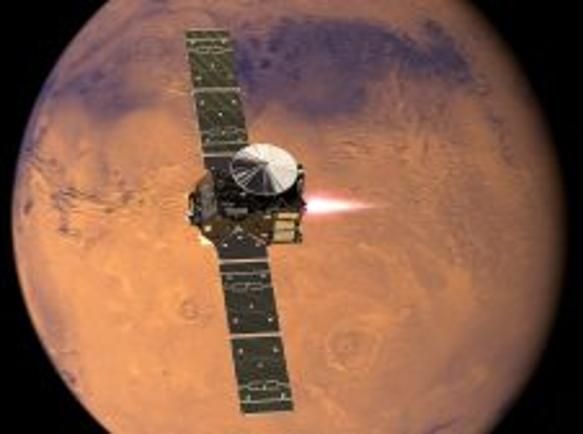
ESA’s ExoMars Prepares To Sample Lower Martian Atmosphere
ExoMars will soon start aerobraking in Mars orbit in a years-long effort to sample Mars super-thin lower atmosphere in the ongoing search for trace gases indicative of life and active geology.
ESA’s ExoMars Trace Gas Orbiter is preparing to aerobrake into parts of the unexplored Martian lower atmosphere in search of methane, water vapor and other possible signatures of life on the Red Planet.
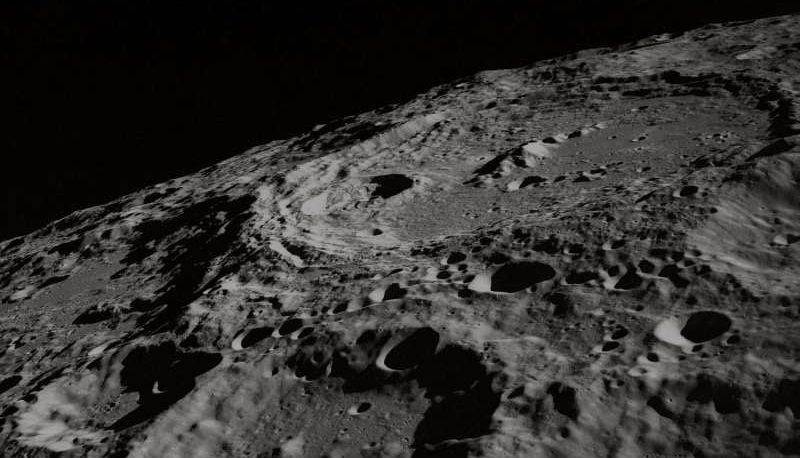
Grail satellite analysis indicates lava tubes on the moon could be up to 1000 to 5000 meters wide which would be ideal sites for massive moon colonies
Slight variations in the moon’s gravitational tug have hinted that kilometers-wide caverns lurk beneath the lunar surface. Like the lava tubes of Hawaii and Iceland, these structures probably formed when underground rivers of molten rock ran dry, leaving behind a cylindrical channel. On Earth, such structures max out at around 30 meters across, but the gravitational data suggest that the moon’s tubes are vastly wider.
Other satellites had found the openings of large lunar lava tubes and caves.
- The Lunar Reconnaissance Orbiter has now imaged over 200 pits that show the signature of being skylights into subsurface voids or caverns, ranging in diameter from about 16 feet (5 meters) to more than 2,950 feet (900 m), although some of these are likely to be post-flow features rather than volcanic skylights.
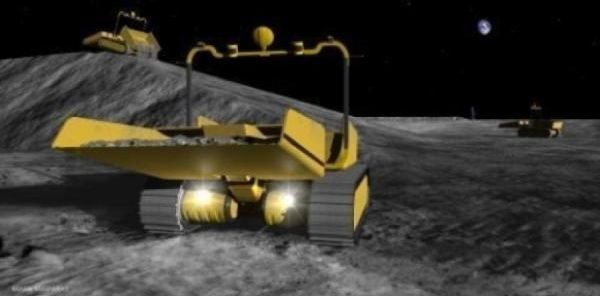
Japan is getting into the lunar mining business
JAXA has signed a memo of understanding with iSpace to create moon mining industry.
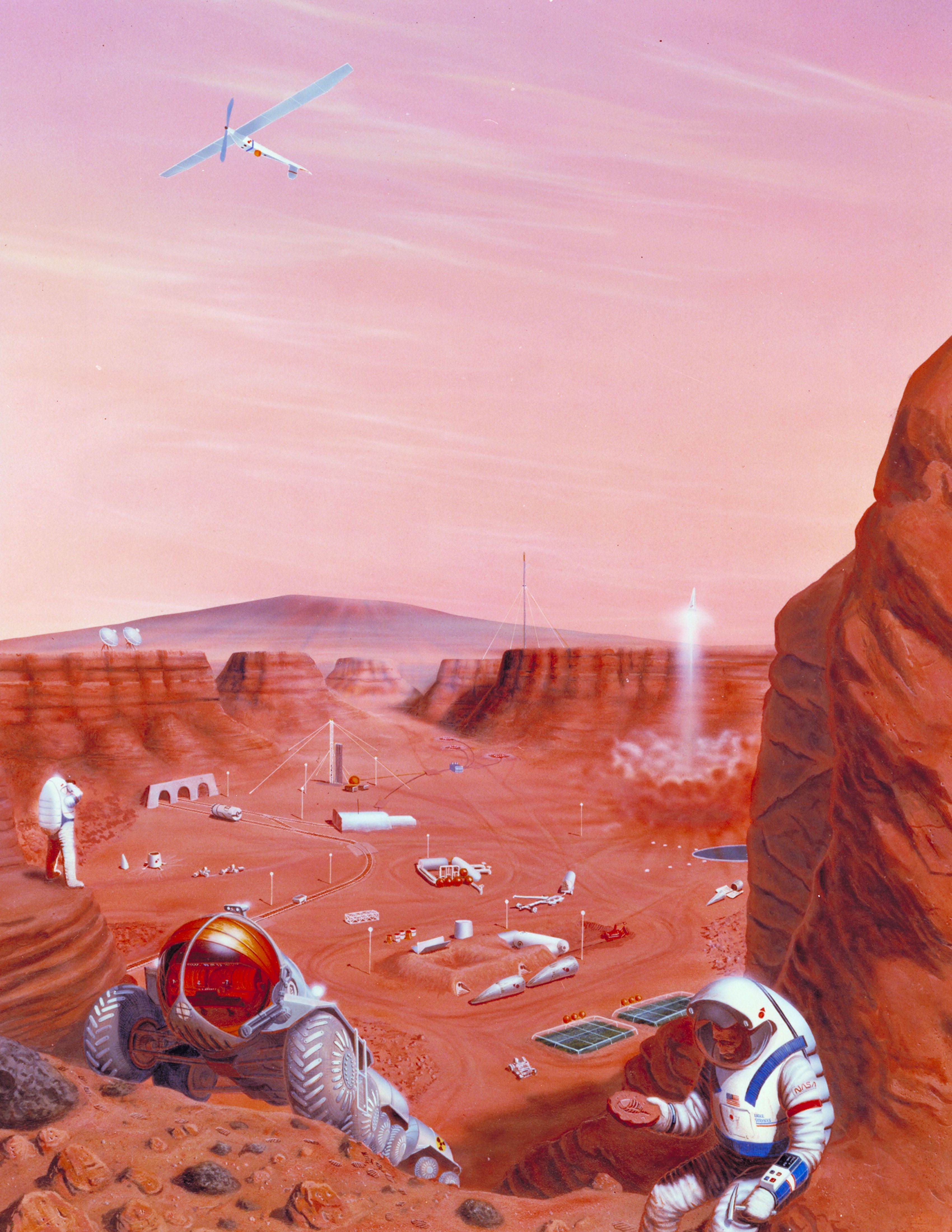
Genetically Engineered Bacteria Will Be Our Martian Architects
And it will change how we think about construction here on Earth.
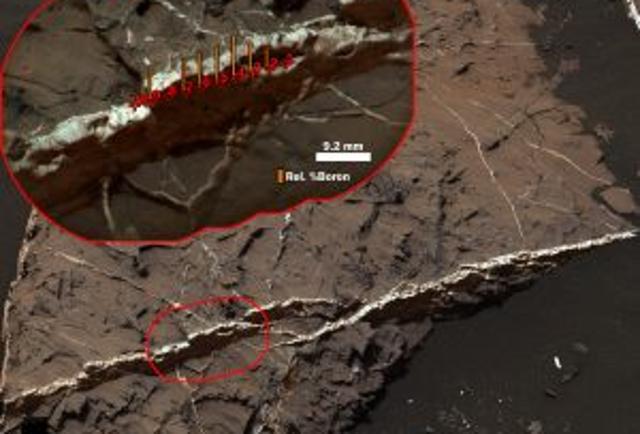
NASA’s Curiosity Rover Finds Boron Under Ancient Martian Lakebed
NASA’s Mars Curiosity strikes again with the first ever discovery of boron at Gale Crater. This detection of Boron, a telltale chemical signature of evaporated liquid water, gives new impetus to the idea that Mars once had clement weather and habitable conditions.
Violent Space Collisions May Have Naturally Produced ‘Impossible’ Quasicrystal
A pretty epic recipe to creating a new kind of substance.