NASA scientists have proposed a bold plan that could give Mars its atmosphere back and make the Red Planet habitable for future generations of human colonists.
By launching a giant magnetic shield into space to protect Mars from solar winds, the space agency says we could restore the Red Planet’s atmosphere, and terraform the Martian environment so that liquid water flows on the surface once again.
Mars may seem like a cold, arid wasteland these days, but the Red Planet is thought to have once had a thick atmosphere that could have maintained deep oceans filled with liquid water, and a warmer, potentially habitable climate.
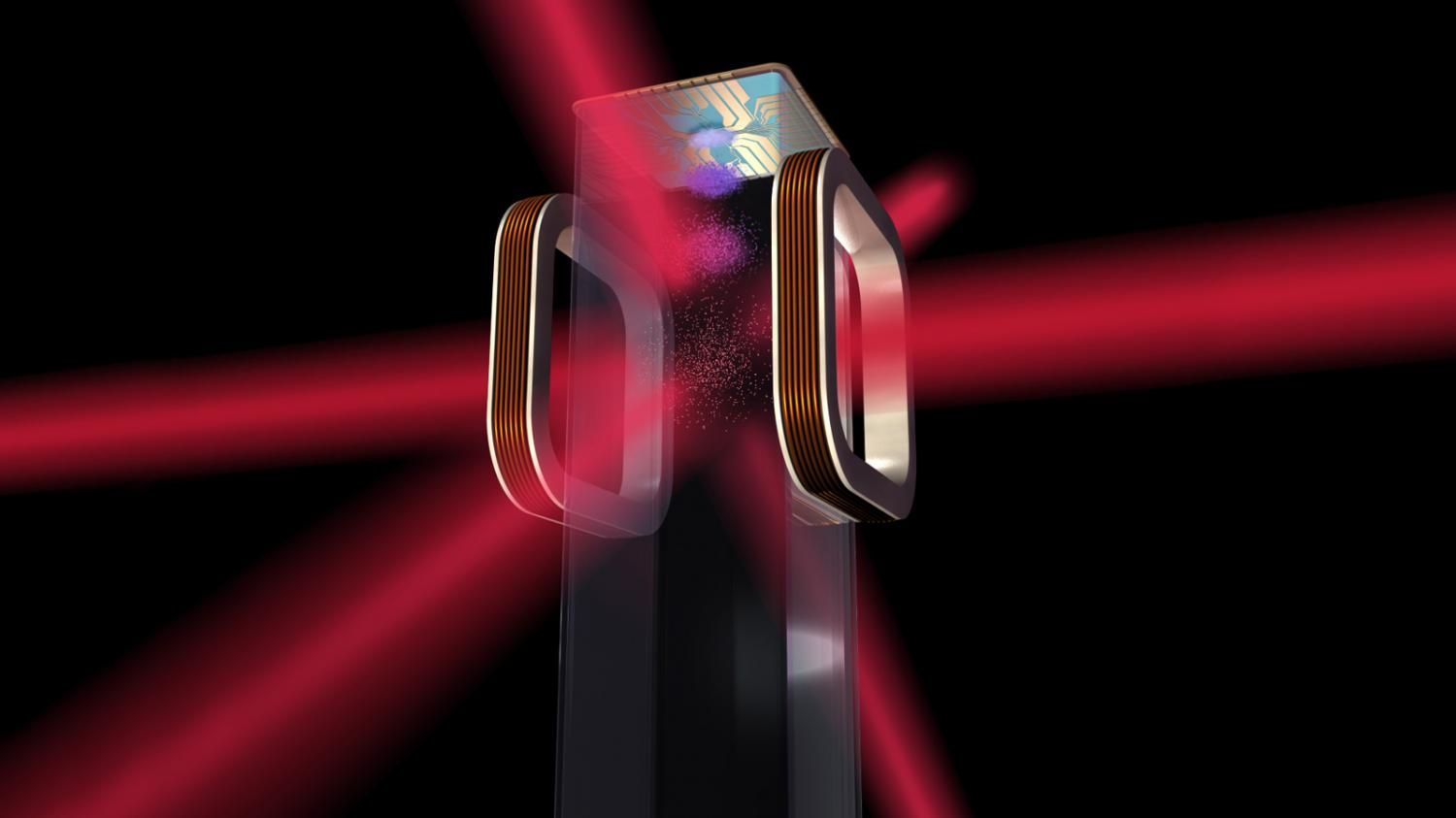
This summer, an ice chest-sized box will fly to the International Space Station, where it will create the coolest spot in the universe.
Inside that box, lasers, a vacuum chamber and an electromagnetic “knife” will be used to cancel out the energy of gas particles, slowing them until they’re almost motionless. This suite of instruments is called the Cold Atom Laboratory (CAL), and was developed by NASA’s Jet Propulsion Laboratory in Pasadena, California. CAL is in the final stages of assembly at JPL, ahead of a ride to space this August on SpaceX CRS-12.
Its instruments are designed to freeze gas atoms to a mere billionth of a degree above absolute zero. That’s more than 100 million times colder than the depths of space.
By Brent Ziarnick, Peter Garretson, Everett Dolman, and Coyote Smith
President-elect Donald Trump often says that Americans no longer dream and must do so again. Nowhere can dreams be more inspiring and profitable than in space. But today, expanding space enterprise is not foremost on the minds of Americans or military strategists. As a recent CNN special showed, defense thinkers feel embattled in space, focused on protecting our existing investments rather than developing new ones that seize strategic advantage.
The U.S. is studying a possible manned mission around the moon as early as next year, marking the first such trip since the Apollo era ended in the early 1970s.
Following requests from the White House, the National Aeronautics and Space Administration has formed a team to examine accelerating earlier plans to launch a crew by 2021, William Gerstenmaier, associate administrator of the agency’s Human Exploration and Operations Mission Directorate, said Friday. Preliminary results of the review should be ready in about a month.
“We have a good, crisp list of all the things we would physically have to change” on the launch vehicle under development, Gerstenmaier said on a conference call with reporters. “We asked the team to take a look at potentially what additional tests would be needed to add crew, what the additional risk would be.”
Stellaris: Utopia brings even greater depth and variety to a game already celebrated for its story-telling power and near endless possibilities. Are you ready for perfection?
One of the core improvements in Utopia is the introduction of Ascension Perks. As your species advances and gains new traditions, it can choose how it wants to evolve as it is further enlightened. You can choose between a biological path, a psionic path or a synthetic path, with various options within these broad categories. Body, Mind or Machine — how will your species challenge the future?
Utopia Also Includes: Megastructures: Build wondrous structures in your systems including Dyson Spheres and ring worlds, bringing both prestige and major advantages to your race. Habitat Stations: Build “tall” and establish space stations that will house more population, serving the role of planets in a small and confined empire. Rights and Privileges: Set specific policies for which of the many species under your thumb will have the rights and privileges of full citizenship. Build an egalitarian paradise or follow a caste system. And even more improvements and updates, including (as is traditional with all of our paid content releases) free updates for every Stellaris owner!
(sth/T.L.) – Luxembourg’s government and Tokyo-based space lunar robotic exploration company ispace Inc. on Thursday signed a Memorandum of Understanding (MoU) in the context of the SpaceResources.lu initiative with focus on developing miniaturized technology to discover, map, and utilize resources on the Moon.
Within the framework of this MoU, ispace intends to focus, through its new European office based in Luxembourg, on business development, R&D and on several key technical services, including payload development, engineering and integration.
American space power stagnated under U.S. Air Force stewardship a long time ago. [1] Congress observed this situation nearly 25 years ago, as the epigraphs above indicate. However, nothing substantive was done to fix the problem.
This article recommends the creation of a U.S. Space Corps in the Department of the Air Force as an initial step to set American space power on a path to reach its full potential.
Ultimately, America’s national security interests in space will best be served when Congress creates an independent Space Corps, just as it created independent services for land, sea and air, uniting them under the Department of Defense.