Elon Musk has yet another dream to make this world a better place, namely Space Internet. And it’s feasible.
Synthetics startup Ras Labs is working with the International Space Station to test “smart materials” that contract like living tissue. These “electroactive” materials can expand, contract and conform to our limbs just like human muscles when a current moves through them – and they could be used to make robots move and feel more human to the touch.
Ras Labs co-founder Lenore Rasmussen accidentally stumbled upon the synthetic muscle material years ago while mixing chemicals in the lab at Virginia Tech. The experiment turned out to be with the wrong amount of ingredients, but it produced a blob of wobbly jelly that Rasmussen noticed contracted and expanded like muscles when she applied an electrical current.
It would be years later when Rasmussen’s cousin nearly lost his foot in a farming accident that she would start to employ that discovery to robotic limbs and space travel. The co-founder thought her cousin might lose his foot and started researching prosthetics.
“The ice the scientists found measures 130 feet (40 m) thick and lies just beneath the dirt, or regolith, or Mars.
‘It extends down to latitudes of 38 degrees. This would be like someone in Kansas digging in their backyard and finding ice as thick as a 13-story building that covers an area the size of Texas and California combined,’ Bramson said.
Such an extensive ice sheet had never been seen at these latitudes.”
A giant slab of ice as big as California and Texas combined lurks just beneath the surface of Mars between its equator and north pole, researchers say.
This ice may be the result of snowfall tens of millions of years ago on Mars, scientists added.
Mars is now dry and cold, but lots of evidence suggests that rivers, lakes and seas once covered the planet. Scientists have discovered life virtually wherever there is liquid water on Earth, leading some researchers to believe that life might have evolved on Mars when it was wet, and that life could be there even now, hidden in subterranean aquifers. [Photos: The Search for Life on Mars].
If the $100 billion International Space Station (ISS) had been constructed to orbit our Moon instead of Earth, prospects for the U.S.’ human spaceflight program would arguably be much brighter than today.
Here are a few reasons why:
An International Lunar Space Station (ILSS) would have guaranteed the U.S. maintained its Apollo-era global dominance in terms of crewed interplanetary transport.
Even if NASA had decided not to continue with the Apollo program as originally envisioned, the space agency could have ferried astronauts to lunar orbit using its remaining Saturn V rockets and begun construction of a scaled-down version of the current ISS.
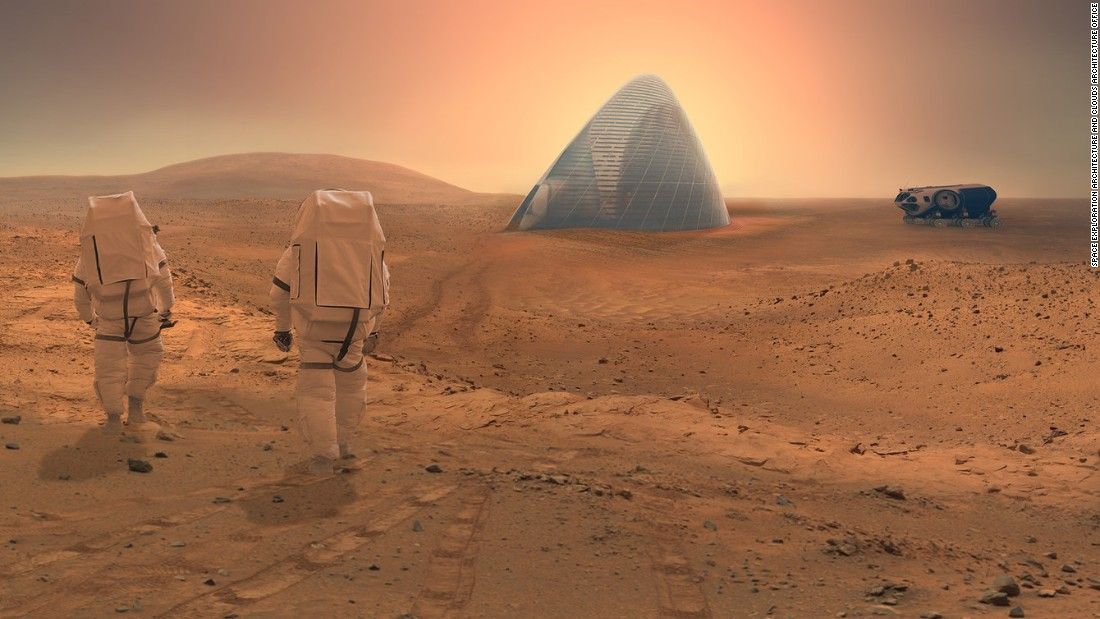
Elon Musk might think it’s a good idea to warm up Mars with thermonuclear weapons so humans can live on it, but scientists are raising red flags about the idea.
The CEO of Hawthorne-based SpaceX talked Mars colonization, among other topics, on “The Late Show with Stephen Colbert” on Wednesday.
When Colbert asked how he would eventually transform the Red Planet into a livable place, Musk said it would need to be warmed up.
NASA and Boeing have released a little teaser on their newest spacecraft, the CST-100 Starliner, which will be built and tested at Kennedy Space Center and hopefully, eventually taxi people to space.
Imagine touring space inside one of these awesome pods in the future. The video below highlights some features of the Starliner.
Before New Horizons completed its trip to Pluto, space geeks around the world were just as fascinated with another one of our solar system’s icy orbs: Ceres. Now that New Horizons is well on its way to the outer edges of the Solar System — and we’re stuck waiting to see the images it took — some of the spotlight is back on Ceres. And while much has already been learned about this other dwarf planet, one question still remains — what the hell are those bright spots?
This new image taken by the Dawn spacecraft doesn’t answer that outright, but it does give us the most detailed look at the spots yet, which are located in what NASA scientists have named the Occator crater. What we do know is that they are undoubtably and remarkably bright. The difference in brightness between the spots and the rest of Ceres is so great that this new glimpse of Ceres is actually made from two images: one specifically exposed capture the detail you see in the bright spots, and one exposed for the surface detail of the crater around those spots.
NASA’s Dawn spacecraft has spotted the bright, reflective patches in a crater on Ceres from a closer orbit.