Toggle light / dark theme

4 Cosmic Phenomena That Travel Faster Than The Speed Of Light

Hopefully one day soon we’ll be able to add a fifth cosmic phenomena that can travel faster than the speed of light to the list — humanity.


When Albert Einstein first predicted that light travels the same speed everywhere in our universe, he essentially stamped a speed limit on it: 670,616,629 miles per hour — fast enough to circle the entire Earth eight times every second.

But that’s not the entire story. In fact, it’s just the beginning.

Before Einstein, mass — the atoms that make up you, me, and everything we see — and energy were treated as separate entities. But in 1905, Einstein forever changed the way physicists view the universe.

Read more

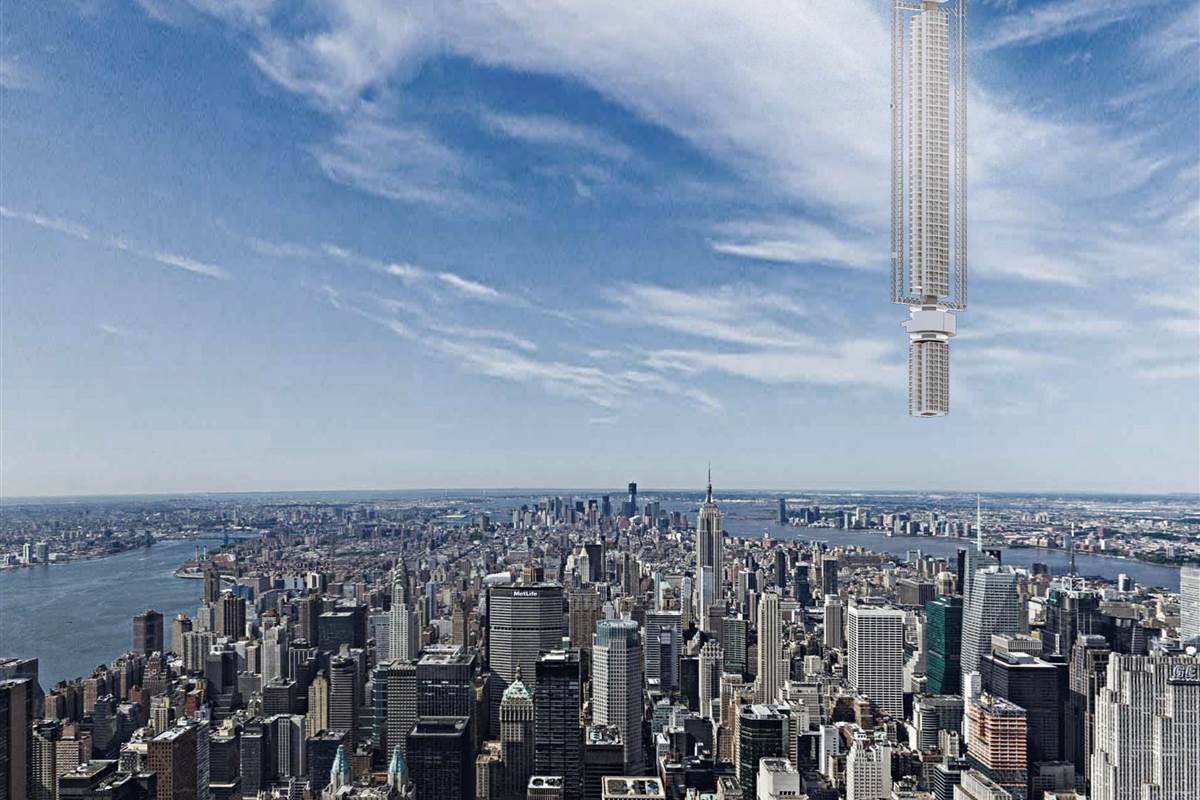
Space elevators will become feasible

The material to create space elevators will be developed by 2030, enabling a new golden age of space travel, according to a study published in the journal New Space.

“The material needed to have a 100,000 km rope will become real before 2030 and enable the creation of this low-cost access to space,” wrote Cathy W Swan, of SouthWest Analytic Network, Peter A Swan and John M Knapman, of the International Space Elevator Consortium, and David I Raitt, retired from the European Space Agency.

A space elevator would make launching people, satellites and craft into geostationary orbit dramatically cheaper than at present, with the researchers estimating it would drop from the current prices of $25,000 per kg for commercial launches and $40,000 per kg for governmental launches to $100 per kg for materials.

Read more

NASA Teaching Robonaut to Perform Surgery

The real question is: “what is the healing time in space v. earth? What is the risk of infection on earth v. space when surgery is performed in space?” If stats show patient survival, healing, and low to no infection rates in space v. earth; we could see a time when hospital colonies in space exist to handle initially complicated and high risks surgeries by robots v. earth.


NASA is grooming its robonauts to eventually perform surgery on people living in remote areas, like space. Lisa D’Souza has more on the future droid docs.

Buzz60 is designed for the way we live now. Short, quirky video snacks that are a little sassy, and always smart. Buzz 60 — and the Buzz60 channel on YouTube — produces all kinds of news video clips for web viewers who want more than just repurposed content. Our team is a diverse group of video journalists with dozens of Emmy awards, an authentic sense of humor, and a mandate to connect with viewers every day.

Read more

‘Space Warps’ and other citizen science projects reap major dividends for astrophysics

The astrophysics project Space Warps offers a compelling example of why citizen science has become such a popular tool and how valuable it can be. In a roundtable discussion with the Kavli Foundation, citizen science leaders and astrophysicists Chris Lintott, Anupreeta More and Aprajita Verma discuss the tremendous impact these enthusiastic volunteers are having.

Read more

Frozen Tardigrade Brought Back to Life After 30 Years

Tardigrades, or “water bears,” are renowned for their remarkable survival skills. But these microscopic creatures are far more indestructible than we thought. In a recent experiment, scientists in Japan successfully revived a tardigrade that had been frozen for more than three decades.

That’s a new record.

Tardigrades are tiny water-dwelling extremophiles that are capable of withstanding some of the most severe environmental conditions, including freezing, total dehydration, radiation, and even the vacuum of space. Much of this has to do with their extraordinary genome, of which nearly 18% is comprised of DNA from other organisms, including plants, fungi, bacteria, and viruses.

Read more

/* */