Join this workshop where esteemed speakers and selected teams will guide us in building a sustainable city on Mars.


China has signed an agreement with the United Nations to open its future space station to spacecraft, science experiments and even astronauts from countries around the world.
The agreement was laid out by Ms Wu Ping, Deputy of China’s Manned Space Agency (CMSA), in a presentation at the UN’s Committee on the Peaceful Uses of Outer Space (COPUOS) annual session in Vienna on Tuesday.
The move is aimed at boosting international cooperation in space and spreading the benefits of on-orbit research and opportunities provided by the Chinese Space Station, the core module of which will launch in 2018.
NASA’s new trailer for its Juno mission to Jupiter shows off the huge planet in all its scary glory.

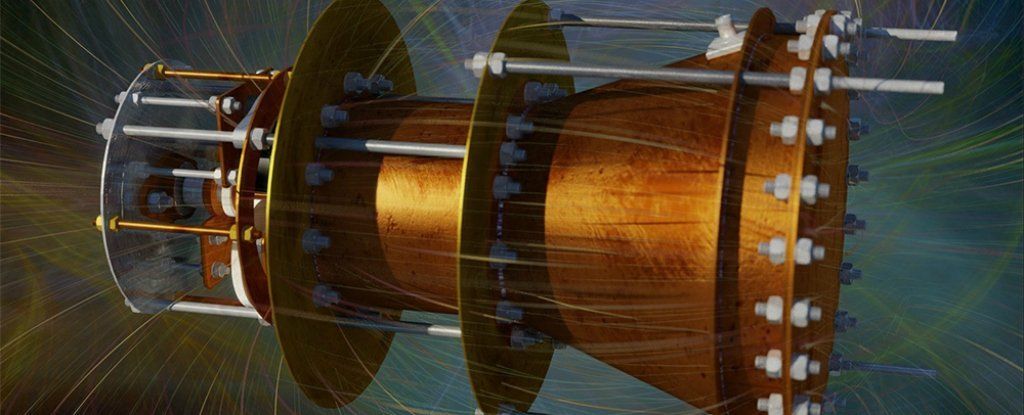
Physicists have just published new calculations that suggest the controversial EM drive — or electromagnetic drive — could actually work, and doesn’t defy Newton’s third law after all.
In case you’ve missed the hype, here’s a quick catch-up: a lot of space lovers are freaking out about the EM drive because of claims it could get humans to Mars in just 10 weeks, but just as many are sick of hearing about it, because, on paper at least, it doesn’t work within the laws of physics.
Despite that not-insignificant setback, the EM drive shows no signs of quitting, and test after test — including trials by NASA scientists at the Eagleworks lab, and an independent researcher in Germany — has conceded that the propulsion system, somehow, does produce thrust.

This needs to be on the commercial carriers especially for those 4+ hour flights.
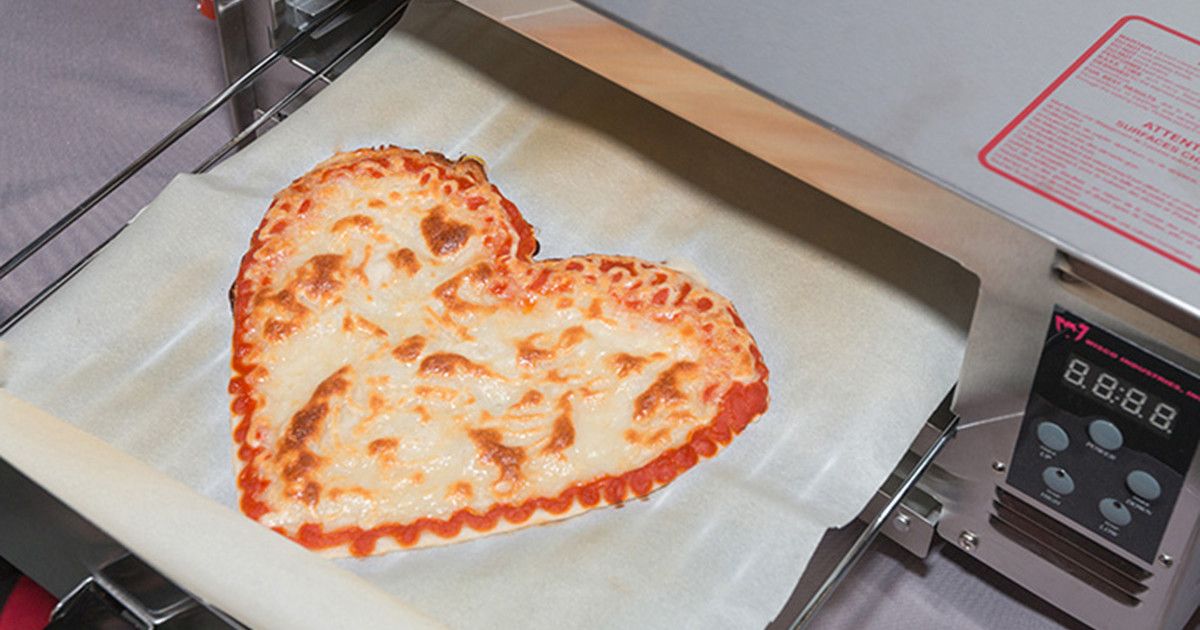
An Austin, Texas company, whose founders were commissioned by NASA to develop palatable foods for astronauts’ deep space mission to Mars, has built a device that can 3D-print pizza.
The company –known as BeeHex — boasts that its machine is efficient, clean, and capable of churning out a delicious pizza in less than half the time it takes a typical human chef. The tech is being developed for astronauts, but since NASA’s manned mission to the Red Planet isn’t planned until the 2030s, us Earthbound eaters may be able to enjoy a 3D-printed pizza at theme parks, shopping malls, or concert halls by early 2017.
Related: MIT student designs gardening robots that could grow produce for astronauts on Mars.

If you’re a Star Trek fan, the odds are that your dream game (outside of a Holodeck) involves helming a starship as if you were really on the bridge. Well, you’re about to get your wish: Ubisoft has teased Star Trek: Bridge Crew, the sci-fi series’ first-ever virtual reality game. The title is set in JJ Abrams’ Star Trek universe, and has you taking on the captain, engineer, helm or tactical stations of the remarkably Enterprise -like starship Aegis as it resettles what’s left of the Vulcan population. Think of it as a very sophisticated VR version of Spaceteam — you have to coordinate with the rest of your crew to explore the galaxy and fight off enemies.
Bridge Crew arrives this fall and will support both the HTC Vive and Oculus Rift on PCs as well as PlayStation VR. More details will have to wait until Ubisoft’s E3 press event on Monday, but it’s already clear that the publisher is making good on its promise of a big VR gaming push this year. We wouldn’t be surprised if Ubi has more extra-immersive games to show when it takes to the stage.

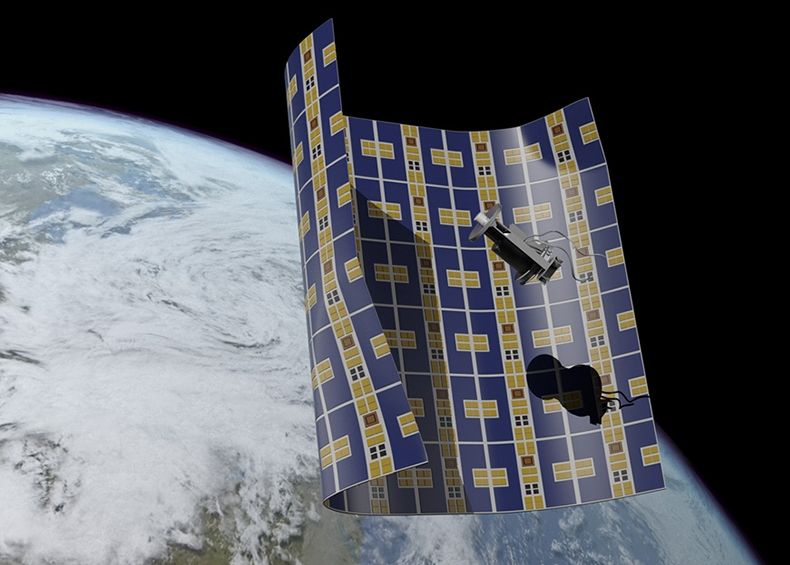
[Via Satellite 06–009-2016] NASA has awarded The Aerospace Corporation a grant to investigate the possibility of developing an extremely thin spacecraft that would wrap around debris and remove it from Earth’s orbit. The concept, called Brane Craft, is a 1-square meter spacecraft that is less than half the thickness of a human hair. The Brane Craft would only weigh about 50 grams, significantly less than even a standard CubeSat weight of about 1 kg. The 30-micron-thick spacecraft would have a very high thrust-to-weight ratio, and would be capable of travelling long distances, which opens up other possibilities beyond just the removal of space debris.
“The Brane Craft concept is based on the one-dimensional compression of a complete spacecraft and upper stage into an essentially two-dimensional object in order to maximize power-to-weight and aperture-to-weight ratios,” said Siegfried Janson, Aerospace Corporation’s senior scientist of the microsatellite systems department and the lead investigator on the project.