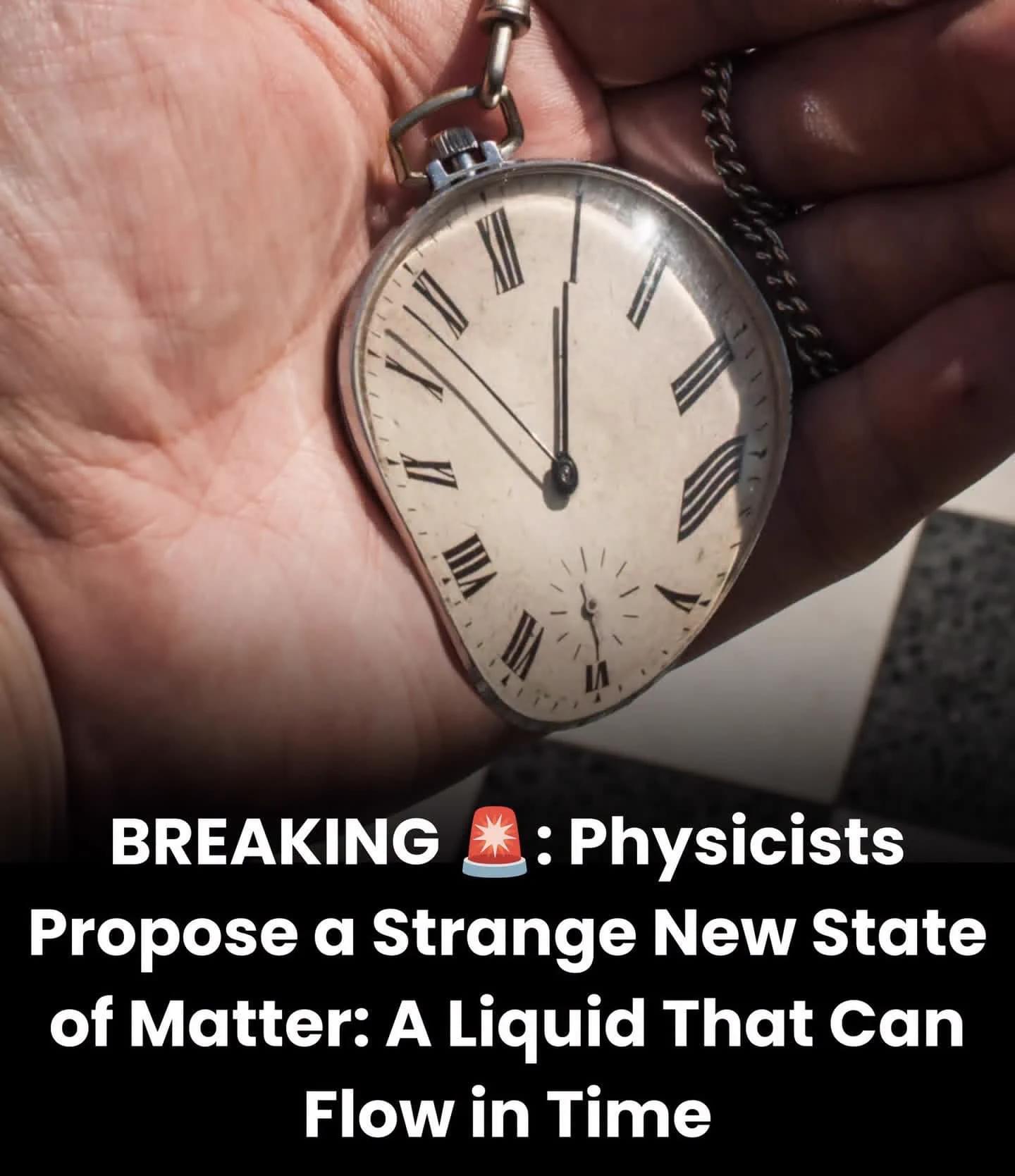
Next Science on X: ⏳ Scientists have proposed a strange new state of matter that behaves like a liquid—but through time.
What if matter could maintain a rhythm without staying perfectly synchronized?
Physicists have proposed a fascinating concept called a discrete time liquid. Ordinary crystals have repeating patterns in space, while time crystals display repeating patterns in their behaviour over time.
In my recent debate with Jordan Sparks, I challenged his characterization of cryonics as pseudoscience and his excessive confidence in chemical brain preservation and mind uploading. Neither cryopreservation nor chemical preservation has yet demonstrated human revival, and important uncertainties remain about what must be preserved to enable future survival. I examine the evidence for cryopreservation, the limitations of chemical fixation, and the assumptions underlying uploading. Our shared goal should be survival, not the vindication of a particular preservation method.
The purpose of biostasis is not to vindicate a particular preservation technology. It is to give people who would otherwise die the best possible chance of living again. For most of my four decades in biostasis, cryonics was the only option. As new options have appeared, I have welcomed the emergence of alternatives. I favor whichever methods work. I remain open to finding better approaches. In my recent debate on “Is Cryonics Pseudoscience?” (video here and audio here) Jordan Sparks seemed more invested in insisting on a fixed position than in being genuinely open to evidence.
In November 2011, inside a pitch-black vacuum chamber at Chalmers University in Sweden, physicists Christopher Wilson and Per Delsing shook an electronic mir…
Everything you’ve ever touched is made of particles. Tiny balls of stuff. Except physics says there are no particles.
In under 3 minutes:
Our best theory of reality says the universe isn’t made of things. It’s made of fields, each with a value at every point in space, filling the entire universe, right through you. There’s an electron field, a light field, quark fields and the Higgs field, all layered on top of each other, everywhere at once. Fields can’t ripple by just any amount. They ripple in lumps. One lump, the smallest ripple allowed, is what we call a particle. Why every electron in the universe is exactly identical: they’re all ripples in the same field. Why light acts like a wave and a particle: it’s a ripple that arrives in lumps. The Large Hadron Collider doesn’t break protons into smaller bits. It shakes the fields so hard that ripples jump into other fields. In 2012, one of them was the Higgs. Inside a proton: three quarks labelled red, green and blue (not real colours), with opposites cyan, magenta and yellow, tied together by the gluon field. All three together cancel out. The twist: the quarks are about 1% of the proton’s mass. The other 99% is the energy of that storm. E = mc² Even empty space isn’t empty. The fields are still there, trembling.
Episode 36 of a series explaining the universe, one big idea at a time.
If we’re all ripples in the same fields, are we actually all connected? Tell me in the comments. 👇
Photo: Paul Dirac, 1933 (Nobel Foundation, via Wikimedia Commons).
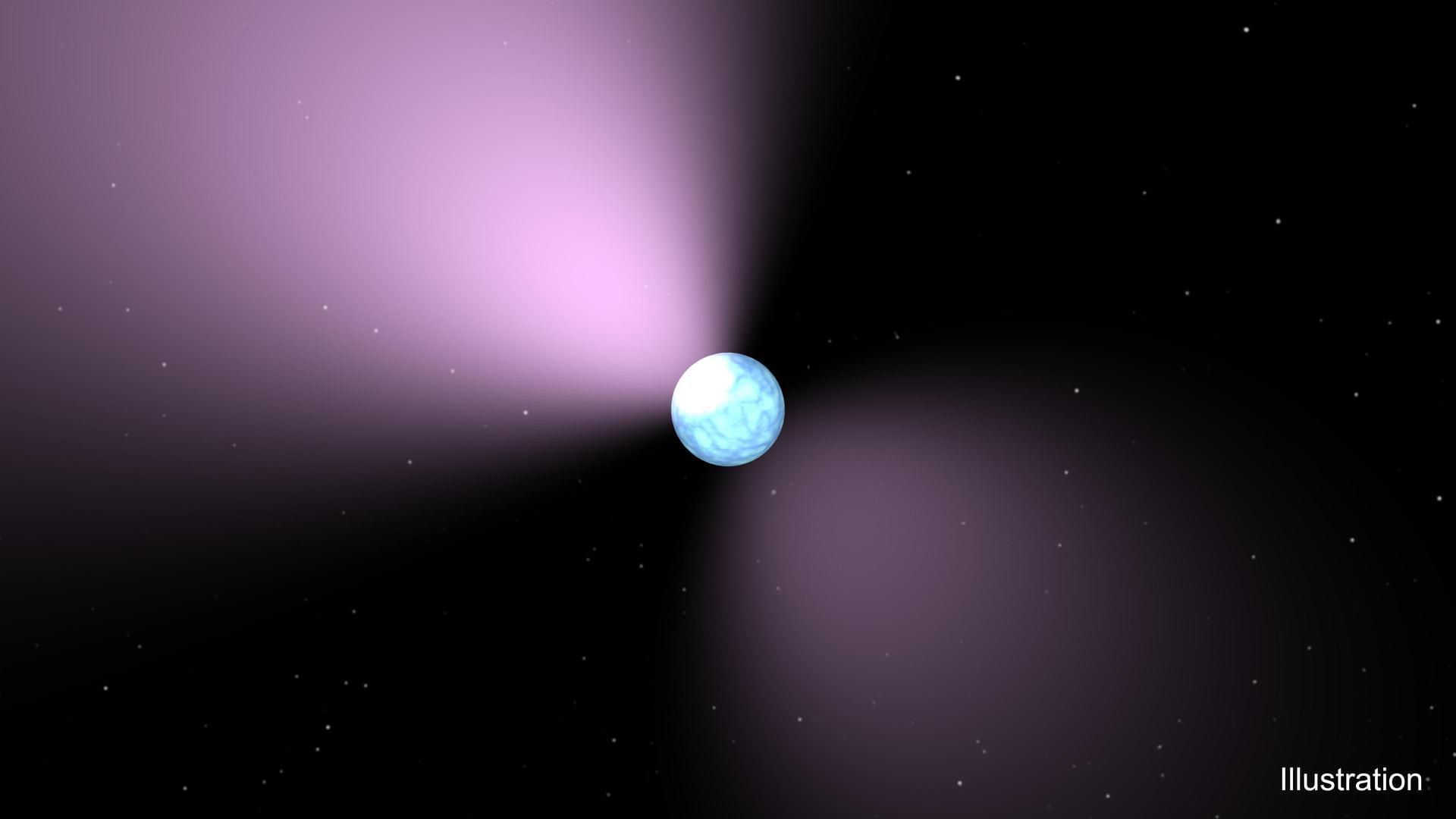
An international team of scientists has developed a method that can find pulsars in publicly available NASA data about a million times faster than before. This opens the door to discovering many more of these rapidly spinning objects. A paper describing the results published Thursday in the Physical Review Letters.
Using 15 years of data from NASA’s Fermi Gamma-ray Space Telescope and a cryptography-based method developed by study co-authors Dotan Gazith and Barak Zackay from the Weizmann Institute of Science in Israel, the team found PSR J1622−7204, an isolated pulsar spinning 261 times per second, using the equivalent of 10 hours of computing time on a standard computer processor.
By comparison, the previous best method failed to find the pulsar, despite using enough computing power that a standard processor would take 600 years to perform the calculation.
In early 2020, before anyone had heard of ChatGPT, I sat down with a man who holds three PhDs: genetics, evolutionary biology, and philosophy.
He told me he’s a philosopher first.
Prof. Massimo Pigliucci built a serious scientific career, publishing in genetics and defending evolution against pseudoscience. Then a midlife crisis pushed him out of the lab and into #philosophy. He didn’t abandon science. He went after the questions science can’t answer on its own.
Six years later, those questions sit at the center of the #AI conversation.
We’ve built machines that write, code, and argue. We still can’t say what they’re for, or what kind of people we want to become as we use them.
So we talked about #Stoicism and the daily work of becoming a better person. Moral relativism versus moral realism. Why technology is the How, not the Why or What. And scientism, the habit of treating every human question as a technical problem waiting for more data.
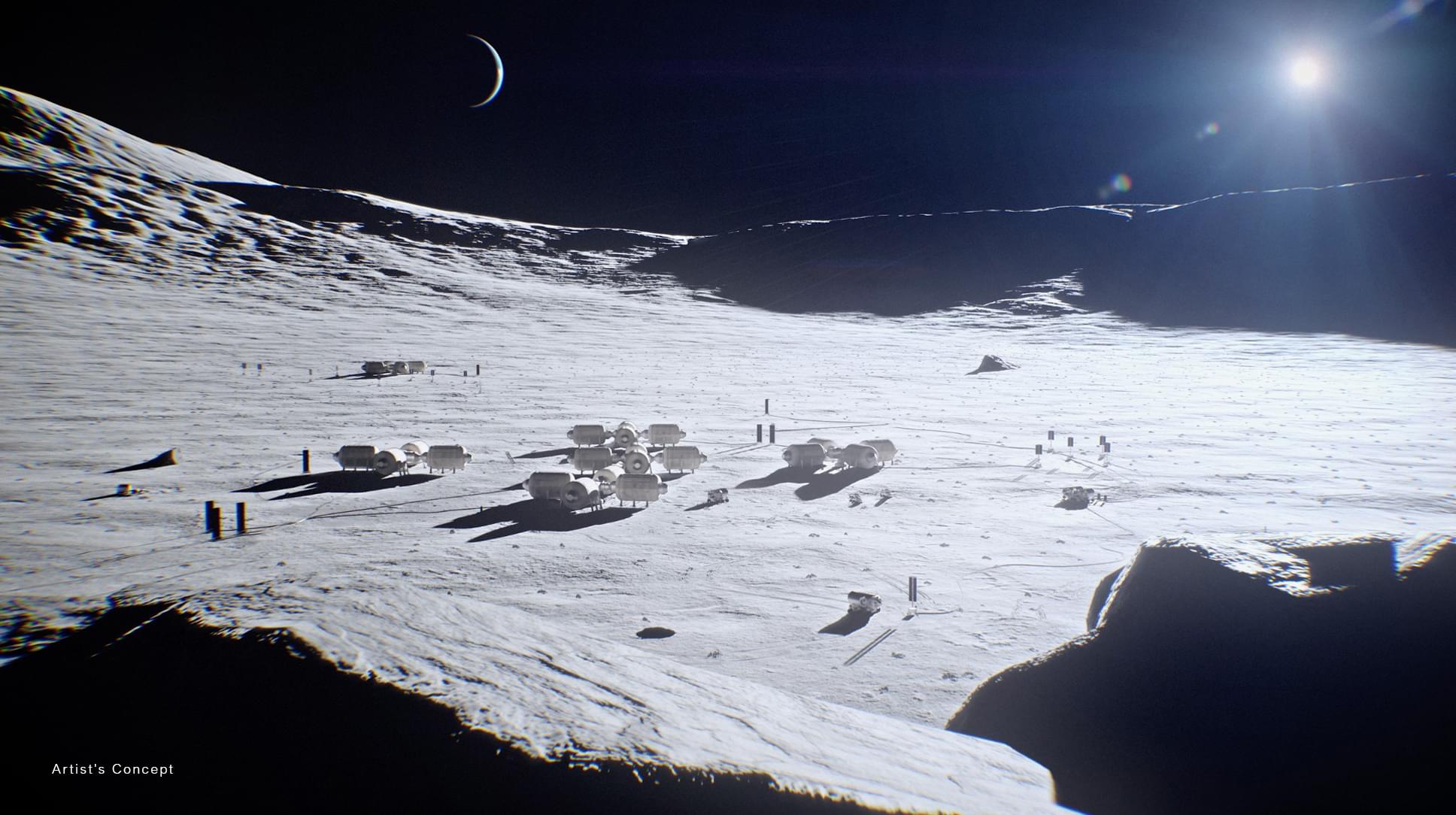
NASA announced a suite of awards and mission updates on Saturday to expand the agency’s Moon Base exploration, science, and infrastructure capabilities. The investments will advance commercial robotic deliveries, a nuclear-powered rover named PROMISE, launch and orbital transfer services, and surface infrastructure as the agency works with American industry to establish a sustained presence on the Moon’s South Pole.
The agency shared the news at the MAX POWER aerospace expo and air show at NASA’s Kennedy Space Center in Florida.
“We are building the Moon Base mission by mission,” said NASA Administrator Jared Isaacman. “Today’s announcements expand nearly every part of that campaign, using the playbook that carried NASA through its greatest eras: fly often, learn, apply those lessons, and get more better and more capable with every mission. When our astronauts return to the Moon, they will arrive with the first elements of the Moon Base already waiting for them on the surface.”
Science Magazine on X: “By analyzing a massive collection of #TCellReceptor chains from 150,000+ patient samples, researchers have developed a pipeline to accelerate the discovery and validation of public T cell receptors for immunotherapeutic design. @ScienceTMhttps://scim.ag/4zr7Ffb” / X.