The Mars-Home for Mission Specialists for next few months.Team includes India born Shawna Pandya
Representatives of Congress and the National Space Council joined President Donald J. Trump, Apollo astronaut Jack Schmitt and current NASA astronaut Peggy Whitson Monday, Dec. 11, 2017, for the president’s signing of Space Policy Directive 1, a change in national space policy that provides for a U.S.-led, integrated program with private sector partners for a human return to the Moon, followed by missions to Mars and beyond.
Lunar Sample 70215 was retrieved from the Moon’s surface and returned by NASA’s Apollo 17 crew. The sample is a basaltic lava rock similar to lava found in Hawaii. It crystallized 3.84 billion years ago when lava flowed from the Camelot Crater. Sliced off a parent rock that originally weighed 8,110 grams, the sample weighs 14 grams, and is very fine grained, dense and tough.
Since beginning of man kind we are keen to answer three fundamental questions on this small rocky planet orbiting a modest star know as Mother Earth..
1- Where from we came?
2- Are We Alone in This Universe?
3-Where our Discoveries will lead us?
To answer all this Human Kind has been indulged in discoveries,inventions,explorations and researches since beginning of civilization.There were many things which were already existing and humans discovered it,explored many unknown places on Earth and in Dark and Dense Universe 70 % of which is made up by Dark Matter and Dark Energy. There were many things which never existed before and humans invented that,many formulas like Law of Gravity but Gravity existed even before it was discovered by Newton. There has been many researches on exiting facts.So there is clear distinction between Researches,Discoveries,Explorations and Invention making inventions the in the top order.
It all needs a Political will to make efforts when we want to explore space beyond Planet Earth .We humans have been doing it in our own way. With or without any mechanic help but real race started in 50s with establishment of NASA or National Aeronautics and Space Administration when President Kennedy appealed US to help him to make the dream realize to land on Moon. President George W Bush was second President who came out with NASA’s Nnew Millenium Program and ordered Space Ship program.Orion Mega Space Ship is result of that. Now President Trump has signed new directive directing NASA administrator to plan for Human Landing on Moon and then on Mars in Deep Space Network across solar system.
The efforts has already started with starting selection process of various Mission Specialists and train them at two different centers where Martian and Llunar Culture has been restructured.
he president signed at the White House Space Policy Directive 1 in December 2017 ‚a change in national space policy that provides for a U.S.-led, integrated program with private sector partners for a human return to the Moon, followed by missions to Mars and beyond.
The policy calls for the NASA administrator to “lead an innovative and sustainable program of exploration with commercial and international partners to enable human expansion across the solar system and to bring back to Earth new knowledge and opportunities.” The effort will more effectively organize government, private industry, and international efforts toward returning humans on the Moon, and will lay the foundation that will eventually enable human exploration of Mars.
“The directive I am signing will refocus America’s space program on human exploration and discovery,” said President Trump. “It marks a first step in returning American astronauts to the Moon for the first time since 1972, for long-term exploration and use. This time, we will not only plant our flag and leave our footprints — we will establish a foundation for an eventual mission to Mars, and perhaps someday, to many worlds beyond.”
The policy grew from a unanimous recommendation by the new National Space Council, chaired by Vice President Mike Pence, after its first meeting Oct. 5. In addition to the direction to plan for human return to the Moon, the policy also ends NASA’s existing effort to send humans to an asteroid. The president revived the National Space Council in July to advise and help implement his space policy with exploration as a national priority.
“Under President Trump’s leadership, America will lead in space once again on all fronts,” said Vice President Pence. “As the President has said, space is the ‘next great American frontier’ – and it is our duty – and our destiny – to settle that frontier with American leadership, courage, and values. The signing of this new directive is yet another promise kept by President Trump.”
Among other dignitaries on hand for the signing, were NASA astronauts Sen. Harrison “Jack” Schmitt, Buzz Aldrin, Peggy Whitson and Christina Koch. Schmitt landed on the moon 45 years to the minute that the policy directive was signed as part of NASA’s Apollo 17 mission, and is the most recent living person to have set foot on our lunar neighbor. Aldrin was the second person to walk on the Moon during the Apollo 11 mission. Whitson spoke to the president from space in April aboard the International Space Station and while flying back home after breaking the record for most time in space by a U.S. astronaut in September. Koch is a member of NASA’s astronaut class of 2013.
Work toward the new directive will be reflected in NASA’s Fiscal Year 2019 budget request next year.
“NASA looks forward to supporting the president’s directive strategically aligning our work to return humans to the Moon, travel to Mars and opening the deeper solar system beyond,” said acting NASA Administrator Robert Lightfoot. “This work represents a national effort on many fronts, with America leading the way. We will engage the best and brightest across government and private industry and our partners across the world to reach new milestones in human achievement. Our workforce is committed to this effort, and even now we are developing a flexible deep space infrastructure to support a steady cadence of increasingly complex missions that strengthens American leadership in the boundless frontier of space. The next generation will dream even bigger and reach higher as we launch challenging new missions, and make new discoveries and technological breakthroughs on this dynamic path.”
A piece of Moon rock was brought to the White House as a reminder of the exploration history and American successes at the Moon on which the new policy will build. Lunar Sample 70215 was retrieved from the Moon’s surface and returned by Schmitt’s Apollo 17 crew. Apollo 17 was the last Apollo mission to land astronauts on the Moon and returned with the greatest amount of rock and soil samples for investigation.
The sample is a basaltic lava rock similar to lava found in Hawaii. It crystallized 3.84 billion years ago when lava flowed from the Camelot Crater. Sliced off a parent rock that originally weighed 8,110 grams, the sample weighs 14 grams, and is very fine grained, dense and tough. During the six Apollo surface excursions from 1969 to 1972, astronauts collected 2,196 rock and soil samples weighting 842 pounds. Scientific studies help us learn about the geologic history of the Moon, as well as Earth. They help us understand the mineral and chemical resources available to support future lunar exploration.
Members of Crew taking a little breather during an EVA mission, with the MDRS campus off in the distance.
So the big question is if President Trump can become the next John F Kennedy of USA and give Space Science and NASA a boost much needed. There have been many stories in communist world suspecting NASA’s Lunar Mission in leadership of Neil Armstrong but that aside there a very few non believer on that story. WE all know NASA and its men actually landed on Moon.So in this new space era when NASA and Trump looking across solar systems by sending and landing on planets of Deep Space Network with focus on Red Planet the big question remain who are other countries which can join the race. Is Russia in position to compete now with trillions of dollars very optimistic Space Plan while NASA and Mission Specialists from US and Collaborating Countries have already started selection process and training.
Mission Training Goes On:
========================
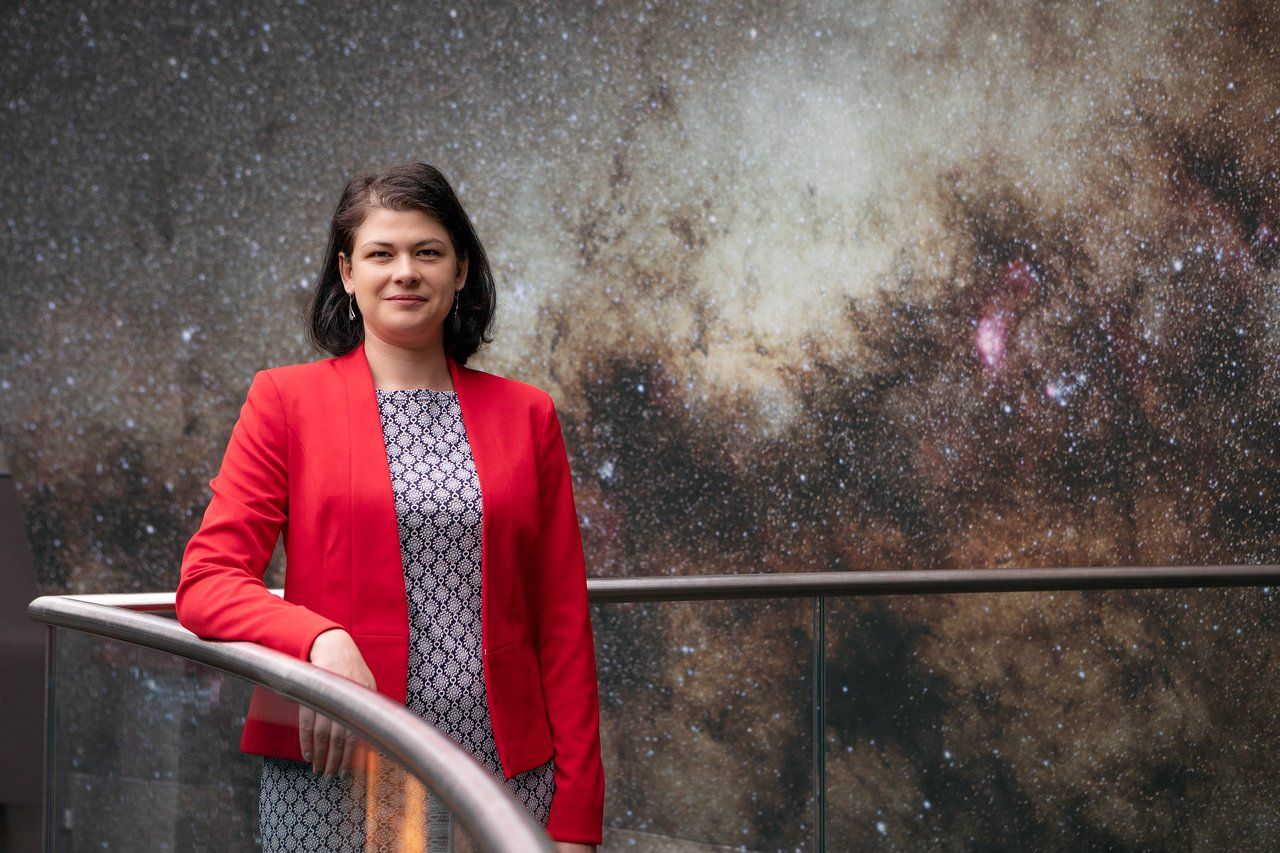
India born Shawna Pandya and and Anima Patil –Sabale are selected Mission Specialist for Martian training Program as part of Project Phenum at Mars Desert Research Station in the deserts of Utah. The training is rigorous and continuous. Both Indian and rest of two Mission Specialist are getting some Martian Veggies to eat and chicken soup. They get one hour of Internet daily and there is Red Soil and Desert all around except the dome they have created for safety.Shawna has already spoken to me about Project PoSSUM and Project Phenum which involved training for 100 hours in water and three month long rigorous training in Mars Culture in Utah desert at Mars Desert Research Center. This team is called SOL 2,Crew 193.
Here are some of Photographs and Mission Report.
Four Member Mission Specialist Team at Mars Desert Research Station.Indian born Shawna Pandya and Anima are standing in middle
Commander ReportMDRS Crew 193Anima Patil-Sabale04.23.18
We arrived on Mars very early in the morning, well rested and brimming with excitement to explore the red planet and begin our research.
After a few hours of settling down, we started the day off with an EVA. A task given to us by Mission Control was to scout for locations suitable for the crew to take shelter in during emergencies like dust storms, radiation storm or incapacitated crew member. Both our morning and afternoon EVAs focused on this task.
We had freshly baked banana bread and chicken noodle soup for lunch. Yes, I have been experimenting with my culinary skills on Mars and its been challenging to cook using the dehydrated items available, but for a person who loves cooking its been fun experimenting.
Our afternoon EVA got interesting when we were informed by base of a request from Mission Support to rescue the astronomer in the observatory. After rescuing him and making sure he was safe, we returned to our next EVA task of fixing and putting up the signpost for the site that had been blown away during the storms in the past couple of weeks. Kudos to our Crew Engineer, whose engineering skills and muscle power made this task seem easier after a three and a half hour!
The Crew Engineer and me plan on constructing and designing a new signpost for the MDRS site bringing his engineering and my artistic skills together.
The crew has been doing well and is looking forward to the next few days with great enthusiasm. Spirits are high and passion great for this mission. We plan to tidy up the hab, continue work on our projects and EVA’s and contribute to valuable research that will lead up to Martian colonization in the near future.
A Report from Mars:
Operations Report – April 24th
Crew 193 Operations Report 24Apr2018
SOL: 2
Name of person filing report: David Attig
Non-nominal systems: One piece EVA suit #10 and two piece EVA suit # 6 have issues
Notes on non-nominal systems: One two piece suit (6) has straps broken holding on neck ring, Visor on suit 10 is heavily scratched and deemed unuseable. See Sol Summary for more details.
Generator (hours run): 12
Solar— SOC 86 % (Before generator is run at night)
Diesel – 75 %
Propane – 60 psi.
ATV Fuel (Ethanol free gasoline) – 0.75 gallons.
Water (trailer) – 0 gallons.
Water (storage) – 550 gallons
Water (static) – 410 gallons
Trailer to Static Pump used – no
Water (loft) – Static to Loft Pump used – yes
Water Meter: 134008.9
Toilet tank emptied: yes
Date last emptied: April 24
ATV’s (Honda, 300, 350.1, 350.2, 350.3):
Honda Used?: Yes
300 Used? Yes
350.1 Used? No
350.2 Used? Yes
350.3 Used? No
ATV Oil Checked?: Yes
ATV Oil Added?: No
ATV Fuel Used: less than 1 Gallon
# Hours the ATVs were Used today: 0.5
Notes on ATVs: With 350.2, throttle cable gets pulled when handlebar is moved all the way to the left. Suggest not using this ATV for future (provided sufficient fuel in others).
Deimos rover used: Yes
Hours: 124.0
Beginning charge: 99%
Ending charge: 98 %
Currently charging: Yes
Sojourner rover used: ASSIGNED TO DIRECTOR
Hours: Unknown
Beginning charge: N/A
Ending charge: N/A
Currently charging: N/A
Spirit rover used: No
Hours: 33.7
Beginning charge: 100 %
Ending charge: 100 %
Currently charging: No
Opportunity rover used: Out Of Service
Hours: 31
Beginning charge: N/A
Ending charge: N/A
Currently charging: N/A
Curiosity rover used: No
Hours: 23
Beginning charge: 100 %
Ending charge: 100 %
Currently charging: No
Hab Car used?: No
Where was Hab Car used?: N/A
Why was Hab Car used?: N/A
General notes and comments:
Summary of internet: By 8AM again today, we have used half of our allotted daily internet. Is there a way to monitor our internet over time without constantly logging on to check it? That way we could monitor usage and know if there is a peak time that it is being used.
Summary of suits and radios: Older style (silver front) radios appear to not transmit well enough to use in EVA. One two piece suit broke during EVA today, and 1 one piece suit was deemed unuseable due to scratches in the visor.
Summary of Hab operations: See Sol Summary report.
Summary of GreenHab operations: See GreenHab report
Summary of ScienceDome operations: See Science report.
Summary of RAM operations: We cut a board to use for a new sign in front of MDRS.
Summary of health and safety issues: None to report.
Questions, concerns and requests to Mission Support: See Sol Summary.
A Graph Created by Crew Shows Human Foot Print on Mars.