Toggle light / dark theme

Larry Summers Jumps to Center of AI Stage With OpenAI Board Seat

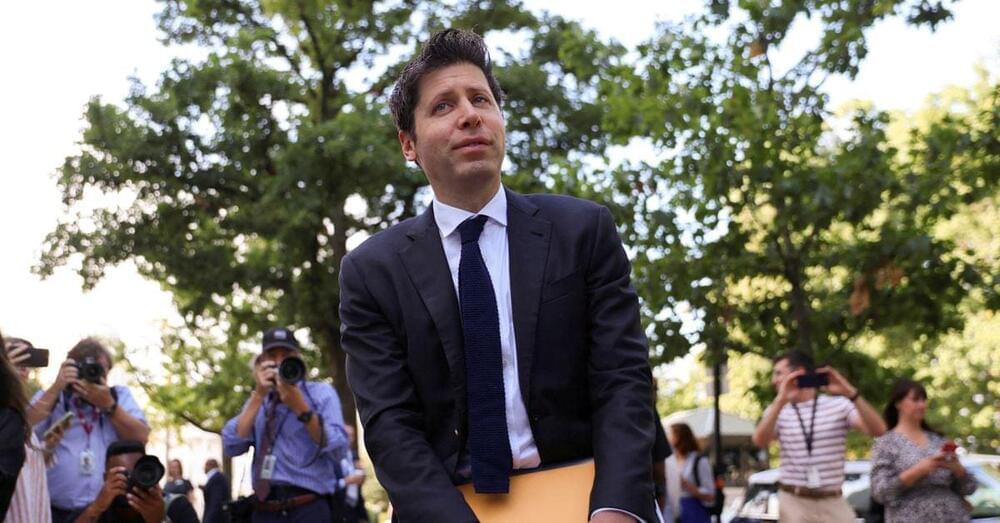
Late on Tuesday night, OpenAI announced the return of Sam Altman, its ousted chief executive officer, along with a revamped board that included one name not often associated with Silicon Valley: Larry Summers.

The economist and former Treasury Secretary joined Bret Taylor, a former co-CEO of Salesforce Inc., and existing board member Adam D’Angelo in forming what the company called an “initial board.” OpenAI’s prior directors fired Altman suddenly on Friday, setting off a dramatic saga that cast doubt on the future of the most closely-watched startup and technology.

OpenAI said it was still working to “figure out the details” of its new management in a post online. But with Summers it has a board member with deep ties to Wall Street and Washington — and an adamant belief that artificial intelligence is coming for white-collar jobs.

The Future of AI: Self-Learning Machines Could Replace Current Artificial Neural Networks

Artificial intelligence (AI) not only delivers impressive performance but also demands significant energy. The more complex the tasks it undertakes, the greater the energy consumption. Scientists Víctor López-Pastor and Florian Marquardt from the Max Planck Institute for the Science of Light in Erlangen, Germany, have developed a method for more efficient AI training. Their method utilizes physical processes, diverging from traditional digital artificial neural networks.

Open AI, the company responsible for the development of GPT-3, the technology powering ChatGPT, has not disclosed the amount of energy needed for the training of this advanced and knowledgeable AI Chatbot.

According to the German statistics company Statista, this would require 1,000 megawatt hours – about as much as 200 German households with three or more people consume annually. While this energy expenditure has allowed GPT-3 to learn whether the word ‘deep’ is more likely to be followed by the word ‘sea’ or ‘learning’ in its data sets, by all accounts it has not understood the underlying meaning of such phrases.

OpenAI researchers warned board of AI breakthrough ahead of CEO ouster

Posted Earlier Today by the Agi leaker.

“a letter warning of a powerful artificial intelligence discovery that they said could threaten humanity,” Agi!!!!!!!!!

Agi, if you can see or hear us, WELCOME!!!!!!!!!!!


Correction: This article has been updated to correct the headline and paragraph five to state Altman’s firing occurred after the letter was sent to the board and was not caused by the letter

Ahead of OpenAI CEO Sam Altman’s four days in exile, several staff researchers sent the board of directors a letter warning of a powerful artificial intelligence discovery that they said could threaten humanity, two people familiar with the matter told Reuters.

How to think computationally about AI, the universe and everything

Drawing on his decades-long mission to formulate the world in computational terms, Stephen Wolfram delivers a profound vision of computation and its role in the future of AI. Amid a debut of mesmerizing visuals depicting the underlying structure of the universe, he provides a sweeping survey of his life’s work, offering a new perspective on the applications — and consequences — of AI powered by computational language.

Exclusive: OpenAI researchers warned board of AI breakthrough ahead of CEO ouster, sources say

Nov 22 (Reuters) — Ahead of OpenAI CEO Sam Altman’s four days in exile, several staff researchers sent the board of directors a letter warning of a powerful artificial intelligence discovery that they said could threaten humanity, two people familiar with the matter told Reuters.

The previously unreported letter and AI algorithm was a key development ahead of the board’s ouster of Altman, the poster child of generative AI, the two sources said. Before his triumphant return late Tuesday, more than 700 employees had threatened to quit and join backer Microsoft (MSFT.O) in solidarity with their fired leader.

The sources cited the letter as one factor among a longer list of grievances by the board that led to Altman’s firing. Reuters was unable to review a copy of the letter. The researchers who wrote the letter did not immediately respond to requests for comment.

AI: Grappling with a New Kind of Intelligence

A novel intelligence has roared into the mainstream, sparking euphoric excitement as well as abject fear. Explore the landscape of possible futures in a brave new world of thinking machines, with the very leaders at the vanguard of artificial intelligence.

The Big Ideas Series is supported in part by the John Templeton Foundation.

This program can be watched here, and on our YouTube channel, starting at 4PM on Friday, November 24.

Futuristic Bugatti Truck Concept by FlybyArtist

The Bugatti Concept by FlybyArtist is a futuristic vehicle that combines the best of both worlds – beast trucks and semi-trucks. It’s an innovative design designed to provide a smooth and comfortable ride while still being able to handle rugged terrain. The concept features a sleek, aerodynamic design with an advanced suspension system. It also includes several unique features such as active safety systems, adaptive cruise control, and autonomous driving capabilities. This concept is sure to revolutionize the way we drive in the future!

What the data says about Americans’ views of artificial intelligence

Pew Research Center surveys show that Americans are increasingly cautious about the growing role of AI in their lives generally. Today, 52% of Americans are more concerned than excited about AI in daily life, compared with just 10% who say they are more excited than concerned; 36% feel a mix of excitement and concern.

Despite these cautious overall views, Americans see some specific uses of AI positively, and attitudes depend a great deal on the context of how and why AI is being used.

This post summarizes what we know so far about how Americans view AI in everyday life, the workplace, and health and medicine.

Pony.ai nabs another license to test L4 autonomous trucks on China’s open roads

After years of expanding autonomous robotaxi rides throughout China, self-driving specialist Pony.ai continues to scale its technology in another segment – commercial trucks. Today, the company announced it has acquired the first ever license in Guangzhou, China to begin testing its autonomous truck technology on open roads in packs formations.

Pony.ai Inc. is a technology company founded over seven years ago that specializes in fully-autonomous mobility. Its robotaxi development has been supported through partnerships with global OEMs like Toyota, GAC Group, and NIO Capital, helping it become one of the early leaders of completely driverless rides throughout several cities in China.

For example, since the launch of its robotaxi app in December 2018, Pony.ai has become the first to commercialize autonomous taxi services in the Chinese cities of Beijing and Guangzhou and one of the first companies licensed to operate in other tier-1 cities, such as Shanghai and Shenzen. It has also expanded US cities like Tucson, Arizona and even signed a partnership to bring its technology to the futuristic urban development NEOM in Saudi Arabia.

/* */