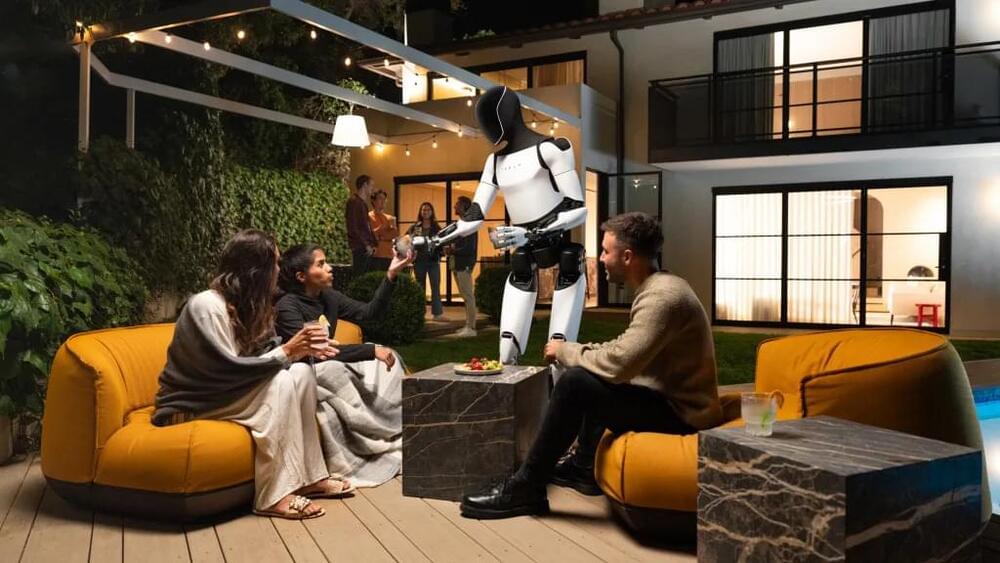
Humanoid robots are on the cusp of mass adoption. And Elon Musk’s Tesla bots aren’t the only game in town.

Elon Musk, Tesla and Warner Brothers Discovery are being sued by “Blade Runner 2049” production firm Alcon Entertainment for alleged copyright infringement, which accused them on Monday of “a massive economic theft.”
The big picture: Alcon alleges the defendants used an AI-generated image like the one from “Blade Runner 2049” to promote Tesla’s robotaxi concept at Warner Bros. Discovery’s studio lot in Burbank, California, earlier this month after it denied their request to use “an iconic still” from the 2017 movie at the event.
Zoom in: The production company alleges in the suit, filed on Monday in federal court in Los Angeles, that the event used an image that was reminiscent of a scene involving Ryan Gosling’s character looking into an apocalyptic world in the sequel to the 1982 sci-fi classic “Blade Runner.”
People with AI are going to replace people without AI.
SAN FRANCISCO (AP) — Artificial intelligence’s recent rise to the forefront of business has left most office workers wondering how often they should use the technology and whether a computer will eventually replace them.
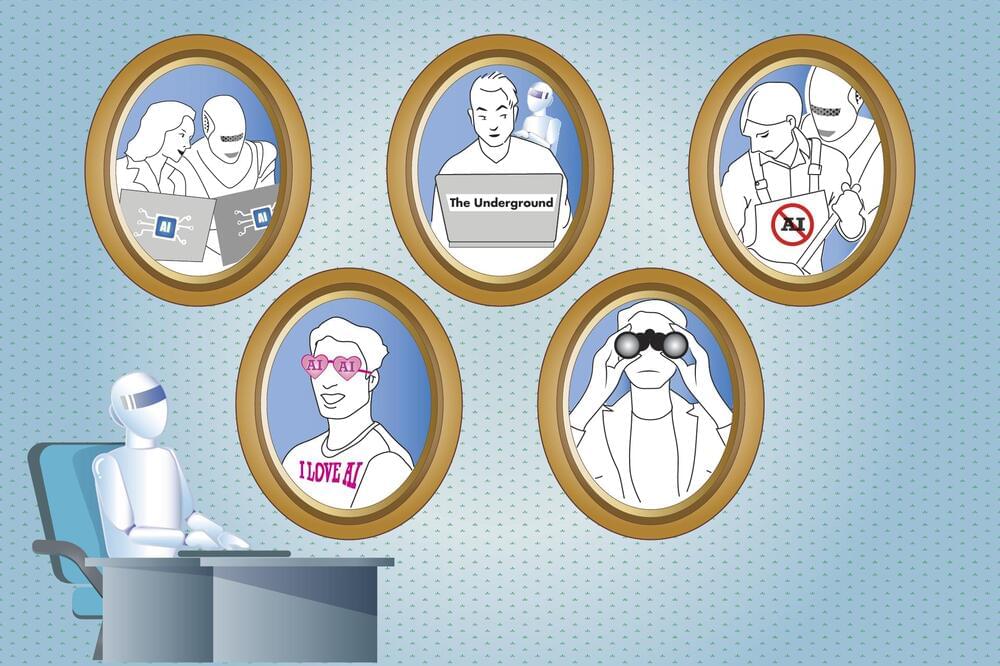
Those were among the highlights of a recent study conducted by the workplace communications platform Slack. After conducting in-depth interviews with 5,000 desktop workers, Slack concluded there are five types of AI personalities in the workplace: “The Maximalist” who regularly uses AI on their jobs; “The Underground” who covertly uses AI; “The Rebel,” who abhors AI; “The Superfan” who is excited about AI but still hasn’t used it; and “The Observer” who is taking a wait-and-see approach.
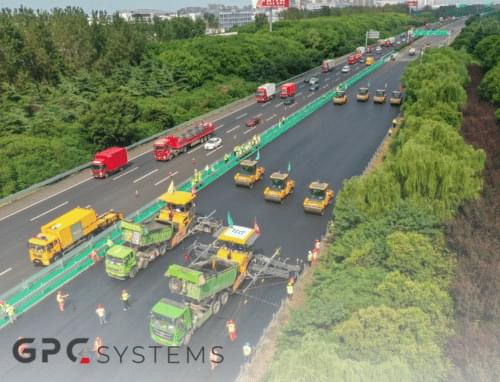
In a remarkable feat of engineering and automation, China has recently completed the world’s first fully unmanned road resurfacing project, covering an impressive 157.79 kilometres of expressway without the involvement of a single human construction worker. This innovative achievement showcases China’s rapid advancements in construction technology and its commitment to pushing the boundaries of what’s possible in infrastructure development.
The Autonomous Fleet
The project utilised a fleet of autonomous road construction vehicles, including drones and robots, to carry out the entire resurfacing process. This cutting-edge approach marks a significant departure from traditional road construction methods, which typically rely heavily on human labour.
Microsoft on Monday said it was enhancing its AI offerings with new autonomous agent capabilities as the tech titan aims to accelerate business adoption of artificial intelligence.
AI agents are specialized programs designed to perform routine tasks autonomously, such as sifting through sales leads or handling customer service inquiries.
The AI agent has become the newest buzzword for major software companies that are investing billions in powerful AI models, which they believe will shape the future of computing.
Kepler launched the Forerunner K2, a humanoid robot with advanced AI for perception and autonomous learning.
Kepler launches Forerunner K2, a full-sized humanoid robot with advanced software for perception, task planning, and autonomous learning.
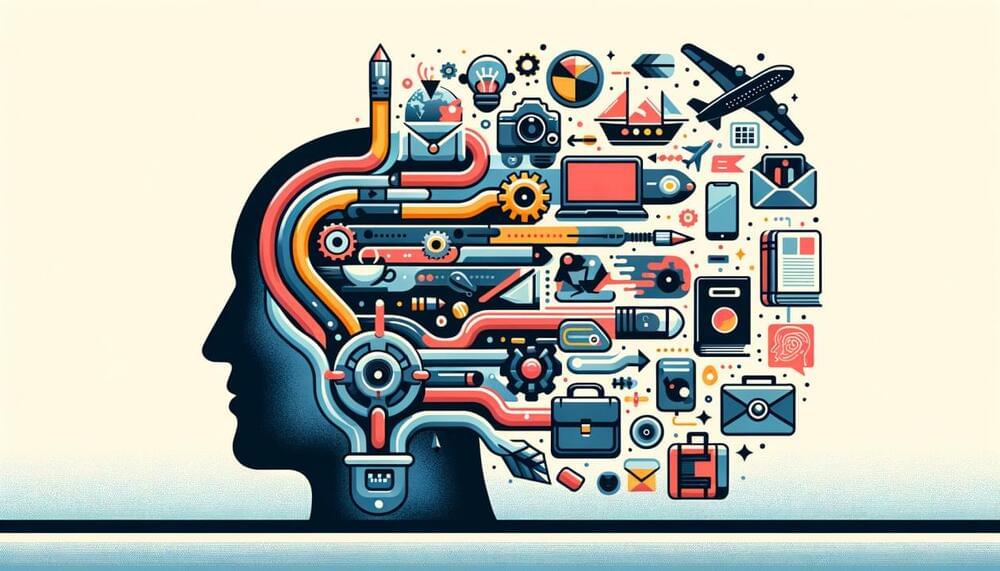
Title: Creating a persona for ChatGPT or other generative AI models serves several important purposes:
See…
I’ve been exploring the development of deep persona for the past few days.
I’ve been fascinated by GenAI ever since ChatGPT-3 came out last year. I’ve found it incredibly useful for brainstorming and speeding up the development of tools and processes. It generally covers the basics, allowing me to concentrate on more advanced topics and specifics based on context and experience.
When starting with GenAI, two of the worst habits I see is that most people either treat it as a search engine replacement or ask non-specific questions.
It might be my Product Management background, but, I have found that the best way to start with AI is creating a persona for it. The benefit of using a persona is that it gives the AI context on the experience and knowledge it should have and the type of output you expect. For example, if I ask it to “write me a story about user login” without a persona, it would write me a short story about a user logging into an app and probably encountering a problem. However, if I say “As a Product Owner, write me a story about user login,” then it will take the intuitive leap to write me a User Story about user login.
But when something out of the ordinary happens, the situation can quickly get scary, because most updates are only delivered by audio announcements. A Deaf traveller may miss their train because it was moved to a different platform, or watch as their station whizzes by because the train isn’t stopping there today. They may also remain on a train carriage in an emergency after everyone else has evacuated, and have to be rescued by station staff.
Every single one of these examples has been drawn from the real life experiences of Deaf people in Sydney. But my colleagues and I are working with Sydney Trains and members of the Australian Deaf community to develop an advanced, artificial intelligence (AI)-powered signing avatar which can automatically translate audio announcements into Auslan.
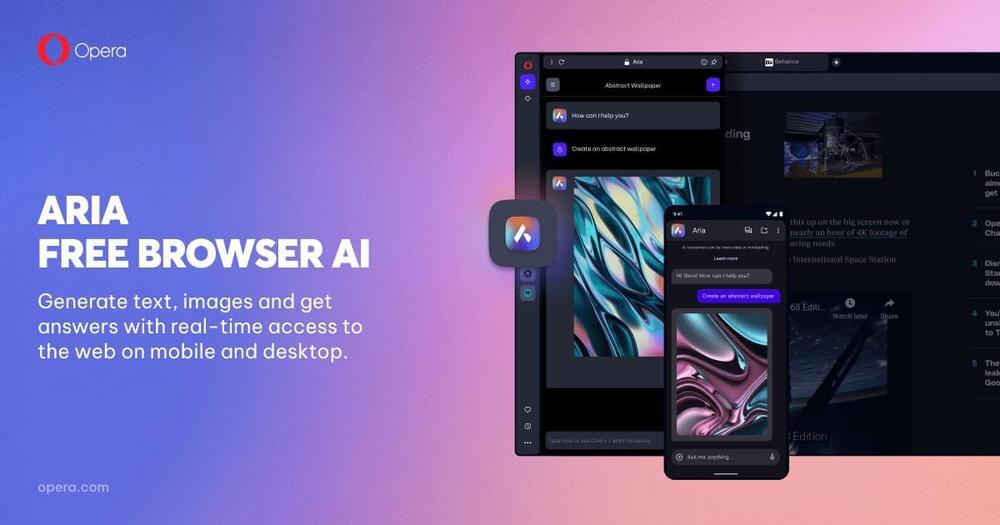
So Everyone is offering free AI because they have to. From X to more it is a spreading trend. Here’s one:
Aria helps with everything you do in Opera Browser: from shopping research to learning and creativity. Generate text, images and get answers with real-time access to the web on mobile and desktop.
Chat and create with Aria, Opera’s free AI, across devices. Aria answers questions and generates content with up-to-date information from the web.
Decomposing the dark matter of sparse autoencoders.
Joshua Engels, Logan Riggs, Max Tegmark MIT 2024 https://arxiv.org/abs/2410.
On mapping concepts in artificial neural networks with sparse autoencoders: we find that map errors exhibit…
Code for our paper ‘Decomposing The Dark Matter of Sparse Autoencoders’ — JoshEngels/SAE-Dark-Matter.