AI promises to help scientists do more, faster, with less money. But it brings a host of new concerns, too — and if scientists rush ahead with AI adoption they risk transforming science into something that escapes public understanding and trust, and fails to meet the needs of society.
Experts have already identified at least three illusions that can ensnare researchers using AI.
Shaping The Culture & Conduct Of Science — Dr. Marcia McNutt Ph.D. — President, National Academy Of Sciences
Dr. Marcia McNutt, Ph.D. is President of the National Academy of Sciences (https://www.nasonline.org/directory-e…), where she also chairs the National Research Council, the operating arm of the National Academies of Sciences, Engineering, and Medicine, and serves a key role in advising our nation on various important issues pertaining to science, technology, and health.
From 2013 to 2016, Dr. McNutt served as editor-in-chief of the Science journals.
Dr. McNutt is a geophysicist who prior to joining Science, was director of the U.S. Geological Survey (USGS) and science adviser to the United States Secretary of the Interior from from 2009 to 2013. During her tenure, the USGS responded to a number of major disasters, including earthquakes in Haiti, Chile, and Japan, and the Deepwater Horizon oil spill.
Dr. McNutt led a team of government scientists and engineers at BP headquarters in Houston who helped contain the oil and cap the well. She directed the flow rate technical group that estimated the rate of oil discharge during the spill’s active phase. For her contributions, she was awarded the U.S. Coast Guard’s Meritorious Service Medal.
Technological development has hit warp speed – in a flash, stars have stretched into starlines and where we are today is far from where we were just days ago. It’s increasingly difficult to predict where we will be tomorrow.
One thing is clear: we are entering the Artificial General Intelligence (AGI) spectrum and Artificial Superintelligence (ASI) now seems clearly within reach. However it is defined, AGI will not appear suddenly; it will evolve and already we see signs of its incremental unfolding.
AGI has long been the ultimate goal—a technology capable of performing the mental work of humans, transforming how we work, live, think. Now, as we step into 2025, glimmers of AGI are already appearing and promise to grow stronger as the year moves along.
Last month, Klarna CEO Sebastian Siemiatkowski boasted that he hadn’t hired anyone in a year as a result of his company embracing AI.
Klarna’s workforce had shrunk by about 22 percent since doubling down roughly a year ago. Meanwhile, the company has amassed a valuation of well over $14 billion, in what Siemiatkowski frames as a financially successful bid to cash in on the hype surrounding AI.
The fintech company, which offers “buy now, pay later” services for the e-commerce industry, made a big fuss about its OpenAI ChatGPT integration, gushing that its AI assistant could do the work of “700 full-time agents” in a February press release.
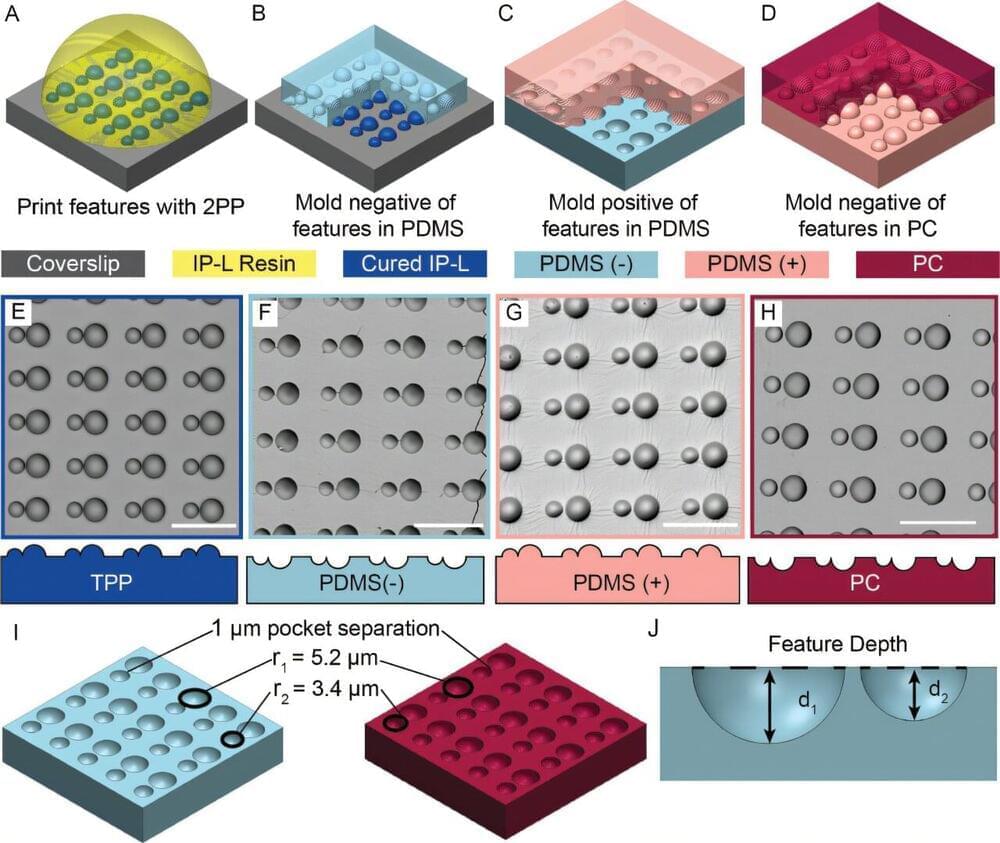
When robots are made out of modular units, their size, shape, and functionality can be modified to perform any number of tasks. At the microscale, modular robots could enable applications like targeted drug delivery and autonomous micromanufacturing; but building hundreds of identical robots the size of a red blood cell has its challenges.
“At this scale, robots are not big enough to hold a microcontroller to tell them what to do,” explained Taryn Imamura, a Ph.D. Candidate in Carnegie Mellon University’s Department of Mechanical Engineering.
“Active colloids (the robots) have what we call embodied intelligence, meaning their behavior, including the speed at which they travel, is determined by their size and shape. At the same time, it becomes more difficult to build microrobots that have the same size and structure as they get smaller.”
Discover new technologies shaping 2025! NVIDIA’s Jetson Thor system is set to revolutionize humanoid robotics, while Meta’s Ray-Ban Stories smart glasses lead the wearable tech trend with over 1 million units sold. AI continues to transform industries with tools like ChatGPT. Don’t miss Unitree’s B2-W robot showcasing incredible stunts, speed, and heavy payload capabilities—available for purchase now!
📲 Follow us on social media @toborlife for updates, innovations, and exciting announcements! 💬 Have questions? Contact us at: 📧 [email protected]. 📞 (408) 409‑4061
World-leading humanoid robotics and artificial intelligence (AI) company Realbotix has announced it will unveil its latest robot, “Melody,” at this year’s Consumer Electronics Show (CES 2025).
Melody is, by all accounts, an open-source design that features functionality, adaptability, and user experience above beyond its previous offerings.
Realbotix, in case you are unaware, develops “customizable, full-bodied, human-like robots with AI integration that improve the human experience through connection, learning, and play.”