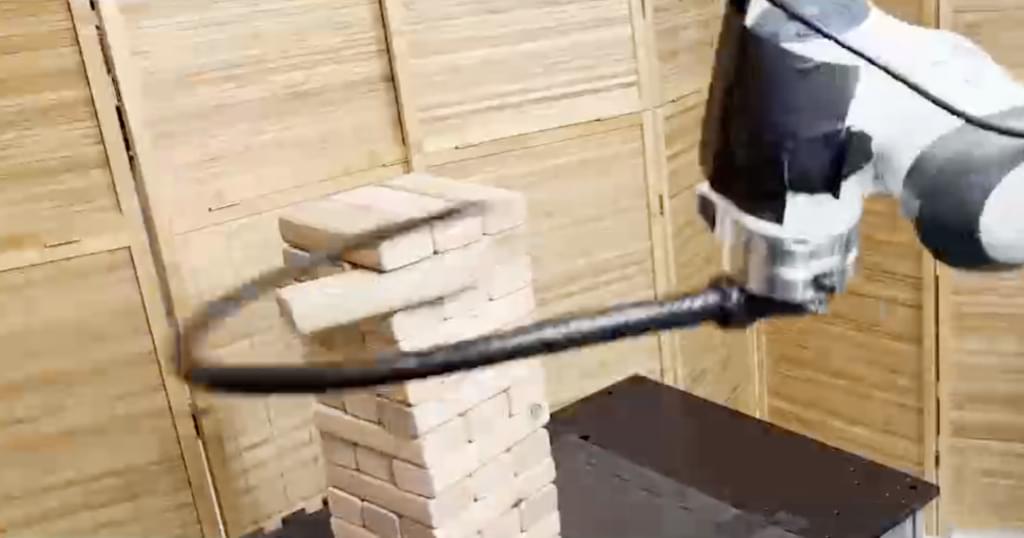
UC Berkeley researchers devised a fast and precise way to teach robots tasks like assembling a motherboard or an IKEA drawer.
Wandering salamanders are known for gliding high through the canopies of coastal redwood forests, but how the small amphibians stick their landing and take-off with ease remains something of a mystery.
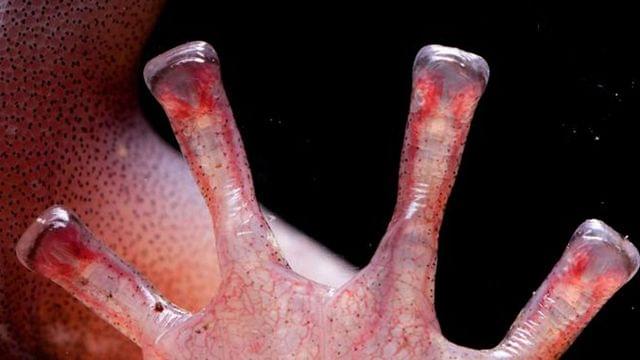
A new study in the Journal of Morphology reveals the answer may have a lot to do with a surprising mechanism: blood-powered toes. The Washington State University-led research team discovered that wandering salamanders (Aneides vagrans) can rapidly fill, trap and drain the blood in their toe tips to optimize attachment, detachment and general locomotion through their arboreal environment.
The research not only uncovers a previously unknown physiological mechanism in salamanders but also has implications for bioinspired designed. Insights into salamander toe mechanics could ultimately inform the development of adhesives, prosthetics, and even robotic appendages.
Boston Dynamics’ Atlas robot has long been admired for its impressive agility, often performing feats that seem to defy the limits of humanoid robotics. But now, Atlas has reached a new milestone in its evolution—autonomy. Thanks to advancements in both hardware and software, Atlas is no longer just a display of physical prowess. It can now complete tasks independently, operating without the need for pre-programmed movements or human control.
Since its unveiling in 2013, Atlas has undergone continuous improvements, transforming from a partially hydraulic machine to a fully electrified robot. This change alone marked a significant shift in its capabilities, providing better efficiency and flexibility. However, it’s not just about the hardware—Atlas now boasts the ability to think on its feet. A recent demonstration showcased the robot’s impressive ability to move objects autonomously. In the video, Atlas was given a list of locations where it needed to place engine parts. With this simple instruction, the robot set to work, moving the pieces with remarkable fluidity and precision.
This isn’t just about lifting heavy objects. Atlas has been designed to navigate and adapt to changing environments. The use of machine learning has strengthened its ability to perceive and interact with the world around it. Through enhanced vision systems, Atlas can analyze its surroundings and adjust its actions accordingly. For example, when it encountered difficulty in placing one of the parts, Atlas immediately recalibrated its movements, showing an impressive level of adaptability.
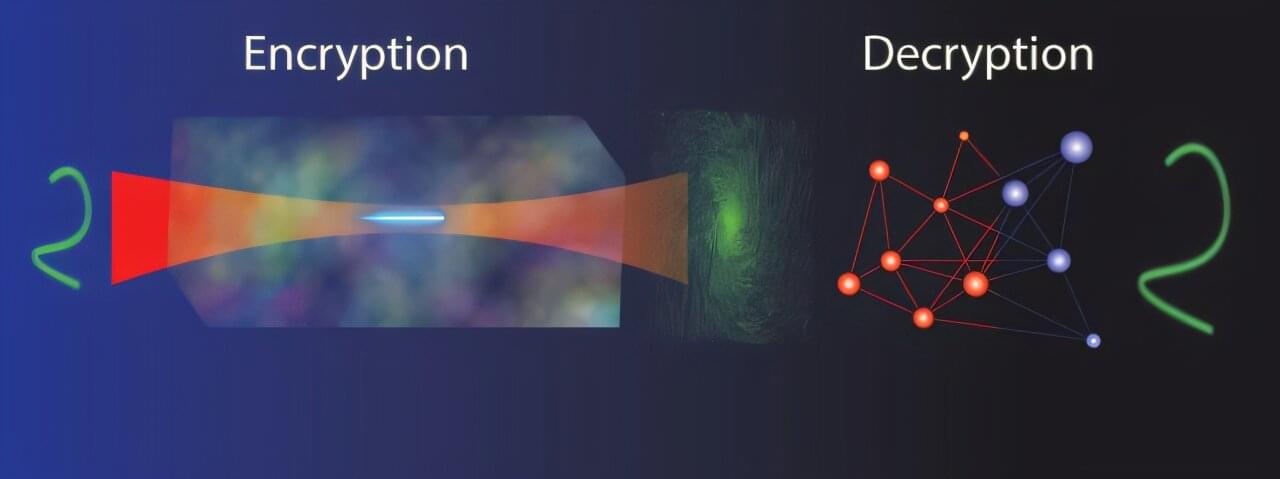
As the demand for digital security grows, researchers have developed a new optical system that uses holograms to encode information, creating a level of encryption that traditional methods cannot penetrate. This advance could pave the way for more secure communication channels, helping to protect sensitive data.
“From rapidly evolving digital currencies to governance, health care, communications and social networks, the demand for robust protection systems to combat digital fraud continues to grow,” said research team leader Stelios Tzortzakis from the Institute of Electronic Structure and Laser, Foundation for Research and Technology Hellas and the University of Crete, both in Greece.
“Our new system achieves an exceptional level of encryption by utilizing a neural network to generate the decryption key, which can only be created by the owner of the encryption system.”
Researchers tested whether one person could command a robot swarm of drones and ground vehicles in complex missions.
OpenAI, in partnership with Retro Biosciences, has recently made significant strides in human longevity research with the development of GPT-4b Micro. This advanced artificial intelligence (AI) model could potentially revolutionize cellular reprogramming and open new avenues in the field of biology. Although this innovation is exciting, it still requires thorough scientific validation to establish its true potential.
For decades, scientists have been endeavoring to unlock the secrets of cellular processes. In 2020, Google DeepMind’s AlphaFold marked a significant breakthrough by predicting protein structures with astonishing accuracy. Now, OpenAI has entered the fray with GPT-4b Micro, a model expressly designed to analyze biological data and hasten scientific discoveries.
According to Sam Altman, CEO of OpenAI, “Hyper-intelligent AI tools could revolutionize science and lead to advancements we could hardly have imagined.” With Retro Biosciences, which specializes in longevity research, the goal is lofty: to extend the average human lifespan by a decade.

More than 10X… 57X faster! 🔥
Exponential growth! 🚀
Cerebras Systems announced today it will host DeepSeek’s breakthrough R1 artificial intelligence model on U.S. servers, promising speeds up to 57 times faster than GPU-based solutions while keeping sensitive data within American borders. The move comes amid growing concerns about China’s rapid AI advancement and data privacy.
The AI chip startup will deploy a 70-billion-parameter version of DeepSeek-R1 running on its proprietary wafer-scale hardware, delivering 1,600 tokens per second — a dramatic improvement over traditional GPU implementations that have struggled with newer “reasoning” AI models.
#asi #singularity.
Is AI about to take a giant leap forward? This video dives into the distinctions between AI, AGI, ASI, and the Singularity, exploring the potential risks and rewards of this rapidly evolving technology.
Prepare to unravel the stages of Artificial Intelligence (AI), Artificial General Intelligence (AGI), Artificial Super Intelligence (ASI), and the Singularity. We’ll discuss the differences between these concepts and what they might mean for the future of humanity.
What do you think? Is this progress something to fear? Join us as we explore the scary and promising possibilities of advanced AI. Let us know your thoughts in the comments below!
👉 Try Murf AI: https://get.murf.ai/w059y5clphi9
👉 Try Notion AI: https://affiliate.notion.so/oh8774ntqk1s.