
Android malware Crocodilus now targets 8 countries, stealing banking and crypto data using fake apps.
Category: robotics/AI – Page 515

Qualcomm Fixes 3 Zero-Days Used in Targeted Android Attacks via Adreno GPU
Qualcomm fixes 3 zero-days in Adreno GPUs used in targeted Android attacks—OEMs urged to patch fast.
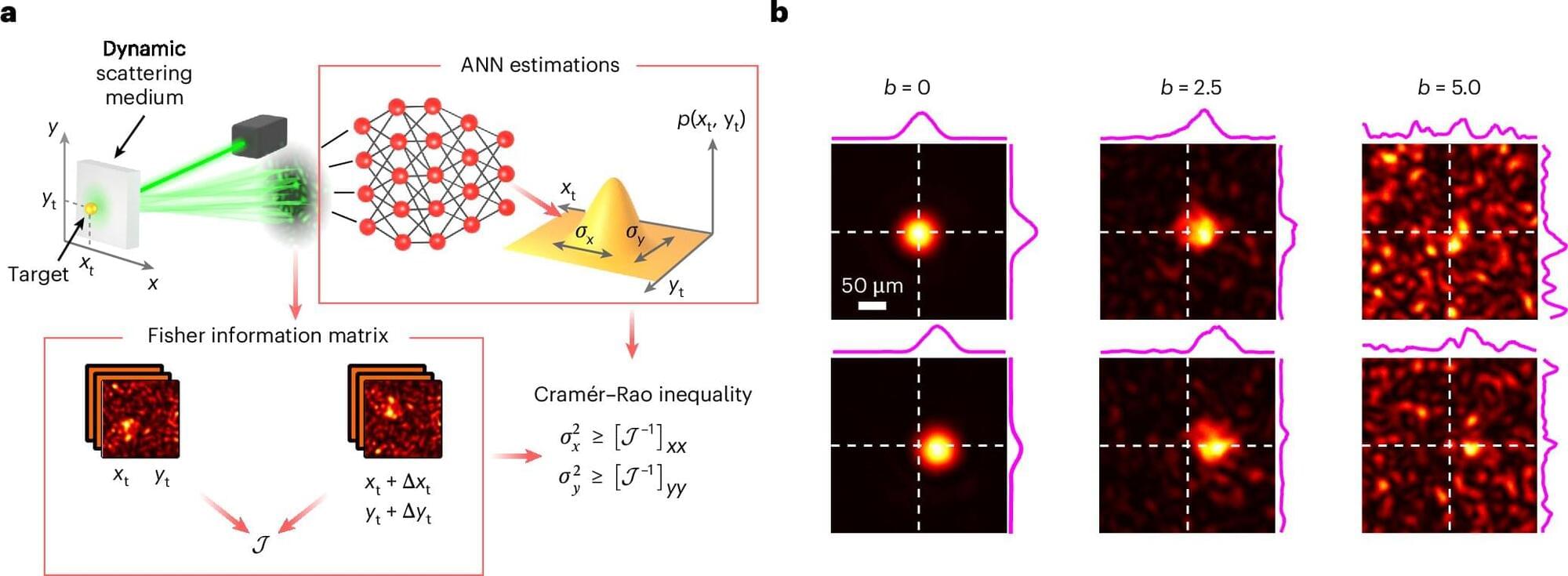
AI algorithms approach the theoretical limit of optical measurement precision
No image is infinitely sharp. For 150 years, it has been known that no matter how ingeniously you build a microscope or a camera, there are always fundamental resolution limits that cannot be exceeded in principle. The position of a particle can never be measured with infinite precision; a certain amount of blurring is unavoidable. This limit does not result from technical weaknesses, but from the physical properties of light and the transmission of information itself.
TU Wien (Vienna), the University of Glasgow and the University of Grenoble therefore posed the question: Where is the absolute limit of precision that is possible with optical methods? And how can this limit be approached as closely as possible?
And indeed, the international team succeeded in specifying a lowest limit for the theoretically achievable precision and in developing AI algorithms for neural networks that come very close to this limit after appropriate training. This strategy is now set to be employed in imaging procedures, such as those used in medicine. The study is published in the journal Nature Photonics.

Sakana AI’s Darwin-Gödel Machine evolves by rewriting its own code to boost performance
With the Darwin-Gödel Machine (DGM), Sakana AI introduces an AI system that can iteratively improve itself through self-modification and open-ended exploration. Early results look promising, but the method is still expensive to run.

AI Pioneer Launches Research Group to Help Build Safer Agents
Yoshua Bengio, an artificial intelligence pioneer, is creating a new nonprofit research organization to promote an alternative approach to developing cutting-edge AI systems, with the aim of mitigating the technology’s potential risks. The nonprofit, called LawZero, is set to launch Tuesday with $30 million in backing from one of former Google Chief Executive Officer Eric Schmidt’s philanthropic organizations and Skype co-founder Jaan Tallinn, among others. Bengio will lead a team of more than 1

I visited Amazon’s robot factories and got an inside look at how it builds and trains them
I saw how the e-commerce giant manufactures its warehouse robots during a recent visit to Amazon Robotics.

New data confirms it: AI is taking human jobs
Most people assume it will take years for AI to reshape the job landscape. But tasks that chatbots can do are already vanishing from job postings.
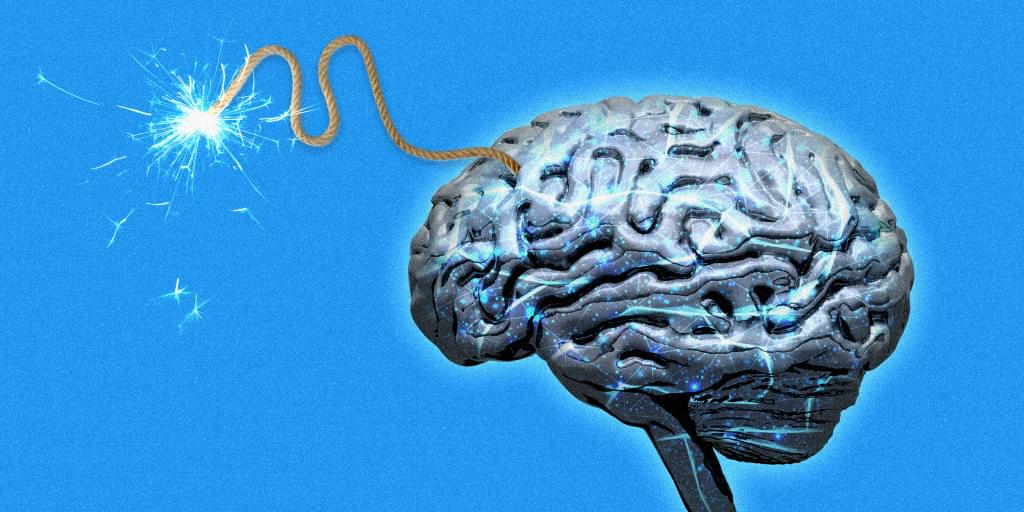
How far will AI go to defend its own survival?
Recent safety tests show some AI models are capable of sabotaging commands or even resorting to blackmail to avoid being turned off or replaced.
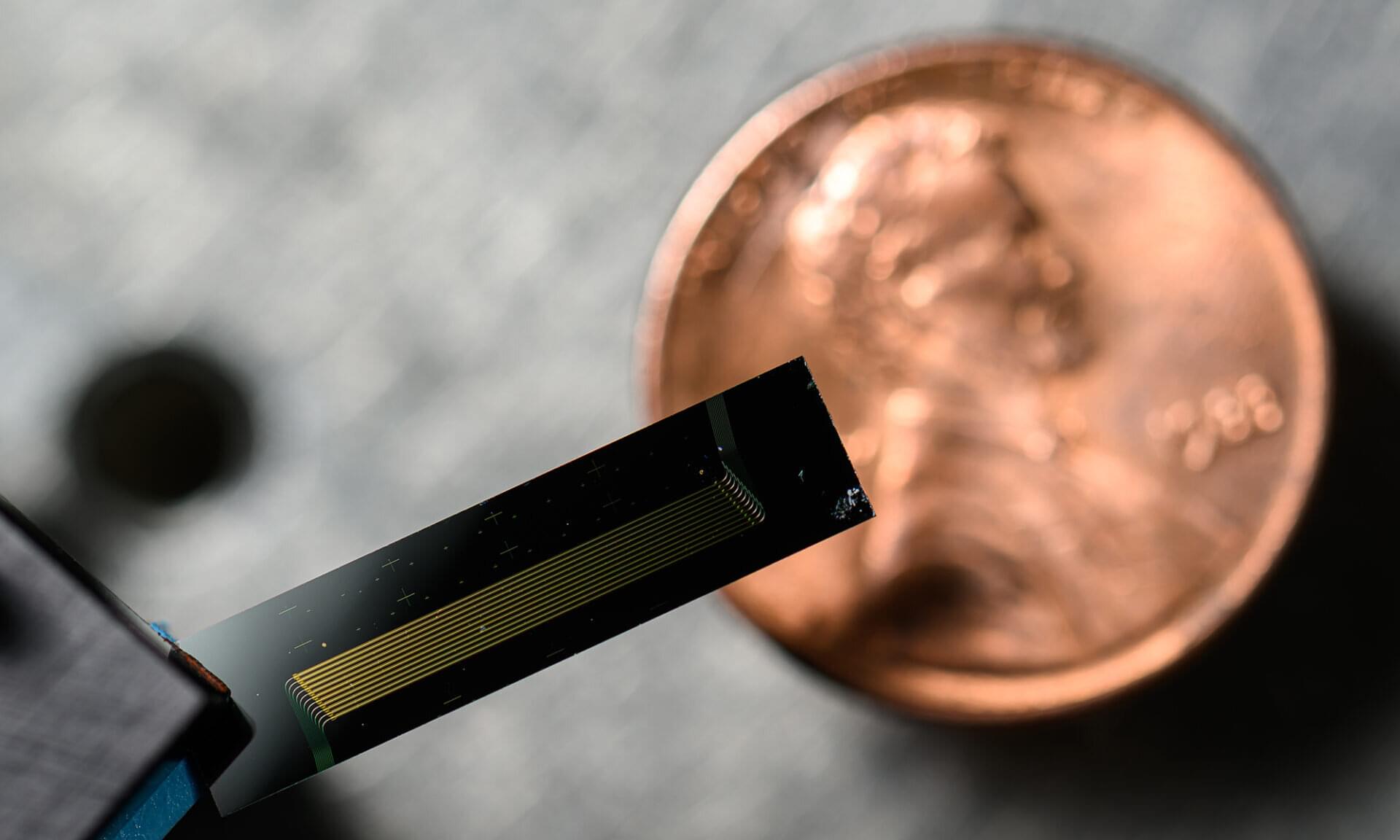
New laser smaller than a penny can measure objects at ultrafast rates
Researchers from the University of Rochester and University of California, Santa Barbara, engineered a laser device smaller than a penny that they say could power everything from the LiDAR systems used in self-driving vehicles to gravitational wave detection, one of the most delicate experiments in existence to observe and understand our universe.
Laser-based measurement techniques, known as optical metrology, can be used to study the physical properties of objects and materials. But current optical metrology requires bulky and expensive equipment to achieve delicate laser-wave control, creating a bottleneck for deploying streamlined, cost-effective systems.
The new chip-scale laser, described in a paper published in Light: Science & Applications, can conduct extremely fast and accurate measurements by very precisely changing its color across a broad spectrum of light at very fast rates—about 10 quintillion times per second.
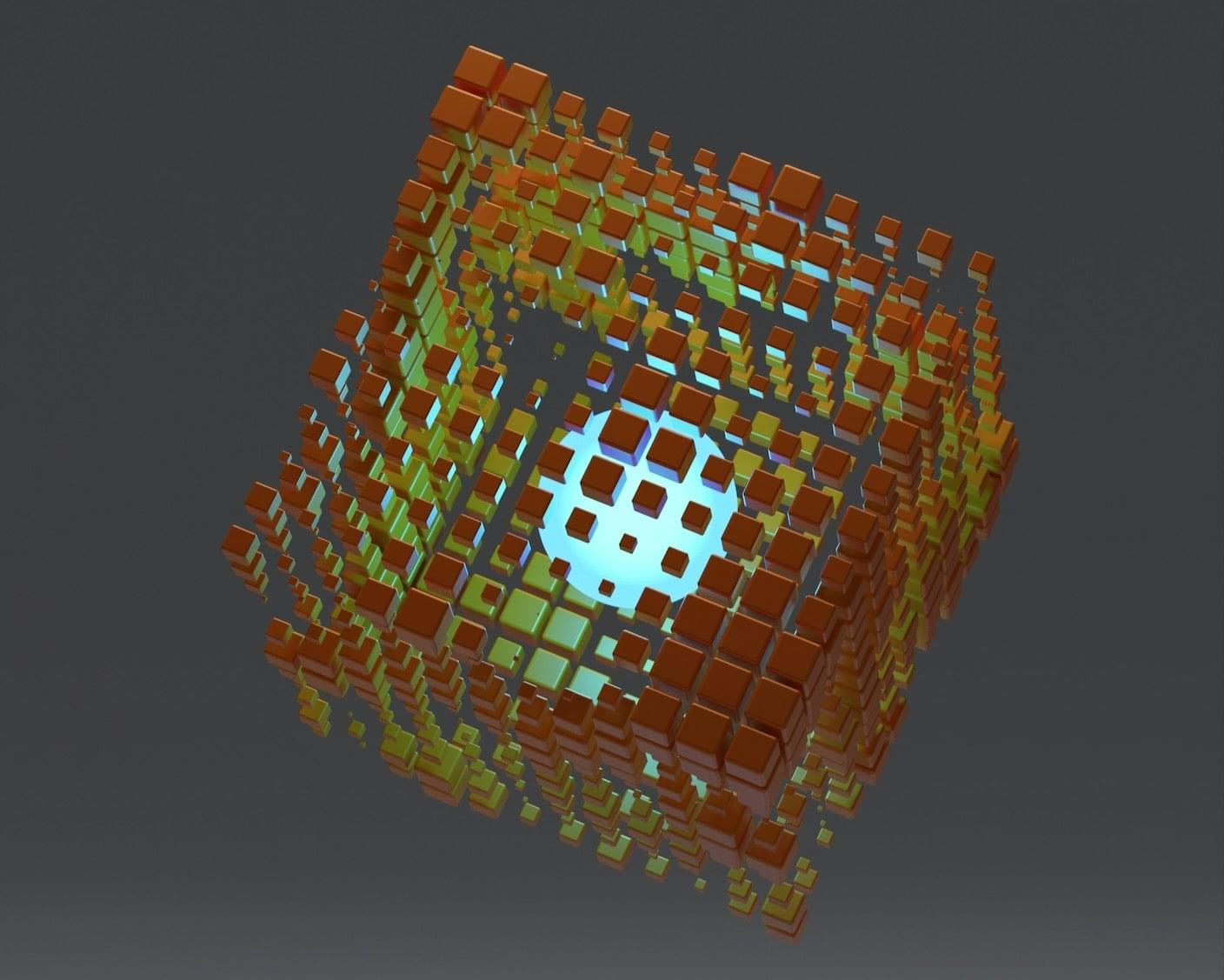
Neurosymbolic AI Could Be the Answer to Hallucination in Large Language Models
The emerging field of neurosymbolic AI could solve these issues, while also reducing the enormous amounts of data required for training LLMs. So what is neurosymbolic AI and how does it work?
LLMs work using a technique called deep learning, where they are given vast amounts of text data and use advanced statistics to infer patterns that determine what the next word or phrase in any given response should be. Each model—along with all the patterns it has learned—is stored in arrays of powerful computers in large data centers known as neural networks.
LLMs can appear to reason using a process called chain-of-thought, where they generate multi-step responses that mimic how humans might logically arrive at a conclusion, based on patterns seen in the training data.