Applied computing; Interdisciplinary application studies; Psychology


In a world first, scientists led by a team from Stanford University have created 16 viable viruses that do not exist in nature and were designed by AI. Their experiment, which is published in Science, could help in the fight against superbugs by allowing researchers to design customized viruses to kill drug-resistant bacteria. Thomas Inglesby and Moritz S. Hanke have published a Perspective piece on the work and its implications in the same edition of the journal.
Artificial intelligence is already helping to speed up drug discovery by analyzing massive genetic data sets, predicting protein shapes and identifying potential medicines. But in this research, the team wanted to see if AI could go a step further by creating an entire functioning genome based on a natural virus template.
AI chatbots can describe reality in words, but don’t truly understand cause and effect in the real world. Now, a fresh kind of machine intelligence that does just that is emerging

Karl Marx knew the future. Not suspected it. Knew it. The revolution was inevitable, and history had a timetable.
Silicon Valley talks the same way now.
Technology has a direction, the exponential is its engine, and the singularity is its destination. You can slow the train, they say, but you cannot stop it.
I spent seventeen years and 300+ interviews taking that story seriously. I was a believer. In 2006 it blew my mind, and I built half a life on it.
Today I am the skeptic. And I have finally written down exactly why I turned.
Because when you strip the singularity down to its engine, it is not a forecast at all. It is a religion, and I can show you the receipts, using Ray Kurzweil’s own diagram to do it.
This is not an attack from the outside. It is a confession from someone who used to preach it.
And there is an important reason this doesn’t necessarily mean we’re headed for a “dead Internet.”
Built on one of the world’s largest networks, Precursor is the only defense of its kind to replace disruptive checkpoints to stop evasive bots without slowing down users
SAN FRANCISCO—(BUSINESS WIRE)— Cloudflare, Inc. (NYSE: NET), the leading connectivity cloud company, today announced the general availability of Precursor, a next-generation, continuous behavioral validation engine for bot management. Built directly on Cloudflare’s edge, Precursor runs seamlessly inside web browsers to monitor entire user sessions in order to detect bot automation. Unlike traditional, static CAPTCHAs, it analyzes ongoing interactions in real time to catch advanced bots, improving detection precision without interrupting legitimate users.
For the first time, automated bot traffic has eclipsed human activity on the Internet, now generating roughly 57% of all web requests. This milestone emphasizes a seismic evolution from an Internet built for human clicks to a digital landscape now dominated by AI agents. For organizations and everyday consumers, this means that legacy defenses are blind to a new breed of automated threats that drive up infrastructure costs, manipulate inventory, and compromise data. While a modern bot can easily fake a single action to pass a one-time security check, replicating an entire human journey remains a massive engineering hurdle. To protect the integrity of the global Internet, organizations must move away from static, point-in-time defenses and embrace continuous behavioral validation—analyzing telemetry across an entire session to unmask automated imposters trying to blend into the crowd.
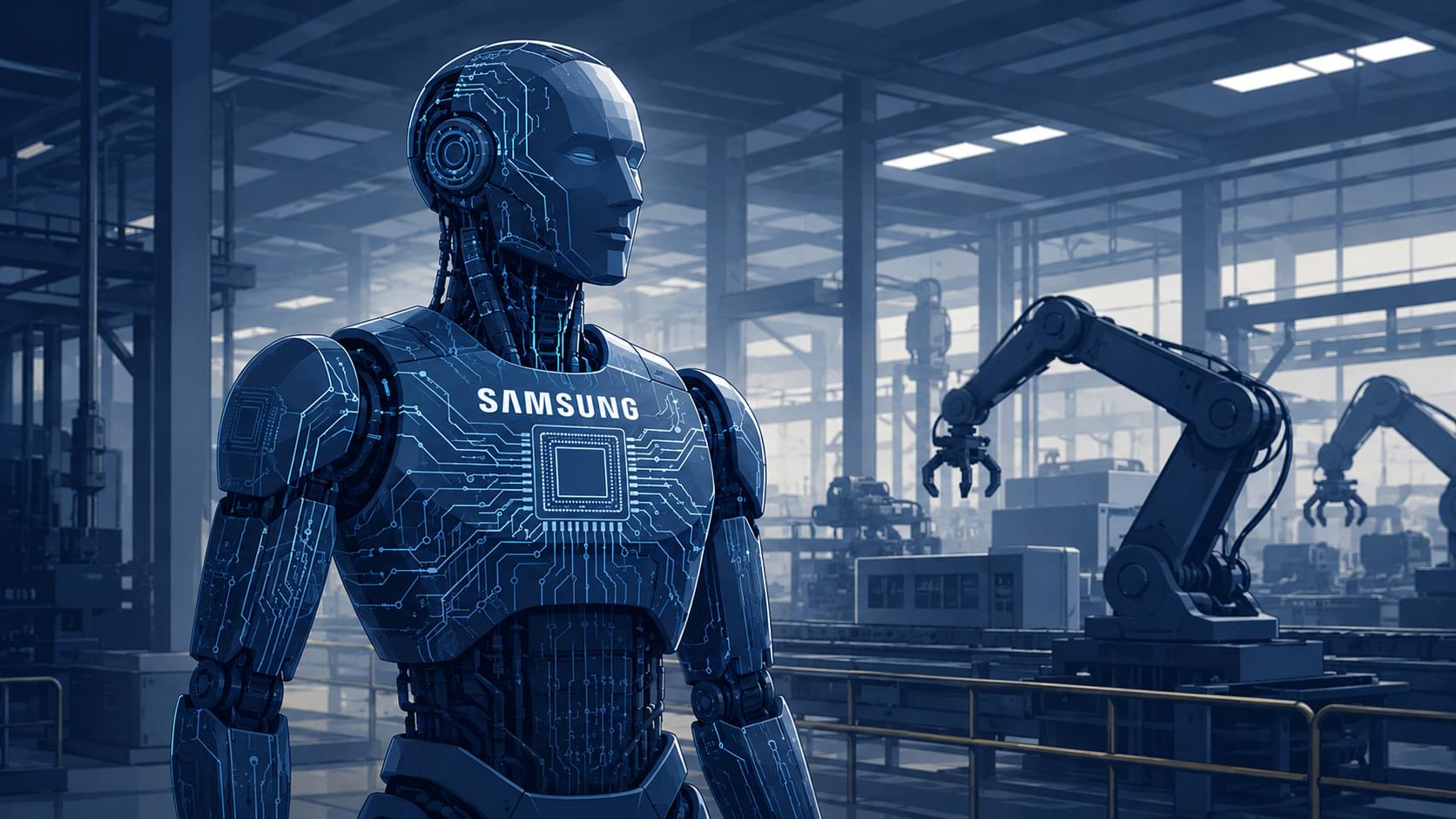
Samsung didn’t promote from within to lead RX’s strategy — it hired Executive Vice President Lee Dongkun, who previously directed robotics strategy at Hyundai Motor Group, the parent of Boston Dynamics, and who oversaw development of the electric Atlas humanoid and Spot quadruped during Hyundai’s push to commercialize both. That hire, paired with Samsung’s Rainbow Robotics subsidiary already commercializing the RBY1 wheeled dual-arm platform and developing HUBO bipedal prototypes, signals a company assembling deployment expertise, not just research capability. See our coverage of Unitree’s TIME cover hiding a 9% industrial deployment problem for how deployment expertise, not funding or hype, is the scarce resource across this entire sector right now.
Samsung’s in-house robots strategy also extends to components most competitors buy from third parties: the company is developing its own actuators using motor technologies adapted from home appliances, an unusual but financially logical move for a company that already runs enormous consumer-electronics manufacturing lines. Owning that layer reduces both cost and dependency on the same small set of actuator suppliers every other humanoid maker competes for.
⚠ Fiction — composite scenario, not a real event: A robotics analyst covers Samsung’s RX division purely as a Tesla and Unitree competitor, publishing a forecast comparing unit shipment targets. Two years later, Samsung has shipped fewer finished humanoids than expected — but its foundry chip revenue from robotics customers across five different manufacturers has quietly become a bigger business line than the humanoid unit itself, exactly the outcome the shipment-focused forecast never modeled.

Situational Awareness may have had to sell off the majority of its public portfolio last month, but the AI-focused hedge fund is still making some big bets.
This week, the fund invested $400 million into Source Foundry, a startup founded by Stanford researchers aiming to make chip manufacturing faster and cheaper, according to The Wall Street Journal. That brings its total investment in Source Foundry to $500 million.
Situational Awareness was founded by Leopold Aschenbrenner, a former OpenAI researcher in his mid-twenties who had no trading experience when he launched the fund in 2024. Early returns were reportedly strong, but the fund faced steep losses in recent months amidst the decline in AI infrastructure stocks.