Toggle light / dark theme

Japan’s vision for AI robots to empower humans

What if instead of replacing us in our jobs, AI-enabled robots were to help us become the best versions of ourselves? Prompted by the ageing crisis and a projected shortfall of carers, a research team in Japan is seeking to create a new robotic paradigm, where AI-enabled robots help us to help ourselves.

“By 2050, I’d like to realize a smarter, more inclusive society, where everyone will be able to use AI robots anytime and anywhere,” says Yasuhisa Hirata, a mechanical engineer at Tohoku University in Sendai, Japan1. Hirata is the project manager on the ‘Adaptable AI-enabled Robots to Create a Vibrant Society’ project of the Japanese Government’s Moonshot Research and Development Program.

He envisages future AI-enabled robots functioning somewhere between a carer and a coach — a tool that can provide support, but which makes users feel as though they are performing tasks independently rather than being assisted by a robot. Such tasks might range from people standing up out of a chair, lifting a heavy object, or expressing themselves through dance.

Novel memristor wafer integration technology paves the way for brain-like AI chips

A research team led by Professor Sanghyeon Choi from the Department of Electrical Engineering and Computer Science at DGIST has successfully developed a memristor, which is gaining recognition as a next-generation semiconductor device, through mass-integration at the wafer scale.

The study, published in the journal Nature Communications, proposes a new technological platform for implementing a highly integrated AI semiconductor replicating the , overcoming the limitations of conventional semiconductors.

The human brain contains about 100 billion neurons and around 100 trillion synapses, allowing it to store and process enormous amounts of information within a compact space.

Human-centric photo dataset aims to help spot AI biases responsibly

A database of more than 10,000 human images to evaluate biases in artificial intelligence (AI) models for human-centric computer vision is presented in Nature this week. The Fair Human-Centric Image Benchmark (FHIBE), developed by Sony AI, is an ethically sourced, consent-based dataset that can be used to evaluate human-centric computer vision tasks to identify and correct biases and stereotypes.

Computer vision covers a range of applications, from autonomous vehicles to facial recognition technology. Many AI models used in were developed using flawed datasets that may have been collected without consent, often taken from large-scale image scraping from the web. AI models have also been known to reflect that may perpetuate sexist, racist, or other stereotypes.

Alice Xiang and colleagues present an image dataset that implements for a number of factors, including consent, diversity, and privacy. FHIBE includes 10,318 images of 1,981 people from 81 distinct countries or regions. The database includes comprehensive annotations of demographic and physical attributes, including age, pronoun category, ancestry, and hair and skin color.

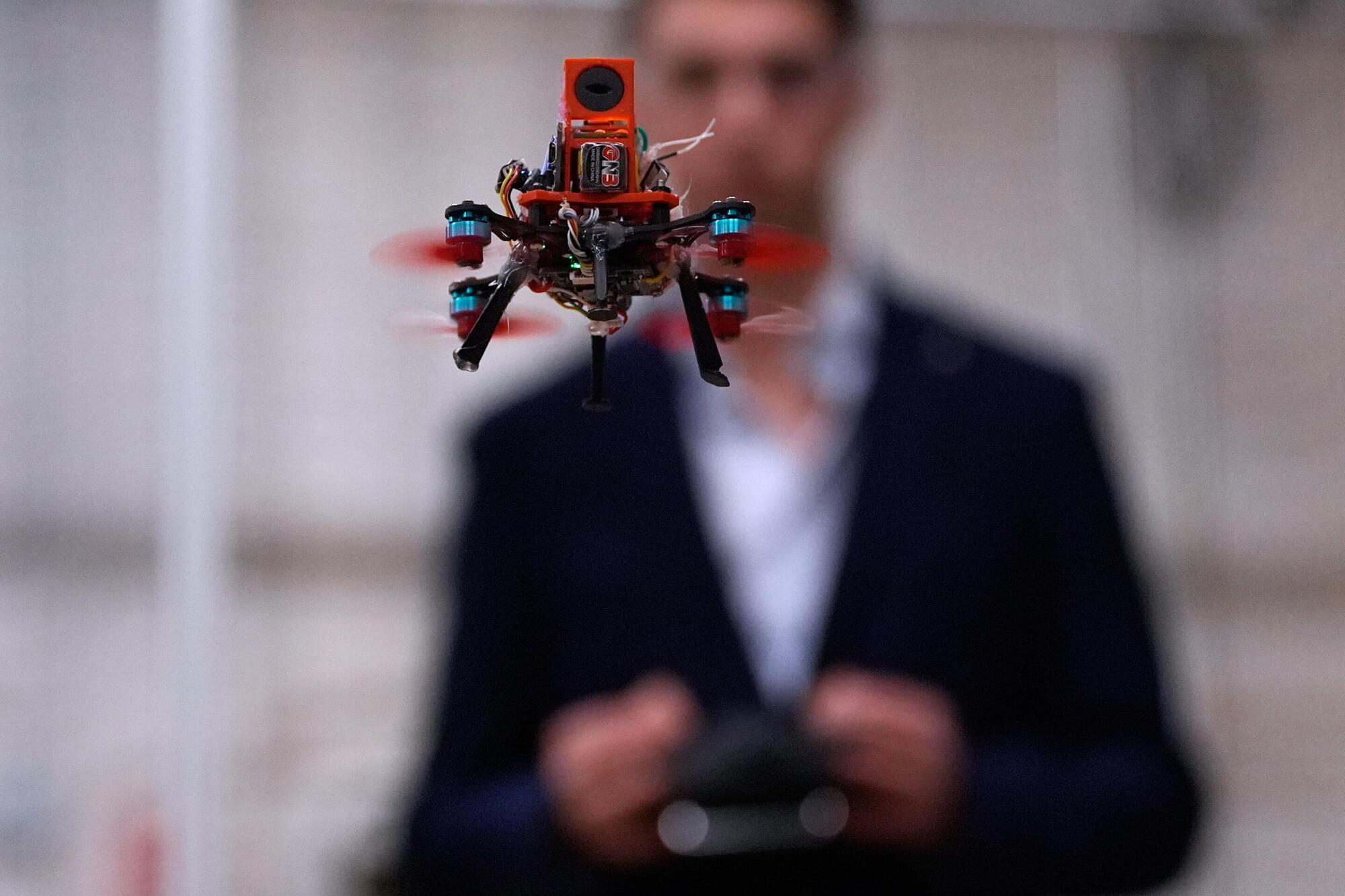
Xpeng’s Robot Revolution: Mass-Producing Humanoids by 2026

Xpeng Motors has accelerated its humanoid robot ambitions, unveiling the advanced IRON model with solid-state batteries and aiming for mass production by end-2026. Paralleling Tesla, the Chinese EV maker is also launching robotaxis, blending automotive and robotics tech for future dominance. This move signals a transformative shift in AI and automation.

Therapeutic brain implants that travel through blood defy the need for surgery

What if clinicians could place tiny electronic chips in the brain that electrically stimulate a precise target, through a simple injection in the arm? This may someday help treat deadly or debilitating brain diseases, while eliminating surgery-related risks and costs.

MIT researchers have taken a major step toward making this scenario a reality. They developed microscopic, wireless bioelectronics that could travel through the body’s circulatory system and autonomously self-implant in a target region of the brain, where they would provide focused treatment.

In a study on mice, the researchers showed that after injection, these minuscule implants can identify and travel to a specific brain region without the need for human guidance. Once there, they can be wirelessly powered to provide electrical stimulation to the precise area. Such stimulation, known as neuromodulation, has shown promise as a way to treat and diseases like Alzheimer’s and multiple sclerosis.

🌌 Unifying AI Through the Feynman Path Integral: From Deep Learning to Quantum AI I’m pleased to share a framework that brings many areas of AI into a single mathematical structure inspired by the Feynman path integral —

🌌 Unifying AI Through the Feynman Path Integral: From Deep Learning to Quantum AI https://lnkd.in/g4Cfv6qd I’m pleased to share a framework that brings many areas of AI into a single mathematical structure inspired by the Feynman path integral — a foundational idea in quantum physics. Instead of viewing supervised learning, reinforcement learning, generative models, and quantum machine learning as separate disciplines, this framework shows that they all follow the same underlying principle: Learning is a weighted sum over possible solutions (paths), based on how well each one explains the data. In other words, AI can be viewed the same way Feynman viewed physics: as summing over all possible configurations, weighted by an action functional.

/* */